



The Sheep Blog

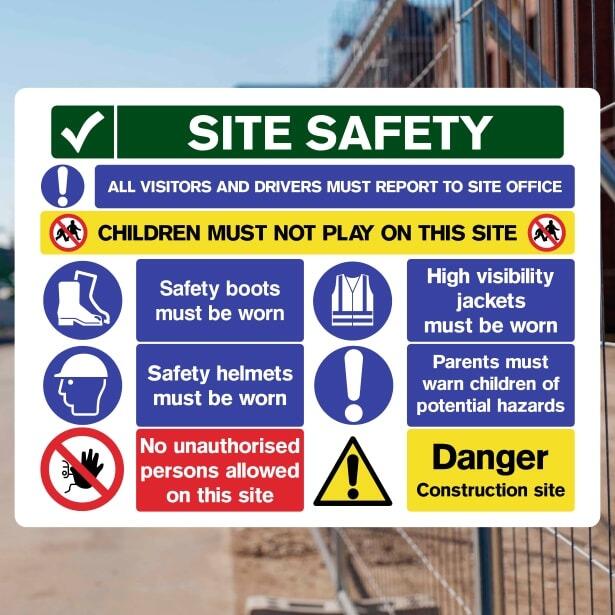


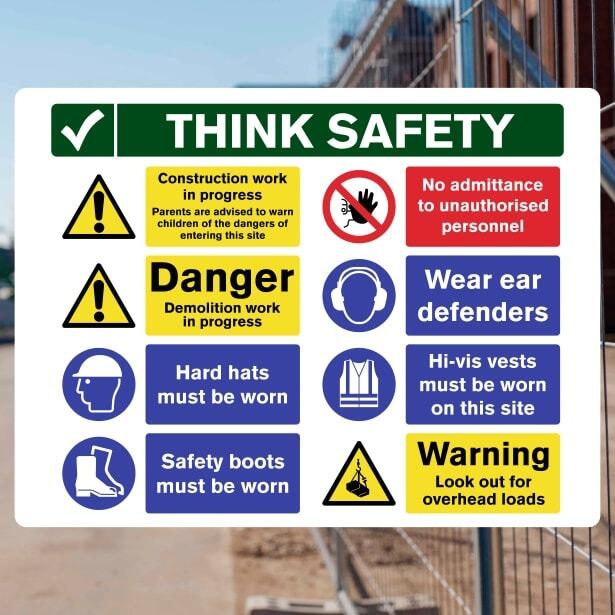
Site Safety Work‑In‑Progress Sign
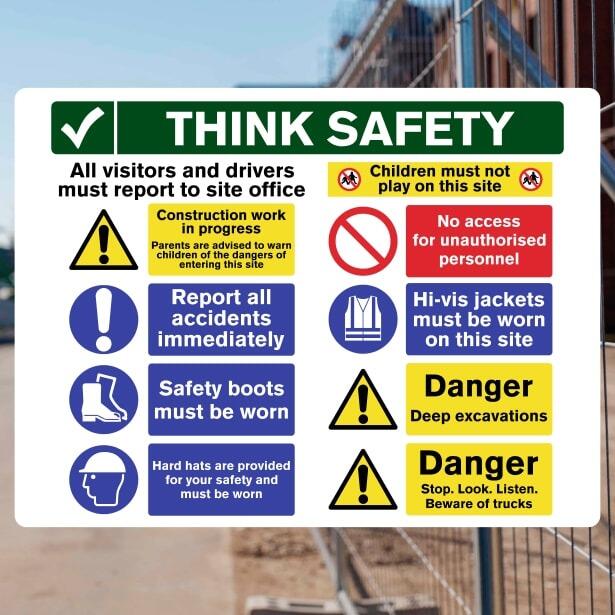
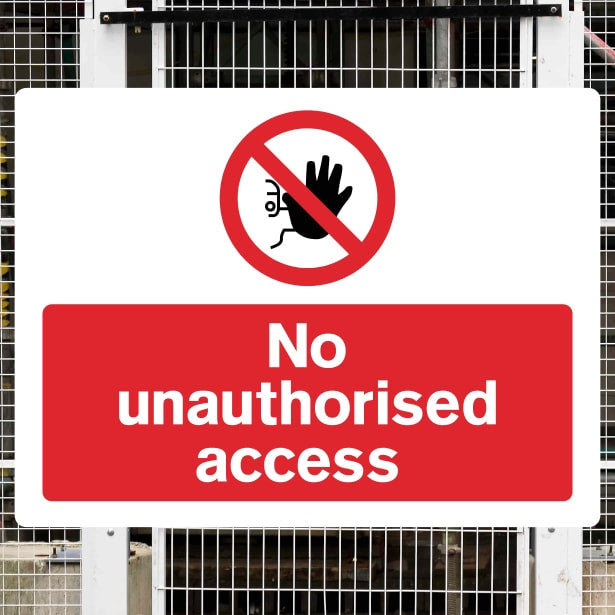
5 Sign Construction Site Pack C
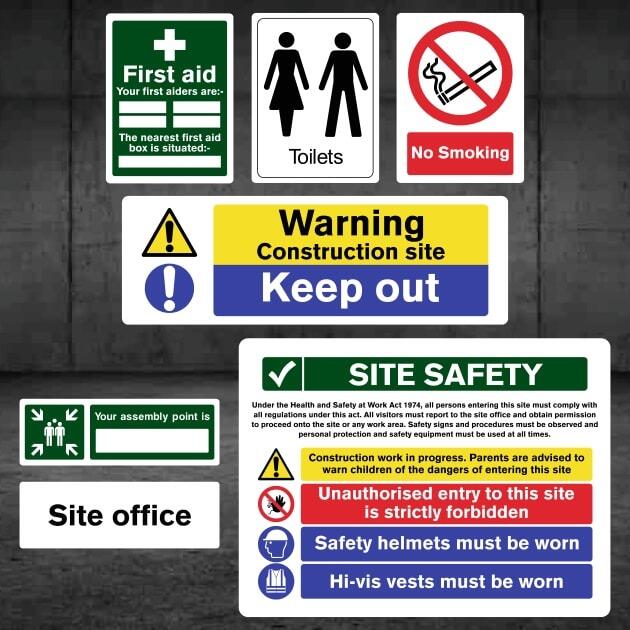


10 Sign Construction Safety Pack H
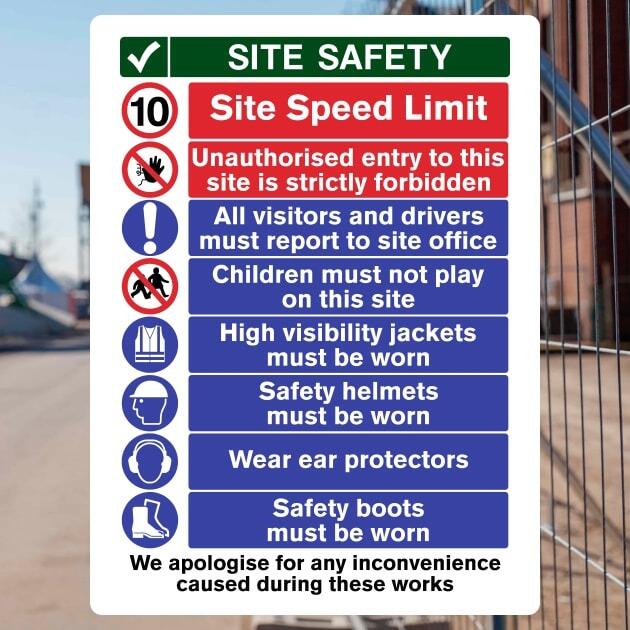
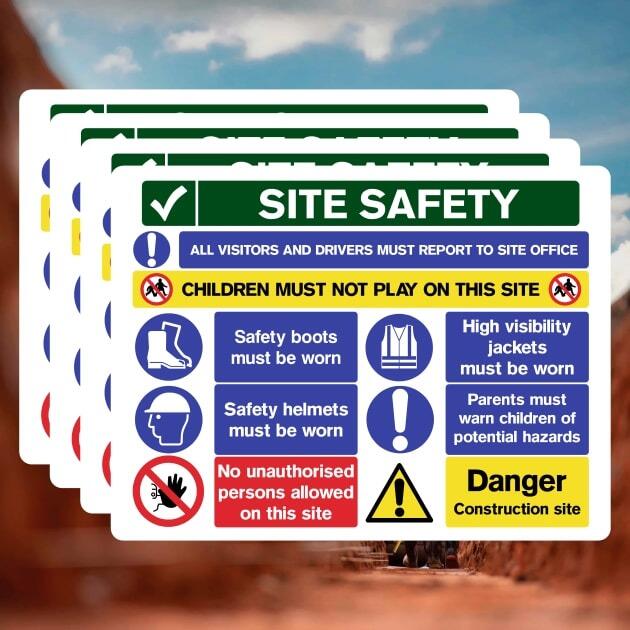
Multi-Message Site Safety Signs 25 Pack D
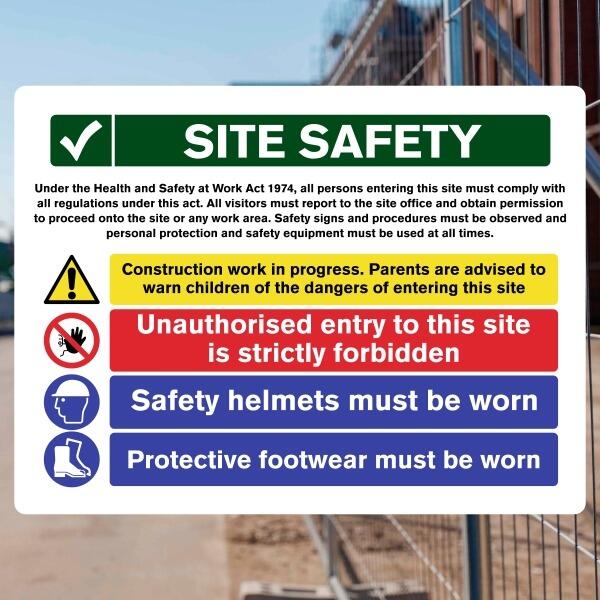
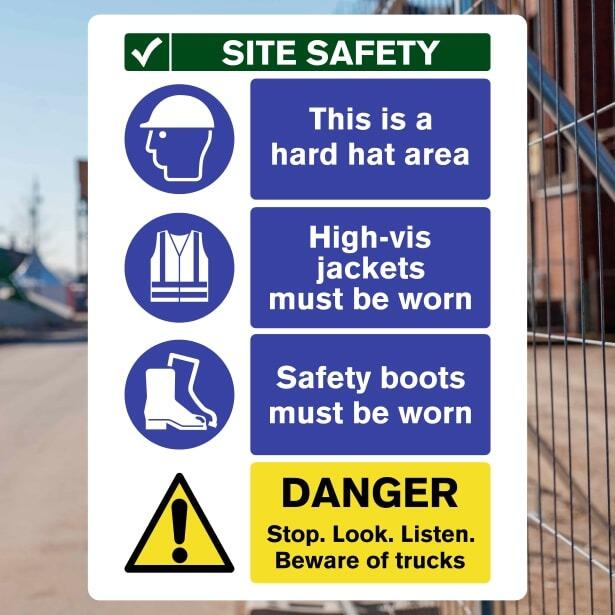
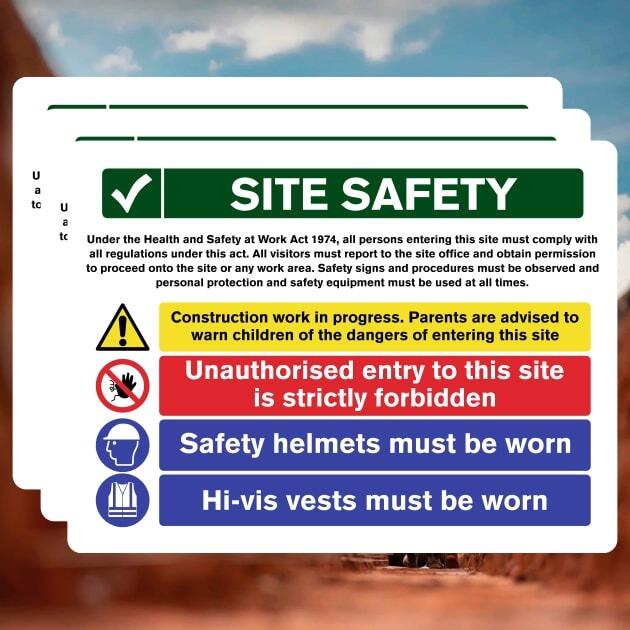
Multi-Message 25 Sign Construction Safety Pack A
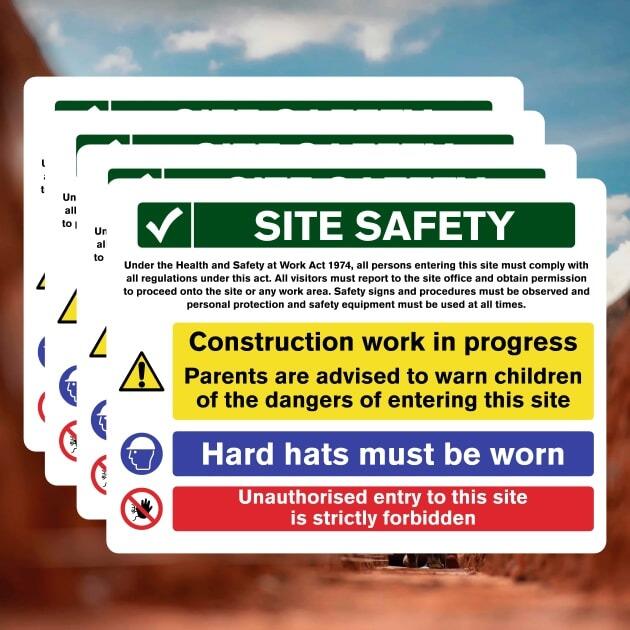
Multi-Message Site Safety Sign 25 Pack C
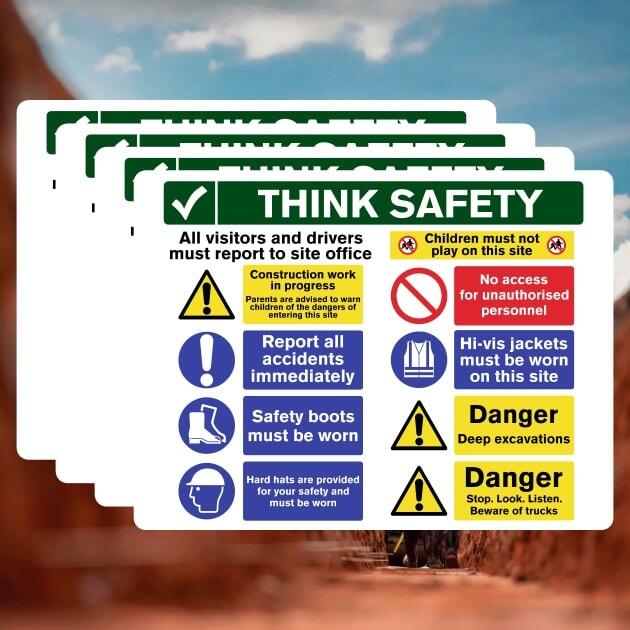
Multi-Message Site Safety Signs 25 Pack E
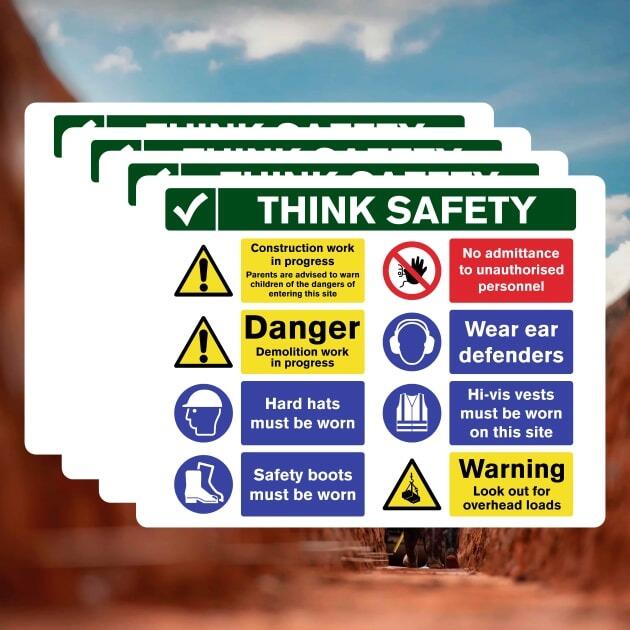
Multi-Message Site Safety Signs 25 Pack F
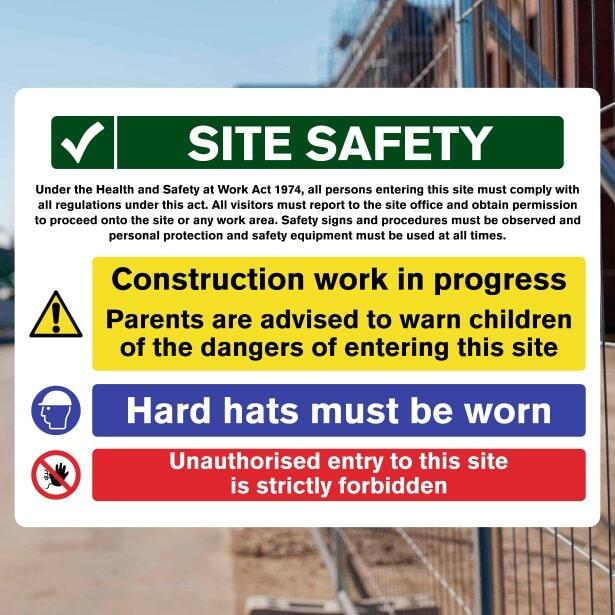
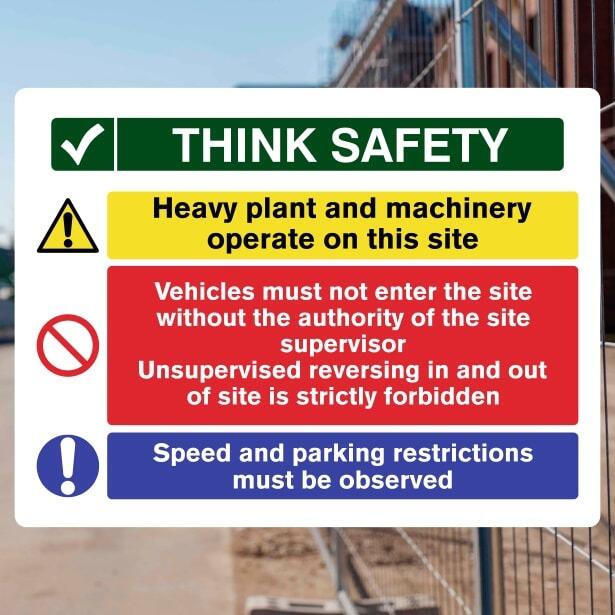
Heavy Plant Machinery Multi Sign
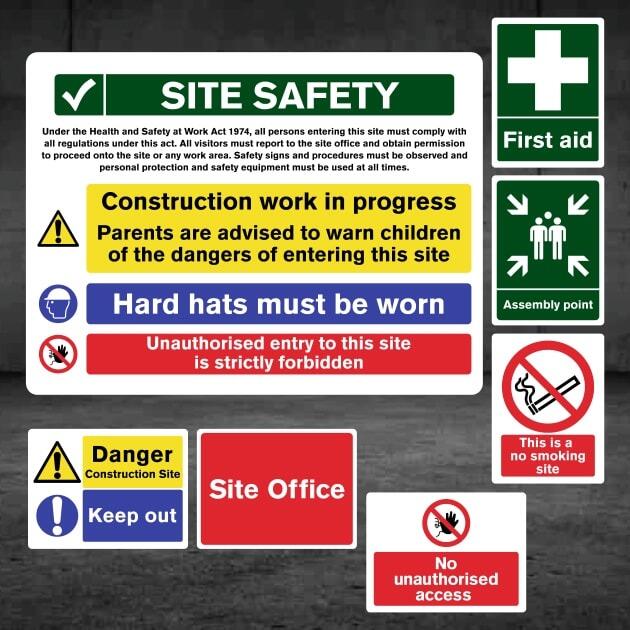
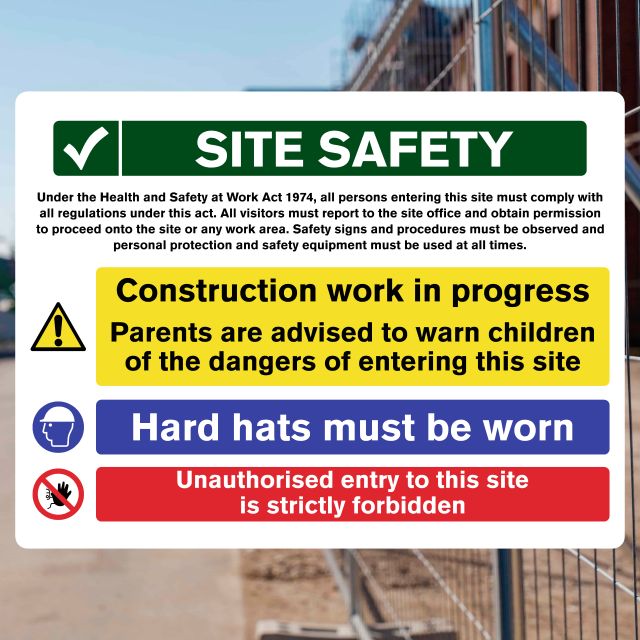
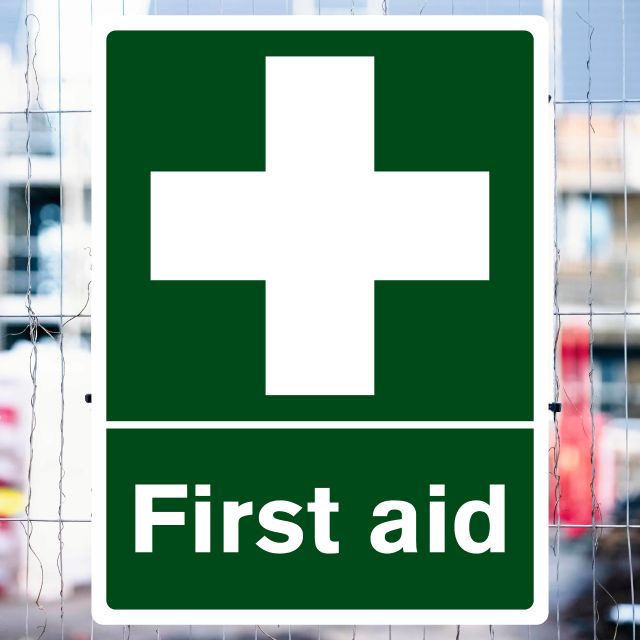
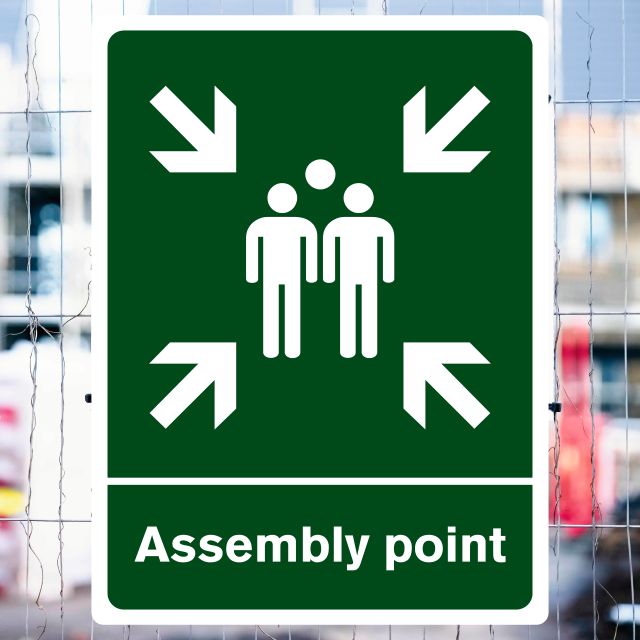
7 Sign Construction Safety Pack D
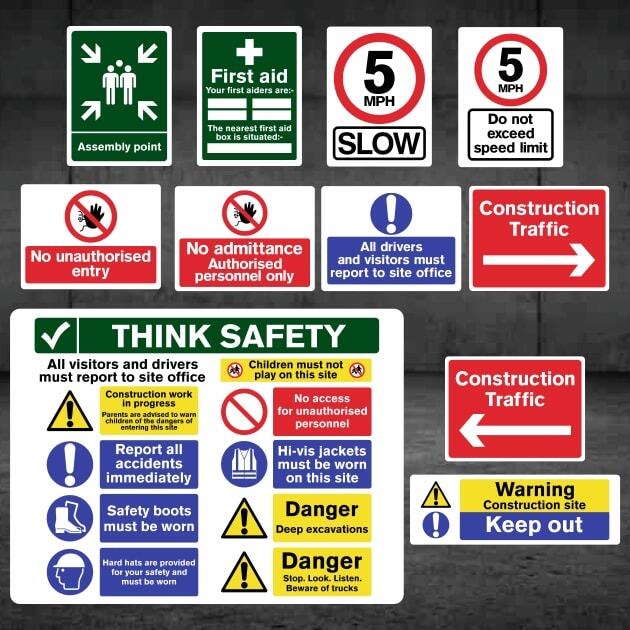

11 Sign Construction Safety Pack J
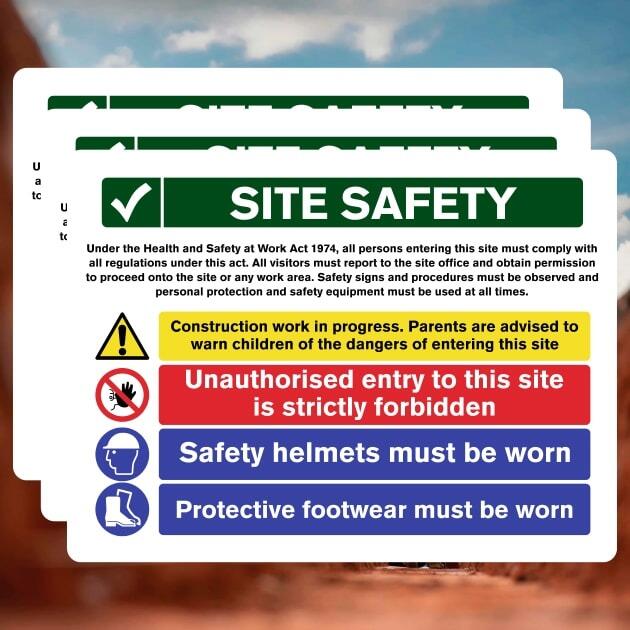
Multi-Message 25 Sign Construction Safety Pack B

Multi-Message 50 Sign Site Safety Pack B
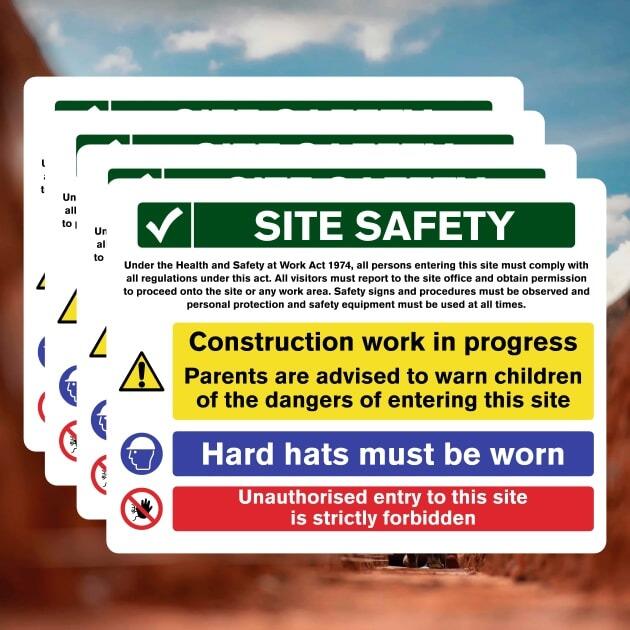
Multi-Message Site Safety Sign 50 Pack C
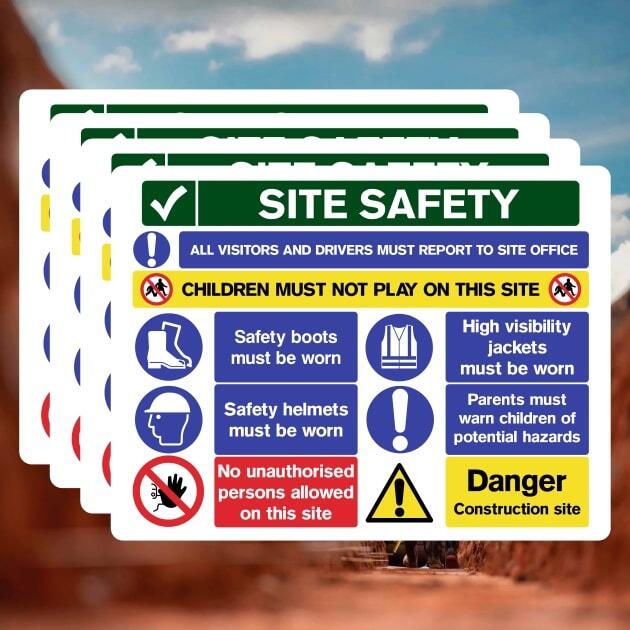
Multi-Message Site Safety Signs 50 Pack D
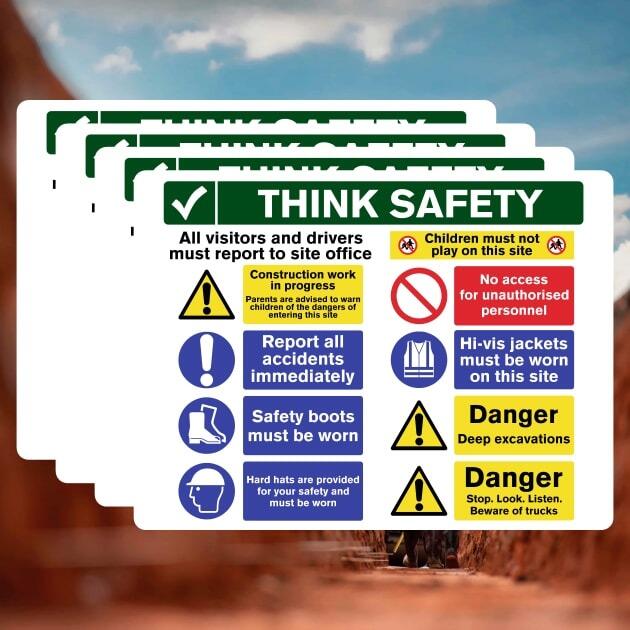
Multi-Message Site Safety Signs 50 Pack E
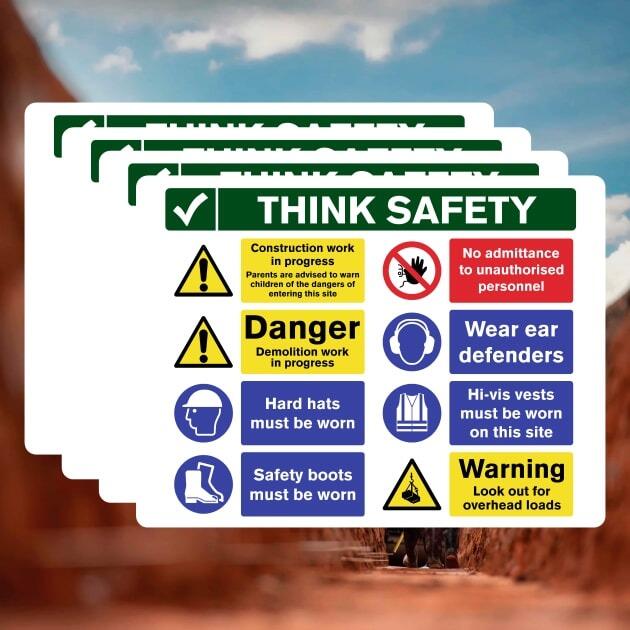
Multi-Message Site Safety Signs 50 Pack F
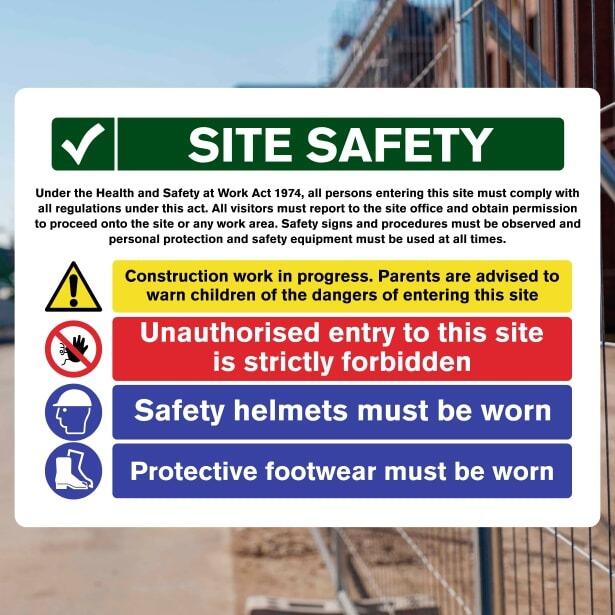
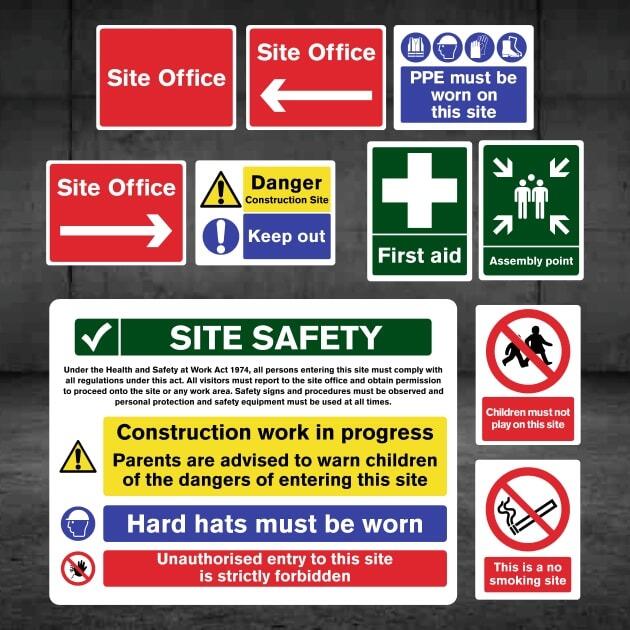
11 Sign Construction Safety Pack E
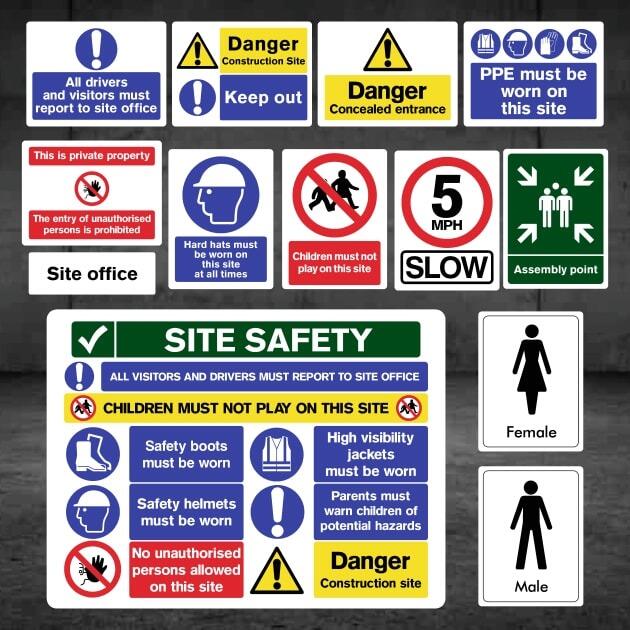


25 Sign Construction Safety Pack F
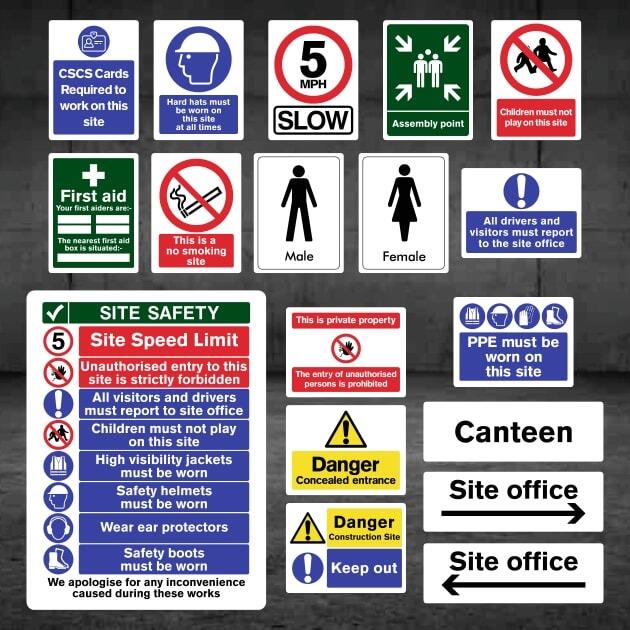


47 Sign Construction Safety Pack G
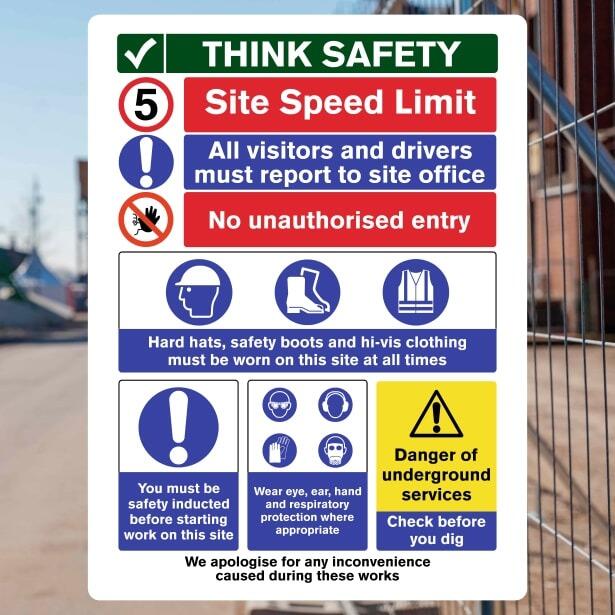
Underground Services 5 mph Sign
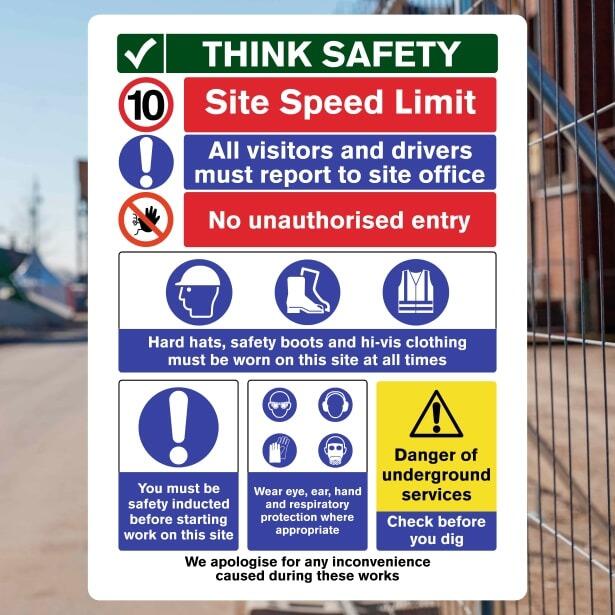
Underground Services 10 mph Sign
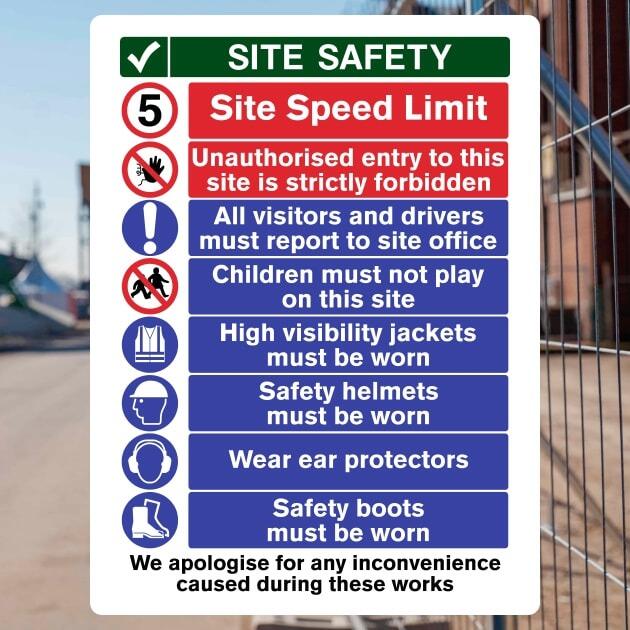
Clear Site Safety Boards provide an effective way to communicate several important site rules in one highly visible location.
Commonly positioned at construction site entrances, gates, compounds and access points, multi-message safety boards can combine warnings, mandatory PPE requirements, access restrictions and visitor instructions on a single sign.
Our range includes construction site safety boards in different sizes and designs for building sites, contractors, civil engineering projects, refurbishment work and other temporary workplaces.
Made in Britain, Safety Sheep site safety boards are available in durable materials suitable for demanding construction environments.
A site safety board is a larger sign combining several safety messages in one panel.
Rather than installing individual signs for every instruction at a site entrance, a multi-message board can bring important information together.
A typical board might include:
The exact messages required depend on the site.
A well-designed site safety board can make entrance signage considerably clearer.
Instead of workers and visitors facing numerous individual signs attached to a gate or fence, important messages can be grouped into a logical visual hierarchy.
Benefits can include:
A combined board is particularly useful where several rules apply from the same point.
The main entrance is one of the most important locations for construction safety information.
Workers, subcontractors, visitors and delivery drivers should be able to understand key requirements before entering an operational area.
A Construction Site Safety Board can communicate those requirements at the gate rather than relying entirely on verbal instructions after somebody has entered.
Depending on the project, the board might cover:
Additional signs can then be positioned around the site for specific local hazards.
There is no single standard board containing every message required by every UK construction site.
The correct information depends on:
The site's risk assessments and safety arrangements should determine which messages need communicating.
A standard multi-message board can provide an excellent starting point, but don't assume every message on every generic board applies to your project.
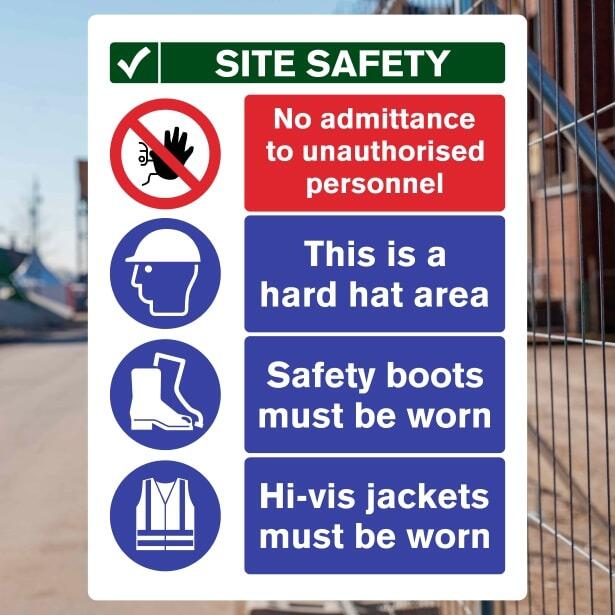
Many construction safety boards include mandatory PPE symbols.
Typical requirements include:
These are particularly suitable for a main entrance board when those PPE requirements apply generally from the point of entry.
Specialist PPE requirements are often better displayed locally.
For example, if hearing protection is required only in one work area, a separate mandatory sign at that area may be clearer than suggesting hearing protection is compulsory throughout the entire site.
Where safety helmets are mandatory from the main site entrance, the recognised head-protection symbol can form part of the site entrance board.
This reinforces the requirement before workers, visitors and contractors enter.
The board should support the site's PPE arrangements rather than replace induction, supervision or provision of appropriate protective equipment.
High-visibility clothing requirements are commonly included on construction entrance boards, particularly where workers and visitors may encounter moving vehicles or plant.
If hi-vis clothing is mandatory throughout the operational site, including the instruction at the main access point helps communicate that requirement immediately.
Safety footwear is another common construction-site requirement.
Where it applies from the point of entry, displaying the recognised mandatory symbol alongside the site's other core PPE requirements can create a clear and consistent entrance message.
Construction sites can present serious hazards to people who have not been authorised, inducted or informed about the work taking place.
Many site safety boards therefore include messages such as:
These messages reinforce the site's wider access-control arrangements.
A sign does not replace suitable fencing, hoarding, locked gates or other security measures.
Visitors and delivery drivers may know very little about a construction site's layout or hazards.
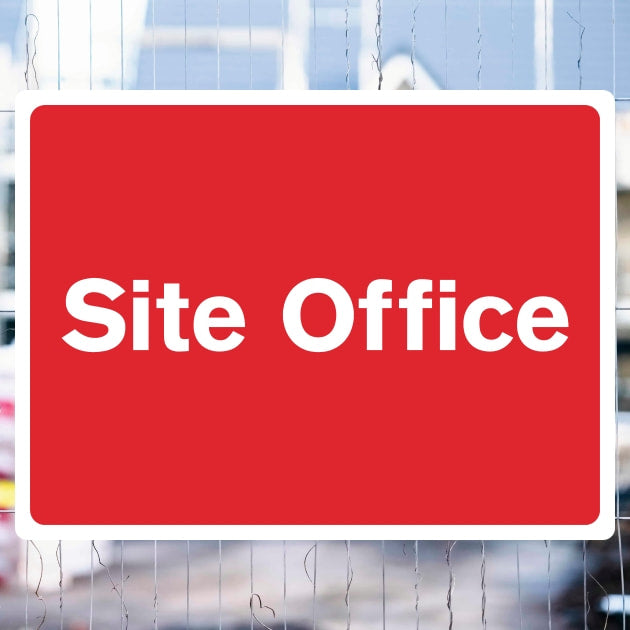
A Visitors Must Report to Site Office instruction can direct them to the appropriate control point before they enter operational areas.
Where the site office is not immediately obvious, additional directional signage may be required.
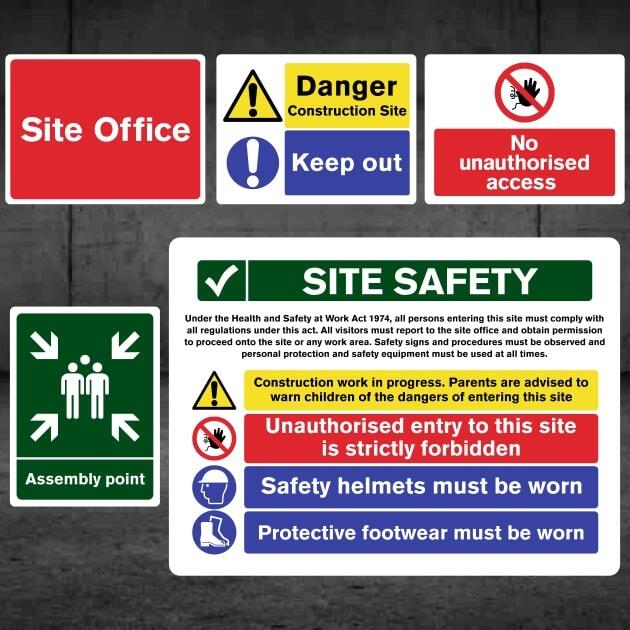
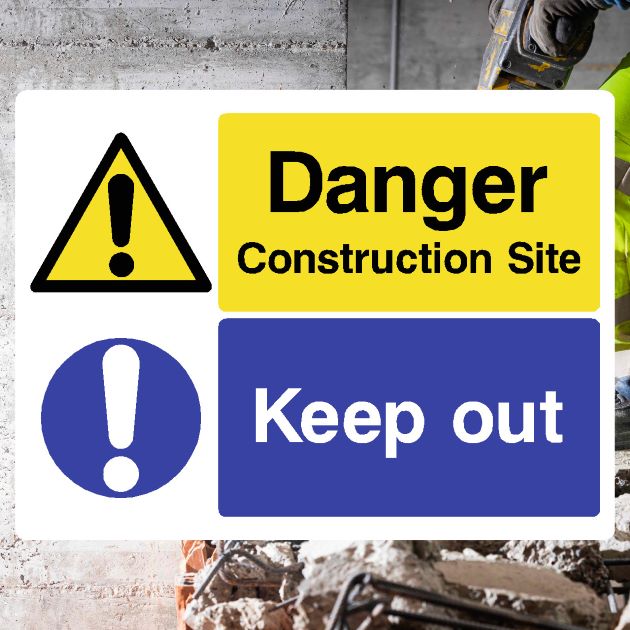
A general construction warning helps people recognise that they are approaching an active work area.
It can be particularly useful at:
More specific hazards should still have appropriate local signage where necessary.
Some sites require a wider range of rules than can be communicated with a basic entrance sign.
A larger site rules board might include information relating to:
Keep the board focused on information people genuinely need.
Trying to include every conceivable instruction can make the most important messages harder to find.
A site safety board needs to be read quickly.
If it contains too much information, text and symbols can become too small and the board can lose its impact.
Ask:
What does somebody need to know before entering this site?
Put those messages on the entrance board.
Then use separate signage for hazards and instructions that apply only in particular locations.
For example:
Main entrance board: hard hats, hi-vis, safety footwear, visitors report, no unauthorised access.
Excavation: Danger Deep Excavation.
Electrical area: Danger High Voltage.
Vehicle route: 5 mph.
Fire point: Fire Extinguisher / Fire Point.
This approach keeps information relevant to the point where people need it.
A standard site safety board is often suitable where the site uses common construction rules.
Custom boards can be useful when you need:
The decision should be based on what needs communicating rather than simply whether a custom board looks more impressive.
Site safety boards and construction sign packs solve slightly different problems.
A Site Safety Board combines several important messages in one prominent panel.
A Construction Sign Pack provides several individual signs that can be positioned around the site.
Many projects can benefit from both.
For example:
Entrance: Multi-message Site Safety Board
Perimeter: Keep Out signs
Work areas: Hazard-specific signs
Traffic routes: Vehicle and pedestrian signs
Emergency arrangements: Fire, first aid and assembly point signs
This provides both a clear site entrance and more targeted information throughout the project.
Large safety banners can be useful along long sections of Heras fencing, hoarding and site boundaries.
Site safety boards are generally better suited to fixed information at entrances and specific access points.
Banners are particularly useful where:
Choose the format according to the location and viewing distance.
Common positions include:
Position the board so people see it before entering the area to which the instructions apply.
If workers, visitors or delivery drivers can enter through different access points, consider whether the relevant information needs to be displayed at each entrance.
A board at the main vehicle gate is of limited value to somebody who always enters through a separate pedestrian gate.
Review how people actually access the site rather than assuming everyone uses the same route.
Choose the size according to:
A larger board generally allows symbols and text to remain more legible when several messages need to be displayed.
Avoid squeezing too much information onto a small panel.
Temporary fencing is commonly used around construction sites and compounds.
A lightweight construction board can be attached to suitable fencing where appropriate.
When choosing the size and material, consider:
Large solid boards can be affected by wind, so the installation method and site conditions need consideration.
Solid site hoardings provide an excellent surface for larger safety boards.
Boards can be positioned near:
Make sure branding, project graphics and advertising do not overwhelm essential safety information.
Construction environments can expose signs to:
Choose a material appropriate to the expected lifespan and location.
Lightweight boards can be useful for temporary projects and movable fencing, while more rigid materials may be preferable for longer-term installation.
A multi-message board can contain several categories of safety sign.
Warning of hazards.
Mandatory instructions such as PPE requirements.
Activities that are prohibited.
Safe-condition and emergency information.
Firefighting equipment information.
Using recognised colours and symbols helps different messages remain visually distinct even when combined on one board.
BS EN ISO 7010 provides standardised graphical safety symbols used on many workplace and construction signs.
Using recognised symbols can make individual messages easier to understand consistently.
However, BS EN ISO 7010 is a standard rather than construction legislation.
A multi-message board does not automatically make a site legally compliant simply because it contains ISO 7010-style symbols.
The information displayed still needs to be appropriate to the actual site.
There is no blanket requirement that every construction project must purchase one particular standard multi-message board.
UK health and safety law requires appropriate safety signs where significant residual risks remain after other relevant control measures.
A multi-message board can be an effective way of communicating several requirements at a site entrance, but the information required depends on the project.
The site's risk assessments and safety arrangements should determine what needs to be communicated.
A construction entrance board provides important visual information, but it cannot explain every risk and procedure.
Site induction, training, supervision and appropriate information remain important.
Use the board to reinforce the most important rules rather than trying to replace the induction process with a very large sign.
Construction projects evolve.
PPE requirements, entrances, contractors, vehicle routes and work activities can change.
Review your site board when:
A board containing outdated information can be worse than one containing less information but remaining accurate.
Make sure its instructions match your actual site rules.
Prioritise important entrance information and use local signs elsewhere.
Several messages need sufficient space to remain legible.
People need to see the board before entering the controlled area.
Don't forget separate pedestrian access points.
Review the board as work changes.
Keep Out messages don't replace fencing, gates and access control.
Local hazards still need local controls and signage.
Recognised symbols support clear communication but do not make the wider site automatically compliant.
Before ordering a board, ask:
Safety Sheep supplies Site Safety Boards for UK construction sites, building projects and contractors.
Choose from multi-message construction boards covering PPE, access restrictions, visitor instructions, hazards and other commonly used site rules.
Available in a choice of sizes and durable materials, our Made in Britain site safety boards provide a practical way to communicate multiple messages clearly at entrances, gates and access points.
A Site Safety Board combines several construction safety messages on one panel, such as PPE requirements, access restrictions, visitor instructions and warnings.
The content depends on the site. Common messages include Construction Site warnings, No Unauthorised Access, Visitors Must Report and mandatory requirements for hard hats, high-visibility clothing and safety footwear.
There is no blanket requirement for every construction project to display one particular standard multi-message board.
The safety information and signs required should be determined by the site's risks and safety arrangements.
The main construction entrance is a common location. Boards can also be positioned at pedestrian gates, vehicle gates, compounds and other access points.
People should see the relevant information before entering the controlled area.
It depends on how the site operates.
If workers, visitors or drivers regularly use several different entrances, consider whether each route needs the relevant safety information.
Only show PPE requirements that genuinely apply.
Common site-wide requirements include safety helmets, high-visibility clothing and safety footwear. Specialist PPE may be better identified with separate signs where the additional requirement begins.
Choose the size according to the number of messages, viewing distance and mounting location.
A larger board is normally preferable when several messages need to remain easily legible.
Suitable lightweight boards can be installed on temporary fencing where appropriate, but consider wind exposure, secure fixing and the stability of the fence.
A multi-message safety sign combines several safety instructions or warnings on one board rather than using separate individual signs for every message.
Many boards use recognised BS EN ISO 7010 graphical symbols.
ISO 7010 standardises safety symbols, but using those symbols does not by itself make an entire construction site legally compliant.


