


Which Signs Are Best for Farmland? A UK Guide
Which signs are best for farmland? Identify the safety, access, biosecurity and visitor signs needed to protect people, livestock and your land safely on site.
Read article


Private Farmland Wildlife Sign











Clear farm and countryside signs help communicate hazards, access restrictions, safety instructions and important information to farm workers, contractors, delivery drivers, visitors and members of the public.
Our range covers working farms, estates, smallholdings, equestrian premises, forestry operations and other rural properties. Choose from farm safety signs, livestock warnings, agricultural machinery signs, private land notices, electric fence signs, water hazard signs, access signs and other countryside signage.
Made in Britain, Safety Sheep farm signs are available in a wide choice of sizes and durable materials for demanding indoor and outdoor environments.
Working farms can contain a constantly changing combination of hazards, from moving agricultural vehicles and machinery to livestock, chemicals, slurry stores, deep water and restricted working areas.
Farm safety signs help communicate these risks and provide clear instructions at the point where workers, visitors and contractors need them.
The signs required will depend on the activities and hazards present on the individual farm. Signage should support appropriate risk assessments, physical controls, safe working procedures, training and supervision rather than replace them.
Farm warning signs can alert people to hazards that may not be immediately obvious.
Common examples include warnings for moving agricultural machinery, deep water, slurry pits and lagoons, chemicals, pesticides, overhead cables, grain stores and other agricultural hazards.
Position warning signs where they can be clearly seen before someone encounters the hazard, taking into account pedestrians, vehicle drivers, contractors and visitors who may be unfamiliar with the farm.
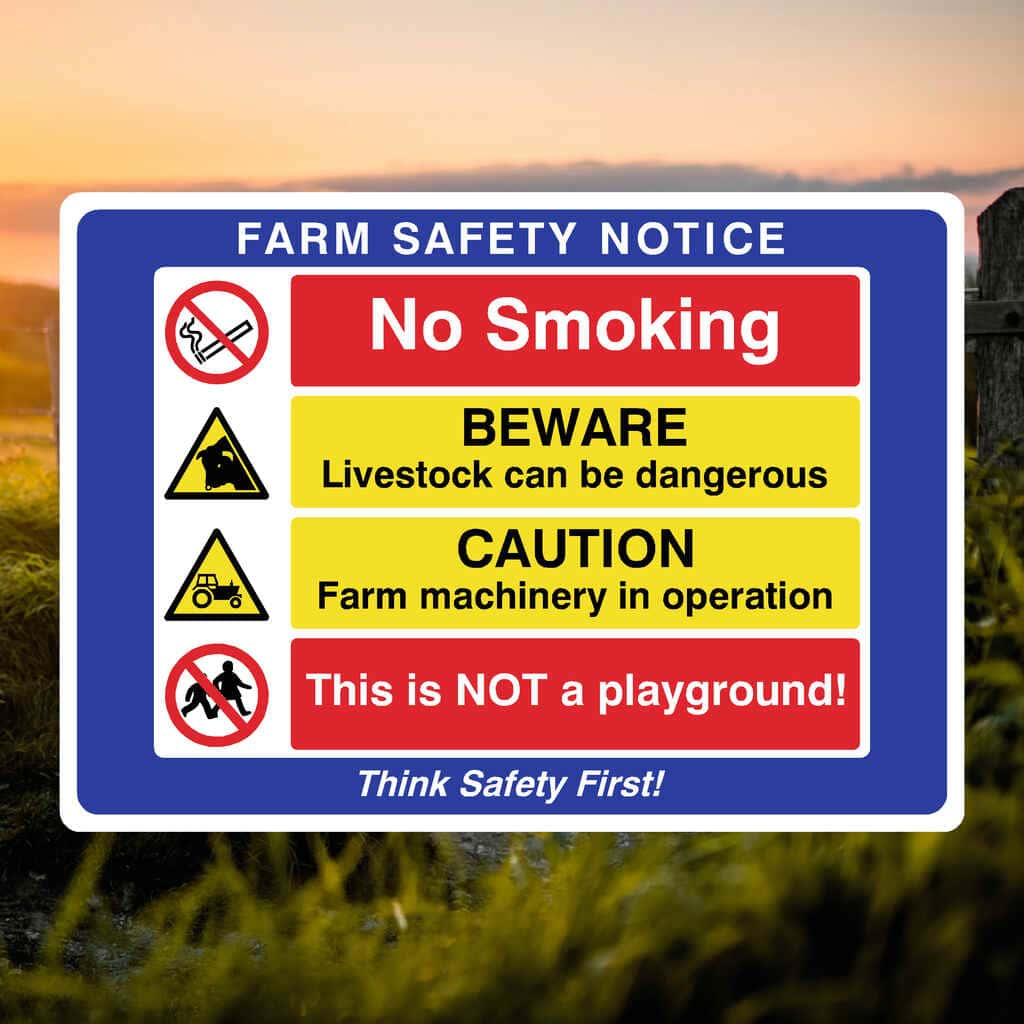
Livestock can present particular risks to workers, visitors and members of the public, especially around fields crossed by public routes or areas where people may come into close proximity to animals.
Our range includes signs for cattle, bulls, horses and other livestock, together with instructions relating to gates, dogs and access to animal areas.
Choose a message that accurately reflects the animals and conditions present rather than relying on a generic warning where a more specific instruction would be clearer.
Tractors, telehandlers, loaders, combines and other agricultural machinery can create significant risks around farmyards, tracks, buildings and field entrances.
Agricultural machinery signs can warn pedestrians and visitors about moving or operating vehicles and machinery before they enter the relevant area.
On busy farms, signage can also support clearly defined pedestrian routes, vehicle access arrangements and restricted working areas.
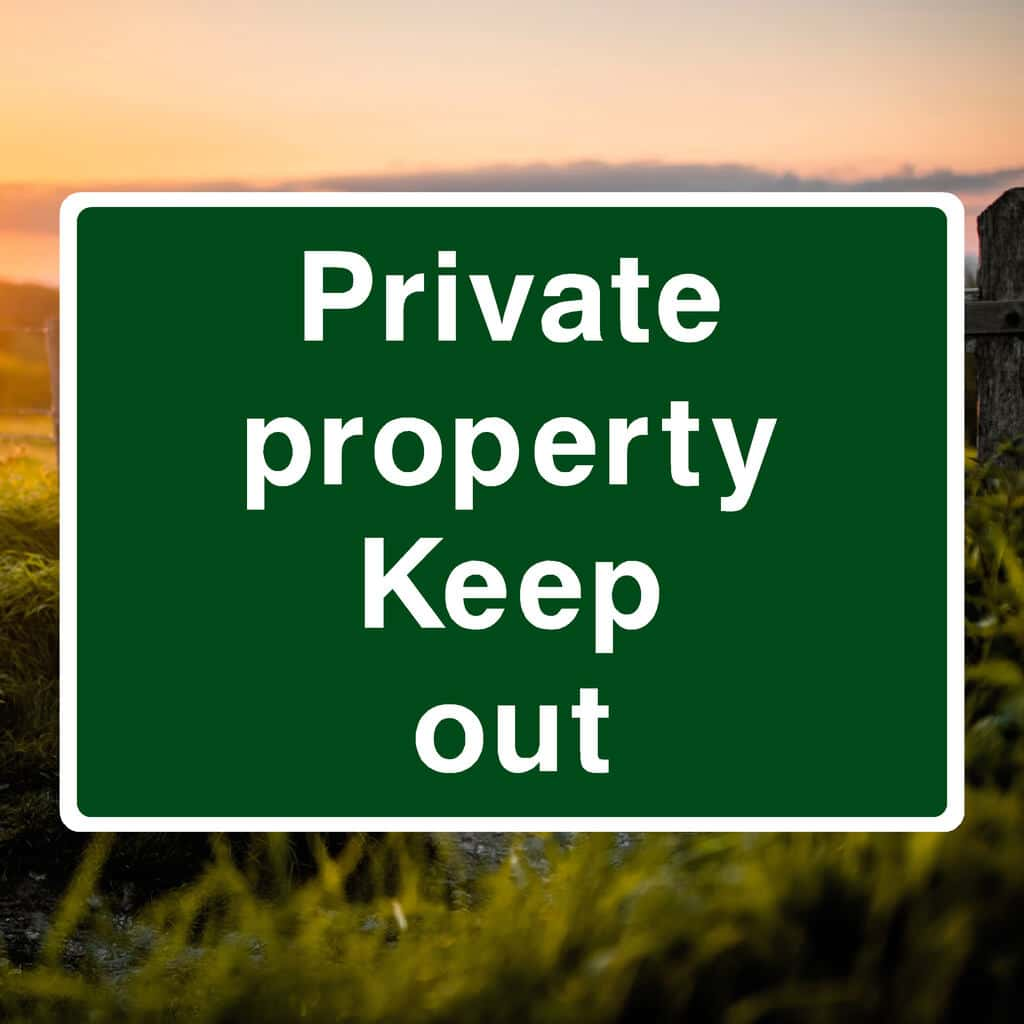
Farms and estates often contain a mixture of private working areas, permitted access routes and locations where visitors need to report before proceeding.
Private Land, No Public Access, Keep Out, Visitors Must Report and other access signs can help make these boundaries and instructions clear.
Where public rights of way cross farmland, signage should distinguish between legitimate public access and areas where access is restricted.
Electric fence warning signs alert people to the presence of electrified fencing around fields, livestock areas, boundaries and other rural locations.
Position signs so they are clearly visible to people approaching the fence. The appropriate number, position and specification of warning signs will depend on the fence installation and applicable requirements.
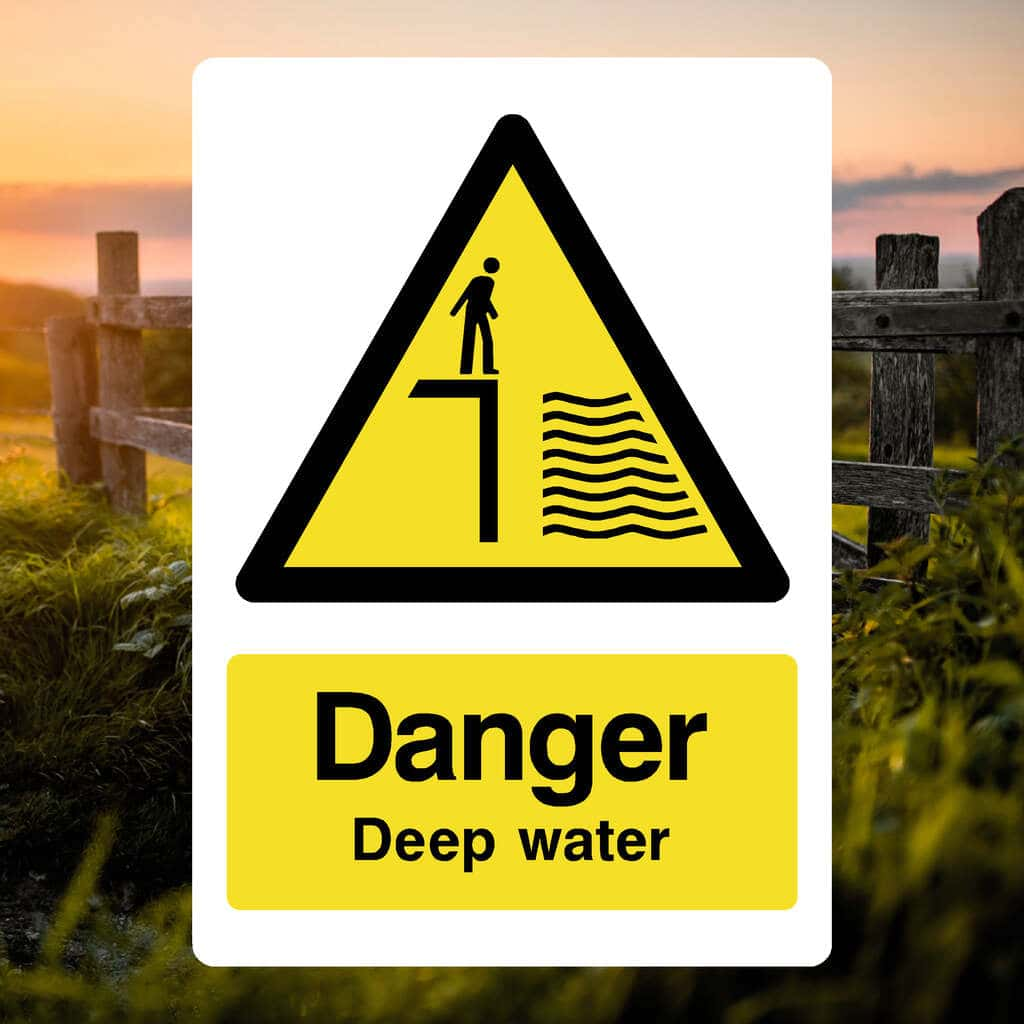
Ponds, reservoirs, slurry lagoons, drainage areas and other bodies of water can present serious hazards on farms and rural properties.
Water hazard signs can warn people about deep water, drowning risks, unstable banks and other dangers. Signs should form part of wider measures used to prevent people from unintentionally entering hazardous areas.
Countryside signs are useful beyond working farms.
Estates, woodland, private roads, equestrian centres, parks, fisheries, rural businesses and other properties may need signs to communicate access restrictions, directions, hazards and instructions to visitors.
Choosing clear wording and positioning signs at natural decision points such as gates, tracks and entrances can reduce confusion and help people understand where they may and may not go.
Forestry and woodland environments can contain hazards from tree-felling operations, machinery, uneven ground and temporary work areas.
Warning and access signs can help alert walkers, contractors and other visitors before they approach an active work area or restricted location.
Temporary hazards should be reviewed regularly so signs remain relevant to the work actually taking place.
Good positioning is just as important as choosing the correct sign.
Consider the farm from the perspective of someone unfamiliar with the site. Signs may be required at:
Place signs where people have enough time to see, understand and act on the message before encountering the relevant hazard or restriction.
Many farm and countryside signs spend their entire working life outside, so material choice is particularly important.
Consider weather exposure, mounting surface, viewing distance and how long the sign needs to remain in position. Gates, fences and exposed boundaries may require a more durable rigid material than signs used inside barns, workshops or stores.
Signs should also be checked periodically for fading, damage, dirt or obstruction by vegetation.
Safety Sheep farm and countryside signs are manufactured in Britain and available in a wide range of messages, sizes and materials for agricultural and rural environments.
Whether you need a single warning sign for a farm gate or signage across an entire holding or estate, choose signs that accurately reflect the hazards, access arrangements and activities at your property.
The signs required depend on the activities, hazards, layout and people who may be exposed to risks on the individual farm.
Common requirements can include warnings for agricultural machinery, livestock, slurry stores, chemicals, electric fencing and deep water, together with PPE, restricted-access, fire and first aid signs.
There is no single list of safety signs that every UK farm must display. Appropriate signage may be required where significant risks remain after other suitable control measures have been put in place and a sign is necessary to warn, instruct or inform people.
Your risk assessments and the particular conditions on the farm should guide the signage required.
Position farm warning signs where people can see them before encountering the relevant hazard. Common locations include gates, farm entrances, yards, tracks, livestock areas, machinery buildings, chemical stores and approaches to slurry or water hazards.
This depends on how the entrance is used. A working farm may need signs covering private access, visitor reporting, moving vehicles, livestock, speed limits, PPE or other site-specific hazards and instructions.
Avoid overcrowding an entrance with unnecessary signs. Prioritise the messages visitors and drivers need before entering the site.
Depending on the animals and location, signs may warn about cattle, bulls, horses or other livestock, instruct people to keep dogs under control or on leads, remind visitors to close gates or restrict access to animal areas.
The wording should accurately reflect the conditions present.
Electric fencing can require warning signs depending on the installation, location and applicable requirements. Signs should be clearly visible so people approaching the fence can recognise that it is electrified.
Check the requirements applicable to your particular fence system and installation.
For exposed outdoor locations, choose a durable material appropriate for the mounting surface, weather conditions and expected lifespan.
Farm gates, fences and boundaries often benefit from rigid weather-resistant signs, while self-adhesive materials may be suitable for appropriate smooth surfaces or more sheltered locations.
Yes, signs can be used to warn people about genuine hazards and provide appropriate information around farmland crossed by public routes.
However, signage should not incorrectly imply that people cannot use a public right of way where a lawful right of access exists. Keep safety warnings and access restrictions clear and accurate.
From the Safety Sheep blog
Not sure which farm signs you need or where they should be displayed? Our practical guides cover choosing farm safety signs, identifying common agricultural hazards and positioning warning and access signage around farms, estates and rural properties. Explore our guides for practical advice on livestock, machinery, farmland access, confined spaces and other countryside safety-sign requirements.
Which signs are best for farmland? Identify the safety, access, biosecurity and visitor signs needed to protect people, livestock and your land safely on site.
Read article

