
Made in Britain Members

Big Bulk Save Discounts
Fast UK Shipping
Refine your fire safety signs search


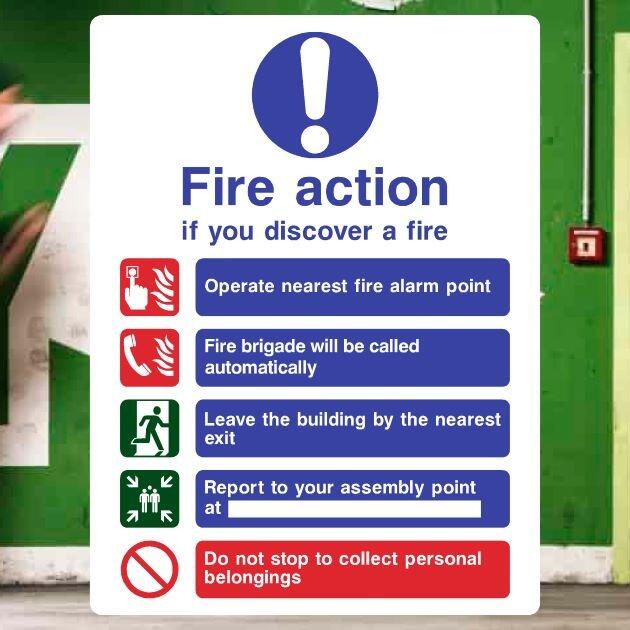
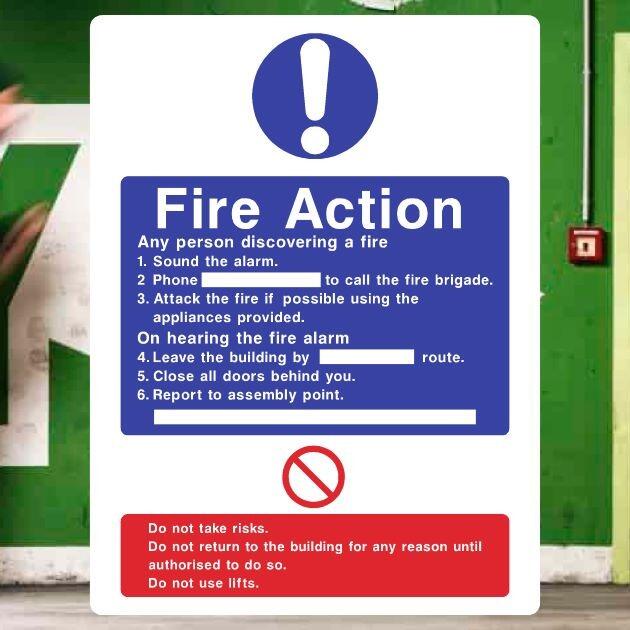
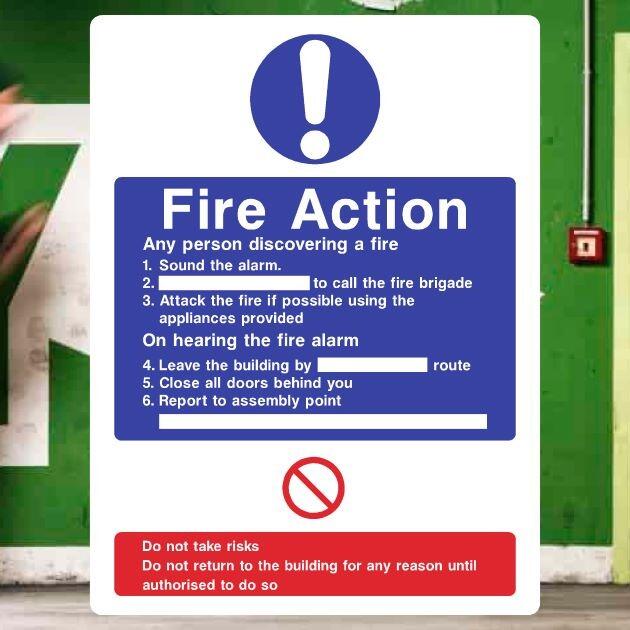
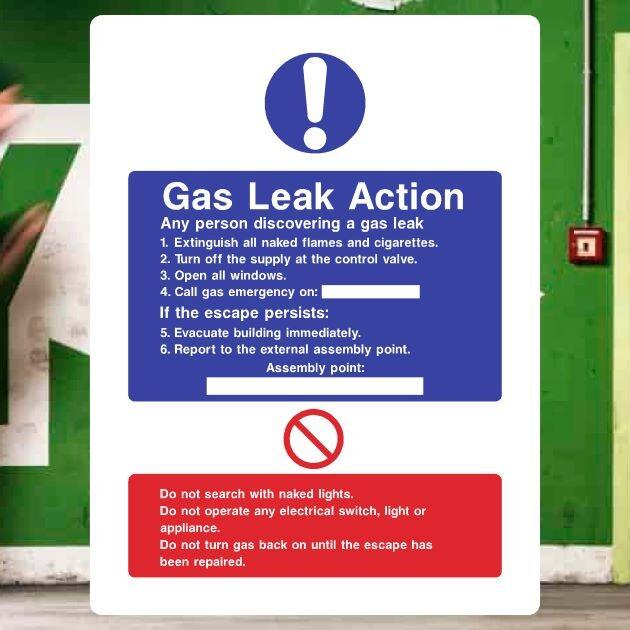
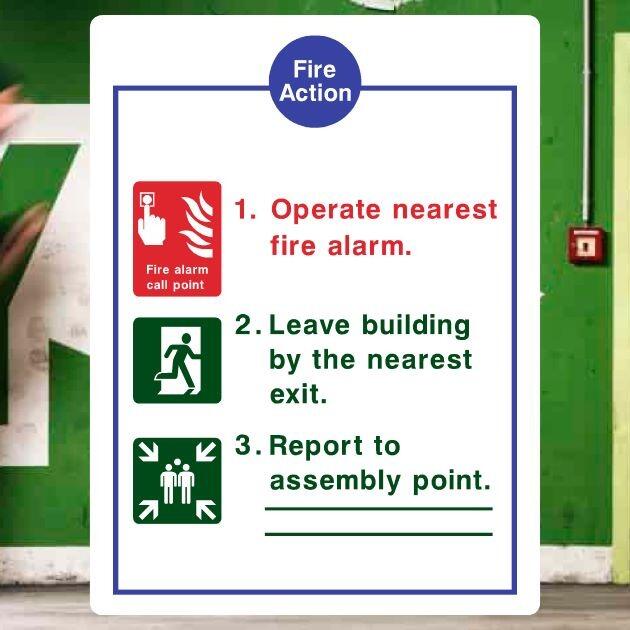

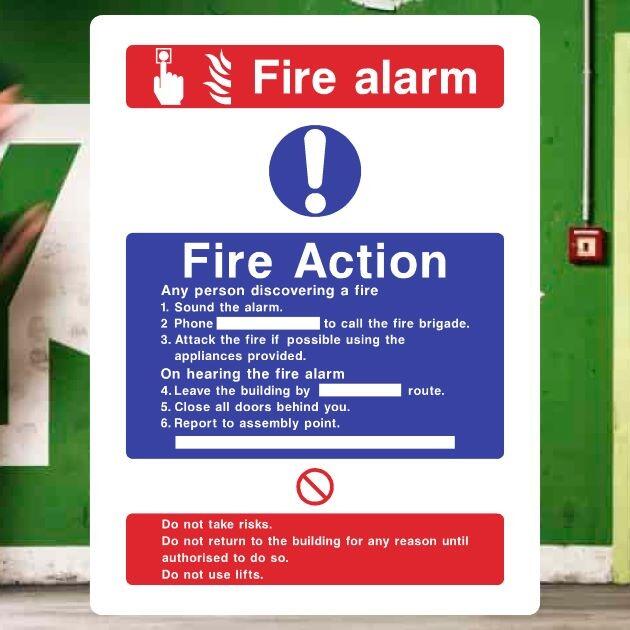
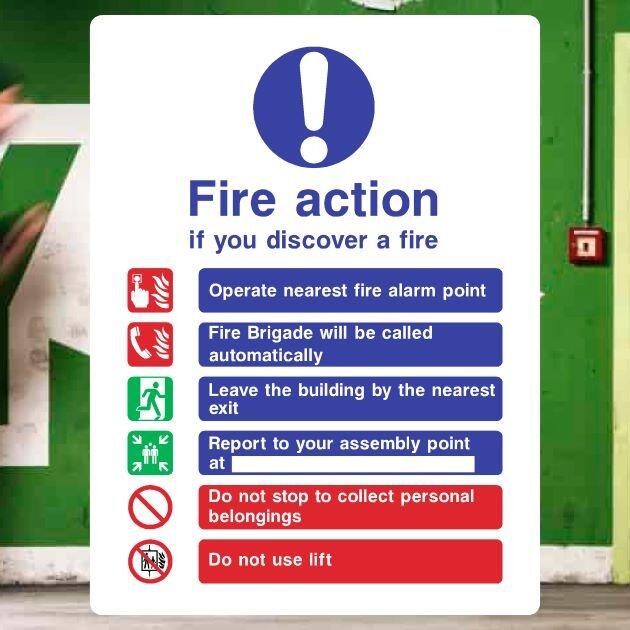
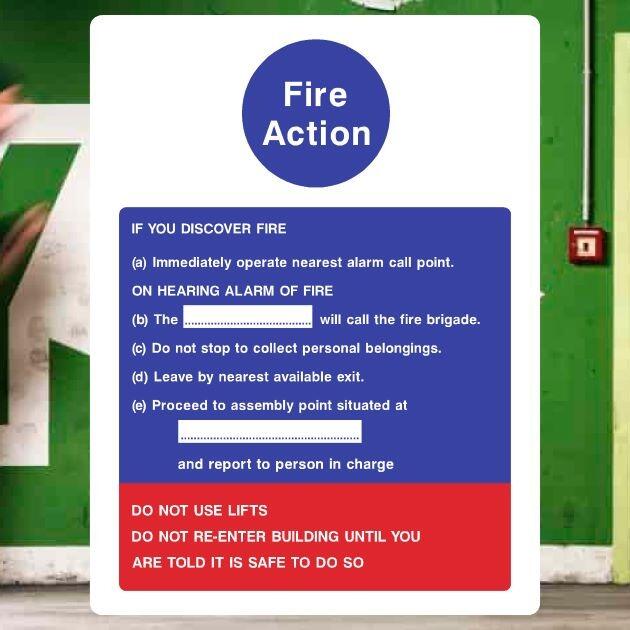
Fire Action 8‑Point Emergency Sign
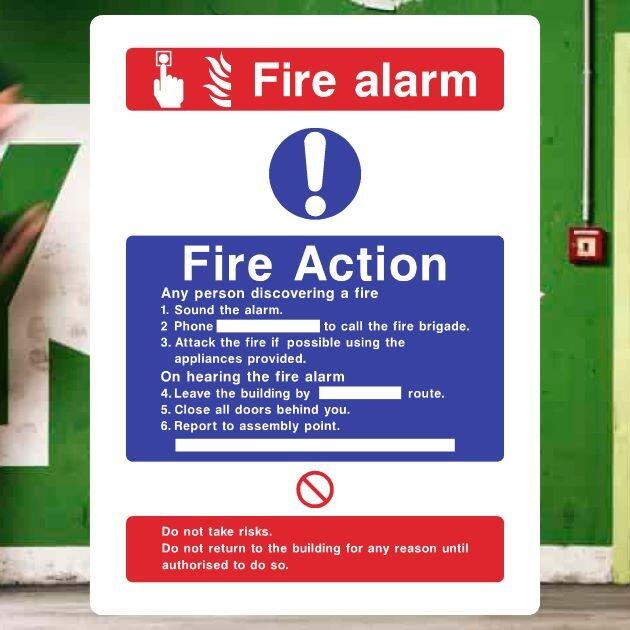
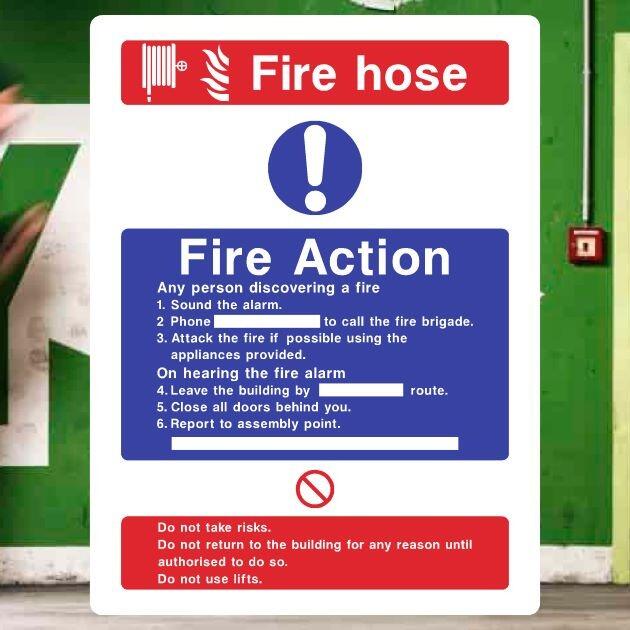
Fire Action Notices for UK Workplaces & Businesses
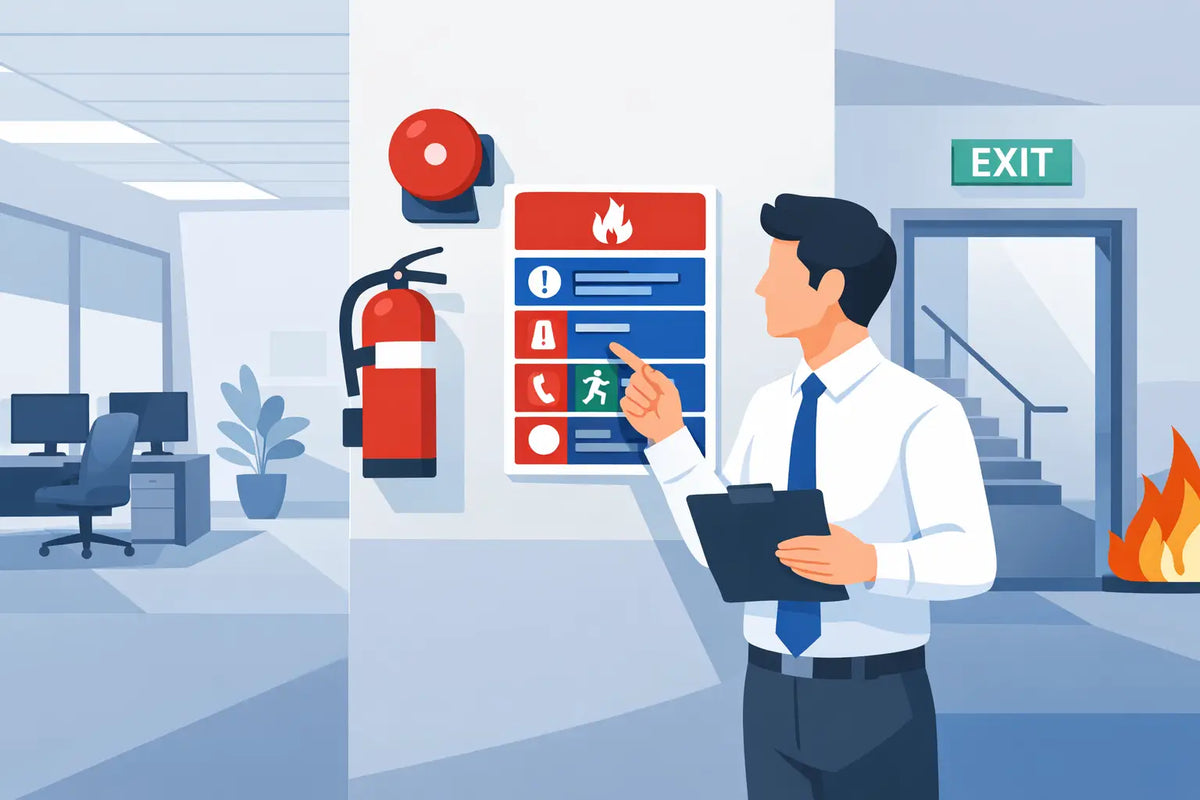
Clear Fire Action Notices help employees, visitors and other occupants understand what they should do if they discover a fire or hear the fire alarm.
Fire action signs can communicate essential emergency information such as raising the alarm, leaving by the appropriate escape route, reporting to an assembly point and following the fire procedure established for the premises.
Made in Britain, Safety Sheep fire action notices are available in a choice of sizes, materials and formats for workplaces and commercial premises.
What Is a Fire Action Notice?
A fire action notice is a sign or notice displaying instructions about what people should do in the event of a fire.
Depending on the premises and its emergency procedures, the notice may provide information about:
- Raising the fire alarm
- Leaving the building
- Using the appropriate escape route
- Going to an assembly point
- Contacting the fire and rescue service
- Not stopping to collect personal belongings
- Not using lifts where applicable
- Not re-entering the building until told it is safe
The information displayed should correspond with the actual fire emergency arrangements for the premises.
Why Are Fire Action Notices Important?
People need clear instructions before an emergency occurs.
During a fire, occupants should not have to work out:
How do I raise the alarm?
Where should I go?
What should I do once I'm outside?
Fire action notices provide a visible reminder of the established emergency procedure.
They are particularly useful for visitors, contractors, temporary workers and new employees who may be less familiar with the premises.
Are Fire Action Notices a Legal Requirement?
Fire-safety requirements depend on the premises and its fire risk assessment.
Government fire-safety guidance states that notices should be used where necessary to provide instructions about the actions to take in the event of fire, and that Fire Action notices may be necessary as part of the premises' fire-safety arrangements.
The exact number, wording and positioning of notices therefore depend on the building, its occupants and its emergency procedures.
A Fire Action Notice should support the emergency plan rather than being treated as a substitute for one.
Fire Action Notices & Your Fire Risk Assessment
The fire risk assessment should help establish the emergency procedures needed for the premises.
Once those procedures have been determined, the Fire Action Notice should accurately reflect them.
Consider:
- How is the alarm raised?
- What should somebody do after discovering a fire?
- Which escape routes should be used?
- Where is the assembly point?
- Who calls the fire and rescue service?
- Are there lifts that must not be used?
- Are there people who may need assistance?
- Are there site-specific emergency arrangements?
Avoid selecting a notice simply because it looks suitable.
Make sure its instructions correspond with your actual procedures.
What Should a Fire Action Notice Say?
The wording depends on the premises.
Typical instructions can include:
On discovering a fire:
- Raise the alarm
- Operate the nearest fire alarm call point
- Follow the established emergency procedure
On hearing the alarm:
- Leave by the appropriate escape route
- Go to the designated assembly point
- Do not stop to collect personal belongings
- Do not use lifts where the emergency procedure prohibits their use
- Do not re-enter until authorised to do so
Only display instructions that are correct for your premises.
Where Should Fire Action Notices Be Displayed?
Fire action notices should be positioned where people are likely to see and read them.
Depending on the premises, suitable locations can include:
- Near fire alarm call points
- Along escape routes
- Near entrances and exits
- Reception areas
- Staff rooms
- Canteens
- Locker rooms
- Noticeboards
- Communal areas
- Near lifts where relevant
- Hotel bedrooms and accommodation areas where appropriate
Government fire-safety guidance specifically identifies escape routes adjacent to fire alarm call points and areas where staff frequently assemble as useful locations in larger or more complex premises.
Fire Action Notices Near Fire Alarm Call Points
Positioning a Fire Action Notice near a manual fire alarm call point can make practical sense.
The call point shows somebody how to raise the alarm.
The notice tells them what actions to take.
The two therefore work together as part of the emergency procedure.
Make sure the notice does not obscure the call point or make the alarm harder to identify.
Fire Action Notices in Staff Areas
Staff rooms, canteens and locker rooms can be useful locations because employees regularly spend time there.
A clearly displayed notice provides a repeated visual reminder of the emergency procedure.
However, displaying a notice should complement rather than replace fire-safety training.
Employees still need to understand what they are expected to do.
Fire Action Notices in Offices
Office fire action notices can communicate the procedures for:
- Raising the alarm
- Evacuating the building
- Using the correct escape routes
- Reaching the assembly point
- Reporting relevant information
- Re-entering the premises
Consider both employees and visitors.
A contractor or client attending a meeting may have no previous knowledge of the building's emergency arrangements.
Fire Action Notices in Warehouses & Factories
Industrial workplaces can have more complex emergency arrangements because of:
- Large buildings
- Multiple exits
- Machinery
- Hazardous processes
- Different work areas
- Shift patterns
- Contractors
- Large numbers of employees
Fire action notices should reflect the procedures established for the site.
Position them where workers are likely to see them, including appropriate welfare and assembly areas and near relevant alarm points.
Fire Action Notices in Shops
Retail premises need to consider both employees and members of the public.
Staff need to understand their responsibilities during an emergency, including any arrangements for assisting customers to leave.
Fire action notices can provide a useful reminder of staff procedures, but they should form part of wider training and emergency planning.
Fire Action Notices in Hotels & Sleeping Accommodation
Sleeping accommodation can require more detailed fire instructions because guests may be unfamiliar with the building.
Government guidance recognises the use of notices providing information to guests and residents about what to do in the event of fire.
In larger or more complex premises, this can include a plan showing escape routes as well as written instructions.
The information provided should match the building's actual emergency arrangements.
Fire Action Notices in Schools
Schools, colleges and other educational premises can contain large numbers of people and may have specific evacuation procedures.
Fire action notices can reinforce instructions for staff and other building users.
The information should correspond with the school's emergency plan, including the alarm arrangements, evacuation procedure and assembly points.
Fire Action Notices for Multi-Occupied Buildings
Buildings occupied by several organisations require careful coordination.
Different businesses should not display conflicting emergency instructions within the same building.
Those responsible for fire safety should cooperate so that fire procedures, signs and notices are consistent with the building's overall emergency arrangements.
Fire Action Notices & Assembly Points
Many Fire Action Notices include an instruction to report to a designated fire assembly point after leaving the building.
If the notice names or identifies an assembly point, make sure that information is correct.
The assembly area itself should also be clearly identifiable where appropriate.
If an assembly point changes, update the Fire Action Notices.
An obsolete assembly-point instruction can create unnecessary confusion during an evacuation.
Fire Action Notices & Fire Exit Signs
These signs perform different functions.
Fire Action Notices explain what people should do during a fire.
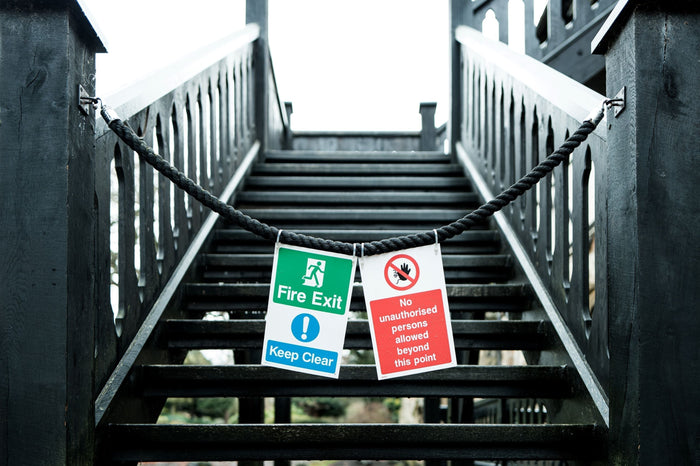
Fire Exit Signs help people identify and follow the physical escape route.
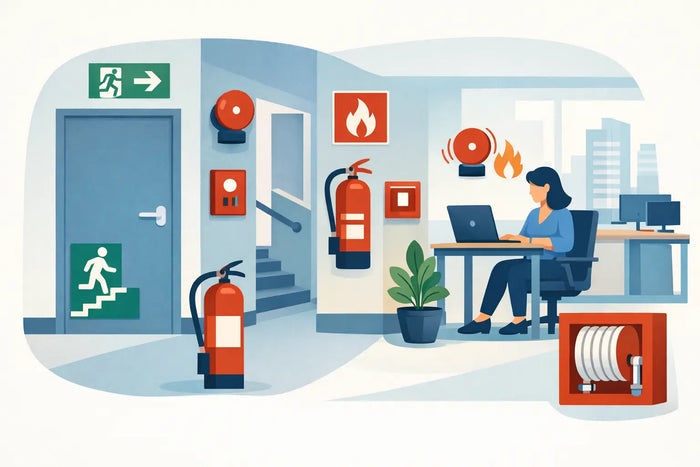
Both can form part of the same fire-safety system.
A Fire Action Notice does not replace directional Fire Exit Signs, and a Fire Exit Sign does not explain the complete emergency procedure.
Fire Action Notices & Fire Alarm Signs
Fire alarm signs identify alarm equipment such as manual call points.
Fire action notices provide broader instructions about what to do when a fire is discovered or an alarm sounds.
Where appropriate, placing the two types of information near each other can create a clear sequence:
Discover fire → raise alarm → evacuate → report to assembly point.
Fire Action Notices & Fire Door Signs
Fire Door Signs communicate instructions relating to individual fire doors, such as:
- Fire Door Keep Shut
- Fire Door Keep Locked
- Automatic Fire Door Keep Clear
Fire Action Notices communicate the emergency procedure.
They should not be confused or treated as substitutes for one another.
Fire Action Notices & Fire Extinguisher Signs
Fire extinguisher signs help identify firefighting equipment.
Fire action notices explain the actions people should take during a fire.
Your emergency procedures should determine whether particular employees are expected or trained to use firefighting equipment.
A generic Fire Action Notice should not encourage untrained occupants to take unnecessary risks fighting a fire.
Should a Fire Action Notice Tell People to Call 999?
That depends on the premises' emergency arrangements.
Some organisations have procedures under which a designated person contacts the fire and rescue service.
Others may have different arrangements.
The notice should accurately reflect the established procedure rather than automatically including instructions that could conflict with it.
Review this carefully when selecting or completing a Fire Action Notice.
Customisable Fire Action Notices
Some Fire Action Notices contain spaces for site-specific information.
This might include:
- Assembly point
- Building name
- Location
- Emergency telephone information
- Additional instructions
Complete these sections clearly before displaying the notice.
A blank box intended for important site-specific information should not simply be ignored.
Fire Action Notices & Multilingual Workplaces
If a workplace routinely accommodates people whose first language is not English, consider whether additional languages are appropriate.
Government guidance says that where instructions are provided in more than one language, the interpretation should convey the same message.
Recognised symbols and clear layouts can also help make emergency information easier to understand.
What Size Fire Action Notice Do I Need?
Choose a size that allows the instructions to be read easily from an appropriate distance.
Consider:
- Amount of information
- Viewing distance
- Mounting position
- Lighting
- Available wall space
- Other nearby notices
A detailed fire action notice generally needs enough space for the wording to remain legible.
Avoid shrinking important emergency information simply to fit a small available space.
Position Fire Action Notices Where They Can Be Read
A notice is only useful if people can actually see and understand it.
Avoid locations where it may be:
- Hidden behind an open door
- Covered by posters
- Obscured by furniture
- Positioned too high
- Lost among excessive notices
- Poorly illuminated
Important emergency information should stand out from general workplace communications.
Fire Action Notices & Lighting
Fire-safety notices need to remain conspicuous and legible.
Consider the lighting conditions in the area where the notice is displayed.
Government guidance also makes clear that photoluminescent signs and notices should not automatically be treated as substitutes for appropriate emergency lighting.
Photoluminescent Fire Action Notices
Photoluminescent Fire Action Notices absorb light and remain visible for a period when surrounding illumination reduces.
They can provide additional visual identification in low-light conditions.
Whether they are appropriate depends on the premises and wider fire-safety arrangements.
They should not automatically be treated as a replacement for emergency lighting where emergency lighting is required.
Fire Action Notices & BS EN ISO 7010
BS EN ISO 7010 provides standardised graphical safety symbols used across safety signage.
Fire Action Notices often combine text with recognised safety symbols to communicate emergency information clearly.
However, the suitability of a Fire Action Notice depends on more than its graphical design.
The instructions must also accurately reflect the emergency procedures for the premises.
A sign cannot make an incorrect fire procedure compliant simply because it uses recognised symbols.
Keep Fire Action Notices Up to Date
Emergency arrangements can change.
Review Fire Action Notices following changes to:
- Escape routes
- Assembly points
- Fire alarm arrangements
- Building layouts
- Occupancy
- Emergency procedures
- Responsible personnel
- Contact arrangements
Remove outdated notices promptly.
Two signs displaying different instructions can create confusion.
Check Fire Action Notices Regularly
Include notices within routine fire-safety inspections.
Check that each notice is:
- Present where required
- Correct
- Clearly visible
- Legible
- Undamaged
- Securely mounted
- Up to date
- Consistent with the emergency plan
Replace faded, damaged or obsolete notices.
Don't Rely on Fire Action Notices Alone
A sign is a communication tool.
It does not replace:
- A fire risk assessment
- Emergency planning
- Staff training
- Fire drills
- Fire detection and alarms
- Appropriate escape routes
- Emergency lighting where required
- Fire doors
- Firefighting equipment
- Inspection and maintenance
Employees need to understand the emergency procedure rather than simply knowing that a notice exists on the wall.
Fire Action Notice Checklist
When reviewing Fire Action Notices, ask:
- Does the notice match our current emergency procedure?
- Does it explain how the alarm should be raised?
- Does it give the correct evacuation instruction?
- Is the assembly point information correct?
- Does it accurately reflect arrangements for contacting the fire and rescue service?
- Is it positioned where people can see it?
- Are notices provided near appropriate fire alarm call points?
- Are relevant staff areas covered?
- Can visitors and contractors understand the instructions?
- Are additional languages needed?
- Is the wording clearly legible?
- Is the notice adequately illuminated?
- Have obsolete notices been removed?
- Are employees trained in the procedure?
- Is the information reviewed whenever the emergency plan changes?
If you're uncertain about the fire procedure for your premises, review your fire risk assessment and seek competent fire-safety advice where necessary.
Made in Britain Fire Action Notices
Safety Sheep offers a range of Fire Action Notices for UK workplaces, businesses and managed premises.
Choose from fire action signs and emergency instruction notices in a selection of sizes, materials and formats for displaying clear fire procedures throughout your premises.
The most important consideration is that the notice you choose accurately reflects your building's actual emergency arrangements.
Fire Action Notices FAQs
What is a Fire Action Notice?
A Fire Action Notice displays instructions explaining what people should do if they discover a fire or hear the fire alarm.
It can include information about raising the alarm, evacuating the building and reporting to an assembly point.
Are Fire Action Notices a legal requirement?
Fire Action Notices may be necessary depending on the premises, its fire risk assessment and emergency arrangements.
Government fire-safety guidance says notices should be used where necessary to provide information about the actions to take in the event of fire.
What should a Fire Action Notice say?
The information should reflect the actual emergency procedure for the premises.
This can include how to raise the alarm, how to evacuate, where to assemble and other relevant emergency instructions.
Where should Fire Action Notices be displayed?
Suitable locations can include escape routes near fire alarm call points, staff areas, canteens, locker rooms, reception areas and other prominent locations.
The appropriate positions depend on the premises and its emergency arrangements.
Should a Fire Action Notice be displayed next to every fire alarm call point?
Not necessarily in every building.
Government guidance identifies positions adjacent to fire alarm call points on escape routes as useful locations for fire instruction notices in larger or more complex premises. Your fire risk assessment should determine the appropriate arrangement.
Do Fire Action Notices need an assembly point?
If your emergency procedure requires occupants to report to a designated assembly point, the notice should provide the appropriate information.
Make sure it is updated if the assembly arrangements change.
Should Fire Action Notices tell people to call 999?
The notice should reflect the actual arrangements for contacting the fire and rescue service at your premises.
Avoid adding an instruction that conflicts with an established site procedure.
What is the difference between a Fire Action Notice and a Fire Exit Sign?
A Fire Action Notice explains what people should do during a fire.
A Fire Exit Sign identifies or provides directions along an emergency escape route.
Can Fire Action Notices replace staff fire training?
No.
Notices provide visible instructions and reminders, but staff still need appropriate information and fire-safety training.
Do Fire Action Notices need to be photoluminescent?
Not automatically.
Whether photoluminescent notices are appropriate depends on the premises and its wider fire-safety arrangements.
Do Fire Action Notices need to comply with ISO 7010?
Recognised graphical safety symbols may be used within fire-safety notices, but the suitability of a Fire Action Notice also depends on whether its instructions accurately reflect the premises' emergency arrangements.
ISO 7010 is a standard rather than UK legislation itself.
From The Safety Sheep Blog