



The Safety Sheep Blog


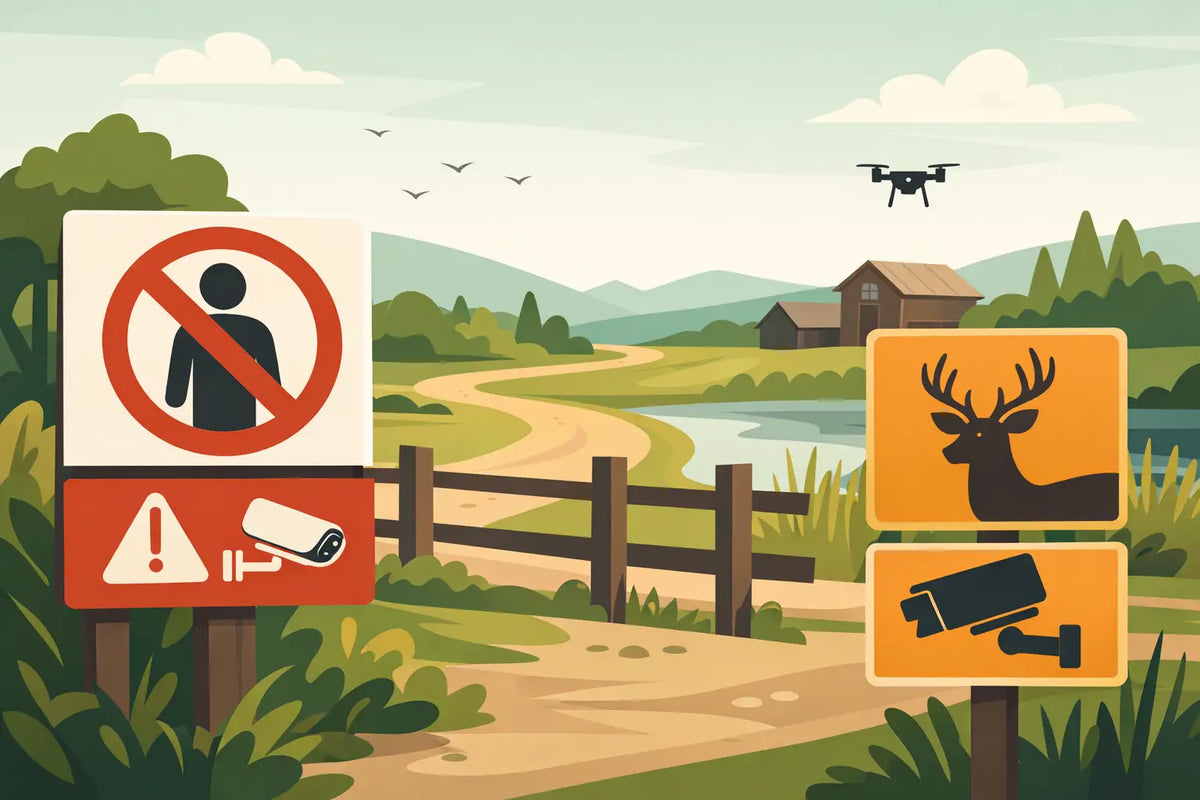
Private Farmland Wildlife Sign






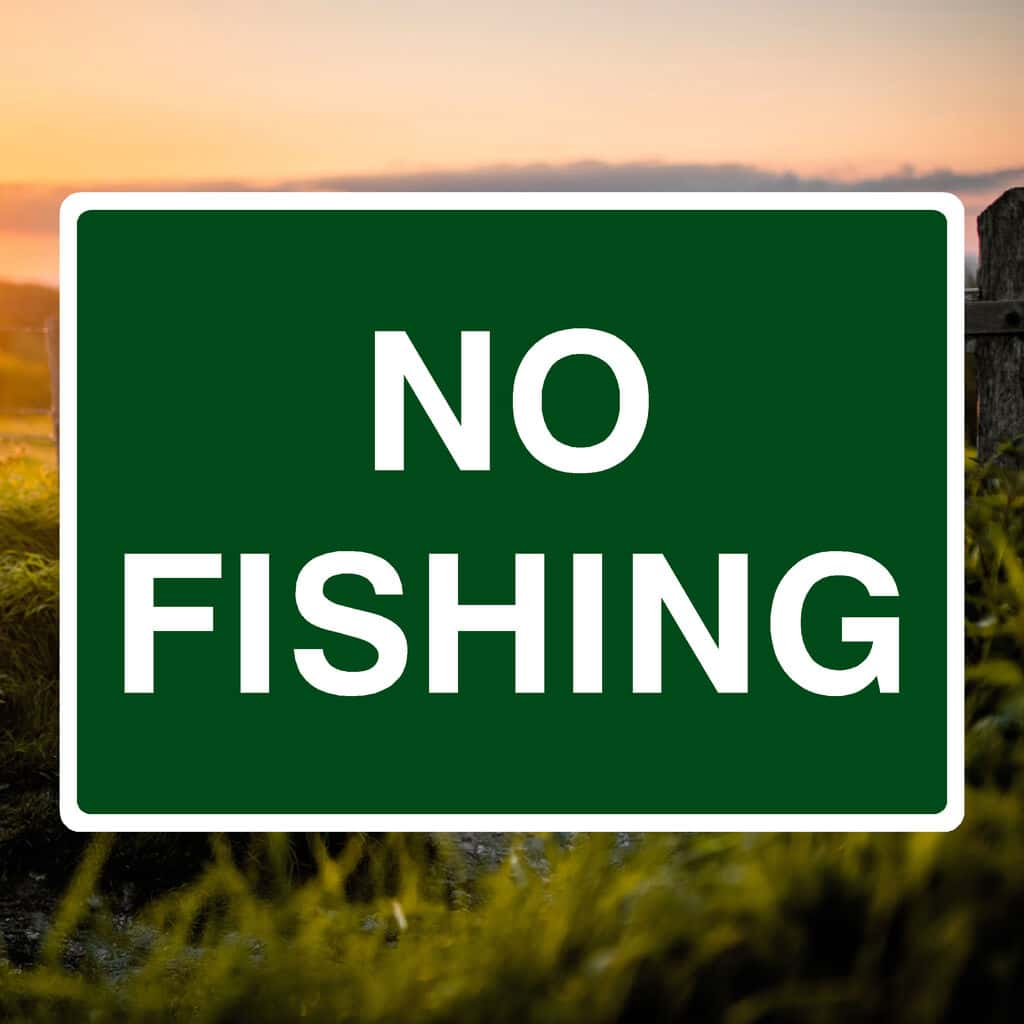


Private Land Signs help landowners, businesses and property managers clearly identify private property and communicate access restrictions.
Whether you're managing a farm, woodland, estate, private road, commercial yard or residential development, appropriate signage can help visitors understand where access is permitted and where restrictions apply.
Our range includes Private Property Signs, No Public Access Signs, No Trespassing Signs, Keep Out Signs, Private Road Signs and countryside access notices, available in a choice of sizes and materials for indoor and outdoor use.
Different locations need different messages. Choosing the right wording is important because a general Private Land notice doesn't necessarily communicate the same restriction as No Public Access or Authorised Access Only.
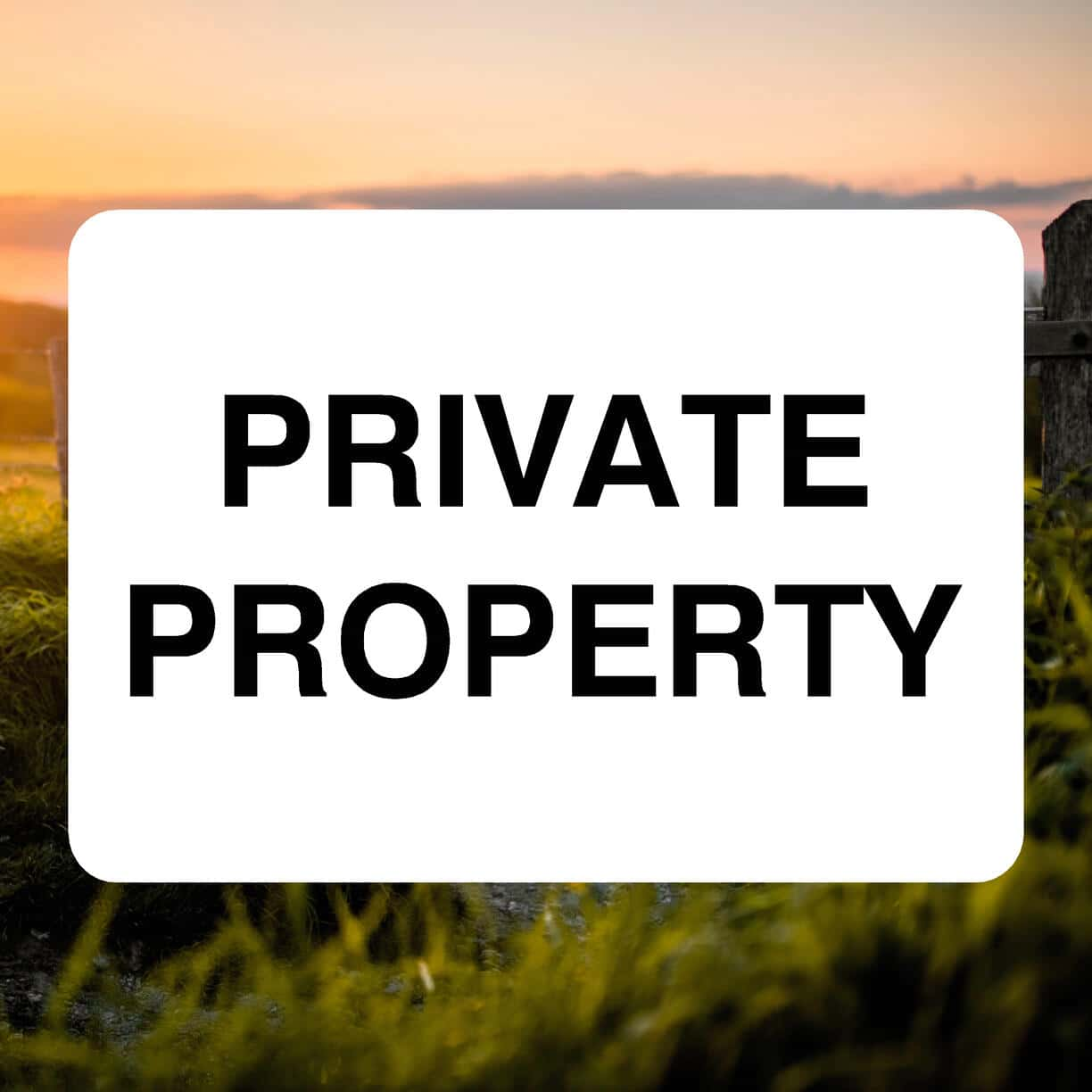
Private Property Signs identify land or premises as privately owned.
They're suitable for entrances, gates, fences, private driveways, business premises and residential developments.
Depending on the circumstances, a simple ownership notice may be sufficient, while other locations benefit from additional wording explaining who may enter.
No Public Access Signs communicate that an area isn't intended for general public entry.
They're useful for restricted commercial premises, private grounds, operational areas and other locations where public access is not permitted.
Before displaying these notices, establish whether any public access rights apply to the relevant route or land.
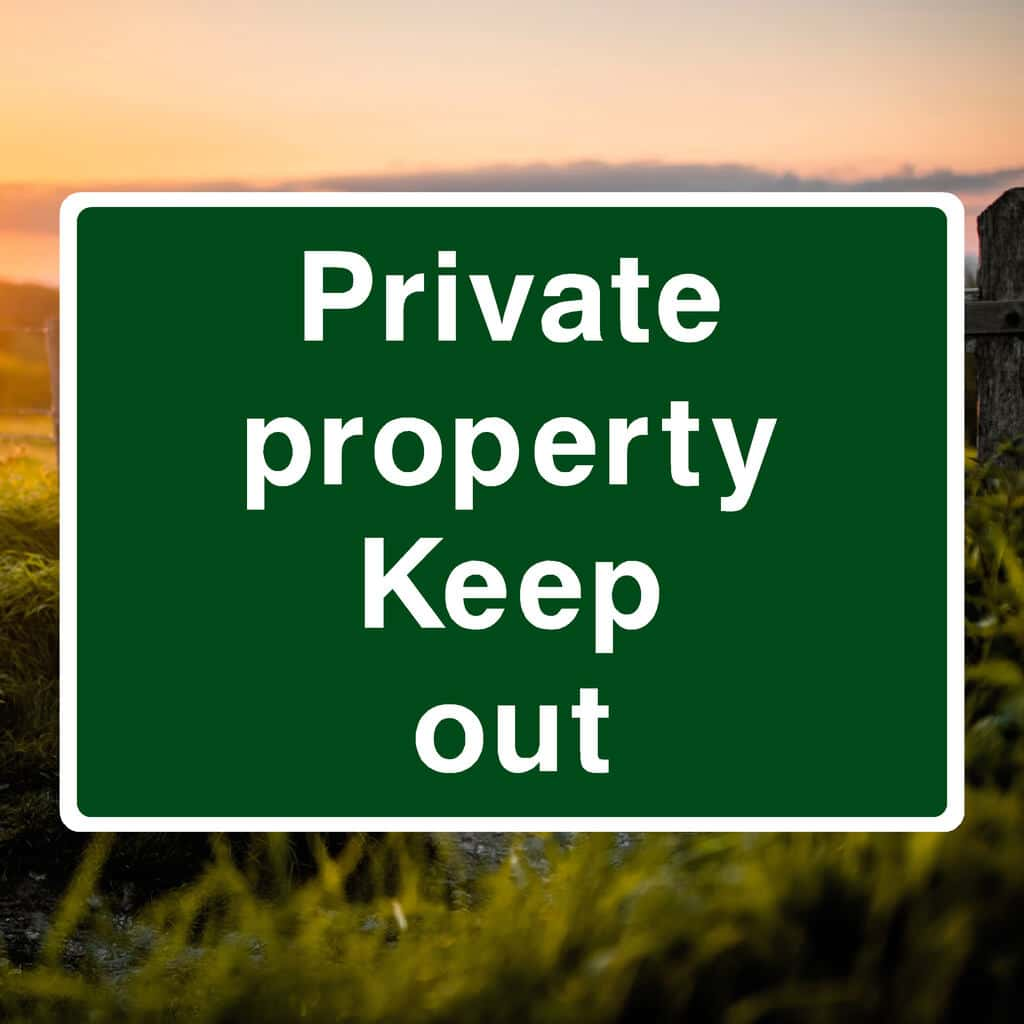
Private Property Keep Out Signs combine ownership information with a direct access restriction.
They can be useful at entrances to private yards, storage areas, enclosed grounds and other locations where unauthorised entry needs to be discouraged.
Position the notice where people can see it before entering the restricted area.
No Trespassing Signs communicate that entry without permission is not welcome.
They can help make a landowner's intentions clear, but displaying a sign doesn't automatically create additional legal rights or determine how a particular trespass dispute must be handled.
Choose wording that accurately reflects the property and its access arrangements.
Private roads can be used by residents, visitors, contractors, deliveries and authorised vehicles.
Appropriate signs can identify the road as private and explain any relevant access restrictions.
Examples include:
Where the issue is specifically parking rather than entry, use an appropriate parking sign instead.
Private woodland and countryside signs can help identify ownership, access arrangements and relevant restrictions.
They are particularly useful around entrances, gates, private tracks and boundaries where visitors may otherwise be unsure whether access is permitted.
Check the status of any public rights of way or other applicable access rights before displaying restrictive wording.
Working farms and rural estates can contain areas that aren't intended for general public access.
These may include:
Private Land Signs can communicate access restrictions, while additional hazard signs may be appropriate where specific risks exist.
For example, a farm entrance may benefit from a Private Property notice supported by a relevant warning about moving agricultural vehicles.
Signage should reflect the actual site arrangements and identified risks.
Businesses frequently need to distinguish public-facing areas from private operational space.
Suitable signage can help identify restricted areas around:
Where authorised contractors or delivery drivers are permitted, choose wording that makes the distinction clear.
A No Unauthorised Access sign may be more appropriate than a blanket No Entry notice.
Residential landowners and property managers can use signs to identify private grounds, access roads and shared spaces.
Examples include:
Choose a sign that communicates the intended restriction without unnecessarily complicating the message.
The most useful position is generally where somebody decides whether to enter the property.
Consider:
For larger properties, one sign at the main gate may not be sufficient to communicate restrictions at every access point.
Walk around the boundary and consider how somebody unfamiliar with the property might approach it.
The appropriate size depends on viewing distance and location.
A sign attached to a pedestrian gate may only need to be read from a relatively short distance.
A notice intended for approaching drivers may need larger lettering and a more prominent mounting position.
Consider:
Keep the message concise enough to be understood before somebody reaches the access point.
Outdoor signage may be exposed to rain, sunlight, wind, mud and changing temperatures.
Choose a material appropriate for the location and intended lifespan.
Depending on the product, options may include:
Rigid Plastic: A practical choice for many everyday signs mounted to gates, fences and walls.
Recycled Plastic: An alternative rigid material where available.
Aluminium Composite: A substantial option for longer-term outdoor installations.
Consider the fixing method as well as the sign itself, particularly in exposed rural locations.
One important consideration is whether public access rights exist across the land.
Private ownership doesn't automatically mean that nobody has a right to cross the property.
Depending on the location, relevant rights may include public footpaths, bridleways and other access arrangements.
In England, landowners must not obstruct public rights of way or use misleading notices to discourage lawful access.
Access law also differs across the UK's nations.
Before installing a No Public Access, No Right of Way or similar sign, check that the wording accurately reflects the legal status of the route.
Where a public route crosses private property, suitable signage can help distinguish the permitted route from surrounding private areas.
Private Land Signs can help communicate that land is privately owned and that particular access restrictions apply.
However, a sign alone doesn't guarantee that unwanted entry will stop.
It also doesn't automatically establish an entitlement to issue fines, prosecute visitors or take other enforcement action.
If unauthorised access is a persistent problem, signage may need to be supported by appropriate boundaries, gates, site management or specialist advice.
Although the terms overlap, they don't always communicate the same information.
A Private Land Sign primarily identifies ownership or private access arrangements.
A No Entry Sign communicates a direct instruction not to enter a particular area or route.
Some situations benefit from combining both messages, such as Private Property – No Unauthorised Access.
Choose the wording according to what visitors genuinely need to understand.
Private land ownership and parking restrictions are also separate issues.
A Private Property notice doesn't necessarily explain whether somebody may park on the land or what conditions apply.
If unwanted parking is the main problem, use appropriately worded parking signage.
Where formal private parking terms, charges or enforcement arrangements apply, these need to be considered separately from general property identification signs.
Before ordering, ask:
A clear, appropriately positioned sign is more useful than an unnecessarily aggressive or misleading notice.
Safety Sheep supplies Made in Britain Private Land Signs for businesses, landowners, farms, estates, private roads, residential developments and commercial premises.
Choose from Private Property, No Public Access, No Trespassing, Keep Out, Private Road and countryside access signs in a range of sizes and materials.
Whether you need one sign for a private gate or matching notices across a larger estate, our range offers practical options for communicating ownership and access restrictions.
Think Safety. Think Sheep.
Private Land Signs identify privately owned land or property and can communicate restrictions relating to entry, access or use. They are commonly displayed at gates, entrances, boundaries and private roads.
The terms are closely related. Private Land Signs are often used for outdoor areas such as farms, estates, woodland and private tracks, while Private Property Signs can also identify buildings and residential or commercial premises.
Generally, landowners can display appropriate notices on their own property, subject to relevant restrictions and the rights of other people. The wording should accurately reflect the access arrangements.
A sign can communicate that land is private and entry is restricted, but it doesn't physically prevent trespass or automatically establish additional enforcement rights.
You can use appropriate access restriction signs where public access is not permitted. However, first establish whether any public rights of way or other access rights apply to the area.
No. A private ownership notice doesn't remove an existing public right of way. Signs must not misleadingly discourage people from exercising lawful access rights.
Position signs at entrances, gates, fence lines, private tracks and other access points where people can see the restriction before entering.
Yes. Private Road, Residents Only and No Unauthorised Access notices can help communicate relevant access arrangements.
Ordinary property identification and access notices aren't automatically subject to a universal ISO 7010 design requirement. Where recognised safety symbols are appropriate, they should be used correctly.


