
Made in Britain Members

Big Bulk Save Discounts
Fast UK Shipping
Refine your fire safety signs search


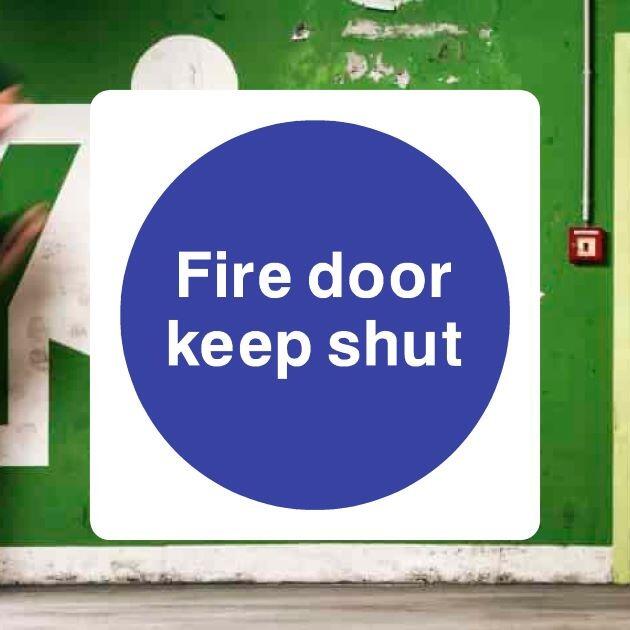
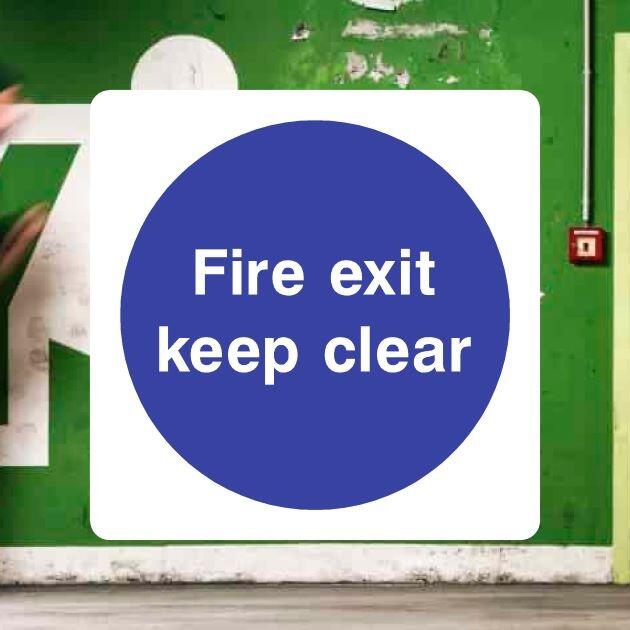
Fire Exit Keep Clear Door Sign
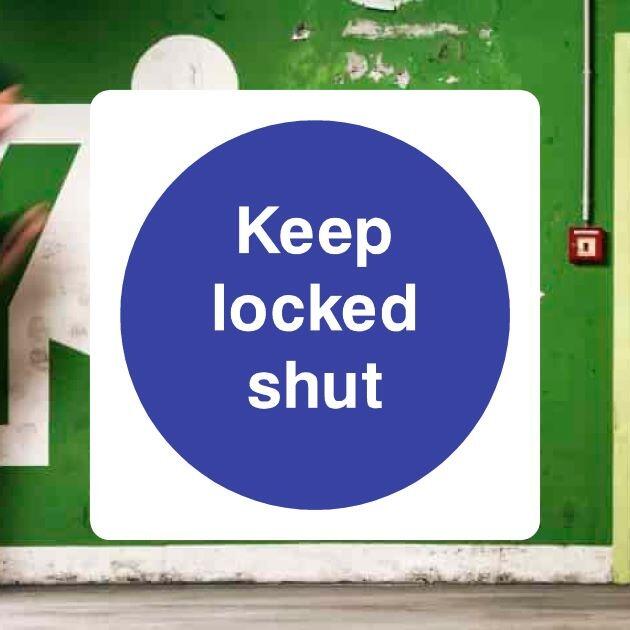
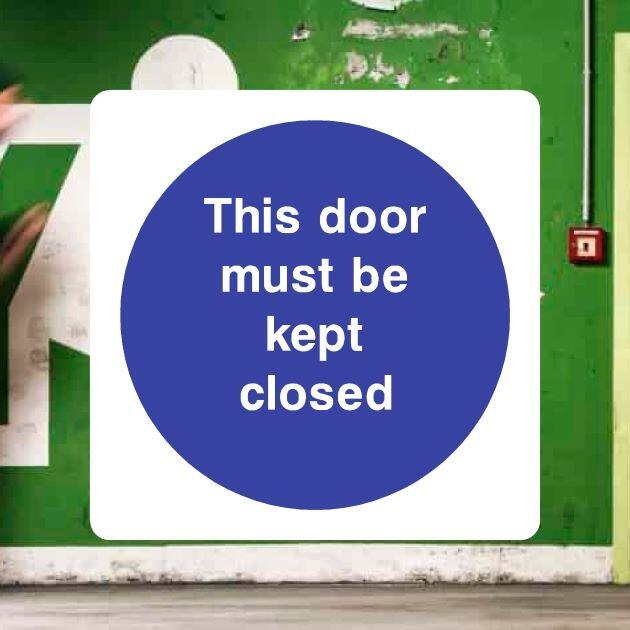


Remove Security Fastening Sign
Fire Door Signs for UK Workplaces & Premises
Clear Fire Door Signs provide important instructions about how fire doors should be used and help prevent actions that could reduce their effectiveness.
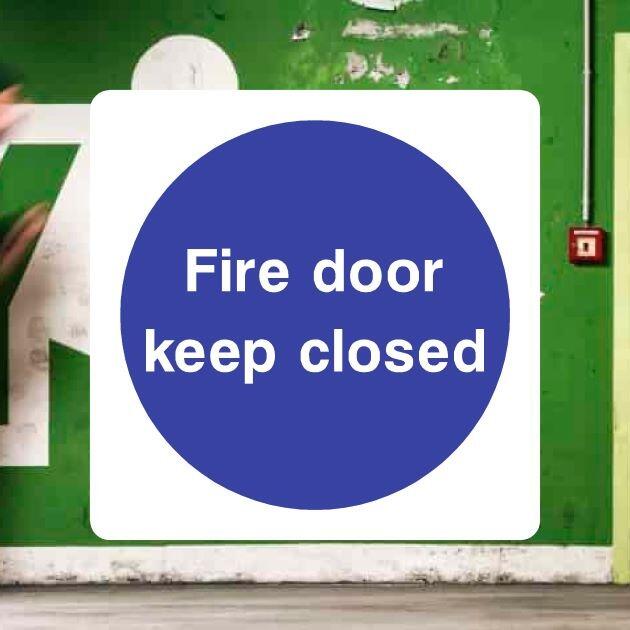
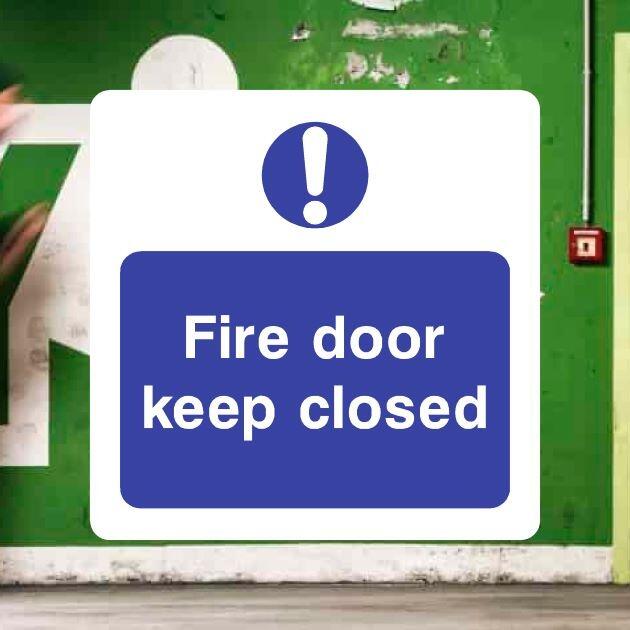
Our range includes Fire Door Keep Shut signs, Fire Door Keep Locked signs, Automatic Fire Door Keep Clear signs and other fire door safety notices for workplaces, commercial buildings, residential common areas and other managed premises.
Made in Britain, Safety Sheep fire door signs are available in a choice of sizes, materials and messages for different types of fire door.
Fire Door Keep Shut Signs
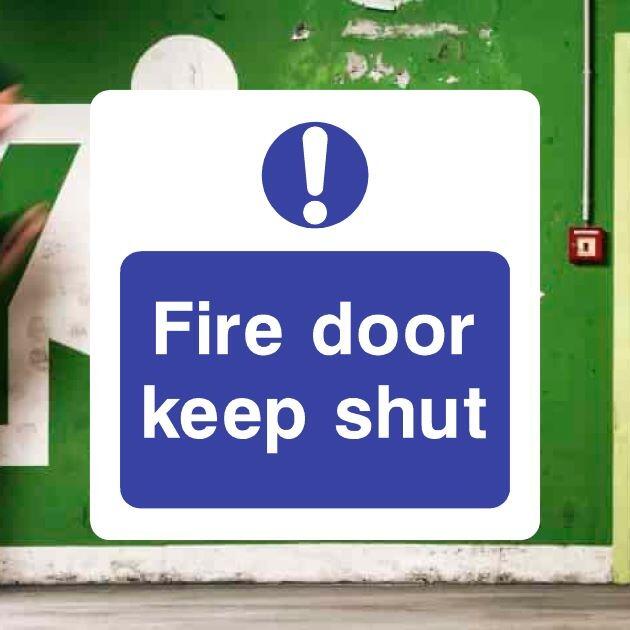
Fire Door Keep Shut signs identify fire doors that should remain closed when they are not being used.
Fire doors fitted with self-closing devices are intended to return to the closed position after somebody passes through them.
Keeping the door shut helps it perform its intended role within the building's fire precautions.
A Fire Door Keep Shut sign provides a clear reminder not to wedge or leave the door open.
Where Should Fire Door Keep Shut Signs Be Displayed?
Government fire-safety guidance states that fire doors fitted with self-closing devices should be labelled Fire Door – Keep Shut on both sides.
This ensures that the instruction can be seen regardless of which direction somebody approaches the door.
The sign should be clearly visible and should not be hidden by other notices, decorations or objects attached to the door.
Fire Door Keep Locked Signs
Some fire-resisting doors protect cupboards, stores, service ducts or other areas that are not intended for normal circulation.
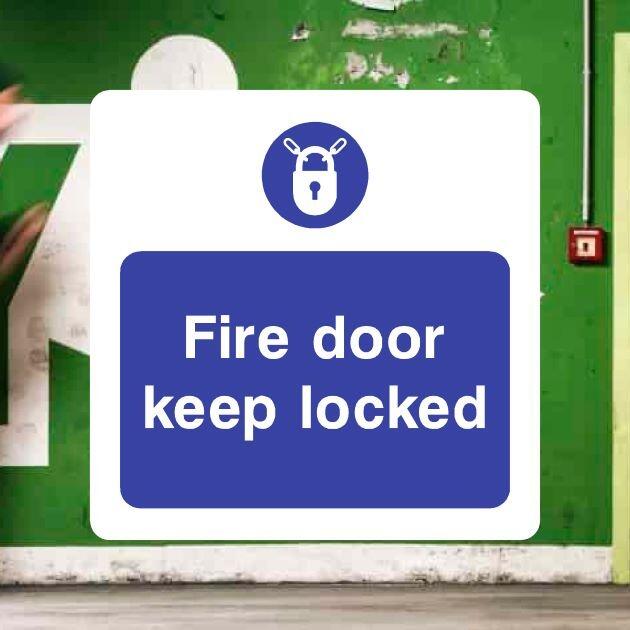
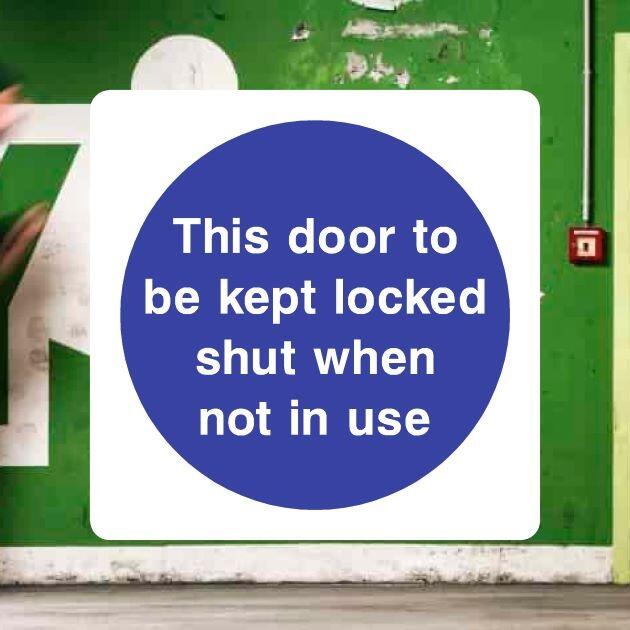
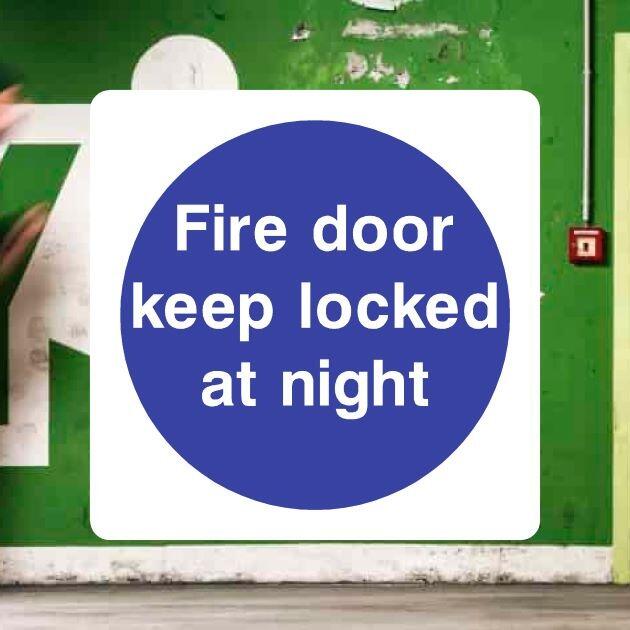
Where these doors are routinely kept locked rather than being self-closing, Fire Door Keep Locked or Fire Door Keep Locked Shut signage may be appropriate.
The sign communicates that the door needs to remain closed and secured when it is not being accessed by an authorised person.
Automatic Fire Door Keep Clear Signs
Some fire doors are held open during normal use by an appropriate automatic device and close when the fire alarm operates or another specified trigger occurs.
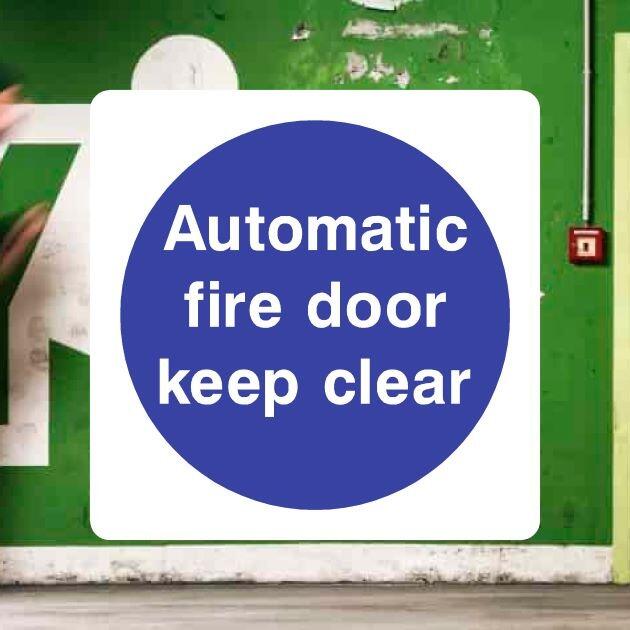
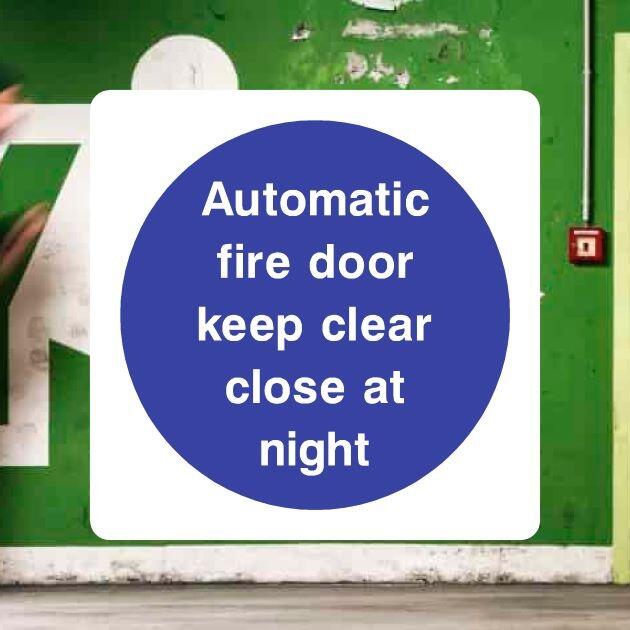
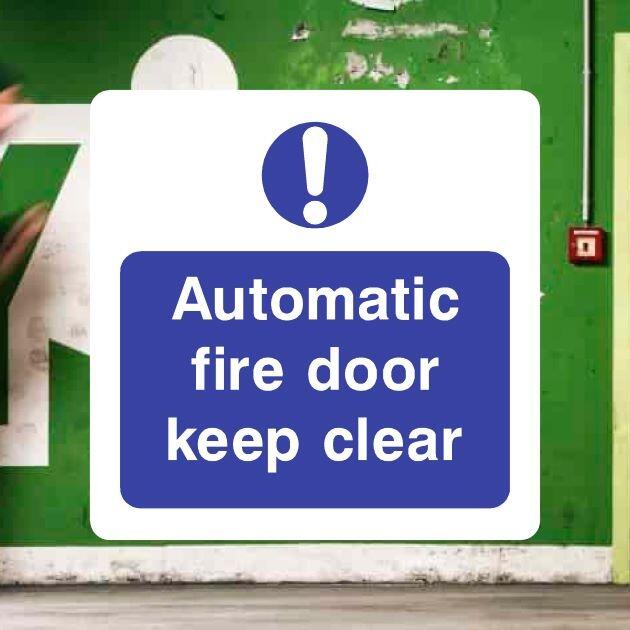
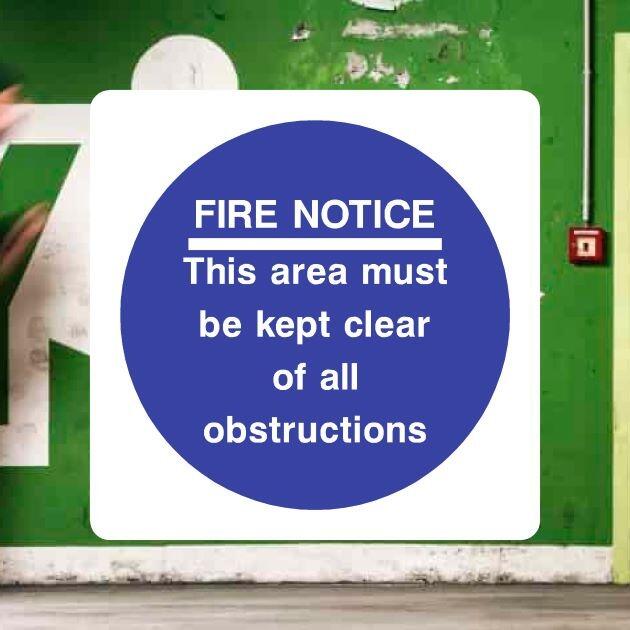
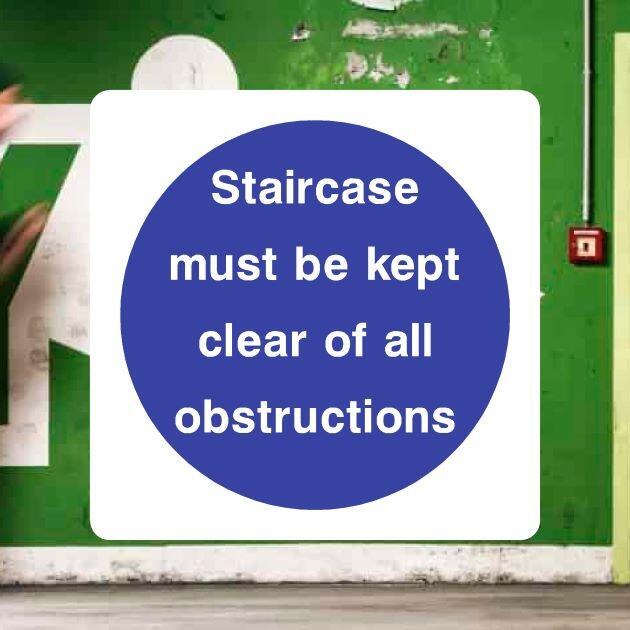
An Automatic Fire Door Keep Clear sign communicates that the area around the door must remain free from obstructions so the door can close properly when required.
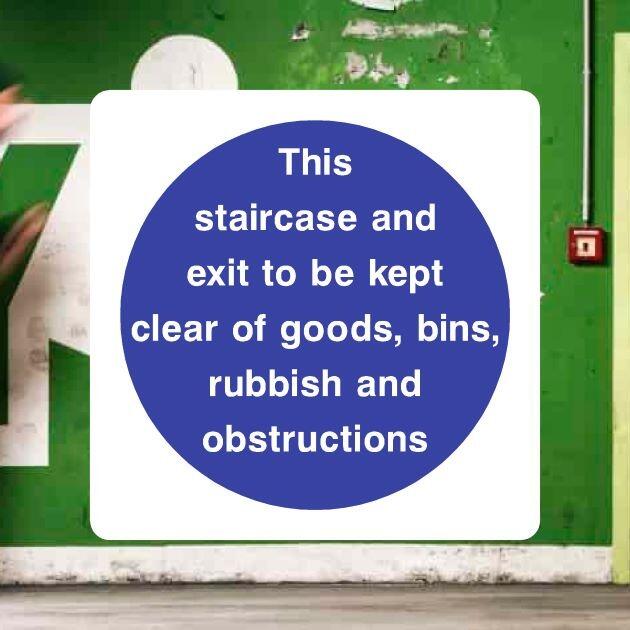
Furniture, boxes, equipment, bins and other objects should not prevent an automatic fire door from closing.
Why Do Fire Doors Need to Be Kept Shut?
Fire doors are designed as part of a building's fire-resisting construction.
When correctly specified, installed, maintained and closed, they can help restrict the spread of fire and smoke between different parts of a building.
A fire door that is wedged open cannot perform its intended function in the same way as a correctly closed door.
Fire Door Keep Shut signs therefore provide an important everyday reminder about how the door should be used.
Don't Wedge Fire Doors Open
A common problem in workplaces is a fire door being wedged open because people find it inconvenient during normal operations.
A Fire Door Keep Shut sign makes the required instruction clear, but the sign alone cannot prevent misuse.
If doors are routinely being wedged open, investigate why.
Where there is a legitimate operational need for a door to remain open, appropriate fire-safety solutions should be considered rather than simply allowing the door to be wedged.
Fire Door Signs & Self-Closing Doors
Self-closing devices are designed to return a fire door to its closed position after use.
The sign and the closer perform completely different functions.
The self-closer closes the door.
The sign tells people how the door should be used.
Installing a Fire Door Keep Shut sign does not compensate for a damaged, missing or ineffective self-closing device.
Fire Door Signs for Offices
Offices can contain fire doors between corridors, stairways, different fire compartments and other areas.
Employees may pass through these doors many times each day, so clear instructions can help reinforce correct use.
Check periodically that signs remain visible and that notices, posters or decorations have not obscured them.
Fire Door Signs for Warehouses & Factories
Industrial premises can contain fire doors separating production, storage, offices, corridors and escape routes.
These environments can also present a greater risk of doors being obstructed by:
- Stock
- Pallets
- Trolleys
- Machinery
- Waste containers
- Temporary storage
Where automatic fire doors need space to close, Keep Clear signage can help reinforce the requirement.
Regular housekeeping and inspection remain essential.
Fire Door Signs for Schools
Schools, colleges and other educational premises can contain numerous fire doors throughout corridors, staircases and communal areas.
Clear and consistent fire door signage helps staff, pupils, students, contractors and visitors understand how those doors should be treated.
The same wording and sign style should be used consistently where possible.
Fire Door Signs for Hotels & Hospitality
Hotels and other sleeping accommodation can contain fire doors protecting escape routes, stairways and other parts of the building.
Guests are unlikely to know the building as well as staff, making clear safety instructions particularly important.
Fire door signage should form part of the premises' wider fire-safety arrangements and reflect the actual function of each door.
Fire Door Signs for Flats & Residential Buildings
Fire doors can be particularly important in blocks of flats and other multi-occupied residential buildings.
Depending on the building and door concerned, signs may be used on fire doors within common areas to communicate instructions such as Fire Door Keep Shut or Fire Door Keep Locked Shut.
The requirements for flat entrance doors and other doors can differ, so signage should be selected according to the particular door and the fire-safety arrangements for the building.
Does Every Fire Door Need a Sign?
Not necessarily in exactly the same way.
The appropriate sign depends on the type, location and function of the fire door.
For example, a self-closing fire door within common parts may require a Fire Door Keep Shut instruction, while a fire-resisting cupboard door that is normally locked may need a Fire Door Keep Locked Shut sign.
Flat entrance doors and other specialist situations can have different considerations.
Use the building's fire risk assessment and relevant fire-safety guidance to determine the appropriate arrangement.
Fire Door Signs in Blocks of Flats
Residential buildings require particular care because different types of fire door can be present within the same building.
These can include:
- Flat entrance doors
- Stairway doors
- Corridor doors
- Cupboard doors
- Service-riser doors
- Plant-room doors
- Bin-store doors
Do not assume that the same sign should automatically be fitted to every door.
The signage should correspond with the door's actual purpose and the building's fire-safety strategy.
Fire Door Signs & the Fire Safety (England) Regulations 2022
The Fire Safety (England) Regulations 2022 introduced specific requirements relating to fire doors in certain residential buildings in England.
Among other requirements, responsible persons must provide residents with information about the importance of keeping fire doors closed, not tampering with self-closing devices and reporting faults or damage.
These requirements should not be confused with simply installing a Fire Door Keep Shut sign.
Fire door management involves the condition, operation, inspection and maintenance of the door as well as appropriate information and signage.
Where Should Fire Door Signs Be Positioned?
Fire door instruction signs are normally positioned directly on the relevant door where they can be readily seen.
The appropriate position will depend on:
- The sign message
- Door type
- Direction of approach
- Building layout
- Other notices
- Visibility
Avoid positioning the sign where handles, glazing, other notices or decorative features make it difficult to see.
What Colour Are Fire Door Signs?
Many mandatory fire door instruction signs use a blue and white design.
Blue safety signs communicate mandatory actions or instructions.
For example, a Fire Door Keep Shut sign provides an instruction about how the door should be used rather than identifying the direction of an emergency escape route.
This is different from the green and white format normally associated with Fire Exit Signs.
Fire Door Signs vs Fire Exit Signs
These two sign types are sometimes confused.
A Fire Door Sign provides an instruction relating to a fire-resisting door.
For example:
Fire Door Keep Shut
A Fire Exit Sign identifies or directs people along an emergency escape route.
A door can potentially be both part of an escape route and a fire door, meaning different signage may be required for different purposes.
Do not assume a Fire Exit sign replaces a required Fire Door Keep Shut instruction, or vice versa.
Fire Door Signs & BS EN ISO 7010
Recognised safety-sign standards provide consistent colours and graphical formats for workplace safety communication.
Where applicable, mandatory fire door signs use recognised mandatory-sign conventions.
However, buying a sign described as conforming to a particular safety-sign standard does not by itself make a fire door or premises compliant.
The door must still be suitable for its intended purpose and correctly installed, maintained and managed.
Photoluminescent Fire Door Signs
Photoluminescent, or glow-in-the-dark, Fire Door Signs absorb light and remain visible for a period when surrounding illumination is reduced.
They are available for messages including Fire Door Keep Shut, Keep Locked and other fire-door instructions.
Whether photoluminescent signage is appropriate depends on the premises and its wider fire-safety arrangements.
A photoluminescent sign does not improve the fire resistance of the door itself and should not be treated as a replacement for emergency lighting where emergency lighting is required.
Fire Door Signs Don't Make a Fire Door Safe
This is an important distinction.
A new Fire Door Keep Shut sign cannot correct:
- A damaged door
- Broken hinges
- Excessive gaps
- Damaged seals
- A faulty closer
- Incorrect glazing
- Inappropriate alterations
- A door that does not close properly
Signs communicate instructions.
They do not replace correct specification, installation, inspection, maintenance or repair.
Check Fire Doors Regularly
Fire doors should be inspected as part of the building's fire-safety arrangements.
Depending on the premises and applicable requirements, checks may consider:
- Door condition
- Frame condition
- Hinges
- Seals
- Glazing
- Self-closing device
- Latches
- Gaps around the door
- Damage or alterations
- Obstructions
- Signage
If a fire door is damaged or does not close properly, the issue should be addressed rather than relying on signage.
Check Your Fire Door Signs Too
Include signs when inspecting fire doors.
Check that each sign is:
- Present where required
- Correct for the door
- Clearly visible
- Legible
- Securely attached
- Undamaged
- Not obscured
Also make sure the instruction still matches how the door is intended to operate.
What Size Fire Door Sign Do I Need?
Fire door signs are generally viewed from relatively close range, so they do not usually need to be as large as signs intended to be seen across a warehouse or long corridor.
However, the sign still needs to be readily visible.
Consider:
- Door size
- Viewing distance
- Mounting position
- Lighting
- Other notices on the door
- The people using the building
Avoid choosing such a small sign that the instruction is easily overlooked.
Choosing the Correct Fire Door Sign
Before ordering a sign, identify how the door is intended to operate.
Ask:
Should it normally remain shut?
Choose an appropriate Fire Door Keep Shut sign.
Should it normally remain locked?
Consider an appropriate Fire Door Keep Locked Shut sign.
Is it an automatic fire door that needs an unobstructed closing area?
Consider Automatic Fire Door Keep Clear.
The wording should reflect the actual function of the door.
Common Fire Door Sign Mistakes
Using the Wrong Instruction
Don't put Fire Door Keep Shut on a door whose correct instruction is Keep Locked Shut.
Assuming Every Fire Door Is the Same
Different fire doors perform different functions.
Wedge Open Despite the Sign
A sign cannot compensate for a door being deliberately wedged open.
Obstructing Automatic Fire Doors
Keep the closing area clear.
Covering the Sign
Posters and notices can gradually hide mandatory instructions.
Ignoring a Faulty Door
A sign is not a repair.
Using Fire Exit and Fire Door Interchangeably
They communicate different information.
Forgetting to Update Signs
If the function or arrangement of a door changes, review its signage.
Fire Door Sign Checklist
When reviewing fire door signage, ask:
- Is this actually a fire door?
- What is the function of the door?
- Should it remain shut when not in use?
- Should it remain locked?
- Is it automatically held open?
- Does its closing area need to remain clear?
- Is the correct instruction displayed?
- Is signage required on one or both sides?
- Is the sign clearly visible?
- Is the door itself in good condition?
- Does the self-closing device work correctly?
- Can the door close without obstruction?
- Is the sign still relevant to the current arrangement?
- Has the door been inspected as required by the building's fire-safety arrangements?
If you're unsure about the door or the appropriate instruction, seek competent fire-safety advice rather than relying on the sign alone.
Made in Britain Fire Door Signs
Safety Sheep offers a range of Fire Door Signs for workplaces, commercial premises and managed buildings.
Choose from Fire Door Keep Shut, Fire Door Keep Locked, Automatic Fire Door Keep Clear and other fire door safety notices in a selection of sizes and materials, including selected photoluminescent options.
Clear fire door signage helps communicate how doors should be used as part of the wider fire-safety arrangements for your premises.
Fire Door Signs FAQs
What is a Fire Door Sign?
A Fire Door Sign communicates an instruction about how a fire door should be used, such as keeping it shut, locked or clear.
Do Fire Doors need signs?
Many fire doors require appropriate signs according to their function. For example, government fire-safety guidance states that self-closing fire doors should be labelled Fire Door Keep Shut on both sides.
The correct signage depends on the type and location of the door.
What does Fire Door Keep Shut mean?
It means the fire door should normally remain closed when it is not being used.
Where fitted with a self-closing device, the door should return to its closed position after somebody passes through it.
Do Fire Door Keep Shut signs go on both sides?
Government fire-safety guidance states that fire doors fitted with self-closing devices should be labelled Fire Door Keep Shut on both sides.
Different arrangements can apply to other types of fire door.
What does Fire Door Keep Locked Shut mean?
It identifies a fire-resisting door that is intended to remain closed and locked when not being accessed.
This can apply to certain cupboards, stores and service areas.
What does Automatic Fire Door Keep Clear mean?
It communicates that the area around an automatic fire door must remain unobstructed so that the door can close when required.
Can a Fire Door be wedged open?
A fire door intended to remain closed should not simply be wedged open.
If there is an operational need to hold a fire door open, an appropriate fire-safety solution should be considered.
What colour are Fire Door Keep Shut signs?
Fire Door Keep Shut signs commonly use the blue and white mandatory safety-sign format.
What is the difference between a Fire Door Sign and a Fire Exit Sign?
A Fire Door Sign tells people how a fire door should be used.
A Fire Exit Sign identifies or provides directions along an emergency escape route.
They perform different functions.
Does a Fire Door Sign make a door compliant?
No. A sign communicates an instruction but does not make a fire door suitable or compliant.
The door itself must be appropriately specified, installed, maintained and managed.
Do flat entrance fire doors need Fire Door Keep Shut signs?
The arrangements for flat entrance doors can differ from fire doors within communal areas.
Do not assume every flat entrance door requires the same signage as a communal self-closing fire door. Follow the applicable fire-safety guidance and building-specific fire risk assessment.
Are photoluminescent Fire Door Signs required?
Not automatically in every premises.
Their suitability depends on the building and its wider fire-safety arrangements.
From The Safety Sheep Blog