
Made in Britain Members

Big Bulk Save Discounts
Fast UK Shipping
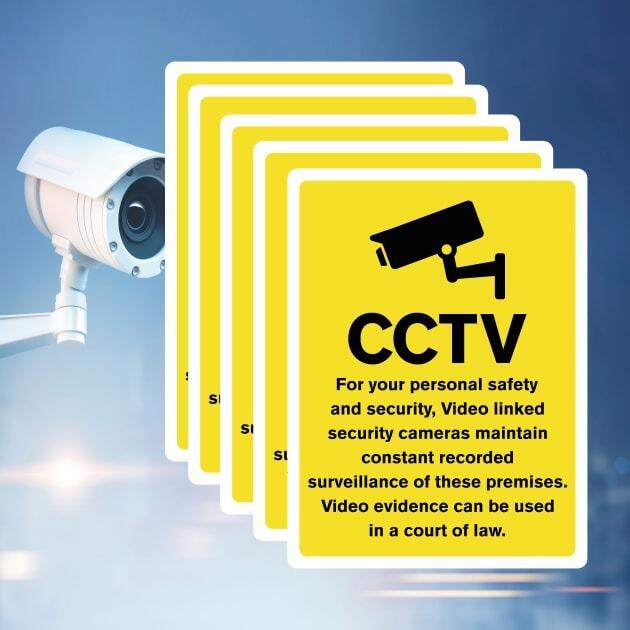
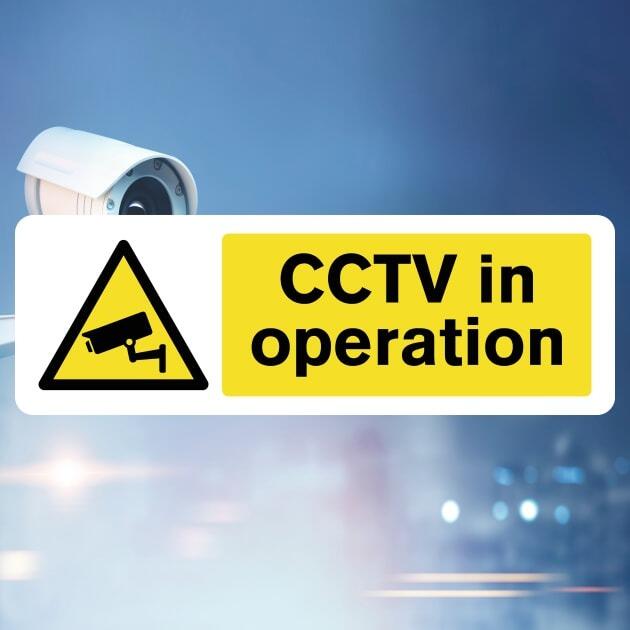
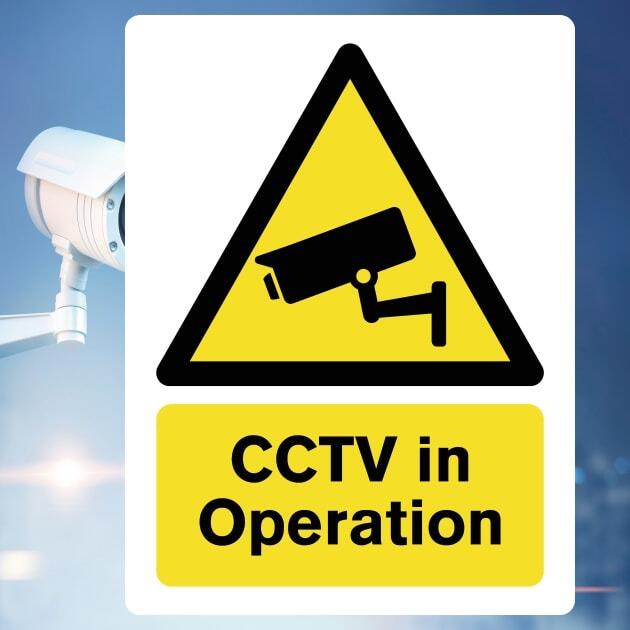
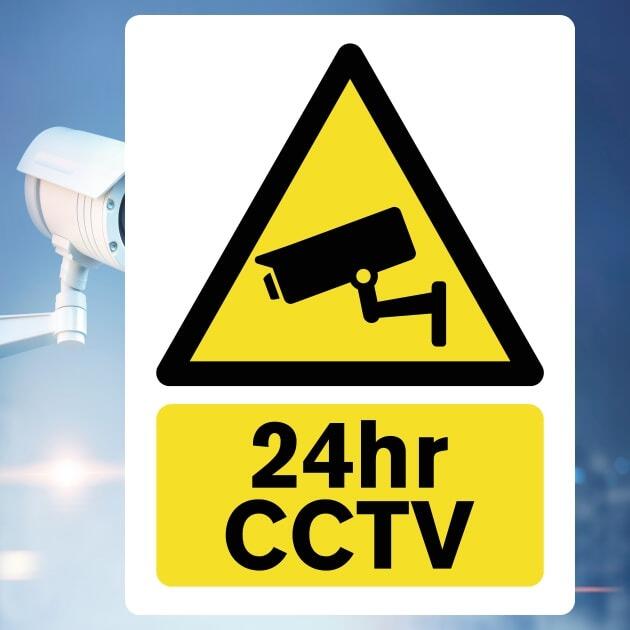

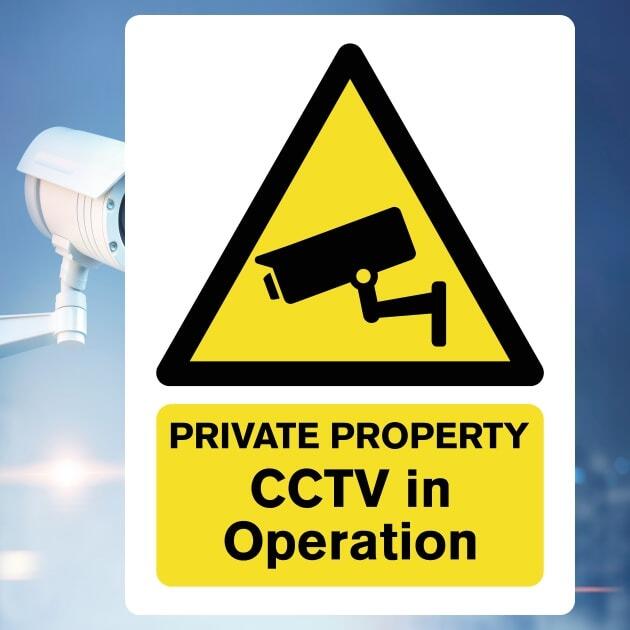
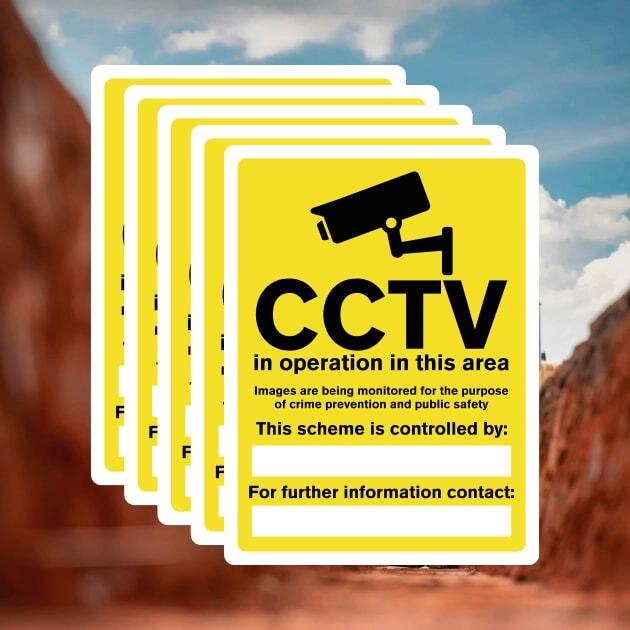
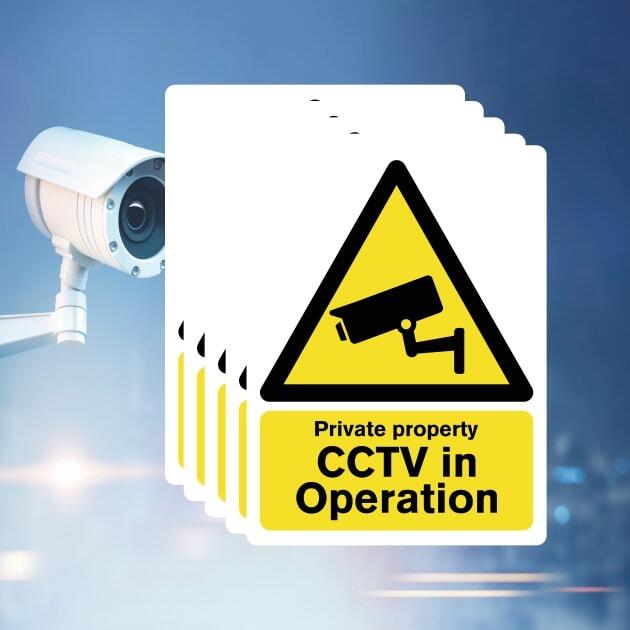
Private Property CCTV Sign 5 Pack
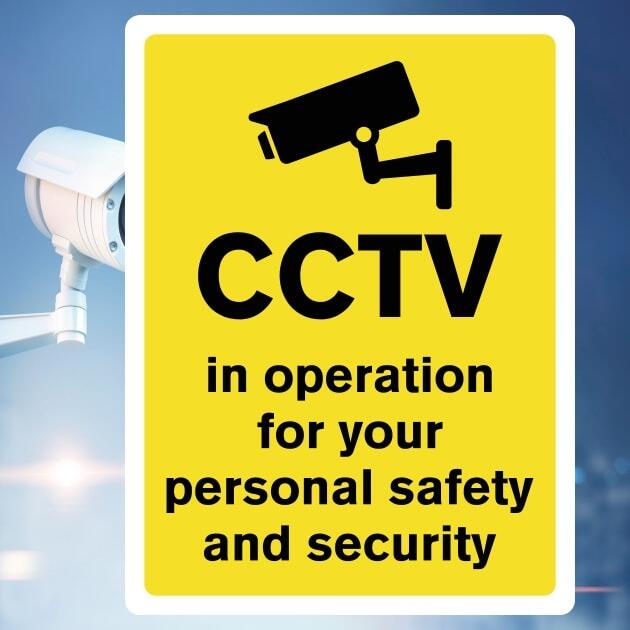
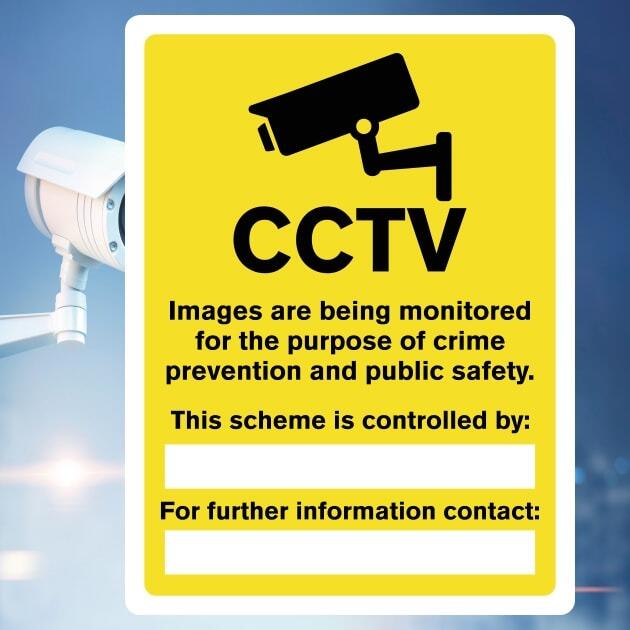
CCTV Images Being Monitored Sign
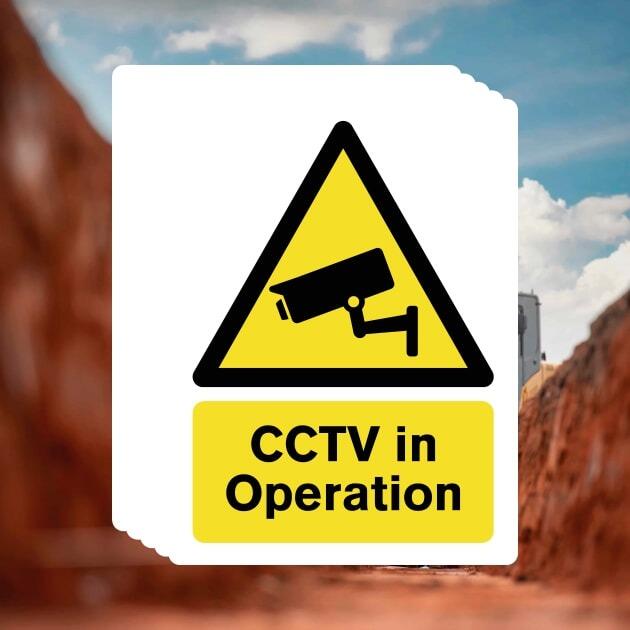
Multipack CCTV In Operation Sign 5 Pack
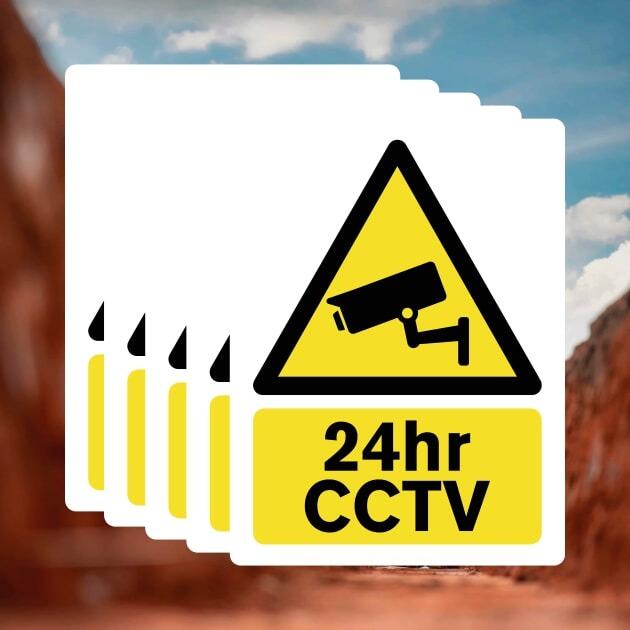
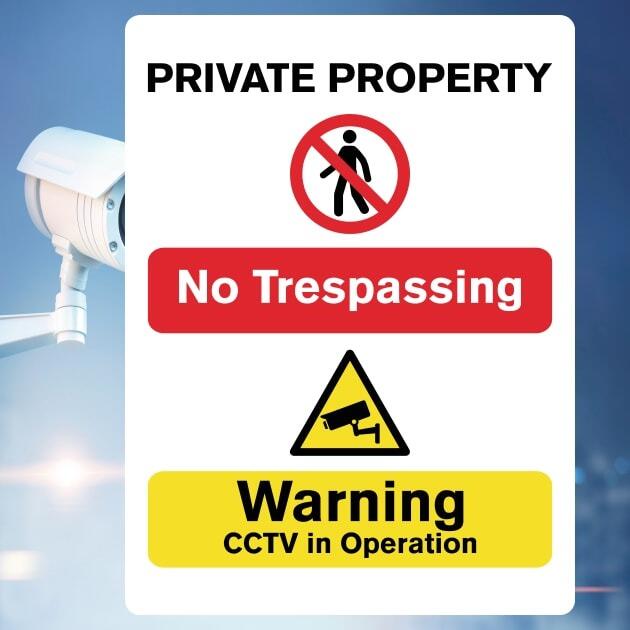
Private Property CCTV Sign 5 Pack v2
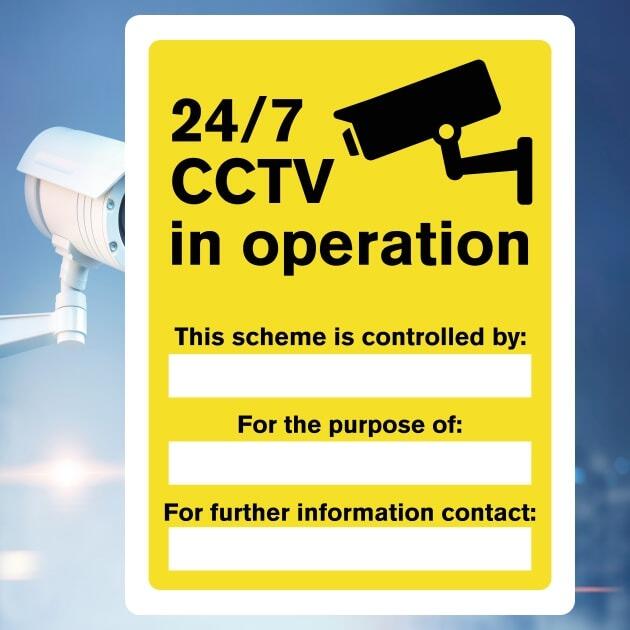
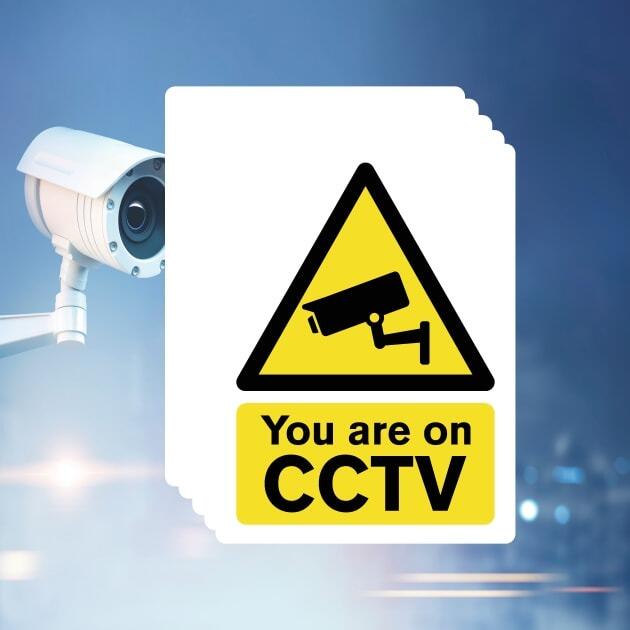
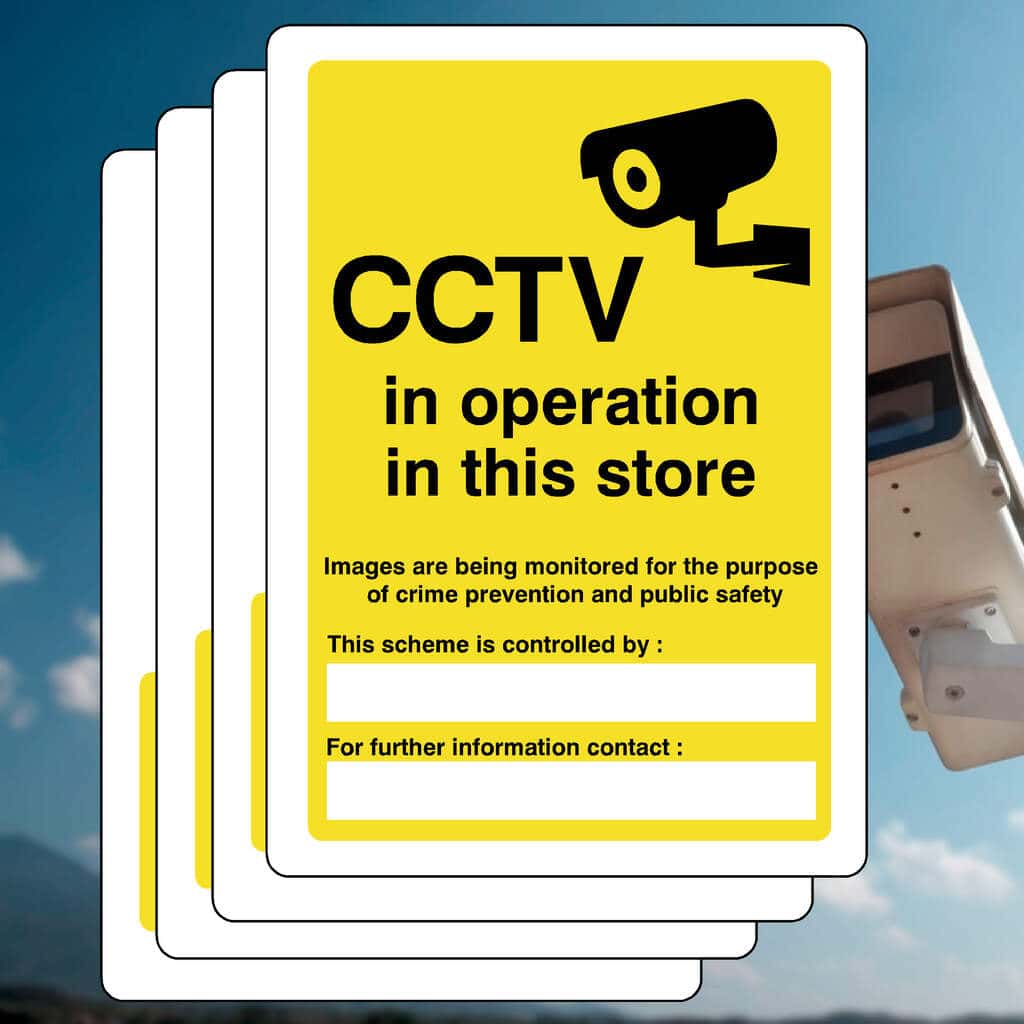
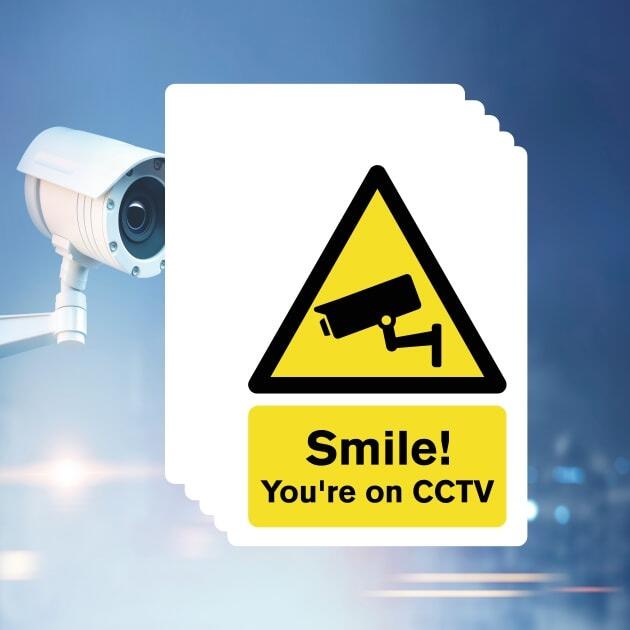
Smile You're On CCTV Sign 5 Pack
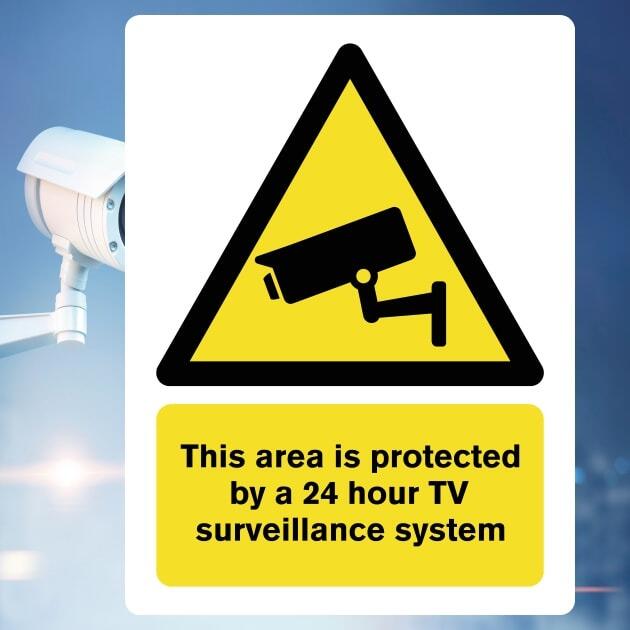




This Site Is Under 24hr Surveillance Sign
CCTV Signs for UK Businesses & Premises
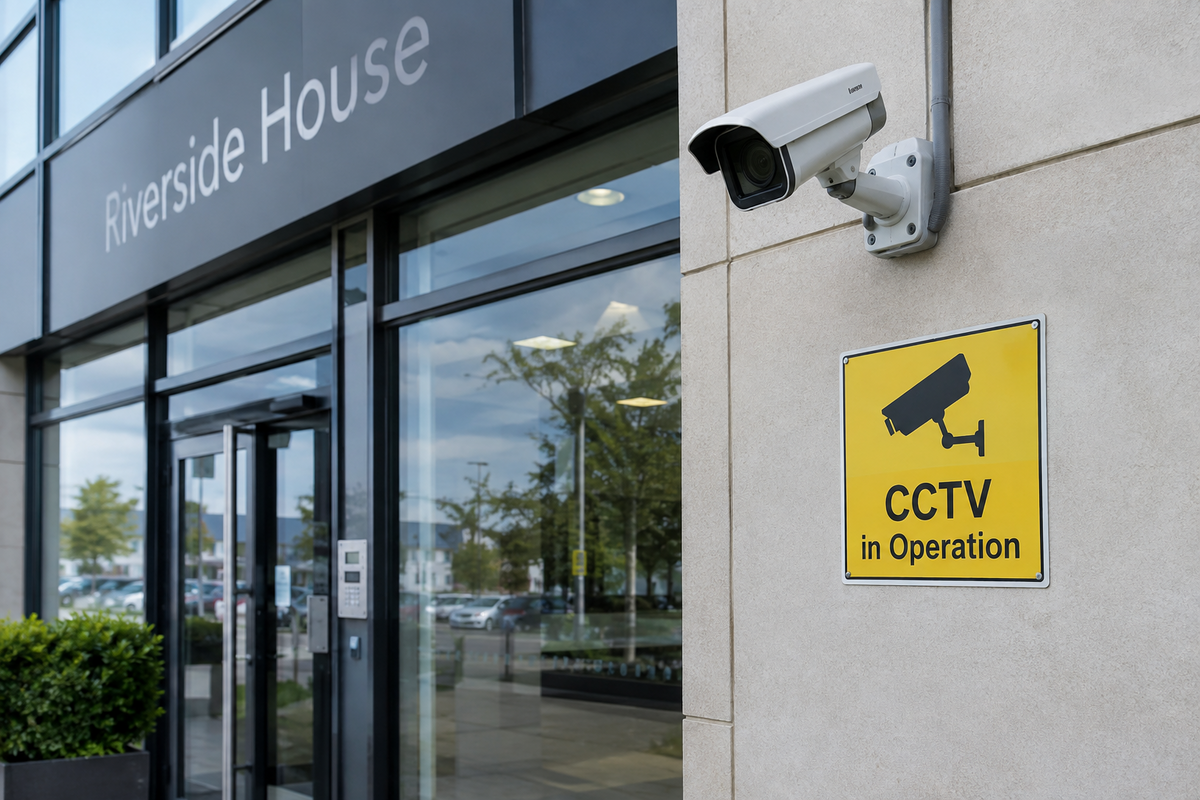
CCTV Signs clearly inform people that camera surveillance is taking place.
They're widely used at shops, offices, warehouses, factories, construction sites, schools, car parks, farms, residential developments and other premises where CCTV cameras monitor people or property.
Clear CCTV signage can help make surveillance transparent while also providing a highly visible security message to visitors and potential intruders.
Why Use CCTV Signs?
CCTV signs have two particularly useful functions.
First, they inform people that surveillance is taking place.
Second, visible CCTV warning signs can reinforce your premises security by making camera monitoring obvious.
CCTV signs can be positioned around:
- Entrances
- Gates
- Car parks
- Reception areas
- Warehouses
- Loading yards
- Construction sites
- Perimeter fencing
- Private property
- Staff entrances
- Commercial premises
Choose wording and positioning appropriate to the way CCTV is actually used at your premises.
CCTV Signs & Data Protection
Where an organisation uses CCTV to capture identifiable individuals, the recordings are likely to involve the processing of personal data.
Businesses and organisations therefore need to consider their responsibilities under UK data protection law.
Clear signage can form an important part of providing people with information about surveillance.
However, simply displaying a CCTV sign doesn't make an organisation GDPR compliant.
CCTV operators also need to consider matters such as why surveillance is necessary, their lawful basis for processing, privacy information, access to recordings, security, retention and individual rights.
Think of your CCTV signs as one part of a wider approach to responsible video surveillance.
What Information Should a CCTV Sign Include?
The appropriate information depends on the CCTV system and circumstances.
As a general principle, CCTV signage should make it clear that surveillance is taking place.
Depending on the circumstances, information may also need to identify:
- The organisation operating the CCTV
- Why the surveillance is being used
- How somebody can contact the organisation
- Where further privacy information can be obtained
Keep the immediate message easy to see and understand.
More detailed information can be provided separately where appropriate.
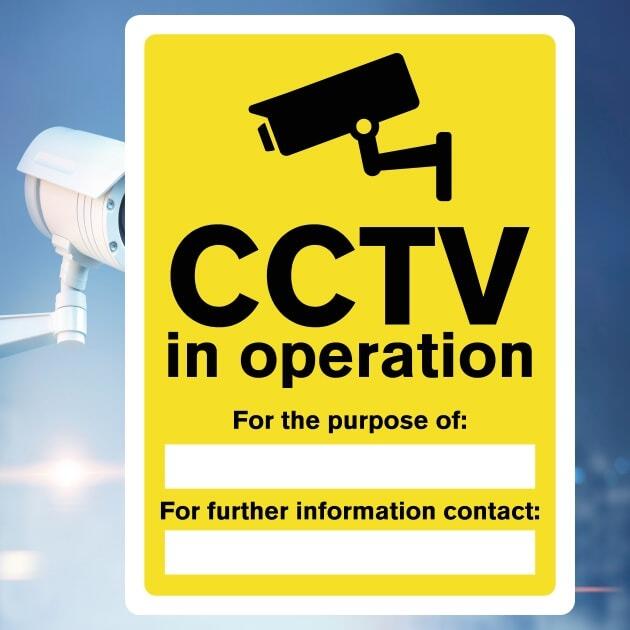
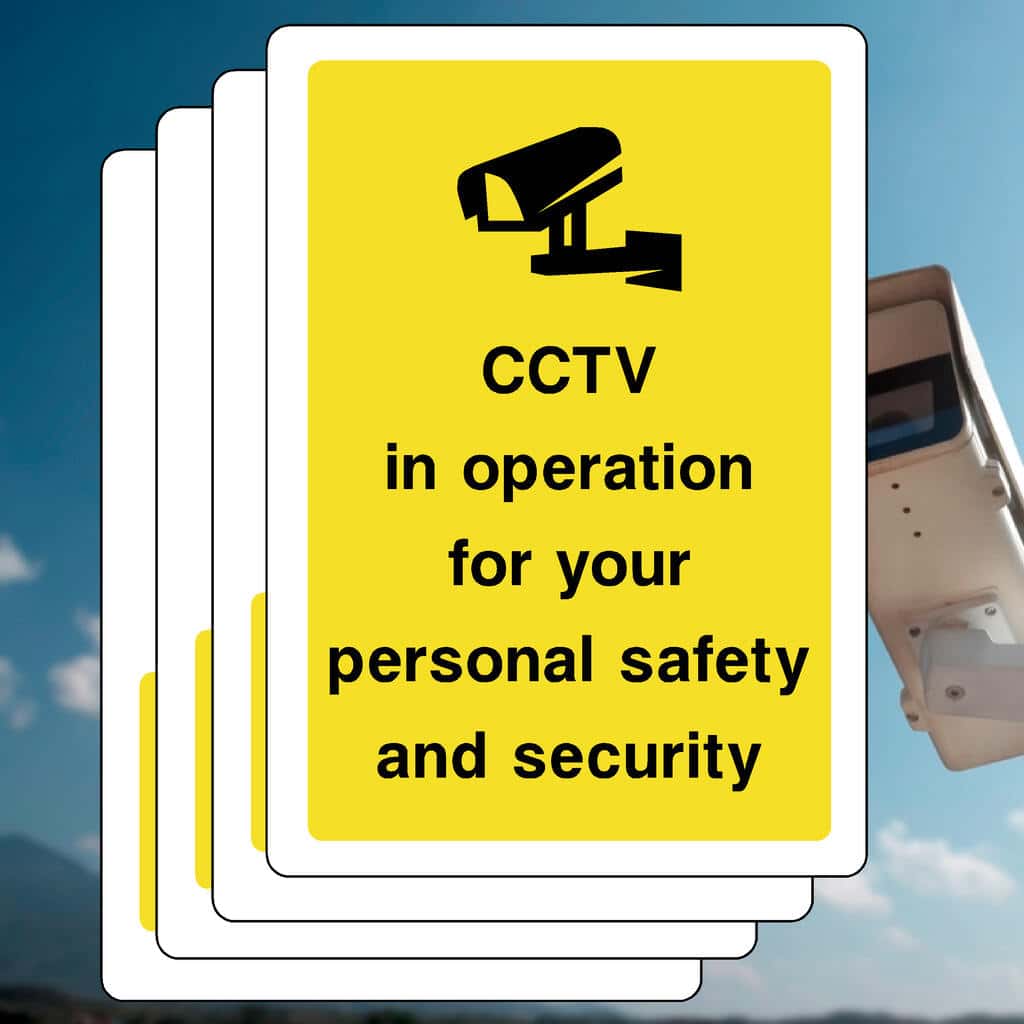
CCTV In Operation Signs
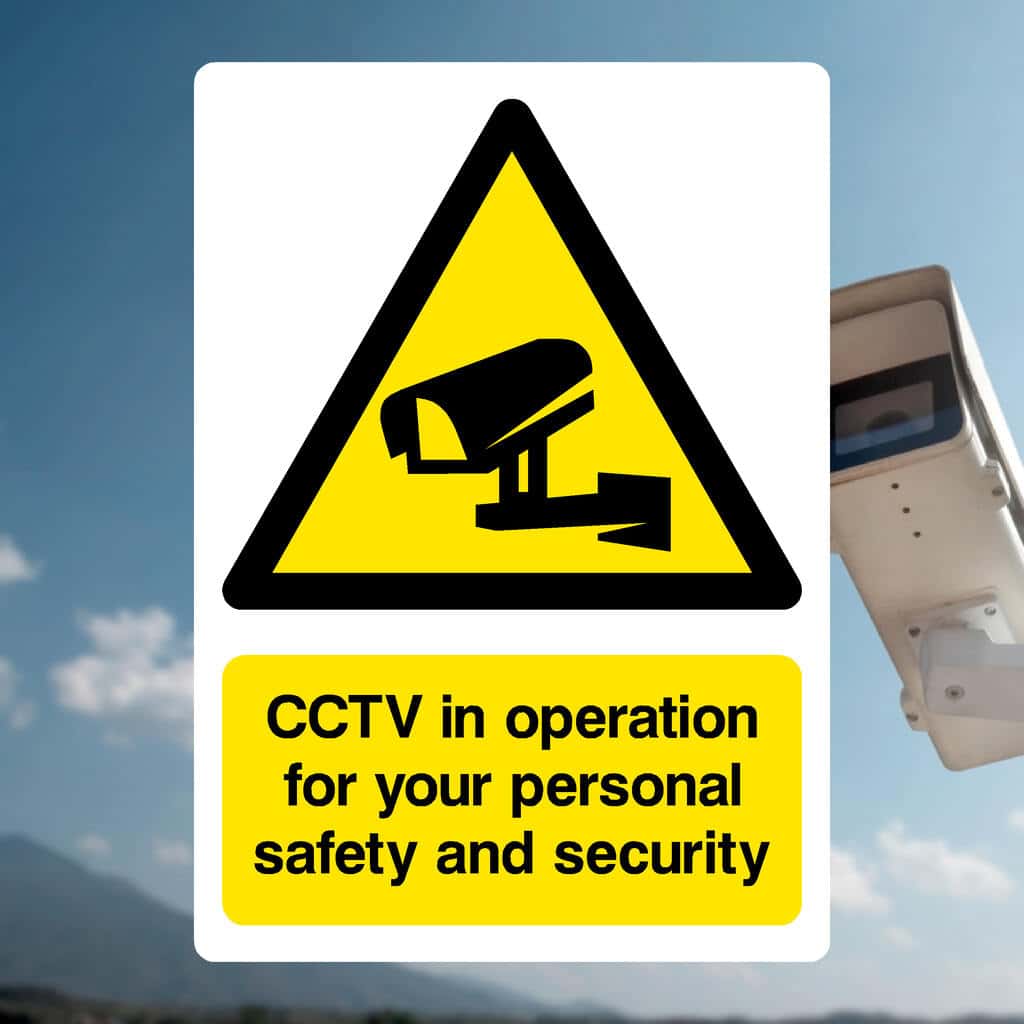
CCTV In Operation Signs provide a simple, immediately recognisable warning that camera surveillance is being used.
They're suitable for a wide variety of commercial and workplace environments including:
- Shops
- Offices
- Warehouses
- Factories
- Car parks
- Construction sites
- Schools
- Farms
- Commercial buildings
Where additional privacy information is required, the CCTV In Operation message can form part of a wider signage and privacy-information system.
24 Hour CCTV Signs
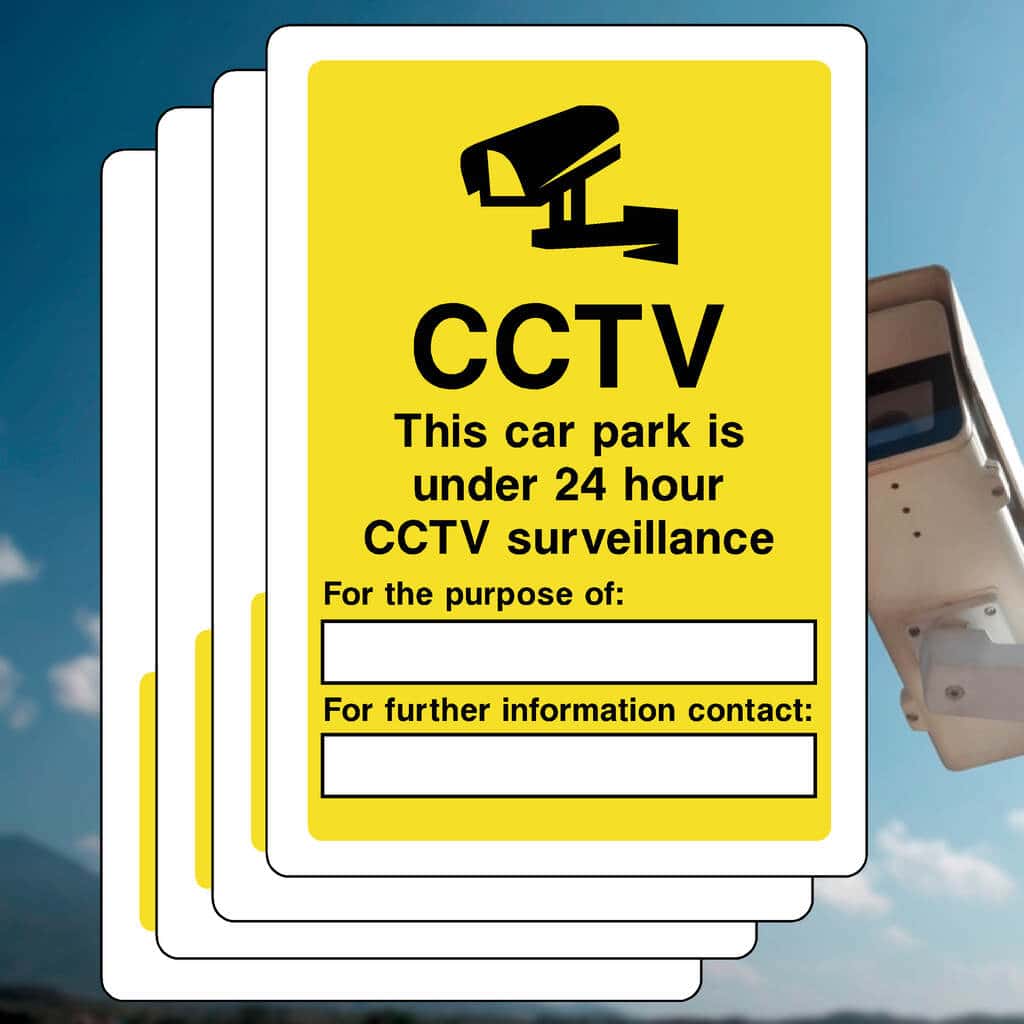
Where surveillance genuinely operates continuously, 24 Hour CCTV or 24/7 CCTV Signs can make that monitoring particularly clear.
Only use wording that accurately reflects the operation of your system.
If cameras aren't operating or recording continuously, avoid suggesting that they are.
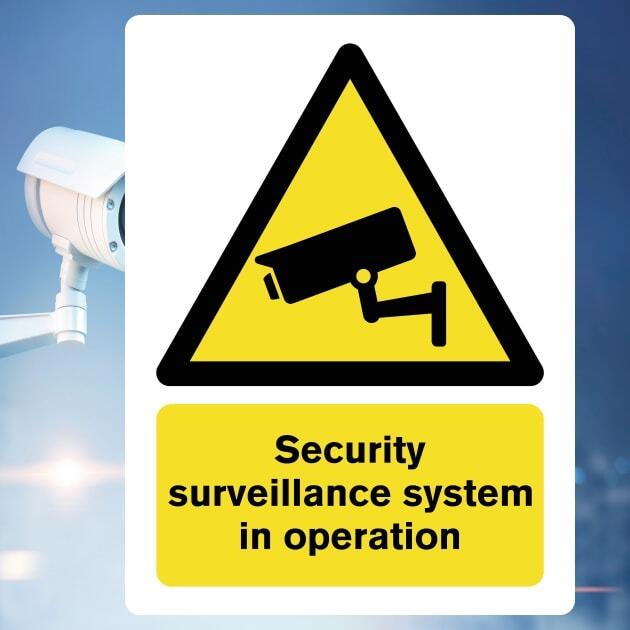
CCTV Surveillance Signs
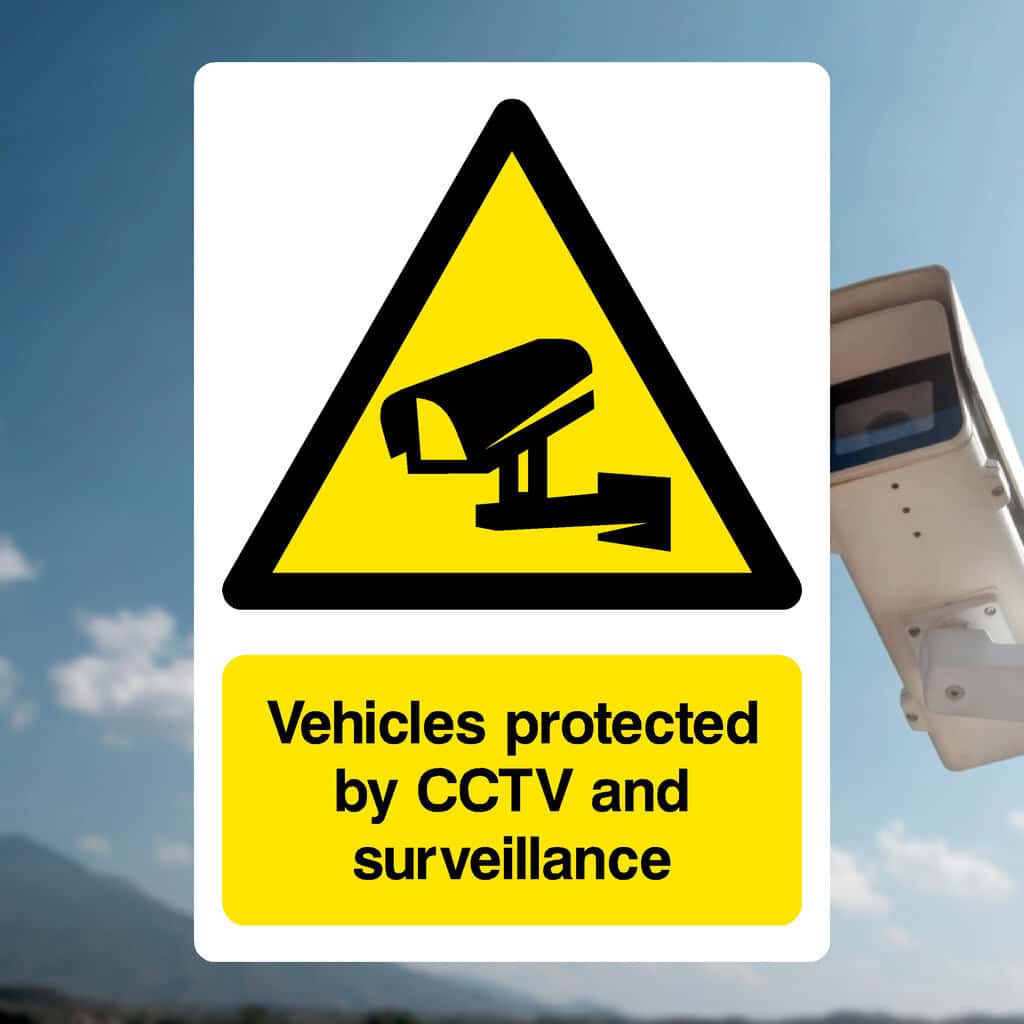
CCTV Surveillance Signs communicate that an area is being monitored by cameras.
They're particularly useful at entrances, boundaries and access points where people should understand that they're entering a monitored area.
Choose a sign that's large enough to be clearly visible at the intended viewing distance.
CCTV Signs for Businesses
Businesses can use CCTV for purposes such as protecting premises, preventing and investigating crime, monitoring access and improving site security.
Potential locations for signs include:
- Customer entrances
- Staff entrances
- Reception areas
- Delivery entrances
- Service yards
- Car parks
- Perimeter gates
- External walls
The appropriate number of signs depends on the size and layout of the monitored premises.
CCTV Signs for Warehouses
Warehouses can have several entrances and monitored areas.
CCTV may cover:
- Loading bays
- Goods-in areas
- Storage areas
- External yards
- Vehicle entrances
- Pedestrian entrances
- Reception areas
Walk through the site from the perspective of an employee, visitor, driver or contractor and consider whether surveillance is clearly communicated before they enter monitored areas.
CCTV Signs for Construction Sites
Construction sites frequently use CCTV to protect equipment, materials and premises.
CCTV signs can be positioned at:
- Main gates
- Pedestrian entrances
- Vehicle entrances
- Perimeter fencing
- Hoardings
- Site offices
Construction layouts change regularly, so check that CCTV notices remain visible as gates, fencing and access arrangements move.
CCTV Signs for Car Parks
Car parks are another common location for CCTV surveillance.
Consider both vehicles and pedestrians when positioning signs.
A CCTV sign intended for drivers may need to be larger and visible from further away than one beside a pedestrian entrance.
Depending on the layout, suitable locations could include:
- Vehicle entrances
- Barriers
- Pedestrian entrances
- Pay areas
- Building entrances
The aim is to make surveillance clear before or as people enter the monitored area.
CCTV Signs for Private Property
CCTV signs can also be used around privately owned commercial premises, estates, farms, yards and other property.
Signs can make camera surveillance visible while reinforcing the property's wider security arrangements.
Where the primary message concerns ownership, trespassing or access rather than CCTV surveillance, consider using a dedicated Security Sign or Private Land Sign alongside the CCTV notice.
Private Property CCTV Signs
A combined Private Property CCTV Sign can be useful where you want to communicate both that the property is private and that CCTV surveillance operates.
These are particularly suitable for:
- Gates
- Driveways
- Yards
- Farms
- Commercial premises
- Storage compounds
- Private access roads
Make sure the CCTV message remains clearly visible rather than becoming lost among several different security warnings.
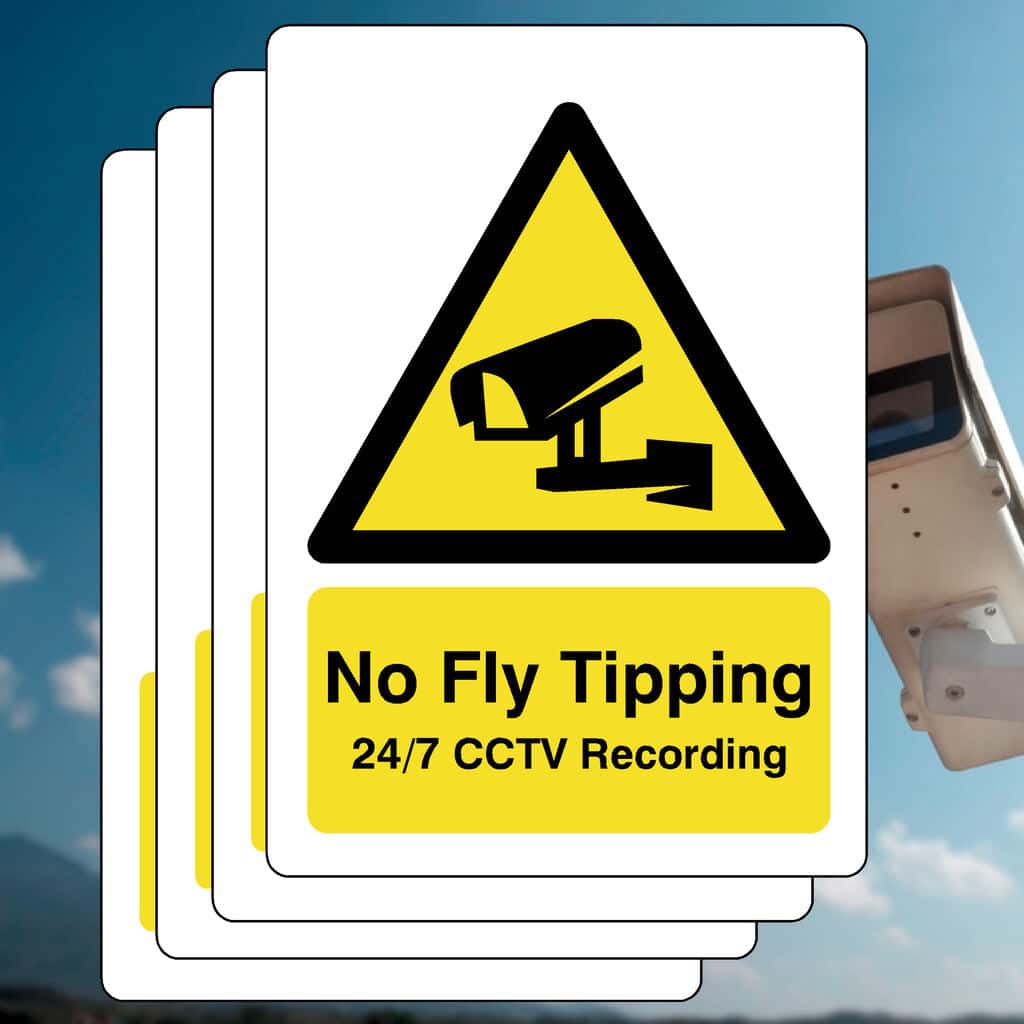
CCTV Signs for No Fly Tipping
CCTV signage is also frequently used at locations vulnerable to fly tipping.
Where CCTV genuinely monitors the area, a No Fly Tipping – CCTV sign can communicate both the prohibition and the presence of surveillance.
Don't claim CCTV monitoring is taking place if it isn't.
Where Should CCTV Signs Be Positioned?
Position CCTV signs so people can see them before or as they enter the monitored area.
Potential locations include:
- Main entrances
- Gates
- Vehicle entrances
- Pedestrian entrances
- Car parks
- Reception entrances
- Perimeter fencing
- Warehouse entrances
- Construction site entrances
Larger or more complex premises may require several signs.
Rather than asking “How many cameras do we have?”, ask:
“Can somebody enter a monitored area without reasonably seeing a CCTV notice?”
If the answer is yes, review your signage.
How Many CCTV Signs Do I Need?
There isn't one universal number of CCTV signs for every premises.
A small office with a single entrance may require relatively few notices.
A warehouse, construction site or commercial estate with several vehicle and pedestrian entrances may need considerably more.
Consider:
- Number of entrances
- Size of the monitored area
- Pedestrian routes
- Vehicle routes
- Separate buildings
- Internal monitored areas
- Viewing distances
Use enough signage to make surveillance clear without unnecessarily covering the premises in repeated notices.
What Size CCTV Sign Do I Need?
Choose sign size according to viewing distance and location.
A notice beside a doorway can be viewed at relatively close range.
A sign at a vehicle gate, car park entrance or perimeter fence may need to be considerably larger.
Consider:
- Viewing distance
- Mounting height
- Vehicle approach
- Lighting
- Background
- Visual clutter
- Amount of information displayed
The message should be readable before somebody enters the monitored area.
CCTV Signs for Drivers
Where drivers enter a CCTV-monitored car park, yard or commercial site, signs should be positioned and sized appropriately for a vehicle approach.
A small notice designed to be read from arm's length isn't suitable for every vehicle entrance.
Consider the driver's direction of approach, speed, stopping position and other signs competing for attention.
Indoor CCTV Signs
Indoor CCTV notices can be useful at:
- Reception areas
- Internal entrances
- Warehouses
- Stockrooms
- Shared corridors
- Staff entrances
- Customer areas
Choose a size and material suitable for the mounting surface and expected viewing distance.
Outdoor CCTV Signs
Outdoor CCTV signs may be exposed to rain, sunlight, wind, dirt and temperature changes.
Choose a material appropriate for the environment and intended lifespan.
Potential mounting locations include:
- Gates
- Fences
- Exterior walls
- Posts
- Hoardings
- Car park entrances
Check outdoor signs periodically for fading, damage or obstruction.
CCTV Signs & UK GDPR
It's better to think of CCTV signage as supporting transparency rather than describing an individual sign as “GDPR compliant”.
UK data protection obligations apply to the organisation's overall use of surveillance and personal data.
A sign alone can't establish compliance.
Your organisation may also need appropriate privacy information explaining how CCTV footage is collected, used, retained and protected.
CCTV Signs & the Data Protection Act 2018
Organisations using CCTV that captures identifiable individuals should consider the UK GDPR and Data Protection Act 2018 as part of their wider surveillance arrangements.
Clear signs can help make people aware that surveillance is taking place.
They don't replace the organisation's other data protection responsibilities.
CCTV Signs & ISO 7010
CCTV signage shouldn't automatically be marketed as legally compliant simply because it uses an ISO-style graphical symbol.
BS EN ISO 7010 is primarily concerned with standardised safety signs and graphical symbols.
CCTV transparency requirements arise principally from data protection considerations rather than an ISO CCTV-sign standard.
Choose CCTV signage because it communicates surveillance clearly and provides the appropriate information for your circumstances.
CCTV Signs vs Security Signs
CCTV Signs and general Security Signs can both support premises security, but they communicate different things.
CCTV Signs specifically tell people that camera surveillance is taking place.
Security Signs can warn about measures such as:
- Guard dogs
- Anti-climb systems
- Electric fencing
- Restricted areas
- Locked areas
- Security procedures
Where several security measures are used, the different sign types can complement one another.
Keep CCTV Signs Visible
Check CCTV signs regularly to make sure they're:
- Clearly visible
- Clean
- Legible
- Securely fixed
- Undamaged
- Unobstructed
- Correctly positioned
- Still accurate
Trees, vegetation, parked vehicles, stock, construction equipment and changes to site layouts can all obscure signs over time.
Review CCTV Signs When Your System Changes
Review signage whenever you:
- Install additional cameras
- Remove cameras
- Move cameras
- Change entrances
- Change monitored areas
- Alter the purpose of surveillance
- Change business details
- Change contact information
Your signs should accurately reflect your current CCTV arrangements.
Choosing the Right CCTV Sign
Before ordering, consider:
- Where is CCTV operating?
- Who will enter the monitored area?
- From which directions will they approach?
- Will they be walking or driving?
- How far away must the sign be read?
- Is the sign going indoors or outdoors?
- What information needs to appear?
- Who operates the CCTV system?
- Why is surveillance being used?
- How can people obtain further information?
- Are several entrances being monitored?
- Does the wording accurately describe the system?
These questions can help you choose CCTV signage appropriate for your premises rather than simply buying the same notice for every location.
Made in Britain CCTV Signs
Safety Sheep CCTV Signs are Made in Britain for UK businesses, workplaces and property owners.
Choose from CCTV In Operation, CCTV Surveillance, 24 Hour CCTV, Private Property CCTV, No Fly Tipping CCTV and other camera surveillance signs in a range of sizes and durable materials.
For other premises security warnings, explore our dedicated Security Signs range.
Think Safety. Think Sheep.
CCTV Signs FAQs
Do businesses need CCTV signs?
Where business CCTV captures identifiable people, organisations need to provide appropriate information about the surveillance. Clearly visible CCTV signage is an important way of making people aware that monitoring is taking place.
Where should CCTV signs be displayed?
Position CCTV signs so people can see them before or as they enter the monitored area. Typical locations include entrances, gates, car parks, reception areas, vehicle access points and perimeter fencing.
What should a CCTV sign say?
The appropriate information depends on the circumstances, but signage should clearly indicate that CCTV or surveillance is operating. Depending on the situation, it may also need to identify the organisation responsible, explain the purpose and provide a contact route.
Are CCTV signs GDPR compliant?
A sign itself can't make a CCTV system GDPR compliant. Appropriate signage can support transparency, but organisations also need to consider their wider responsibilities when processing personal data.
Do I need a CCTV sign for every camera?
Not necessarily. Signage should provide clear notice of surveillance at appropriate entrances and monitored areas rather than simply placing one notice beside every camera.
Can I put up CCTV signs if I don't have cameras?
A CCTV sign should accurately describe the surveillance operating at the premises. Avoid stating that CCTV monitoring or recording is taking place when it isn't.
Do CCTV signs need contact details?
ICO guidance says surveillance signs should include basic contact information such as a website, telephone number or email as part of appropriate transparency, taking account of the circumstances and whether responsibility for the system is already obvious.
From The Safety Sheep Blog