



The Safety Sheep Blog


Construction Site Keep Out Sign v2

Construction Site Keep Out Sign



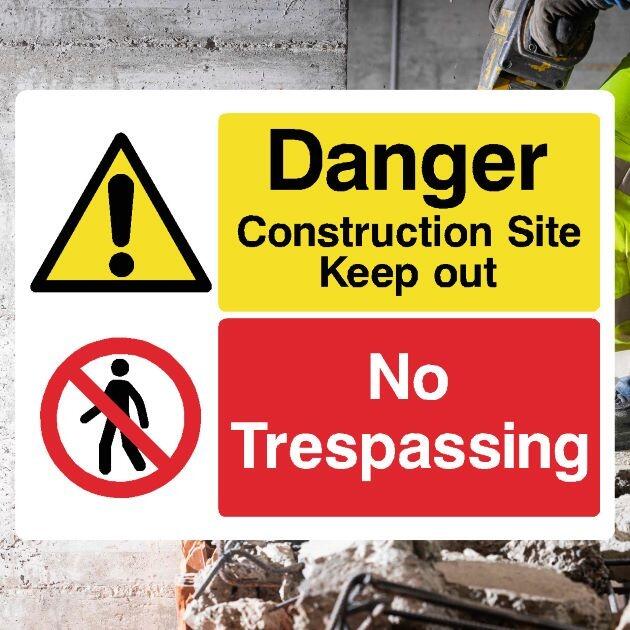
Construction Site Trespass Sign
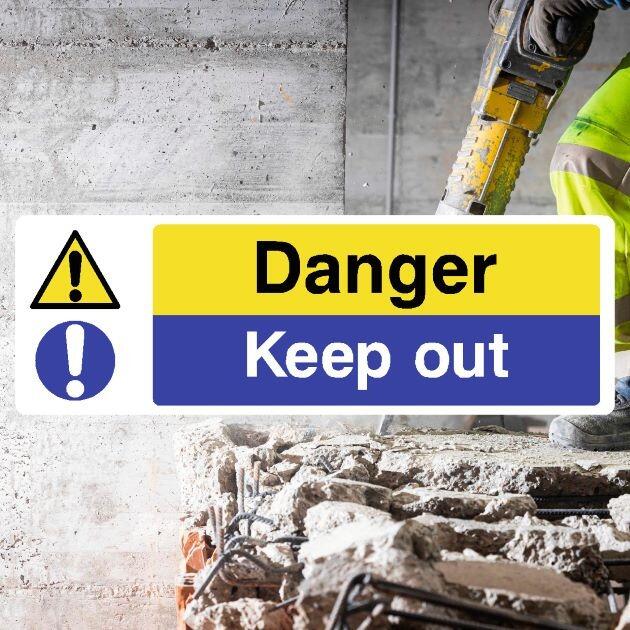

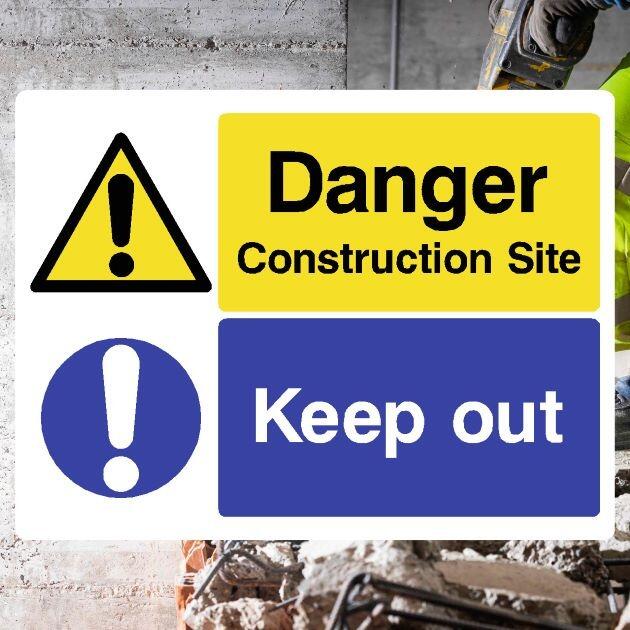

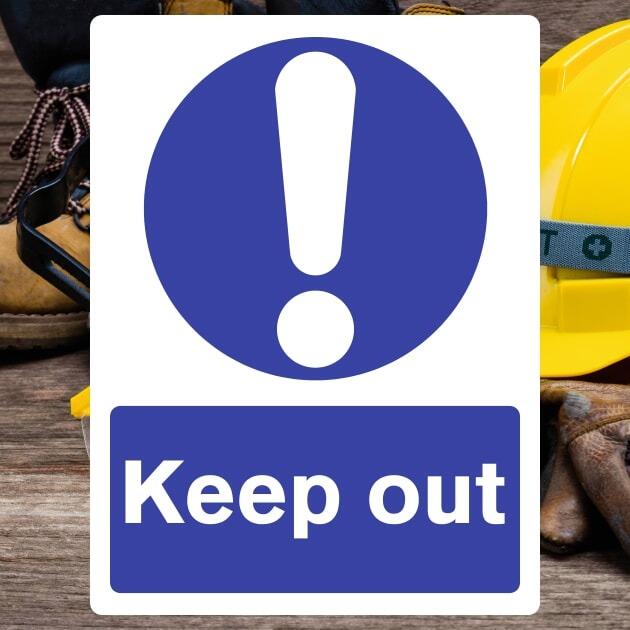


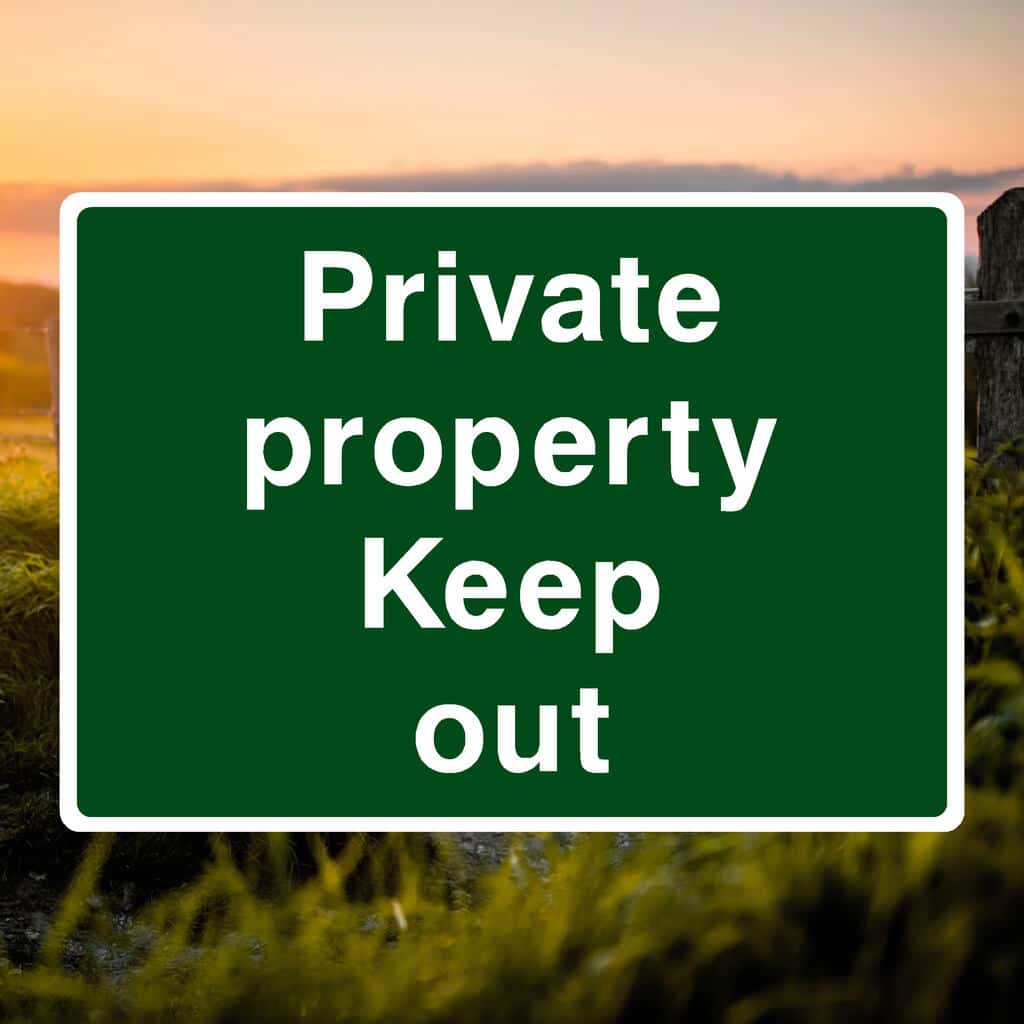
Keep Out Signs provide a clear warning that people should not enter or remain within a particular site, work area or restricted zone.
They're widely used on construction sites, around hazardous work areas, industrial premises, warehouses, plant areas and private property where access needs to be controlled.
Safety Sheep Keep Out Signs are available in a choice of sizes and materials for different indoor and outdoor environments, helping businesses and contractors communicate access restrictions clearly.
A Keep Out Sign tells the viewer that they shouldn't enter or proceed into a particular area.
The wording is direct and easy to understand, making Keep Out signs particularly useful where people need to remain outside a site, compound, work area or defined boundary.
Depending on the application, the message may appear by itself or alongside additional information such as:
Choose wording that accurately reflects the reason access is being restricted.
Keep Out signs can be used in many environments where people need to be prevented from entering a particular location.
Common applications include:
The appropriate sign depends on the nature of the restriction and the people who could approach the area.
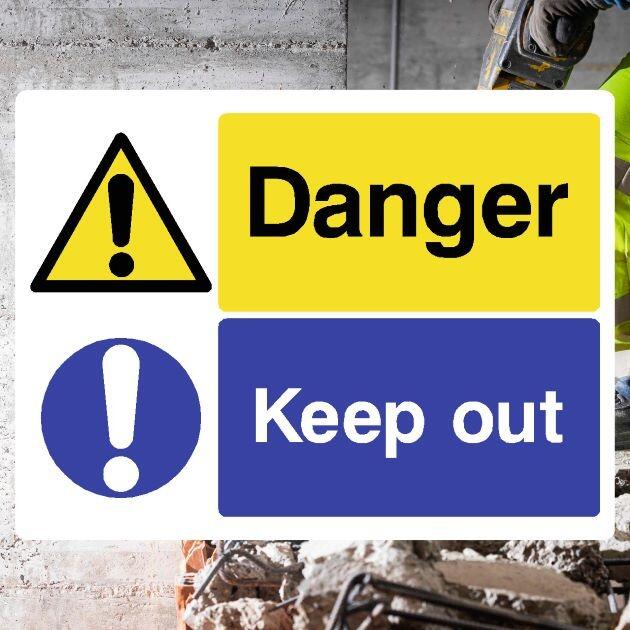
A Danger Keep Out Sign combines an access restriction with a clear indication that a hazard is present.
This can be useful where somebody entering an area could be exposed to a significant risk.
However, the word Danger shouldn't be added simply to make a sign appear more noticeable.
Use wording that reflects the actual situation and make sure the hazard itself is controlled through appropriate measures.
Construction sites are one of the most common locations for Keep Out signs.
Sites can contain moving vehicles, machinery, excavations, work at height, temporary structures and other hazards that members of the public aren't equipped to encounter.
Keep Out signage can help reinforce site boundaries and access restrictions at locations such as:
Signs should support appropriate site security and physical access controls rather than replace them.
Keep Out signs aren't limited to construction sites.
Workplaces may contain areas where general access isn't appropriate, including:
Where authorised employees are permitted to enter, consider whether No Unauthorised Access or Authorised Personnel Only communicates the restriction more accurately than a general Keep Out message.
Where an area contains a specific hazard, a general Keep Out Sign may need to be supported by additional information.
For example, the viewer may need to know about:
A Keep Out message controls access, while appropriate hazard signage can explain the reason for the restriction.
Keep Out and No Entry signs have closely related purposes, but the wording can suit different situations.
Keep Out generally tells people to remain outside a site, area or defined boundary.
No Entry can be particularly useful at a specific doorway, entrance or route where entry is prohibited.
For example, a construction-site perimeter may use Keep Out signs, while a particular doorway inside a workplace may use a No Entry sign.
Choose the wording that communicates the restriction most clearly.
A Keep Out message can imply that people shouldn't enter the area.
A No Unauthorised Access sign makes it clearer that some people are permitted to enter provided they have the necessary permission.
If employees or authorised contractors routinely need access, No Unauthorised Access or Authorised Personnel Only may provide a more accurate instruction.
There isn't a universal requirement for every UK workplace or construction site to display a Keep Out Sign.
The safety signage required depends on the hazards, access arrangements and findings of the relevant risk assessment.
Where a significant residual risk remains after appropriate measures have been taken, safety signs can be used to communicate the restriction or hazard.
Keep Out signage should be considered alongside wider controls such as:
A sign communicates the restriction; it doesn't physically prevent somebody entering.
BS EN ISO 7010 provides standardised graphical symbols for safety signage.
Recognised symbols can make safety information easier to understand consistently, particularly where workplaces are used by employees, contractors and visitors.
However, ISO 7010 is a standard rather than UK legislation itself.
Choose signs according to the actual restriction and risks present rather than assuming that displaying a particular sign automatically makes an area compliant.
The design depends on the type of safety message being communicated.
Where access is being formally prohibited, prohibition signage commonly uses a red circular border and diagonal bar with a black pictogram on a white background.
Where a Keep Out instruction is combined with a hazard warning, yellow and black warning elements may also be used where appropriate.
The important consideration is that the sign clearly communicates the intended safety message.
Position Keep Out signs where people can see the restriction before entering the area.
Potential locations include:
Think about every direction from which somebody could approach.
A sign on the main gate won't necessarily communicate the restriction to somebody approaching a site from another access point.
Temporary and permanent fencing are common mounting locations.
Construction sites in particular may need signs at several points along a perimeter where people could reasonably approach or attempt to enter.
The number and position of signs should be determined by the site's layout and visibility rather than using an arbitrary spacing rule.
Make sure signs remain securely attached and aren't hidden by equipment, vegetation or stored materials.
The appropriate size depends on viewing distance and location.
A Keep Out sign on an internal door may only need to be viewed from a few metres away.
A sign on a large construction-site perimeter or entrance may need to be visible from considerably further away.
Consider:
The message should be visible early enough for the person to understand the restriction before entering.
Consider where and how long the sign will be displayed.
For temporary construction applications, lightweight sign materials can provide a practical solution.
For longer-term outdoor applications, a more durable rigid material may be preferable.
Indoor workplaces may require different materials again depending on whether the sign is being fitted to a door, wall or other surface.
Also consider the fixing method and whether the sign may need to be relocated.
Some restrictions are temporary.
Maintenance work, refurbishment, construction activities or temporary hazards may create areas that people need to avoid for a limited period.
Temporary Keep Out signs can communicate these changing restrictions, but they should be removed when the restriction no longer applies.
Leaving outdated safety signs in place can create confusion and reduce confidence in other safety information.
Where a worksite or hazardous area can be approached by members of the public, the message should be easy to understand without relying on specialist workplace knowledge.
Clear wording and recognised symbols can help communicate the restriction to visitors and passers-by as well as employees.
Physical access controls remain particularly important where unauthorised entry could expose members of the public to significant hazards.
A Keep Out sign communicates an instruction; it isn't a security system or physical safety barrier.
Where unauthorised entry could expose somebody to danger, appropriate controls may also include:
The measures required depend on the particular environment and risk.
Inspect signage periodically and when workplace or site arrangements change.
Check whether signs are:
Replace damaged or faded signs and remove signs when the restriction no longer applies.
Don't use a Keep Out sign simply because an area is normally closed to the public.
The wording should accurately reflect the access arrangements.
If authorised staff regularly enter, No Unauthorised Access may be clearer.
If only pedestrians are prohibited, use No Pedestrian Signs.
If the restriction applies to vehicles, use No Vehicle Signs.
And where an entrance is prohibited more generally, a No Entry Sign may provide the most appropriate message.
Specific signage is usually more useful than a vague restriction.
Before ordering, consider:
Answering these questions will help you choose the right Keep Out Sign and position it effectively.
Safety Sheep Keep Out Signs are Made in Britain for UK workplaces, contractors, construction projects and businesses.
Choose from Keep Out, Danger Keep Out and construction-related signs in different sizes and materials for a variety of indoor and outdoor environments.
For other types of restricted-access signage, explore our complete No Entry Signs range, including No Access, No Unauthorised Access, No Pedestrian and No Vehicle signs.
Think Safety. Think Sheep.
A Keep Out Sign tells people that they shouldn't enter or proceed into a particular site, work area or restricted zone. They're commonly used on construction sites, industrial premises and around hazardous work areas.
Position Keep Out Signs where people can see the restriction before entering the area. Typical locations include gates, fencing, hoardings, doors, barriers and entrances to restricted work zones.
There isn't a universal requirement for every UK workplace to display a Keep Out Sign. The appropriate safety signage depends on the risks, access arrangements and applicable requirements for the individual site.
Keep Out Signs are commonly used where unauthorised access to a construction site or work area needs to be prevented. The specific signs required depend on the site's hazards, layout, boundaries and access arrangements.
Keep Out is commonly used where people need to remain outside a site or defined area. No Entry can be particularly suitable at a specific doorway, entrance or route. Choose the wording that most accurately describes the restriction.
Keep Out tells people to remain outside an area. No Unauthorised Access makes it clearer that authorised employees or contractors may enter while other people may not.
A Danger Keep Out Sign combines an access restriction with a warning that a hazard is present. It should be used where that message accurately reflects the risks at the location.
Yes, provided the material and fixing method are appropriate. Position signs where they can be clearly seen by people approaching the restricted area.
There isn't a universal spacing or quantity that applies to every site. Consider the length and layout of the perimeter, access points, visibility and the directions from which people could approach.


