


Made in Britain Members

Big Bulk Save Discounts
Fast UK Shipping

From £4.71
From £4.71
Save 17%
Sale priceFrom £7.84Regular price
£9.50
From £4.71

From £4.71
From £1.57
From £4.71
From £4.71
From £1.57
Save 17%
Sale priceFrom £7.84Regular price
£9.50
From £4.71
From £4.71

Flammable Vapour Prohibition Sign
From £4.71
From £4.71
From £1.57
From £1.57
From £1.57
From £1.57
Save 17%
Sale priceFrom £7.84Regular price
£9.50
From £4.71
From £4.71
From £4.71
Chemical Safety Signs for UK Workplaces
Chemical Safety Signs help businesses communicate hazards associated with chemicals, hazardous substances, storage areas and workplace processes.
From factories and laboratories to warehouses, workshops, farms and commercial premises, clear chemical signage can help employees, contractors and visitors recognise identified risks before entering or working in hazardous areas.
Our range of Chemical Hazard Signs includes Corrosive, Flammable Liquid, Hazardous Substances, Solvents, LPG, Explosive Gases, Hazardous Waste and Asbestos warning notices.
Choose from a selection of sizes and durable materials suitable for different workplace environments.
What Are Chemical Safety Signs?
Chemical Safety Signs are notices used to communicate chemical hazards, restrictions and relevant safety instructions.
They can help warn people about corrosive substances, flammable liquids, hazardous materials and other risks associated with the workplace.
Different signs communicate different messages. A warning sign identifies a hazard, a prohibition sign communicates an activity that isn't permitted, and a mandatory sign communicates a required action.
The correct signage should be selected according to the substances present, the way they are used and the findings of the relevant risk assessment.
Types of Chemical Safety Signs
Corrosive Warning Signs
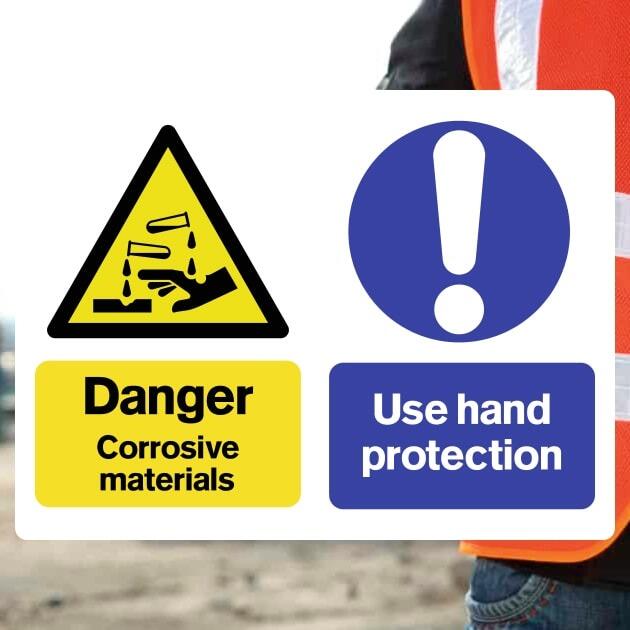
Corrosive Signs warn about substances capable of causing chemical burns or other corrosive damage.
They may be appropriate around chemical handling areas, industrial processes, laboratories and relevant storage facilities.
Where necessary, additional notices can communicate specific protective equipment requirements.
Flammable Liquid Signs
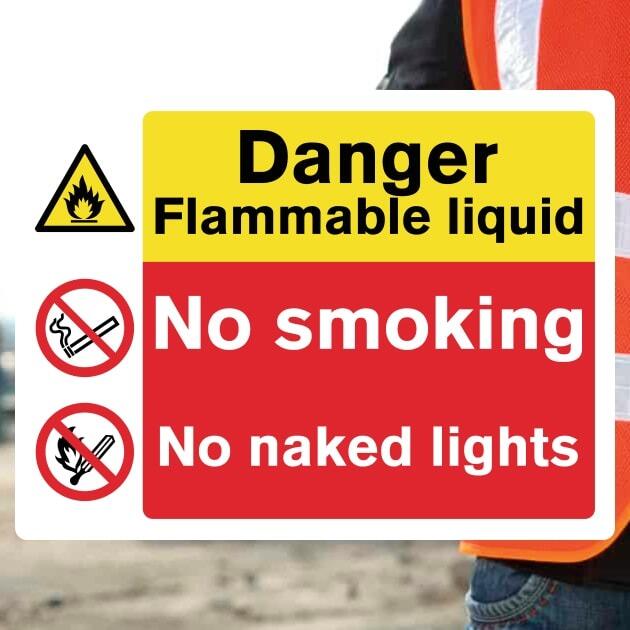
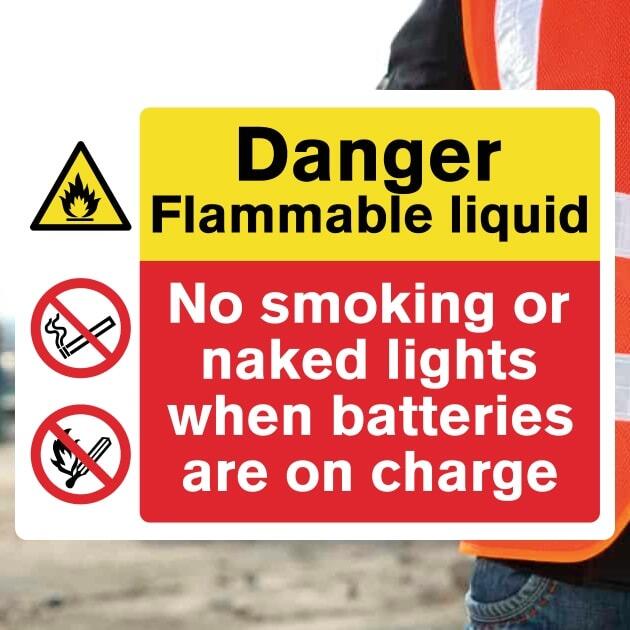
Flammable Liquid Signs warn people about the presence of flammable liquids.
They may be relevant to workshops, industrial premises, chemical stores and other areas where flammable products are used or stored.
Depending on the risk assessment, accompanying No Smoking or No Naked Flames notices may also be appropriate.
Hazardous Substances Signs
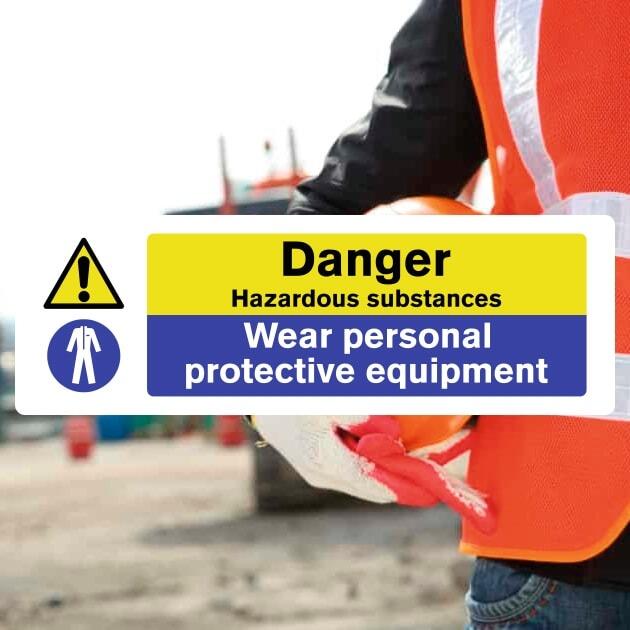
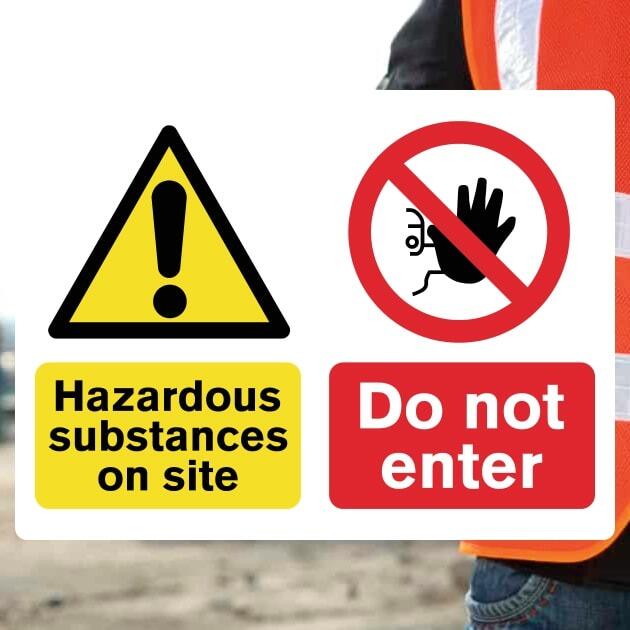
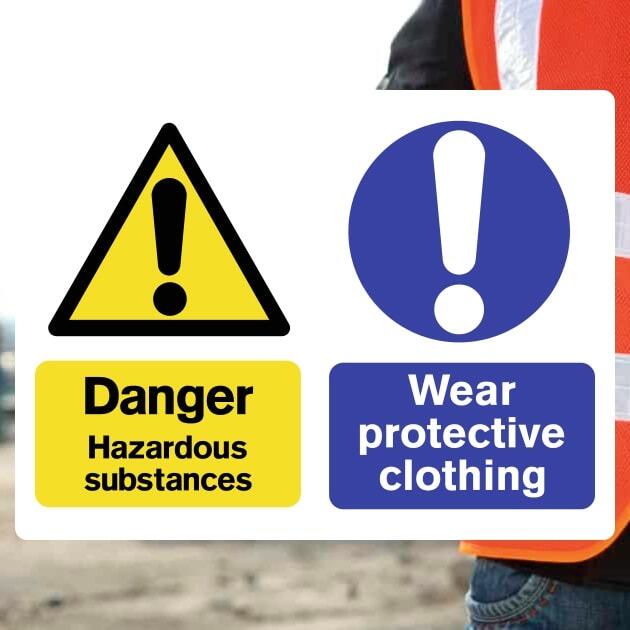
Hazardous Substances Signs communicate the presence of materials that may present health or safety risks.
These notices can help identify relevant storage and working areas, particularly where employees, visitors or contractors need to recognise the hazard before entry.
A general warning should be supplemented with more specific information where necessary.
Acid Warning Signs
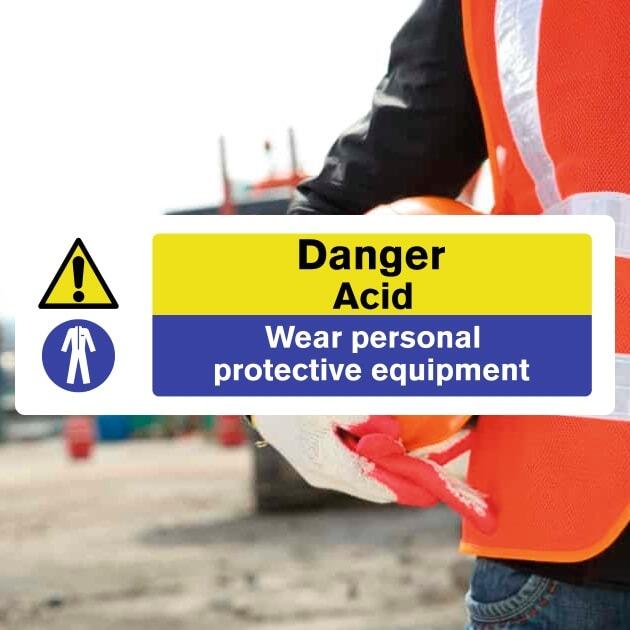
Acid Warning Signs help communicate hazards associated with acid handling or storage.
Depending on the activity, a combined warning and PPE instruction may be useful.
The correct protective equipment should be determined through the relevant assessment rather than selected solely from the wording on a generic sign.
Solvent Warning Signs
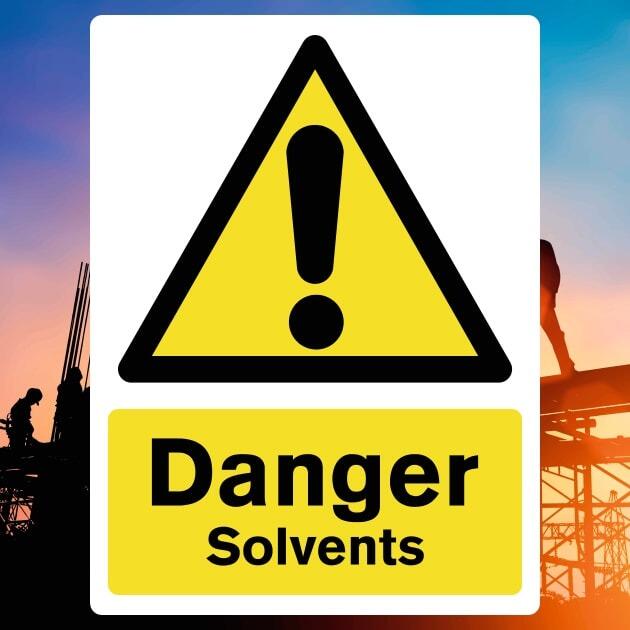
Solvent Warning Signs can help identify areas where solvent-related hazards are present.
The appropriate message depends on the particular solvent, its properties and how it is used.
Some solvents may present flammability hazards, while others require different exposure precautions.
LPG & Petroleum Signs
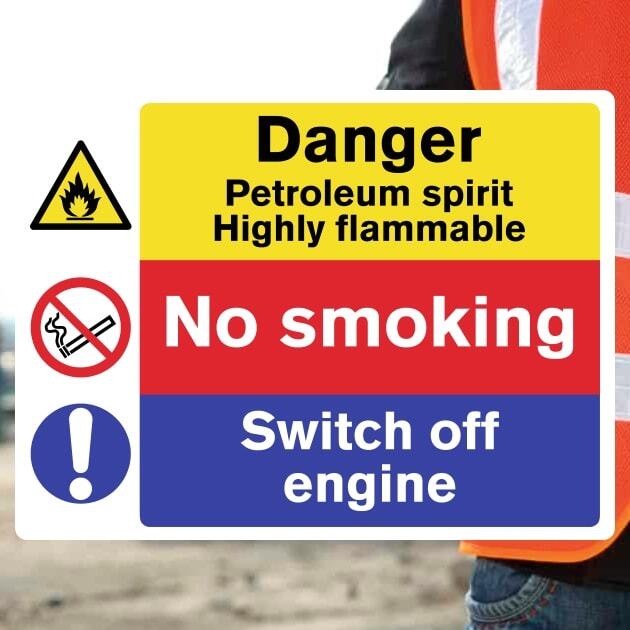
LPG and Petroleum Spirit Signs communicate specific hazards associated with relevant fuel storage and handling locations.
Depending on the installation and risk assessment, suitable notices may include:
- LPG Flammable.
- No Smoking.
- Petroleum Spirit Danger.
- No Naked Flames.
Choose the correct combination for the actual storage or operational area.
Explosive Gas Warning Signs
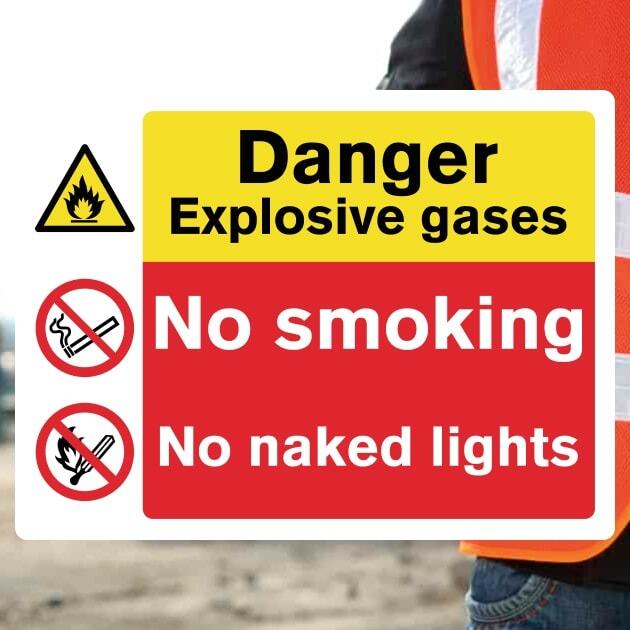
Explosive Gas Signs can help communicate an identified gas-related hazard.
These may be relevant to specialist industrial or process environments.
The sign should accurately reflect the hazard and support suitable controls for the installation.
Hazardous Waste Signs
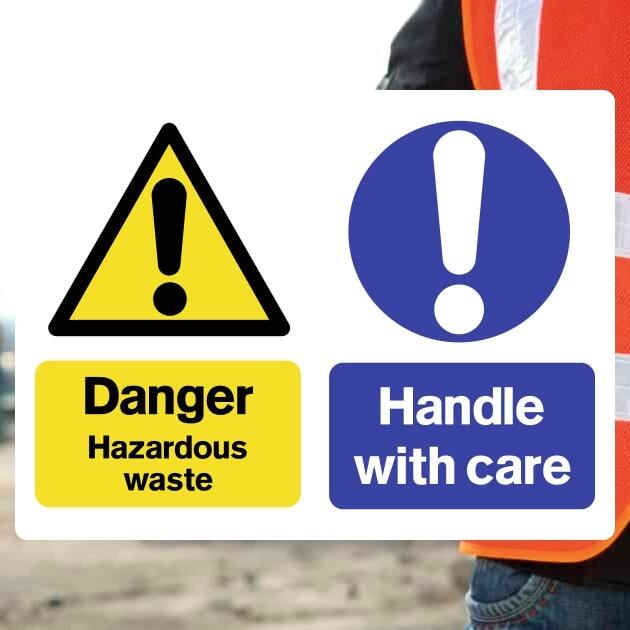
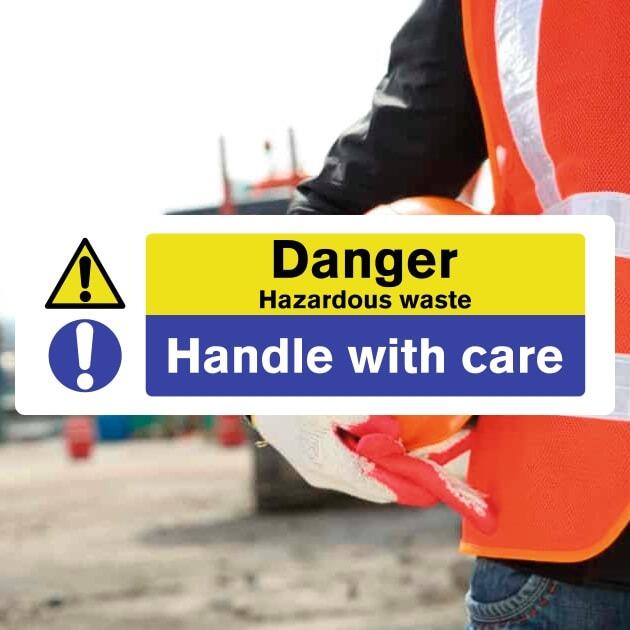
Hazardous Waste Signs help identify designated waste handling and storage areas.
They may be useful in industrial premises, workshops, warehouses and waste management facilities.
Choose signage that reflects the materials being handled and the site's waste management arrangements.
Asbestos Warning Signs
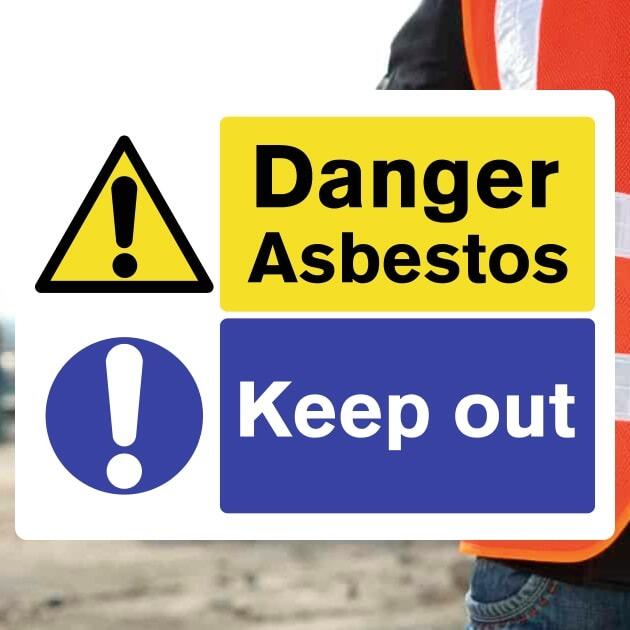
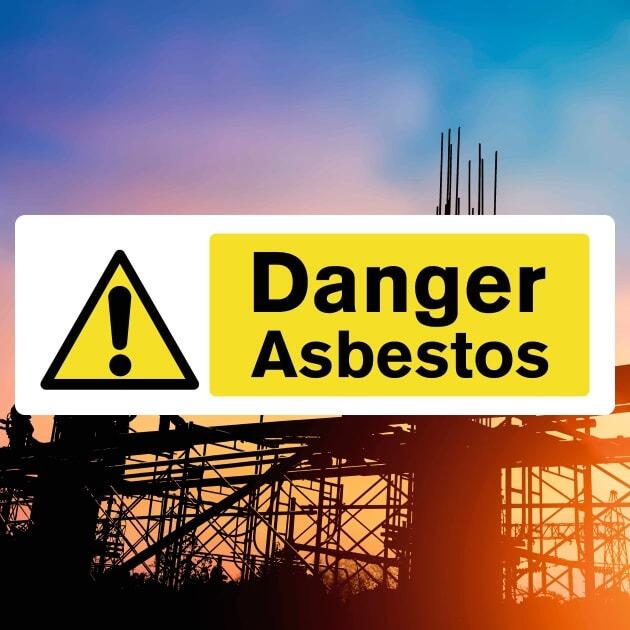
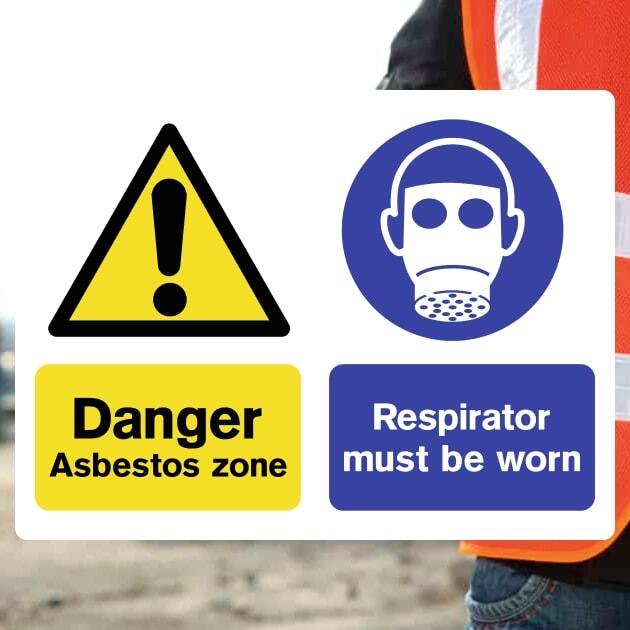
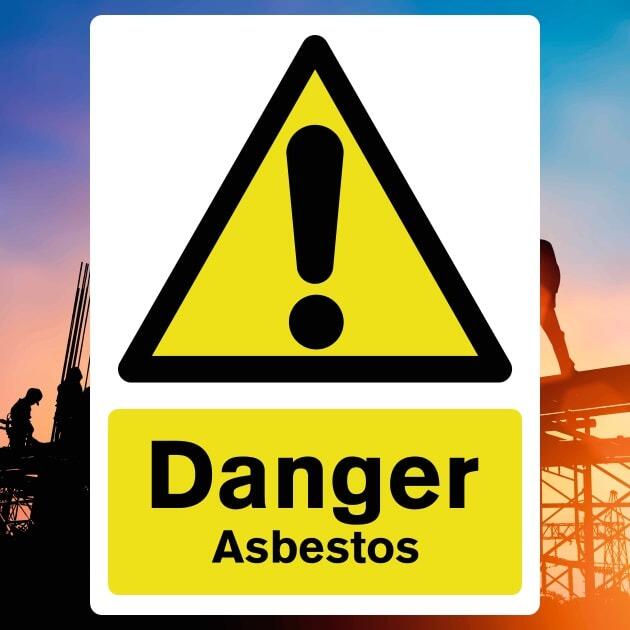
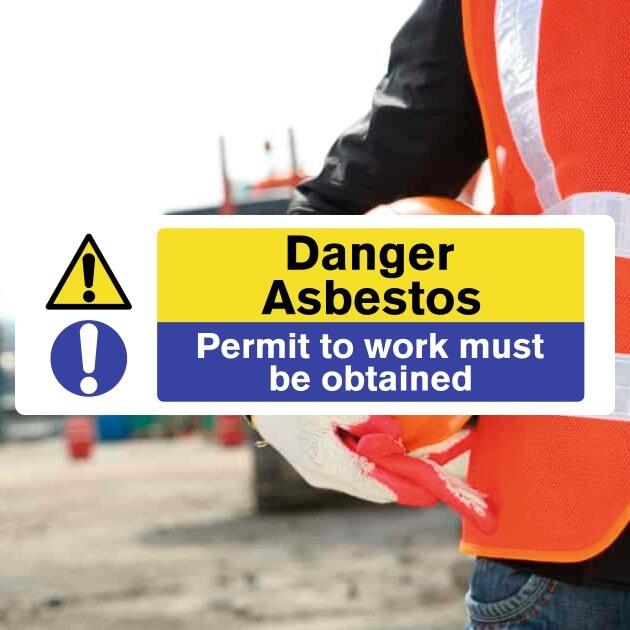
Asbestos Warning Signs communicate hazards and access restrictions associated with asbestos-containing materials or controlled asbestos work.
Examples include:
- Asbestos Danger.
- Asbestos Keep Out.
- Asbestos Zone.
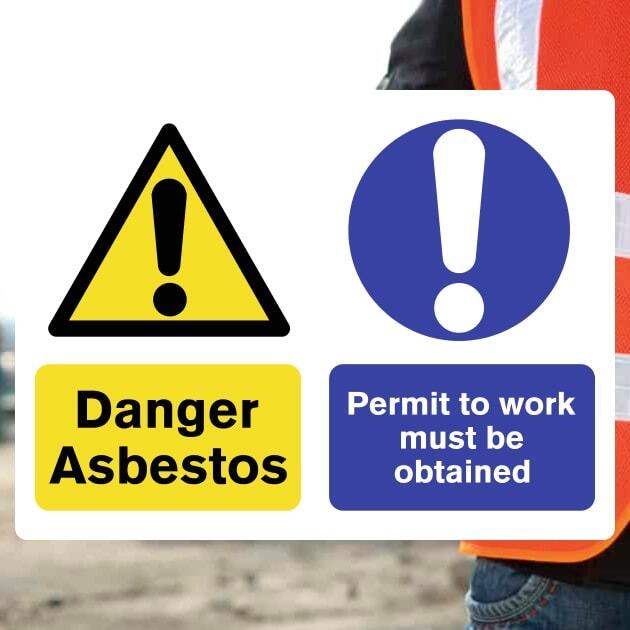
- Asbestos Permit to Work.
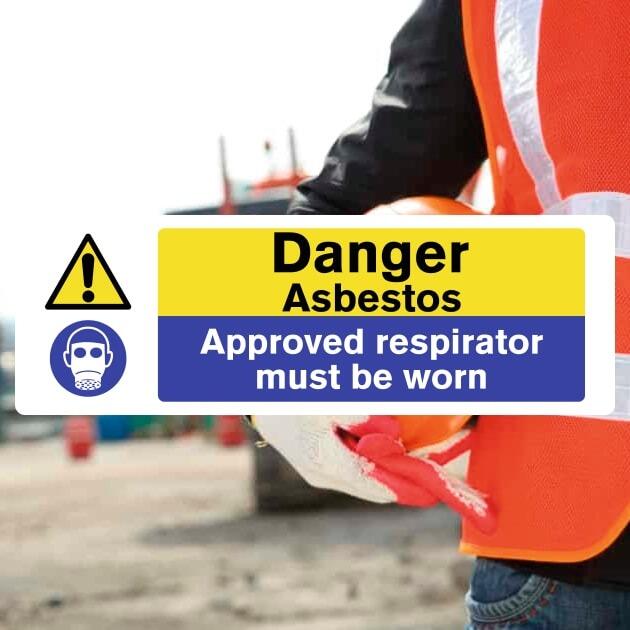
- Asbestos Respirator.
Asbestos is subject to its own specific regulatory requirements. Signage must support appropriate assessment, controls and competent working arrangements.
Where Are Chemical Safety Signs Used?
Factories & Manufacturing
Manufacturing environments may require chemical warnings around production areas, processing equipment, cleaning chemicals and hazardous substance stores.
Laboratories
Laboratories may use a combination of chemical hazard warnings, access restrictions and task-specific safety instructions.
Warehouses & Storage Facilities
Where chemicals are stored, suitable signage can help identify hazards and communicate restrictions at relevant access points.
Workshops & Garages
Vehicle workshops may use solvents, fuels, cleaning chemicals and other products requiring appropriate hazard communication.
Farms & Agricultural Premises
Agricultural premises may contain chemical stores, fuel storage, pesticides and other hazardous materials.
Choose warnings that accurately reflect the products and activities on site.
Cleaning & Maintenance Areas
Commercial cleaning stores and maintenance rooms may require relevant chemical hazard notices, particularly where concentrated products are stored or handled.
Chemical Safety Signs & COSHH
The Control of Substances Hazardous to Health Regulations (COSHH) require employers to assess and control risks arising from substances hazardous to health.
Appropriate signage may form part of communicating those risks, but displaying a warning notice does not by itself satisfy COSHH requirements.
Businesses should consider the substances used, potential exposure, appropriate control measures, employee information and training.
Safety Data Sheets can help inform the assessment, but they are not a substitute for carrying out a suitable workplace risk assessment.
Chemical Warning Signs vs Chemical Container Labels
These two types of hazard communication serve different purposes.
Chemical container labels identify the contents of a substance or mixture and communicate relevant hazard information under applicable classification and labelling rules.
Workplace Chemical Safety Signs warn people about hazards or communicate instructions at particular locations.
A wall-mounted warning sign does not automatically replace the required label on a chemical container.
Similarly, a labelled container does not necessarily remove the need for appropriate workplace signage where significant risks remain.
What Colour Are Chemical Safety Signs?
Recognised safety signage uses different colours and shapes to communicate different messages.
Warning Signs: Generally use a yellow triangle with a black border and symbol.
Prohibition Signs: Use a red circular border and diagonal line to communicate prohibited actions, such as No Smoking.
Mandatory Signs: Generally use a blue circular design to communicate required actions.
Emergency & Safe Condition Signs: Use green to identify relevant safety facilities and emergency information.
Chemical product labels may instead feature red-bordered diamond hazard pictograms. These belong to a different labelling system and shouldn't automatically be treated as interchangeable with workplace safety signs.
Chemical Safety Signs & UK Regulations
The Health and Safety (Safety Signs and Signals) Regulations 1996 establish requirements for workplace safety signage.
Appropriate signs are required where significant risks remain after other relevant safety measures have been implemented and signage can help reduce those remaining risks.
Other requirements, including COSHH and applicable chemical classification and labelling legislation, may also be relevant.
The correct arrangements depend on the substances, workplace activities and identified hazards.
A warning sign should support suitable storage, handling, ventilation, access controls, training and emergency procedures rather than replace them.
Chemical Safety Signs & ISO 7010
BS EN ISO 7010 provides standardised graphical symbols for recognised safety signage.
Using appropriate symbols can help communicate workplace hazards consistently.
However, not every chemical information notice, substance-specific instruction or combined warning board automatically conforms to ISO 7010.
Any claim of compliance with a particular standard should be checked against the individual product design.
Where Should Chemical Safety Signs Be Positioned?
Position chemical safety signage where people need to recognise the hazard or instruction before encountering it.
Typical locations include:
- Chemical store entrances.
- Relevant storage cupboards.
- Laboratories.
- Mixing and dispensing areas.
- Hazardous waste storage points.
- Restricted industrial working areas.
- Relevant handling and maintenance locations.
Make sure signs remain visible and aren't obscured by open doors, shelving or stored materials.
Choosing the Right Chemical Safety Sign Size
Choose the sign size according to viewing distance, mounting height and workplace conditions.
Consider:
- Intended viewing distance.
- Symbol and text size.
- Lighting.
- Mounting position.
- Approach direction.
- Colour contrast.
- Indoor or outdoor exposure.
The message should be recognisable before somebody enters or approaches the relevant hazardous area.
Choosing Chemical Safety Sign Materials
Different working environments require different materials.
Depending on the product, options may include self-adhesive vinyl, rigid plastic, recycled plastic and aluminium composite.
Choose a material and fixing method suitable for the mounting surface and expected conditions.
Where chemical splashes, cleaning agents or other environmental factors are relevant, consider the suitability of the complete sign and fixing arrangement.
Chemical Safety Sign Buying Checklist
Before ordering, ask:
- What chemical hazard needs to be communicated?
- Is a general warning sufficient?
- Would a more specific substance warning be clearer?
- Are additional access restrictions necessary?
- Is a PPE instruction required?
- Does the sign accurately reflect the substance or process?
- Where should it be displayed?
- Is the sign large enough for the viewing distance?
- Is the material suitable for the environment?
- Are the wider risk controls and emergency arrangements in place?
Review signs when substances, processes or storage arrangements change.
Made in Britain Chemical Safety Signs
Safety Sheep supplies Made in Britain Chemical Safety Signs for UK businesses, laboratories, factories, warehouses, workshops, farms and commercial premises.
Our range includes Corrosive, Flammable Liquid, Hazardous Substances, Solvents, LPG, Hazardous Waste and Asbestos warning signs.
Available in a choice of sizes and materials, with bulk savings for businesses and trade customers.
Think Safety. Think Sheep.
Chemical Safety Signs FAQs
What are Chemical Safety Signs?
Chemical Safety Signs communicate hazards, restrictions and safety instructions associated with chemicals, hazardous substances and relevant workplace activities.
What are the most common Chemical Hazard Signs?
Common examples include Corrosive, Flammable Liquid, Hazardous Substances, Acid, Solvents, LPG and Hazardous Waste signs.
What is the difference between a Chemical Safety Sign and a COSHH label?
A workplace safety sign communicates a hazard or instruction at a location. A chemical product label identifies the substance or mixture and provides relevant classification and hazard information.
Are Chemical Safety Signs a legal requirement in the UK?
Appropriate workplace safety signage is required where significant risks remain after other relevant safety measures have been implemented and signs can help reduce those risks.
Does displaying a Chemical Safety Sign make a workplace COSHH compliant?
No. Signage may support hazard communication, but COSHH also requires appropriate assessment, exposure controls, information and training.
What colour are Chemical Warning Signs?
Recognised workplace warning signs generally feature a yellow triangle with a black border and symbol.
When should a Flammable Liquid Sign be used?
A Flammable Liquid Sign may be appropriate where an identified flammable liquid hazard needs to be communicated.
Do Chemical Safety Signs have to comply with ISO 7010?
BS EN ISO 7010 provides recognised safety symbols. However, not every custom chemical notice or combined instruction automatically falls within the standard.
Can a warning sign replace a chemical container label?
No. Workplace warning signs and chemical product labels serve different purposes and should not automatically be treated as interchangeable.


