

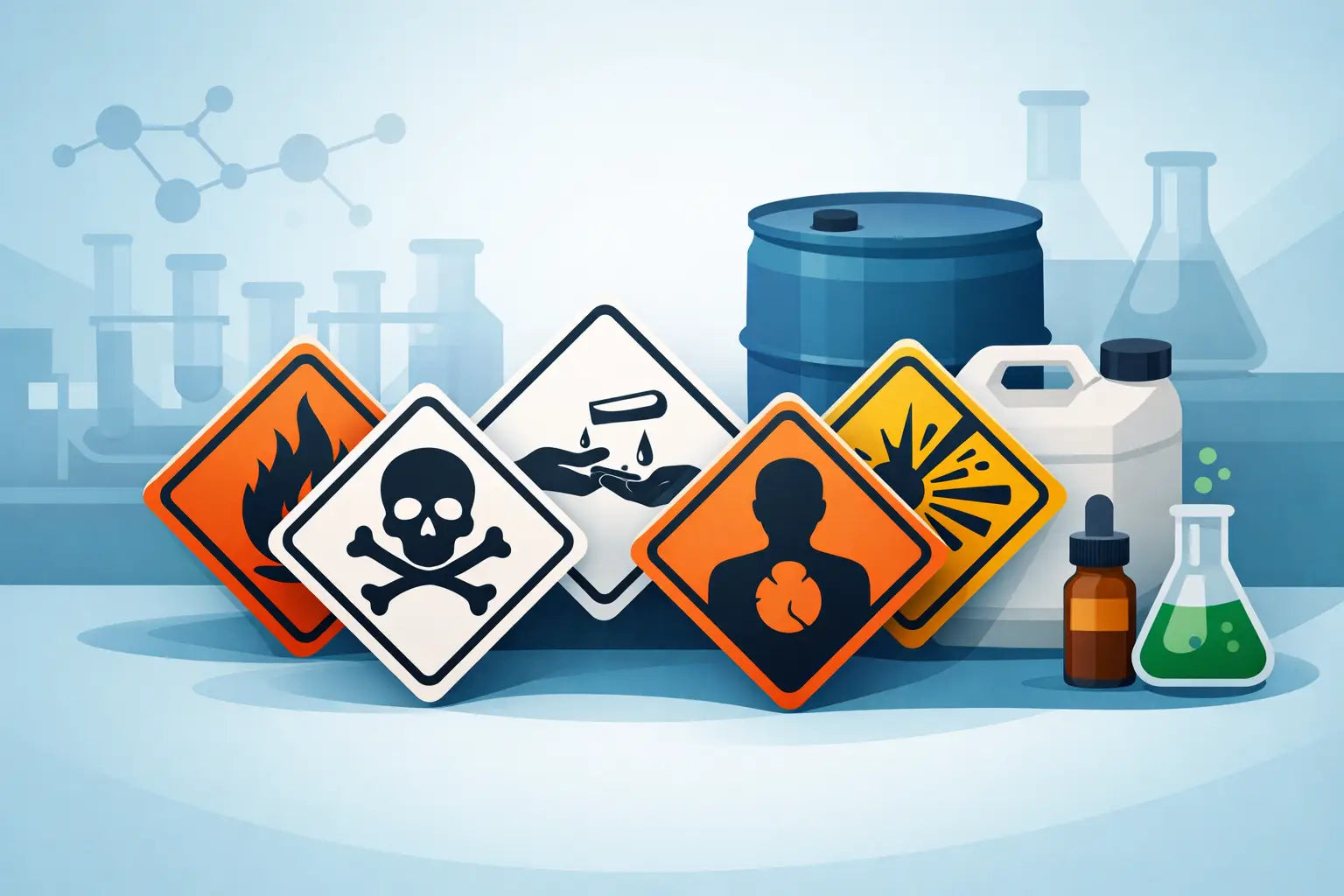
A missing chemical warning sign is rarely noticed until something goes wrong. A cleaner decants a corrosive liquid into a spray bottle, a contractor enters a store room without the right PPE, or a visitor opens a cupboard that should have been clearly marked. That is why hazard warning signs for chemicals are not just a box-ticking exercise. In UK workplaces, they help prevent exposure, guide behaviour and support legal compliance in areas where the risk is real and often immediate.
Why hazard warning signs for chemicals matter
Chemical hazards are easy to underestimate because many substances look harmless at a glance. A clear liquid can be corrosive. A common aerosol can be highly flammable. Dust, fumes and vapours may not be visible at all. Signage acts as a fast, visual warning where people make split-second decisions.
For employers, site managers and facilities teams, the job is not simply to put a sign on the wall. The sign needs to match the actual hazard, be placed where it can be seen before exposure, and remain legible in the conditions it is used in. In practice, that means thinking about entrances to stores, chemical mixing points, washdown areas, plant rooms, workshops, farms and cleaning cupboards as much as laboratories.
There is also a practical point. Good signage reduces confusion for staff, contractors and visitors who may not know your site layout or stock. It supports inductions and reinforces COSHH controls without slowing work down.
What these signs usually show
In most UK workplaces, chemical hazard signage is built around recognised warning symbols and short, direct wording. The familiar yellow warning triangle is used to alert people to a hazard in the area, while product labels carry CLP pictograms that identify the nature of the substance itself. Those two things work together, but they are not the same.
A storage area sign might warn of corrosive substances or flammable materials in the room. The individual containers inside should then carry the correct product labelling for the chemical they contain. If one is missing, the other does not fully replace it.
This is where many sites slip up. They have compliant containers but no area signage, or the right wall sign but poorly labelled transfer bottles. If you are responsible for safety, it is worth checking both.
Common chemical hazards you may need to sign
The exact mix depends on your environment, but the most common chemical risks include flammable liquids, oxidising agents, corrosive substances, toxic materials and irritants. You may also need to warn about gases under pressure or substances that present serious health hazards through inhalation or long-term exposure.
For example, a vehicle workshop may need flammable and harmful substance warnings, while a food production area might focus on cleaning chemicals, sanitisers and corrosives. Farms often need signs for pesticides, fuel stores and chemical sheds. In schools and public buildings, even a small cleaning store may need proper hazard identification if chemicals are kept on site.
Choosing the right sign for the risk
The right sign starts with the actual substance and the way it is used. If a chemical is stored in bulk, your signage needs to warn people before they enter the space. If it is handled during a task, the sign should support safe behaviour at the point of use. If emergency action is critical, extra instruction may be needed nearby.
That is why generic signage can be useful in one area and unhelpful in another. A simple warning sign stating that hazardous chemicals are stored inside may be suitable for a locked cabinet or plant room door. In a mixing station or process area, a more specific sign such as warning corrosive substances or warning toxic chemicals may do a better job.
There is always a balance to strike. Too little information leaves risk unclear. Too many signs clustered together can make people ignore all of them. The best approach is usually a clear primary warning with only the supporting messages that are genuinely needed.
Match signage to who uses the space
A chemical store used only by trained staff can often rely on concise, hazard-specific signage because users already understand the context. A mixed-use building with visitors, agency staff or multiple contractors usually needs clearer, more visible warnings and better wayfinding.
This matters especially in shared premises, schools, leisure sites, housing blocks and public-facing environments. If someone can reach a hazard area without prior briefing, the sign needs to do more work.
Where chemical warning signs should be placed
Placement matters as much as wording. A sign fixed behind a door, hidden by shelving or mounted too low to be seen over stored stock will not do its job. In most cases, chemical warning signs should be positioned at the entrance to the area, on the door of the store, cabinet or room, and close to the point where handling takes place if there is a task-specific risk.
Think about the route a person takes before exposure. The warning needs to appear before they open the wrong cupboard, walk into the wrong bay or start a job without protection. In larger sites, repeated signage may be necessary where chemicals are stored in more than one place or where access routes are not obvious.
Material choice also matters. Internal office cupboards do not need the same sign specification as outdoor fuel and chemical stores exposed to weather, abrasion or washdown. For tougher environments, durability is part of compliance because a faded sign quickly stops being a clear sign.
Compliance is not just about buying any sign
UK duty holders usually think about COSHH first, and rightly so. Risk assessments, safe storage, training and labelling all sit alongside signage. But signage still plays a direct role in communicating residual risk and supporting safe systems of work.
The key point is that chemical warning signs should reflect the findings of your assessment, not guesswork. If your COSHH register identifies corrosive cleaning chemicals in one room and flammable solvents in another, the signage should show that distinction. A one-size-fits-all warning may be fast to order, but it is not always accurate enough.
There is also a housekeeping angle. Sites change. Products are swapped, stores are moved and contractors leave temporary containers behind. A sign that was right two years ago may now be misleading. Regular checks are worth building into routine inspections, especially across multi-site estates.
When standard warning signs are not enough
Sometimes a warning sign on its own is too limited. If PPE is mandatory for handling a substance, that may need a separate mandatory sign nearby. If emergency eyewash or spill response equipment is required, those locations should be clearly identified as well. Where unauthorised access is a problem, prohibition signage may need to sit alongside the hazard warning.
This layered approach is often the most effective. A warning triangle tells people there is danger. A PPE sign tells them what to do. An emergency sign helps them respond if something goes wrong. Used properly, those messages complement each other rather than compete.
For busy working environments, that joined-up approach is often what keeps signage practical rather than decorative.
Buying chemical signage without wasting time
For procurement teams and site managers, the challenge is usually speed. A damaged sign needs replacing quickly, a new store needs fitting out, or several sites need the same message in consistent formats. The easiest way to avoid delays is to order by hazard type, environment and fixing method rather than by appearance alone.
Size should suit viewing distance. Material should suit location. Wording should suit the risk level and likely audience. If you are ordering in volume, consistency across sites helps with training and inspections, and bulk purchasing can make sense where standard messages repeat across an estate.
This is also where a specialist supplier helps. A safety signage range organised by category and application saves time compared with trawling through general print products. At The Safety Sheep Store, that practical, compliance-led structure is exactly what many trade buyers need when the clock is already ticking. Think Safety - Think Sheep.
A simple standard worth keeping
Chemical hazards are not always dramatic, but they are rarely forgiving. A clear sign in the right place can stop a bad decision before it starts, support the controls you already have in place and make your site easier to manage for everyone who uses it. If a sign is faded, generic or missing altogether, that is usually your cue to fix it now rather than after someone asks why it was not there.
Share:
Fire Exit Sign Requirements UK Explained
Choosing PPE Signs for Workplace Safety