

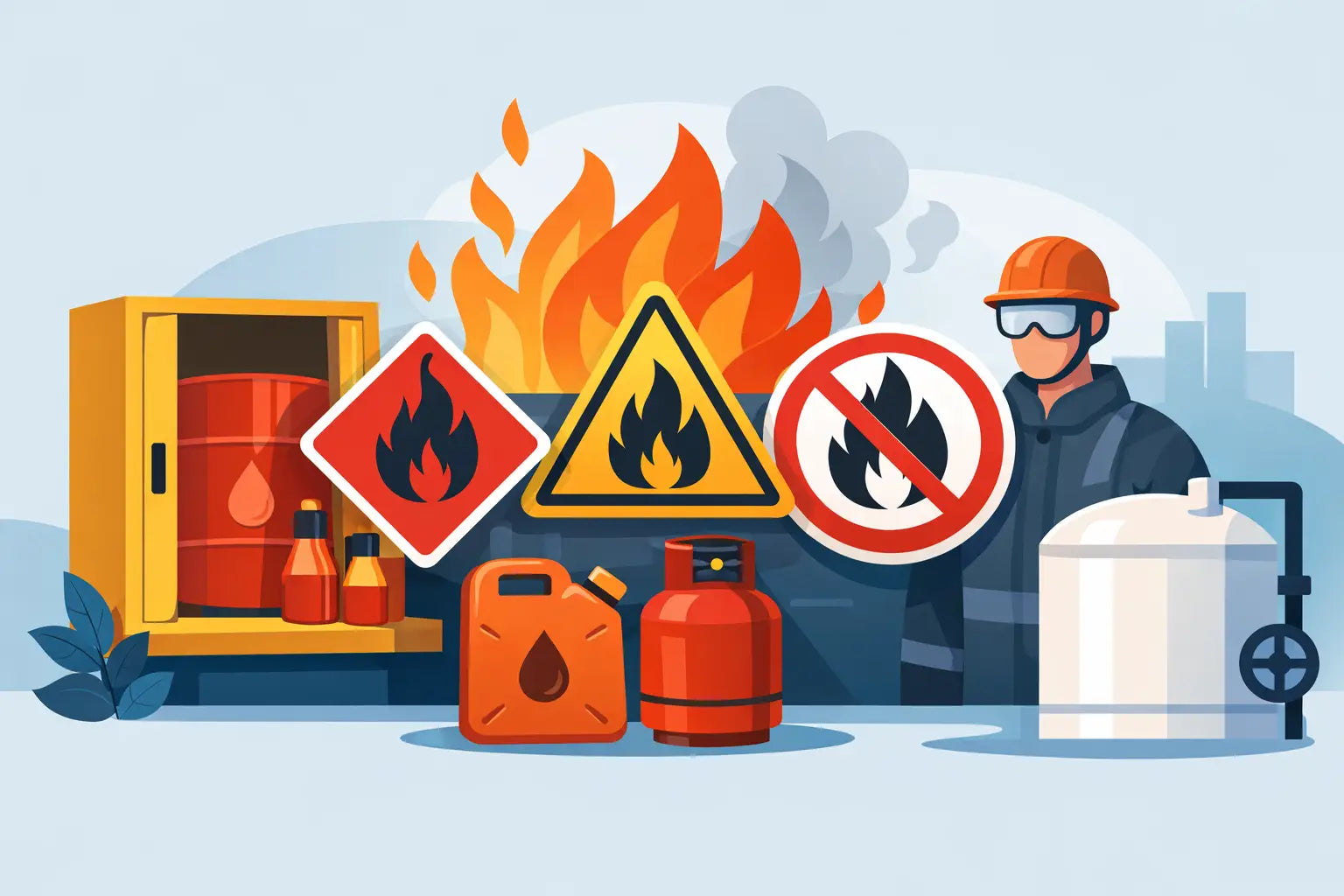
A flammable liquids cabinet with no clear sign on the door is the sort of detail that gets missed - right up until a contractor, cleaner or delivery driver walks into the area and makes the wrong assumption. Flammable storage warning signs are there to remove doubt quickly. In workplaces where fuel, solvents, paints, aerosols or chemicals are stored, that matters for compliance, fire prevention and day-to-day control.
The right sign does a simple job well. It tells people that hazardous materials are present, that ignition sources must be controlled, and that the storage area is not just another cupboard, store room or workshop bay. For site managers and buyers, the challenge is usually not whether to display a sign. It is choosing the right type, placing it properly and making sure it stays legible in a real working environment.
Why flammable storage warning signs matter
Where flammable substances are stored, signage supports the wider control measures already in place. It does not replace risk assessment, ventilation, segregation or safe handling procedures, but it plays an important supporting role. A clear visual warning helps employees, visitors and contractors recognise the hazard before they open a cabinet, enter a store or start work nearby.
That becomes especially important on mixed-use sites. A warehouse may have maintenance staff, agency workers, drivers and external engineers all moving through the same building. Not everyone knows where flammable products are kept, and not everyone will be familiar with the layout. A properly displayed sign gives an immediate warning without relying on induction memory or local knowledge.
From a compliance point of view, signage also shows that hazards have been identified and communicated. UK workplaces handling dangerous substances are expected to manage risks properly, and warning signs form part of that practical safety picture. If a storage point contains petrol, thinners, LPG, cleaning solvents or other combustible materials, it should be obvious to anyone nearby that extra care is needed.
What information should the sign communicate?
Not every storage area needs exactly the same message. The best choice depends on what is being stored, who uses the area and how much detail people need in the moment. In many cases, a hazard warning triangle with a flame symbol and wording such as "Flammable مواد" would not be suitable in a UK setting because clarity matters. British workplaces usually need plain English wording that can be understood at a glance.
For most sites, a flammable warning sign should communicate one or more of the following points: that flammable substances are present, that naked flames are prohibited, that smoking is not allowed, or that access is restricted to authorised personnel. Sometimes one sign is enough. In higher-risk areas, a combination of hazard, prohibition and mandatory messages is more effective.
For example, a small janitorial cupboard holding limited quantities of aerosol cleaners may only need a straightforward warning and a no smoking sign nearby. A dedicated chemical store or flammable liquids cabinet in a workshop may need more visible messaging, especially where contractors or temporary staff could access the area.
Choosing the right flammable storage warning signs
The first decision is whether you need a general warning sign or a more specific message. General signs work well where the hazard is obvious once identified but the exact substance is less important than the fire risk. Specific signs are better where the storage arrangement creates a particular instruction, such as "No naked flames", "Highly flammable" or "Flammable liquids store".
Material choice matters too. In an indoor plant room or warehouse, a standard rigid plastic sign may be perfectly suitable. In a farm building, external compound or exposed service yard, a more durable option may be better if weather, washdown or dirt are likely to reduce visibility. The cheapest sign is not always the most cost-effective if it curls, fades or cracks after one season.
Size should match viewing distance and traffic conditions. A label on a cabinet door can be smaller because it is read close up. A sign identifying a flammable store across a loading area needs to be larger and easier to read from a distance. If fork-lift traffic, stacked goods or parked vehicles regularly obstruct sightlines, the sign may need to be bigger or mounted higher.
There is also a practical trade-off between keeping signage concise and overloading an area with warnings. Too many messages clustered around a door or cabinet can reduce impact. People stop noticing what should stand out. The aim is clear communication, not visual clutter.
Where signs should be placed
Position is just as important as wording. A flammable warning sign needs to be seen before someone interacts with the hazard, not after. On a cabinet, that usually means the front-facing door at eye level where possible. On a room or enclosed store, it should be mounted on or beside the entrance so the warning is visible before entry.
If the storage area sits within a larger workspace, repeat signage may be sensible. A single sign on an internal door may not be enough if the route into the area is not obvious or if staff regularly approach from different directions. In larger premises, wayfinding and hazard marking often need to work together.
Outdoor storage brings extra considerations. Fencing, gates and compounds should carry signage where people first approach the area. If tanks, cages or cabinets are set back from the gate, a second sign closer to the actual storage point can help. Dirt, weathering and seasonal growth can all block visibility, so checks should form part of routine inspections.
Common locations that need clear warning signage
Flammable storage is not limited to chemical factories. Many ordinary workplaces hold products that create a meaningful fire risk. Facilities teams often find that the issue is spread across several smaller storage points rather than one central hazardous area.
Typical examples include maintenance cupboards holding solvents and paint, groundskeeping stores containing petrol for equipment, workshops with thinners and adhesives, farm buildings storing fuels and oils, and industrial units using aerosols or coatings. Even smaller commercial premises may have a flammable liquids cabinet tucked into a back room. If the hazard exists, signage should reflect it.
This is where a practical, sector-led approach helps. A school site, a manufacturing unit and an agricultural yard will not all need the same sign set-up. The principle is the same, but the risks, users and environment differ.
Getting compliance right without overcomplicating it
Many buyers are not looking for a legal lecture. They want to know what is sensible, compliant and quick to implement. That usually means matching the sign to the hazard, using recognised safety colours and symbols, and making sure the sign is durable and clearly displayed.
If your site stores dangerous substances, signage should sit alongside the wider controls required by your risk assessment. That may include separation from ignition sources, suitable cabinets, spill control, staff training and emergency procedures. Signs support those measures by giving consistent visual instruction.
It is also worth checking older signs during site audits. Faded text, outdated wording, poor mounting or damaged corners can make a sign easy to ignore. If the cabinet has moved, the message may now be hidden behind shelving or equipment. Replacement is usually a low-cost fix compared with the risk of poor hazard communication.
For organisations managing multiple buildings, consistency is often the missing piece. If one site uses clear flammable storage warning signs and another relies on handwritten labels or mixed formats, standards quickly drift. Standardising sign types across estates, depots, farms or branches saves time and makes inspections easier.
Buying signs that work in the real world
For procurement teams and site managers, speed matters. So does confidence that the product will actually suit the job. The best buying decisions are usually straightforward: choose clear wording, the right symbol, the right material and a size that can be read where it is mounted.
If you are ordering for several cabinets, stores or compounds at once, it makes sense to review the whole requirement rather than buying one sign at a time. That approach reduces delays, keeps messaging consistent and usually improves value, particularly where bulk savings apply. Think Safety - Think Sheep if you need a dependable UK source that makes compliance-led ordering easier.
Just as important is avoiding guesswork. If you are unsure whether a general warning sign is enough or whether the area needs prohibition signage as well, look at how people actually use the space. Do they pass through briefly, work in it regularly, or access it without supervision? The answer often tells you how much instruction is needed.
Flammable hazards do not become safer because they are stored neatly behind a locked door. A clear sign on that door helps everyone make better decisions before a problem starts.
Share:
Dangerous Machinery Warning Signs Explained
Difference Between Mandatory and Prohibition Signs