

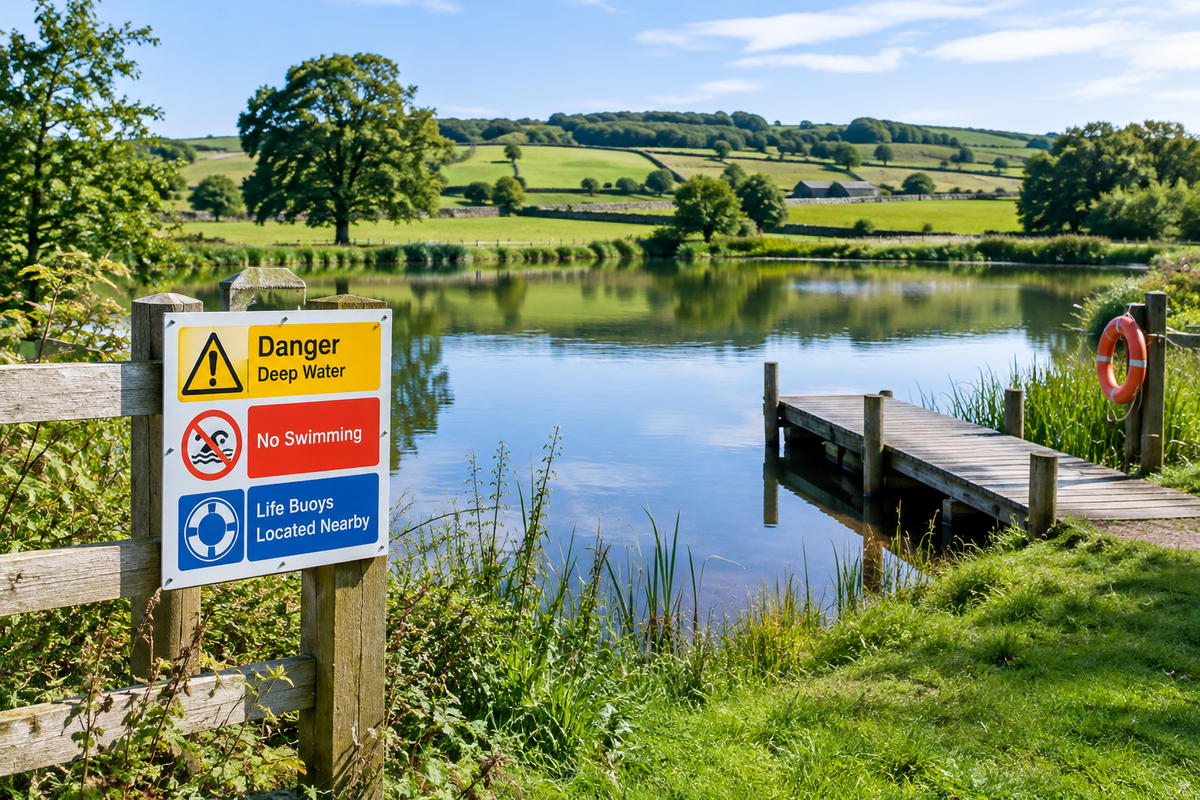
Water can present serious hazards, even in places that appear calm, familiar or relatively shallow.
Whether you're responsible for a swimming pool, lake, reservoir, riverbank, marina, farm pond or commercial waterside property, clear Water Safety Signs can help visitors, employees and members of the public recognise potential dangers and understand important restrictions.
But which signs should you display? Do you need a Deep Water warning, a No Swimming notice or a more specific hazard sign? And where should signs be positioned to make them effective?
This practical UK checklist explains the main types of Water Hazard Signs, where they may be appropriate and what businesses and landowners should consider before ordering.
Why Are Water Safety Signs Important?
Water-related hazards aren't always immediately obvious.
A lake may have steep underwater banks, a river may contain strong currents, and a seemingly harmless pond may present a drowning risk.
In managed leisure facilities, visitors may also need information about water depth, prohibited activities, safety equipment and designated areas.
Appropriate signage can help:
-
Warn people about identified hazards.
-
Communicate swimming and diving restrictions.
-
Reinforce relevant safety instructions.
-
Identify designated water activity areas.
-
Provide information at entrances and access points.
-
Support wider water safety arrangements.
However, displaying a sign doesn't remove the underlying hazard.
Signage should form part of an appropriate approach to managing water-related risks, alongside other measures identified as necessary for the location.
Is There a Legal Requirement to Display Water Safety Signs in the UK?
There isn't one universal checklist of water safety signs that every UK lake, swimming pool, marina or private landowner must display.
The appropriate signage depends on factors such as the location, identified risks, activities taking place and relevant legal responsibilities.
For workplaces, the Health and Safety (Safety Signs and Signals) Regulations 1996 may require suitable safety signs where significant risks remain after other relevant safety measures have been implemented.
Other duties and guidance may also be relevant depending on the circumstances, particularly for managed public-facing facilities and organised water activities.
Businesses and landowners should select signs according to the actual risks and restrictions rather than assuming every waterside location needs exactly the same notices.
Water Safety Sign Checklist
Use the following checklist to review your premises and identify which signs may be appropriate.
1. Deep Water Signs
Check: Could people encounter water that is deeper than expected?
Deep Water Signs warn people that the depth may present a hazard.
They can be particularly useful around:
-
Lakes
-
Reservoirs
-
Canals
-
Marinas
-
Farm ponds
-
Industrial water features
-
Other open-water locations
Consider positioning the sign where somebody may approach the water, rather than waiting until they're already at the edge.
2. Danger Drowning Signs
Check: Has a potential drowning hazard been identified?
Danger Drowning Signs communicate a serious water-related risk.
They may be appropriate around deep water, drainage ponds, reservoirs, industrial lagoons and other locations where entering or falling into the water could have severe consequences.
A drowning warning should be clearly visible and positioned where people can recognise the danger before reaching the hazardous area.
3. Strong Currents Signs
Check: Could moving water create a danger that isn't immediately obvious?
Strong currents can present a risk even where the water surface appears relatively calm.
Signs may be appropriate around rivers, waterways, channels and other locations where water movement creates an identified hazard.
Use wording that accurately reflects the conditions at the site.
4. Fast Flowing Water Signs
Check: Is the speed or force of moving water a particular concern?
Fast Flowing Water Signs can help identify hazardous conditions around rivers, drainage channels and managed waterways.
Where conditions change significantly during heavy rainfall or seasonal flooding, consider whether your wider safety arrangements adequately address those changes.
5. Sudden Drop Signs
Check: Does the water become deeper unexpectedly?
A sudden change in depth can create a hazard for people entering the water or approaching the edge.
Sudden Drop Signs can help warn visitors where the risk has been identified.
They may be particularly relevant around swimming areas, lakes and managed waterside facilities.
6. Shallow Water Signs
Check: Could people incorrectly assume that the water is deep enough for a particular activity?
Shallow Water Signs can help communicate conditions where entering the water or diving could be dangerous.
For swimming pools and managed leisure environments, combine appropriate warning signs with clear operating rules and other necessary safety measures.
7. No Swimming Signs
Check: Is swimming prohibited in the area?
A No Swimming Sign communicates a restriction rather than simply warning that water is present.
These signs may be appropriate around:
-
Reservoirs
-
Farm ponds
-
Industrial water features
-
Restricted lakes
-
Commercial waterside premises
-
Other locations where swimming is not permitted
Choose a sign with a clear prohibition message and position it before somebody enters the restricted area.
A Deep Water warning doesn't necessarily communicate that swimming is prohibited.
8. No Diving Signs
Check: Is diving prohibited because of water depth, underwater hazards or facility rules?
No Diving Signs are particularly relevant around swimming pools, shallow-water areas and managed leisure facilities.
Where the restriction applies only to part of a pool or designated area, make sure the signage clearly identifies the relevant location.
9. Swimming Pool Rules Signs
Check: Does your swimming pool need a clear summary of its operating rules?
Swimming pools may need a combination of warning, prohibition and information signs.
Depending on the facility, relevant notices could include:
-
No Running
-
No Diving
-
No Inflatables
-
No Outdoor Footwear
-
Shallow Water
-
Water Depth
-
Wave Machine Operates
-
Other facility-specific rules
Choose signs according to the pool's risk assessment and operating procedures.
Avoid adding unnecessary rules that don't apply to your facility.
10. Water Depth Signs
Check: Do pool users need clear information about the depth of the water?
Water Depth Signs can help communicate depth information at relevant locations.
This is particularly important where depth changes across the pool.
Ensure that any stated measurements accurately reflect the facility.
11. Life Jacket Signs
Check: Are life jackets required for a particular activity or operational area?
Where appropriate, mandatory signs can reinforce requirements to wear life jackets.
These may be relevant to boating activities, waterside work and certain managed leisure environments.
Signage should support suitable equipment provision, training, supervision and other relevant safety arrangements.
12. Buoyancy Aid Signs
Check: Are buoyancy aids required for a particular activity?
Buoyancy Aid Signs can communicate requirements for designated water sports or managed activities.
Choose wording that reflects the actual equipment requirements.
A buoyancy aid and a life jacket aren't necessarily interchangeable, so use the appropriate instruction for the activity.
13. No Fishing Signs
Check: Is fishing prohibited in the area?
No Fishing Signs can help communicate restrictions around private ponds, managed waterways, reservoirs and other relevant locations.
Before installing access or activity restrictions around natural waterways, ensure that the wording accurately reflects the applicable rights and permissions.
14. Private Fishing Signs
Check: Is fishing permitted only for authorised users or permit holders?
Private Fishing and Fishing Permit Signs can help identify managed fishing arrangements.
They may be useful around private lakes, estates, fisheries and other designated fishing locations.
15. Water Sports & Activity Signs
Check: Are different activities permitted in designated areas?
Managed water sports facilities may benefit from signs identifying particular activity zones.
Examples include:
-
Swimming Area
-
Sailing Area
-
Rowing Area
-
Diving Area
-
Snorkelling Area
-
Windsurfing Area
-
Kitesurfing Area
-
Water Skiing Area
-
Motorised Craft Area
Clear activity identification can help users understand how the facility is organised.
Where activities are prohibited, use an appropriate prohibition sign rather than relying on an information sign alone.
16. Thin Ice Signs
Check: Could frozen water create a seasonal hazard?
Thin Ice Signs can help warn people where frozen ponds, lakes or other water features present an identified risk.
Consider whether additional temporary barriers, access controls or other measures are appropriate during freezing conditions.
17. Overhead Cables When Fishing Signs
Check: Could fishing rods or equipment come into contact with overhead electrical cables?
Overhead Cables When Fishing Signs communicate a specific hazard that may not be immediately obvious to anglers.
They can be relevant near fisheries, lakes, canals and other fishing locations where overhead electrical infrastructure presents a risk.
Where this hazard exists, signage should support appropriate separation and other necessary safety measures.
18. Water Safety Equipment Signs
Check: Is emergency or rescue equipment provided at the location?
Where appropriate, clear identification can help people locate water safety and rescue equipment.
Examples may include:
-
Lifebuoy
-
Rescue Equipment
-
Emergency Telephone
-
First Aid
Equipment locations should remain accessible, clearly identified and subject to appropriate inspection arrangements.
Where Should Water Safety Signs Be Positioned?
Choosing the correct sign is only part of the process.
The sign also needs to be visible at the point where somebody requires the information.
Consider positioning signs at:
-
Main entrances
-
Waterside access points
-
Swimming pool entrances
-
Lake and reservoir approaches
-
Riverbanks
-
Canal paths
-
Marina access points
-
Designated activity areas
-
Locations with identified hazards
For larger sites, additional signs may be necessary at secondary entrances or frequently used access routes.
Choosing the Right Water Safety Sign Size
The correct sign size depends on the intended viewing distance and location.
A sign mounted near a swimming pool may be viewed from relatively close range.
A warning positioned beside a large reservoir or outdoor lake may need to be more prominent.
Consider:
-
Viewing distance
-
Mounting height
-
Approach direction
-
Symbol size
-
Text size
-
Colour contrast
-
Lighting
-
Weather conditions
-
Vegetation
The objective is to make the message recognisable before somebody encounters the hazard.
Choosing Outdoor Water Safety Signs
Many water hazard signs are installed outdoors, where they may be exposed to rain, wind, sunlight and moisture.
Choose a material suitable for the location and intended lifespan.
Depending on the product, options may include rigid plastic, recycled plastic and aluminium composite.
Secure mounting and regular inspection are particularly important in exposed waterside environments.
Water Safety Sign Colours Explained
Recognised safety signage uses different colours and shapes to communicate different types of information.
Warning Signs: Commonly feature a yellow triangular design with a black border and symbol to warn of hazards.
Prohibition Signs: Use a red circular border and diagonal line to communicate actions that aren't permitted, such as No Swimming.
Mandatory Signs: Commonly feature a blue circular design to communicate required actions, such as wearing appropriate safety equipment.
Safe Condition & Emergency Information: Green signs can help identify emergency information, first aid and relevant safety facilities.
Using an appropriate recognised design can make instructions easier to understand.
However, not every water-related information or activity notice automatically falls within BS EN ISO 7010, and displaying a sign doesn't by itself establish legal compliance.
Printable Water Safety Sign Checklist
Use this summary when reviewing your premises or ordering replacement signage.
Water Hazard Warnings
-
Deep Water
-
Danger Drowning
-
Strong Currents
-
Fast Flowing Water
-
Sudden Drop
-
Shallow Water
-
Thin Ice
-
Overhead Cables When Fishing
Prohibition Signs
-
No Swimming
-
No Diving
-
No Fishing
-
No Running
-
No Inflatables
-
Other relevant activity restrictions
Mandatory & Safety Information
-
Life Jackets
-
Buoyancy Aids
-
Water Depth
-
Swimming Pool Rules
-
Rescue Equipment
-
First Aid
-
Emergency Telephone
Activity Identification
-
Swimming Area
-
Fishing Area
-
Sailing Area
-
Rowing Area
-
Diving Area
-
Snorkelling Area
-
Windsurfing Area
-
Kitesurfing Area
-
Other designated activities
Sign Positioning & Maintenance
-
Signs are positioned before the relevant hazard.
-
Main entrances have been reviewed.
-
Secondary access points have been considered.
-
Signs are large enough for the viewing distance.
-
Wording and symbols are clear.
-
Signs are suitable for the environment.
-
Vegetation doesn't obscure the message.
-
Damaged or faded signs are replaced.
-
Signs are reviewed when site conditions change.
Important: This is a selection checklist, not a list of signs that every waterside location must display. Choose only the notices relevant to your premises and identified risks.
A Practical Way to Review Your Water Safety Signage
One of the simplest ways to identify gaps is to walk through your site as though you're visiting for the first time.
Start at the main entrance.
Can you identify where water-related hazards are located?
Are relevant restrictions visible before somebody reaches the water?
If swimming or diving is prohibited, is that instruction clearly communicated?
Can visitors identify any designated activity areas?
Are emergency equipment locations appropriately marked?
This practical review can highlight missing, damaged or poorly positioned signs that may otherwise be overlooked.
Shop Water Hazard & Safety Signs at Safety Sheep
Safety Sheep supplies Water Hazard Signs & Water Safety Signs for UK businesses, landowners, leisure facilities, farms, estates and other waterside locations.
Our range includes Deep Water, Danger Drowning, Strong Currents, No Swimming, No Diving, swimming pool notices and designated water activity signs.
Choose from a selection of sizes and durable materials suitable for indoor and outdoor use.
Made in Britain, with bulk savings available for businesses and trade customers.
Think Safety. Think Sheep.
Share:
Private Land Signs: What Can Landowners Legally Display in the UK?
Deep Water & Drowning Hazard Signs: Where Should They Be Displayed?