

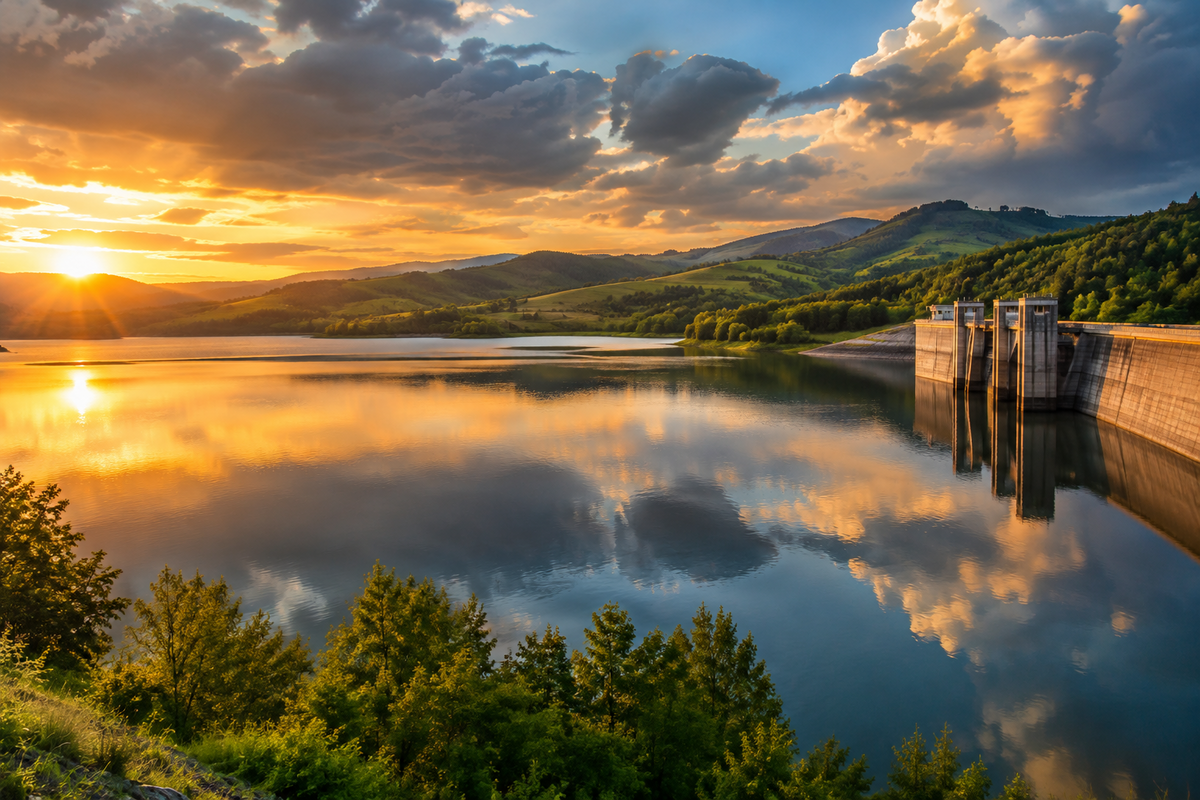
Deep water isn't always easy to recognise.
A lake may appear shallow from the bank, a farm pond may have steep underwater sides, and a reservoir may contain sudden changes in depth. Even familiar waterside locations can present risks to employees, visitors and members of the public.
Deep Water Signs and Drowning Hazard Signs help communicate these dangers before somebody approaches a hazardous area.
But where should they be installed? How many signs might a large site need? And should a Danger Drowning notice be used alongside a No Swimming sign?
This practical guide explains how UK businesses, landowners, local authorities and leisure operators can choose and position appropriate water hazard signage.
What Is a Deep Water Sign?
A Deep Water Sign warns people that nearby water may be deep enough to present a hazard.
It can be particularly useful where the water depth isn't immediately apparent from the surrounding environment.
Common locations include:
-
Lakes and reservoirs
-
Farm ponds
-
Canals
-
Marinas
-
Quaysides
-
Industrial water features
-
Drainage ponds
-
Other open-water locations
Deep Water Signs should communicate the identified hazard clearly and be positioned where people can recognise the danger before approaching the water.
What Is a Danger Drowning Sign?
A Danger Drowning Sign communicates a potentially serious water-related hazard.
While a Deep Water Sign identifies a particular characteristic of the water, a Danger Drowning notice provides a more direct warning about the potential consequences of entering or falling into it.
The most suitable message depends on the site's actual risks.
For example, a drainage lagoon with steep, slippery sides may present a drowning hazard even where water depth isn't the only concern.
Where Should Deep Water Signs Be Displayed?
The most effective position is usually somewhere people will see the warning before encountering the hazard.
Consider the following locations.
1. Lakes & Reservoirs
Lakes and reservoirs can contain deep water, steep underwater banks, sudden changes in depth and other hazards that aren't always visible from the shore.
Deep Water Signs may be appropriate at:
-
Main visitor entrances
-
Frequently used waterside paths
-
Popular viewing points
-
Informal access routes
-
Fishing locations
-
Areas where people can approach the water directly
For larger sites, one sign at the main entrance may not adequately communicate the hazard to people arriving from other directions.
Review the different routes people use to access the location.
Where swimming is prohibited, an additional No Swimming Sign may be appropriate.
2. Farm Ponds & Agricultural Land
Farm ponds, irrigation reservoirs and drainage lagoons may be situated close to agricultural tracks, public footpaths or working areas.
These locations can present risks to farm workers, contractors, visitors and other people who may encounter the water.
Consider installing warning signs at:
-
Farm tracks approaching the water
-
Gates and access points
-
Paths passing close to the pond
-
Exposed pond edges
-
Drainage lagoon entrances
-
Locations used by contractors or agricultural workers
Where a public right of way passes nearby, signage should warn of the genuine hazard without misleadingly suggesting that lawful access is prohibited.
Deep Water and Danger Drowning notices can be useful additions to appropriate farm safety arrangements.
3. Rivers & Canals
Rivers and canals may contain deeper sections, submerged obstacles, slippery banks and moving water.
Where these hazards have been identified, warning signs can help communicate the risks to pedestrians, visitors and people working nearby.
Potential positions include:
-
Towpath entrances
-
Waterside access points
-
Steep or exposed banks
-
Public viewing areas
-
Maintenance access routes
-
Locations with known depth changes
Where water movement presents a particular hazard, a Strong Currents or Fast Flowing Water Sign may communicate the risk more accurately than a generic Deep Water notice.
4. Marinas, Harbours & Quaysides
Marinas and quaysides often have direct access to deep water.
People may be working, walking, loading equipment or moving between boats and the shore.
Consider displaying Deep Water or Danger Drowning signs at relevant pedestrian access points and locations where people may approach an exposed edge.
The appropriate signage will depend on the layout, operating arrangements and identified hazards.
5. Industrial Water Features & Drainage Lagoons
Industrial sites may contain settling ponds, drainage lagoons, attenuation basins and other water features that aren't intended for recreational use.
These areas can present risks including deep water, steep sides and difficult escape conditions.
Relevant signage may include:
-
Danger Drowning
-
Deep Water
-
No Swimming
-
No Unauthorised Access
-
Other site-specific hazard warnings
Position notices at appropriate entrances, gates, barriers and access routes.
Signs should support the site's wider risk controls rather than replace necessary physical restrictions.
6. Parks & Public Open Spaces
Lakes, ponds and ornamental water features are common in public parks and visitor attractions.
Where a water-related risk has been identified, appropriate signage can help people understand the hazard.
Consider the likely users of the space, including families, children, visitors unfamiliar with the area and people approaching from different directions.
Signs should be prominent enough to communicate the message without unnecessarily cluttering the environment.
7. Swimming Pools & Leisure Facilities
Swimming pools have different operating arrangements from natural open-water locations.
Where appropriate, warning signs can identify water depth, sudden changes in depth or other specific hazards.
However, a generic Deep Water notice may not always be the most informative option.
Clearly displayed Water Depth, No Diving, Shallow Water and Pool Rules signs may be more relevant depending on the facility.
Choose signage according to the pool's risk assessment and operating procedures.
Where Should Danger Drowning Signs Be Positioned?
Danger Drowning Signs should be positioned where the identified risk is relevant and the warning can be seen before somebody reaches the hazardous location.
Potential positions include:
-
Exposed waterside entrances
-
Gates leading towards hazardous water
-
Steep banks
-
Drainage ponds
-
Industrial lagoons
-
Reservoir approaches
-
Restricted waterside working areas
-
Other identified high-risk access points
For larger sites, review whether the warning needs to be repeated at additional access routes.
A sign hidden behind vegetation or positioned beyond the point of danger is unlikely to communicate the warning effectively.
Deep Water Signs vs No Swimming Signs: What's the Difference?
These signs communicate different messages.
A Deep Water Sign warns people about a potential hazard.
A No Swimming Sign communicates that swimming is prohibited.
For example, a reservoir may require a Deep Water warning because of its depth and a separate No Swimming notice because recreational swimming isn't permitted.
The two signs shouldn't automatically be treated as interchangeable.
Similarly, a Danger Drowning notice doesn't necessarily communicate every restriction that applies to the location.
Choose signs according to both the identified hazards and the actual rules.
Should Deep Water Signs Be Displayed Together?
Sometimes a combination of signs provides clearer information than one general warning.
Depending on the location, appropriate messages may include:
| Identified hazard or restriction | Sign to consider |
|---|---|
| Unexpectedly deep water | Deep Water |
| Potential drowning hazard | Danger Drowning |
| Swimming is prohibited | No Swimming |
| Diving is prohibited | No Diving |
| Strong water movement | Strong Currents |
| Rapidly moving water | Fast Flowing Water |
| Unexpected depth change | Sudden Drop |
| Frozen water presents a risk | Thin Ice |
| Access is restricted | Appropriate access restriction sign |
Only use signs that accurately reflect the location.
Displaying too many notices can make important information harder to identify.
How Many Deep Water Signs Do I Need?
There isn't a universal number of Deep Water Signs required for every pond, lake or reservoir.
The appropriate quantity depends on factors such as:
-
The size of the location
-
Number of entrances
-
Length of accessible shoreline
-
Identified hazards
-
Pedestrian routes
-
Visitor numbers and activities
-
Visibility
-
Existing safety arrangements
A small, enclosed pond with one entrance may require a different approach from a large reservoir with multiple public access routes.
Start by reviewing the site and identifying where people are most likely to encounter the hazard.
Then consider whether each relevant approach provides sufficient warning.
What Height Should Water Hazard Signs Be Installed At?
Choose a mounting height that makes the sign easy to see from the intended approach.
Avoid positioning signs:
-
Too low to be noticed
-
Behind vegetation
-
Where parked vehicles obstruct them
-
Behind gates when open
-
Beyond the point where the hazard is encountered
-
Where glare makes the message difficult to read
The most appropriate position depends on the site's layout and intended users.
What Size Deep Water Sign Should I Choose?
Sign size should reflect the intended viewing distance.
A warning mounted on a pedestrian gate may be viewed from relatively close range.
A sign beside a large outdoor lake or reservoir may need to be more prominent.
Consider:
-
Viewing distance
-
Approach direction
-
Symbol size
-
Text size
-
Colour contrast
-
Lighting conditions
-
Mounting height
-
Surrounding vegetation
The objective is to make the warning recognisable before somebody reaches the hazardous area.
Choosing Materials for Outdoor Water Hazard Signs
Deep Water and Drowning Hazard Signs are frequently installed outdoors, where they may be exposed to wind, rain, sunlight and moisture.
Choose a material suitable for the environment and intended lifespan.
Depending on the product, options may include:
Rigid Plastic: A practical option for many general signage applications.
Recycled Plastic: An alternative material where available in the selected product range.
Aluminium Composite: A durable option for many longer-term outdoor installations.
Consider how the sign will be fixed to a fence, gate, wall or suitable mounting surface.
Regular inspection is particularly important in exposed waterside locations.
Are Deep Water Signs a Legal Requirement in the UK?
There isn't a single rule requiring every UK pond, lake, river or reservoir to display an identical Deep Water Sign.
The appropriate approach depends on the location, its use, the identified risks and the legal responsibilities that apply.
For workplaces, the Health and Safety (Safety Signs and Signals) Regulations 1996 require appropriate safety signage where significant risks remain after other relevant safety measures have been implemented.
Businesses and organisations managing waterside locations should consider appropriate signage as part of their wider risk-management arrangements.
A sign alone doesn't remove a drowning hazard or automatically establish legal compliance.
Can a Deep Water Sign Replace a Fence or Safety Barrier?
No.
A warning sign communicates information, but it doesn't physically prevent somebody from falling or entering the water.
Where a risk assessment identifies a need for barriers, restricted access, rescue equipment, supervision or other measures, signage should support those arrangements rather than replace them.
This is particularly important around industrial water features, drainage lagoons and other hazardous locations.
How Often Should Water Hazard Signs Be Checked?
Outdoor signs can become damaged, faded or obscured over time.
Establish a suitable inspection routine based on the environment and site conditions.
Check for:
-
Faded symbols or lettering
-
Damaged sign faces
-
Loose fixings
-
Corrosion or deterioration
-
Vegetation obscuring the message
-
Changes to pedestrian access routes
-
New or altered hazards
-
Missing or vandalised notices
Review the signage whenever the site's risks or access arrangements change.
Deep Water & Drowning Hazard Sign Placement Checklist
Use this checklist when reviewing your property or ordering replacement signage.
Identifying the Hazard
-
Have I identified the water-related risks?
-
Is deep water present?
-
Is there a potential drowning hazard?
-
Are sudden depth changes relevant?
-
Are currents or fast-flowing water a concern?
-
Are swimming or diving restrictions necessary?
Choosing the Signs
-
Have I selected the correct warning message?
-
Do I need a Deep Water Sign?
-
Do I need a Danger Drowning Sign?
-
Are additional prohibition signs required?
-
Are the symbols clear and appropriate?
-
Is the wording accurate?
Positioning
-
Are signs visible before people encounter the hazard?
-
Have I reviewed the main entrances?
-
Have I considered secondary access routes?
-
Are signs positioned at relevant high-risk locations?
-
Is the mounting height appropriate?
-
Are signs free from obstructions?
-
Is the viewing distance suitable?
Materials & Maintenance
-
Is the material suitable for outdoor conditions?
-
Are the fixings secure?
-
Are signs clearly legible?
-
Is vegetation kept clear?
-
Are damaged signs replaced?
-
Is signage reviewed when site conditions change?
Remember: This checklist supports the selection and positioning of signage. It isn't a substitute for a suitable site-specific water safety risk assessment.
Shop Deep Water & Drowning Hazard Signs at Safety Sheep
Safety Sheep supplies Deep Water Signs, Danger Drowning Signs and Water Hazard Signs for UK businesses, farms, estates, leisure facilities, local authorities and other waterside locations.
Our range includes warning and prohibition signs for lakes, rivers, reservoirs, swimming pools, drainage ponds and other water environments.
Choose from a selection of sizes and durable materials suitable for indoor and outdoor use.
Made in Britain, with bulk savings available for businesses and trade customers.
Explore our full range of Water Hazard Signs to find suitable warnings for your location.
Think Safety. Think Sheep.
Share:
Water Safety Signs: A Checklist for UK Businesses & Landowners
Swimming Pool Safety Signs: A Guide for UK Facilities