

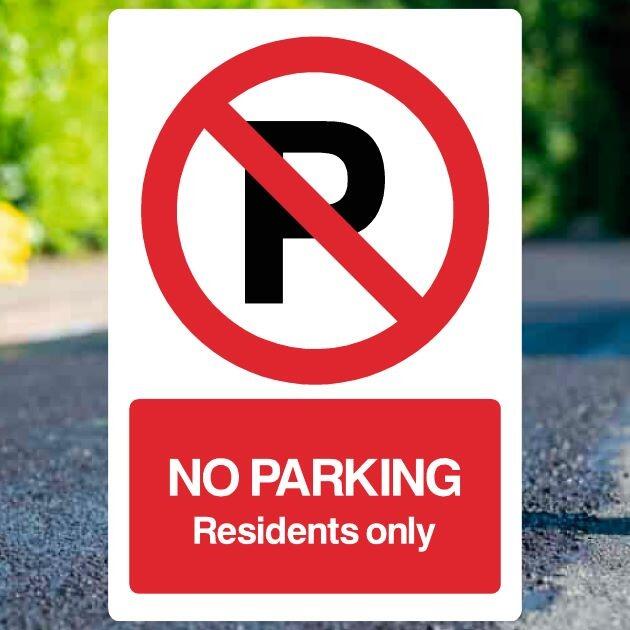
Parking can become one of the most contentious parts of managing flats, apartment blocks and residential developments.
Who can park where? Which bay belongs to which flat? Where should visitors park? Are permits required? And what happens when someone leaves their vehicle in another resident's space?
Clear Resident Parking Signs cannot solve every parking problem, but they can make the arrangements considerably easier for residents, visitors and contractors to understand.
In this guide, we look at the different types of residential parking signs available, where to position them and what landlords and property managers should consider when organising parking around residential properties.
What Are Resident Parking Signs?
Resident parking signs identify parking spaces or areas intended for people living at a particular property or development.
They can be used at:
- Apartment blocks
- Blocks of flats
- Housing developments
- Gated communities
- Managed estates
- Private residential roads
- Mixed-use developments
- Houses with shared parking
- Housing association properties
- Other privately managed residential car parks
Depending on the parking arrangements, signs might identify an entire residents-only car park or a single space allocated to one property.
Why Are Resident Parking Signs Important?
Imagine moving into an apartment development containing 50 parking spaces.
Some belong to individual flats.
Others are for visitors.
Several are accessible bays.
Two contain EV chargers.
A few are unallocated.
Without clear signage or markings, a new resident may have little idea which space they are permitted to use.
The same problem applies to visitors, delivery drivers and contractors.
Good residential parking signage helps answer the most important question:
Where am I supposed to park?
Residents Only Parking Signs
Residents Only signs identify spaces or areas intended for people living at the property.
They can be particularly useful where residential parking is close to:
- Railway stations
- Town centres
- Shops
- Offices
- Schools
- Hospitals
- Leisure facilities
- Other busy parking areas
In these locations, residential spaces may otherwise be mistaken for general parking.
A clearly positioned Residents Only sign makes the intended use of the area easier to understand.
Residents Parking Only Signs
A Residents Parking Only sign can be used to identify an individual bay or a larger residential parking area.
If the whole car park is intended exclusively for residents, signage at the entrance may be appropriate.
Where resident bays are mixed with visitor spaces, accessible parking or EV charging bays, additional signs can help identify the different parking categories.
The key is to make the arrangement clear without covering the car park in unnecessary signs.
Resident Parking vs Allocated Parking
These terms can describe different arrangements.
Resident Parking may mean that any resident can use any available space within a designated area.
Allocated Parking usually means a particular space has been assigned to a particular property, resident or authorised user.
For example, a development may have 30 flats and 30 individually allocated spaces.
In that situation, simply displaying:
RESIDENTS ONLY
does not tell a resident which particular space belongs to them.
More specific identification may be appropriate.
Signs for Allocated Residential Parking Bays
Where parking spaces are allocated to individual properties, landlords and property managers can use numbers or property-specific signs to make the allocation clearer.
For example:
Reserved – Flat 14
Allocated Parking – No. 8
Parking for Apartment 22
or simply a clearly identified bay number.
Matching bay numbers with the information supplied to residents can make the system easier to understand.
Resident Parking vs Visitor Parking
Residents and visitors should be treated as separate parking groups where a development provides dedicated spaces for both.
Resident Parking is intended for people living at the property.
Visitor Parking is intended for guests or other authorised visitors.
Clearly identifying visitor bays can help prevent guests from accidentally occupying residents' allocated spaces.
It can also help residents tell their visitors exactly where they should park before they arrive.
Visitor Parking at Flats & Apartments
Visitor parking is often limited at residential developments, making clear identification particularly useful.
Visitor spaces can be marked using:
- Visitor Parking signs
- Bay markings
- Numbered visitor spaces
- Permit requirements, where applicable
- Directional signs on larger developments
If visitors need a permit or must follow particular parking conditions, make sure those arrangements are communicated clearly.
A simple Visitor Parking sign should not be expected to communicate an entire parking-management scheme.
Resident Permit Parking Signs
Some residential developments use parking permits to identify authorised vehicles.
A Resident Permit Holders Only sign can make it clear that a particular area is subject to a permit system.
Permit schemes may be used where:
- Parking spaces are limited
- Non-resident parking is a recurring problem
- Residents share communal parking
- A parking-management company operates the site
- Different groups have different parking rights
Where a formal permit or enforcement system operates, the relevant terms should be communicated through appropriate signage.
A simple resident parking sign and a detailed parking-terms notice perform different jobs.
Do Resident Parking Signs Stop Unauthorised Parking?
Clear signs can make it obvious that an area is intended for residents and may discourage some unauthorised parking.
However, a sign cannot physically prevent someone from parking in a space.
If unauthorised parking is a recurring problem, property managers may need to review the wider parking arrangements rather than simply adding more signs.
This could include examining:
- Whether the existing signs are visible
- Whether the wording is clear
- Whether spaces are properly identified
- Visitor arrangements
- Permit systems
- Entrance signage
- Parking-management arrangements
Sometimes the problem is not a lack of signs but a parking system that is difficult for drivers to understand.
Are Residents Only Parking Signs Legally Enforceable?
A standard Residents Only or Resident Parking sign communicates the intended use of a parking area.
It does not automatically create a right to issue parking charges.
Parking on private land can involve contractual arrangements between drivers and landholders or parking operators. Where formal terms, charges or enforcement arrangements operate, appropriate notices should clearly communicate the applicable conditions.
Landlords and property managers should therefore distinguish between:
A bay-identification sign – tells drivers who the space is for.
and:
A parking-terms notice – explains formal conditions that apply to parking.
They are not necessarily interchangeable.
Can a Landlord Simply Put Up a Resident Parking Sign?
A sign can communicate an existing parking arrangement, but the sign itself does not determine who legally has the right to use a particular parking space.
Parking rights may arise from leases, tenancy agreements, property ownership, licences or other arrangements.
Before changing the allocation or use of residential parking spaces, landlords and property managers should make sure the proposed signage accurately reflects the rights and parking arrangements that apply to the property.
This is particularly important where individual bays are demised, allocated or otherwise connected to particular properties.
Where Should Resident Parking Signs Be Positioned?
Signs should be positioned where drivers can see them before deciding where to park.
Potential locations include:
- Residential car park entrances
- At the head of individual bays
- Walls facing parking spaces
- Posts beside parking areas
- Entrances to residents-only areas
- Junctions within larger developments
Consider the driver's direction of approach.
A sign may be perfectly visible to someone walking through the car park but difficult to see from inside a vehicle.
Check Visibility When the Car Park Is Full
This is easily overlooked.
A property manager may inspect an empty car park and decide that every sign is clearly visible.
But what happens at 7pm when almost every space is occupied?
Signs mounted too low can disappear behind parked vehicles.
Vegetation, bins, fences and other objects can also obscure them.
When reviewing parking signage, inspect the area under realistic conditions rather than only when the car park is empty.
Do You Need a Sign for Every Resident Parking Bay?
Not always.
If an entire car park is reserved for residents, a combination of entrance and strategically positioned signs may clearly identify the area.
Individual bay signs become more useful where:
- Spaces are allocated to individual flats
- Resident and visitor spaces are mixed
- Some spaces require permits
- Accessible bays are present
- EV charging bays are provided
- Different properties have separate allocations
The layout should determine the number of signs rather than assuming every parking space automatically needs one.
Resident Parking Signs & Bay Numbers
Bay numbering can be an effective way to manage individually allocated residential spaces.
For example:
Flat 1 – Bay 12
Flat 2 – Bay 13
Flat 3 – Bay 14
Residents can then be given clear information about which numbered space they are authorised to use.
Where appropriate, upright signs can be combined with matching numbers painted or marked on the parking surface.
Resident Parking Signs & Ground Markings
Ground markings can make parking allocations immediately visible when spaces are empty.
However, they have limitations.
Surface markings can become:
- Worn
- Dirty
- Faded
- Covered by leaves
- Obscured by vehicles
An upright sign can remain visible after a vehicle has parked.
For important allocated spaces, using both signs and surface markings can provide greater clarity.
Resident Parking Signs for Private Roads
Private residential roads can have different parking arrangements from conventional car parks.
Some may permit parking only in designated bays, while others may restrict parking to residents or authorised vehicles.
Signs should accurately reflect the arrangement that applies at that particular development.
Avoid using generic wording simply because it appears more restrictive.
The purpose of the sign is to communicate the actual parking arrangement clearly.
Resident Parking at Mixed-Use Developments
Mixed-use developments can present some of the most complicated parking layouts.
A single site might include:
- Apartments
- Offices
- Shops
- Restaurants
- Customer parking
- Resident parking
- Staff parking
- Visitor spaces
- Accessible bays
- EV charging
Generic Reserved Parking signs are unlikely to provide enough information.
Use specific wording to distinguish the different groups wherever practical.
Accessible Parking at Residential Properties
Accessible parking spaces should be clearly distinguishable from ordinary resident parking.
Where accessible bays are provided, appropriate signage and markings can help identify their intended use.
However, accessibility involves much more than simply putting up a sign.
Property managers should consider the wider parking layout, access routes and the needs of people using the facilities.
EV Charging in Residential Car Parks
Electric vehicle charging is becoming increasingly common in apartment blocks and residential developments.
Where charging bays are provided, signs should make their purpose clear.
For example:
EV Charging Only
communicates something different from:
Resident Parking
If a charging space is reserved specifically for residents, visitors or particular properties, the overall signage and parking arrangements should make this understandable.
Contractor & Maintenance Parking
Property managers regularly need to accommodate contractors, maintenance teams and other service vehicles.
If particular spaces are available for these vehicles, identifying them can prevent contractors from occupying residents' allocated bays.
Alternatively, contractors can be directed to visitor or other authorised parking areas according to the arrangements at the property.
Deliveries & Short-Stay Parking
Delivery vehicles create another challenge for residential developments.
Drivers may need brief access close to entrances but should not necessarily occupy residents' allocated spaces.
Where delivery or loading arrangements exist, use suitable signs to distinguish those areas from resident parking.
Keep fire access, emergency routes and other areas that need to remain clear in mind when planning the overall parking layout.
What Size Resident Parking Sign Do You Need?
There is no single ideal size for every residential parking sign.
The correct size depends on factors such as:
- Viewing distance
- Vehicle speed
- Mounting height
- Amount of text
- Lighting
- Sign location
- Potential obstructions
A sign immediately in front of an individual bay can usually be smaller than a sign identifying a residents-only car park from an entrance.
Keep messages concise so drivers can understand them quickly.
Choosing Resident Parking Signs for Outdoor Use
Most residential parking signs are permanently exposed to the weather.
Consider:
- Rain
- Wind
- Sunlight
- Mounting surface
- Expected lifespan
- Potential impact damage
A durable rigid sign is generally appropriate for long-term outdoor installation on walls, fences and posts.
Property managers should include parking signs in routine site inspections so damaged, faded or obsolete signs can be replaced.
Don't Forget Directional Signs
Large apartment developments and managed estates may have several separate parking areas.
If a resident or visitor cannot see their parking area from the entrance, directional signs may be helpful.
For example:
Resident Parking →
Visitor Parking ←
Apartments 1–20 Parking →
Place directional signs at the points where drivers need to make decisions.
A Simple Residential Parking Sign System
For larger developments, think about signage at three levels.
1. Entrance
Tell drivers they have arrived at the correct parking area and communicate important overall information.
2. Direction
Guide residents and visitors towards the appropriate parking section.
3. Individual Bays
Identify resident, visitor, allocated, accessible, EV and other designated spaces.
This creates a much clearer journey than relying entirely on signs beside individual bays.
Common Resident Parking Sign Mistakes
1. Using “Residents Only” When Bays Are Individually Allocated
Residents Only does not explain which resident owns or is allocated which space.
Use bay numbers or more specific identification where necessary.
2. Not Providing Clear Visitor Parking
If visitors cannot identify their spaces, they may park in resident bays.
3. Hiding Signs Behind Vehicles
Check visibility when the car park is occupied.
4. Assuming More Signs Always Solve the Problem
Too many conflicting signs can make a parking area harder to understand.
Use a consistent system.
5. Confusing Bay Signs with Enforcement Notices
A Residents Only sign identifies the intended user. Formal parking terms may require separate notices.
6. Forgetting About EV Charging
Make sure charging bays are distinguishable from ordinary resident spaces.
7. Failing to Update Signs
Parking arrangements change when developments are altered, EV chargers are installed or spaces are reallocated.
Remove or replace obsolete signs.
8. Ignoring Existing Parking Rights
Do not assume that putting a new sign beside a space changes rights granted through leases, tenancies or other property arrangements.
Residential Parking Sign Checklist
Before ordering resident parking signs, ask:
- Is parking communal or individually allocated?
- Which spaces are for residents?
- Are any bays allocated to particular flats or houses?
- Do residents require permits?
- Where should visitors park?
- Are accessible bays clearly identified?
- Are EV charging bays provided?
- Do contractors have somewhere to park?
- Can drivers understand the layout from the entrance?
- Are directional signs required?
- Will signs remain visible when vehicles are parked?
- Are bay numbers needed?
- Are formal parking terms communicated separately where applicable?
- Does the signage accurately reflect leases and other parking arrangements?
- Are signs suitable for long-term outdoor use?
Working through these questions can help property managers develop a clearer and more consistent parking system.
Making Residential Parking Easier to Understand
The best residential parking signage is usually straightforward.
Start by deciding exactly how the car park operates.
Then identify each type of parking:
Residents
Visitors
Allocated bays
Permit holders
Accessible parking
EV charging
Contractors or deliveries
Use the most specific sign appropriate to each area and position it where drivers actually need the information.
Clear signage won't eliminate every parking dispute, but it can remove much of the uncertainty that causes them.
Made in Britain Resident Parking Signs
Safety Sheep offers a range of Resident Parking Signs for landlords, property managers, housing developments, flats and private residential car parks.
Our residential parking signs are made in Britain and available in a choice of sizes and durable materials for parking bays, walls, fences, posts and car park entrances.
Whether you need Residents Only signs for a communal car park or signs for individually allocated spaces, clear parking signage can help residents and visitors understand where they should park.
Share:
Reserved Parking Signs: A Guide for UK Businesses & Property Managers
Fire Door Signs: A Complete Guide for UK Businesses