

Fire Door Keep Shut.
It's one of the most familiar fire safety instructions in UK workplaces – but why is it there, which doors need it and what other fire door signs might a business need?
Fire doors form an important part of a building's fire precautions. But they can only perform their intended function if they are correctly specified, installed, maintained and used.
Fire Door Signs help communicate how particular doors should be treated.
From Fire Door Keep Shut and Fire Door Keep Locked to Automatic Fire Door Keep Clear, choosing the right message matters.
This guide explains the main types of fire door signs, where they are used and what UK businesses should consider when reviewing their fire door signage.
What Is a Fire Door Sign?
A fire door sign communicates an instruction relating to the operation or use of a fire door.
Common examples include:
- Fire Door Keep Shut
- Fire Door Keep Locked
- Fire Door Keep Locked Shut
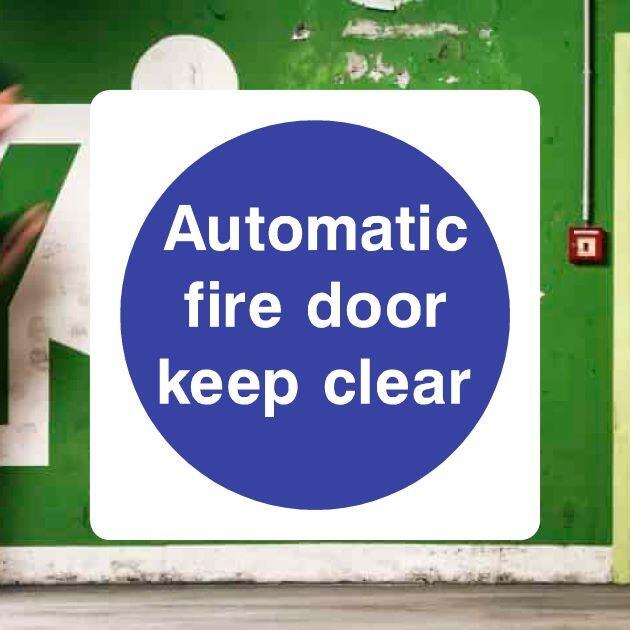
- Automatic Fire Door Keep Clear
- Fire Door Keep Clear
These signs perform a different function from Fire Exit Signs.
A Fire Door Sign tells people how a particular fire door should be treated.
A Fire Exit Sign helps people identify or follow an emergency escape route.
Understanding that distinction is important when planning fire safety signage.
What Is a Fire Door?
A fire door is a door designed and installed as part of a building's fire-resisting construction.
When correctly installed, maintained and closed, a suitable fire door can help restrict the spread of fire and smoke from one part of a building to another for a specified period.
Fire doors can help protect:
- Escape routes
- Stairways
- Corridors
- Different fire compartments
- Rooms presenting particular fire risks
- Service areas
- Residential common parts
However, the door needs to be capable of performing its intended function.
Simply attaching a Fire Door Keep Shut sign to an ordinary door does not turn it into a fire door.
Why Are Fire Door Signs Important?
People use doors constantly.
Without an instruction, somebody may have no reason to realise that a particular door needs to remain shut or locked for fire-safety purposes.
A sign such as:
FIRE DOOR KEEP SHUT
provides a clear everyday instruction.
Similarly:
AUTOMATIC FIRE DOOR KEEP CLEAR
warns people not to obstruct a door that needs to close automatically.
Fire door signs therefore support the correct use of the door.
Fire Door Keep Shut Signs
Fire Door Keep Shut is probably the best-known fire door instruction.
It is used on fire doors fitted with self-closing devices that need to remain closed when they are not being used.
The principle is simple.
Someone opens the door.
They walk through.
The self-closing device returns the door to its closed position.
The sign reminds people not to interfere with this process by deliberately leaving or wedging the door open.
Which Fire Doors Need Keep Shut Signs?
Government fire-safety guidance states that fire doors fitted with self-closing devices should be labelled:
Fire Door – Keep Shut
on both sides.
This ensures the instruction is visible regardless of the direction from which somebody approaches the door.
However, different arrangements apply to some other fire doors, so businesses should not assume every fire-resisting door automatically needs exactly the same sign.
Start by establishing what the door is, how it is intended to operate and what your fire risk assessment requires.
Do Fire Door Keep Shut Signs Go on Both Sides?
For self-closing fire doors covered by the relevant government fire-safety guidance, Fire Door Keep Shut signs should be displayed on both sides.
This makes practical sense.
Someone approaching the door from either direction receives the same instruction.
When checking your premises, don't simply count the number of fire doors.
Check both faces of each relevant door.
Why Must Fire Doors Be Kept Shut?
A fire door is intended to help resist the passage of fire and smoke when it is closed.
If a door that needs to remain closed is wedged open, it cannot provide the same barrier.
This is why Keep Shut is an instruction rather than merely a description.
It tells people what they need to do to allow the door to perform its intended role.
Don't Wedge Fire Doors Open
One of the most common problems with fire doors is also one of the simplest:
Someone wedges the door open.
Perhaps employees regularly carry boxes through it.
Perhaps the door is between a busy kitchen and serving area.
Perhaps people find opening it inconvenient.
Whatever the reason, a door intended to remain closed should not simply be wedged open for convenience.
If there is a genuine operational need to hold a fire door open, seek appropriate fire-safety advice about suitable solutions rather than using an improvised wedge.
What Is a Self-Closing Fire Door?
A self-closing fire door has a device intended to return the door to its closed position after it has been opened.
A suitable self-closing device should be capable of closing the door fully into its frame.
This is important because a door left partly open cannot perform as intended.
The sign and self-closing device therefore have separate functions:
The closer closes the door.
The sign tells people not to defeat that function.
Fire Door Keep Locked Signs
Not every fire door is a door that people regularly walk through.
Some fire-resisting doors protect:
- Cupboards
- Stores
- Service ducts
- Service risers
- Other normally secured areas
Where such a door is not self-closing because it is routinely kept locked, government fire-safety guidance says it should be labelled:
Fire Door – Keep Locked
on the outside.
The instruction is different because the door operates differently.
Fire Door Keep Shut vs Fire Door Keep Locked
Choosing between these signs depends on how the door is intended to function.
Fire Door Keep Shut
Typically used for a self-closing fire door through which people may pass.
The door should close after use.
Fire Door Keep Locked
Used for certain fire-resisting doors, such as cupboards, stores or service ducts, that are normally secured rather than being used as passage doors.
The distinction matters.
Don't simply use whichever sign happens to be available.
Match the instruction to the door.
Automatic Fire Door Keep Clear Signs
Some fire doors are designed to remain open during normal use using an appropriate automatic hold-open or release system.
When required, the system releases the door so it can close.
An Automatic Fire Door Keep Clear sign communicates that nothing should prevent that closing movement.
Potential obstructions include:
- Boxes
- Furniture
- Bins
- Trolleys
- Stock
- Equipment
- Doorstops
The area the door needs to travel through should remain clear.
Automatic Hold-Open Fire Doors
Automatic hold-open systems can make movement through a building more convenient while allowing a fire door to close when required.
Depending on the system, release may occur following activation of the fire detection and alarm system, detection of smoke or loss of power.
These systems need to be appropriate for the particular premises and door.
A sign does not make an unsuitable hold-open arrangement acceptable.
If you're unsure whether a device is appropriate, seek advice from a competent fire-safety professional.
Fire Door Keep Clear Signs
Keep Clear instructions may be appropriate where objects could interfere with a fire door's operation.
The objective is to ensure the door can perform as intended.
A Keep Clear sign is particularly useful in locations where temporary storage regularly appears, such as:
- Warehouses
- Stockrooms
- Corridors
- Workshops
- Service areas
- Back-of-house retail areas
But signage should support good housekeeping rather than replace it.
What Colour Are Fire Door Signs?
Many familiar fire door instruction signs use the blue and white mandatory safety-sign format.
Blue mandatory signs communicate an action or behaviour that needs to be followed.
For example:
Fire Door Keep Shut
instructs people to keep the door closed.
This is different from the green and white safe-condition format used for Fire Exit Signs.
Fire Door Signs vs Fire Exit Signs
This distinction causes a lot of confusion.
Fire Door Sign
Tells people how a fire door should be used.
Examples:
Fire Door Keep Shut
Fire Door Keep Locked
Fire Exit Sign
Helps identify an emergency escape route or direction of travel.
Examples:
Fire Exit ←
Fire Exit →
A fire door can also form part of an escape route.
That does not mean one type of sign automatically replaces the other.
Each sign communicates different information.
Fire Door Signs vs Fire Action Notices
A Fire Action Notice explains what people should do if they discover a fire or hear the alarm.
A Fire Door Sign gives an instruction about a particular door.
Again, they perform different functions within the wider fire-safety signage system.
Where Should Fire Door Signs Be Positioned?
Fire door instruction signs are normally positioned directly on the relevant door where the instruction can be readily seen.
Consider:
- Direction of approach
- Door size
- Glazing
- Handles
- Existing notices
- Lighting
- Visibility
Avoid placing the sign where it is likely to be hidden by another notice or where it becomes difficult to read.
How High Should a Fire Door Sign Be?
The sign should be positioned where its instruction is clearly visible to people approaching and using the door.
Unlike directional Fire Exit Signs, which may need to be seen from considerable distances, Fire Door Keep Shut signs are generally viewed at closer range.
Consistency can be useful.
Where several similar fire doors exist along a corridor, positioning the signs consistently makes them easier to recognise.
What Size Fire Door Sign Do I Need?
There isn't one ideal size for every door.
Consider:
- Viewing distance
- Door dimensions
- Amount of text
- Lighting
- Other notices
- Mounting position
The message needs to be sufficiently prominent that someone approaching the door notices and understands the instruction.
Fire Door Signs in Offices
Offices can contain fire doors protecting corridors, stairways and different parts of the building.
Employees may use these doors repeatedly throughout the day.
Clear signs reinforce how those doors should be treated.
When checking office fire doors, look for:
- Doors being wedged open
- Missing signs
- Damaged signs
- Posters covering signs
- Faulty self-closers
- Objects preventing doors from closing
Don't inspect the sign without inspecting the door.
Fire Door Signs in Warehouses
Warehouses can be particularly challenging environments for fire doors.
Stock, pallets and equipment can create obstructions, while busy operations may encourage people to wedge doors open.
Check that:
- Relevant fire doors have the correct instructions
- Automatic doors have sufficient space to close
- Stock is not obstructing doors
- Signs remain visible
- Self-closing devices operate correctly
- Doors are not damaged
Include these checks within routine workplace inspections.
Fire Door Signs in Factories & Workshops
Industrial premises may contain fire doors separating production areas, stores, offices, corridors and higher-risk areas.
Dust, dirt, impact damage and changing equipment layouts can affect both doors and signage.
Inspect them periodically and address problems rather than simply replacing the sign.
Fire Door Signs in Shops
Retail premises can change frequently as displays and stock are moved.
Back-of-house fire doors can also be particularly vulnerable to being propped open during deliveries or stock movement.
Make sure employees understand why the door needs to close rather than relying solely on the wording printed on it.
Fire Door Signs in Schools
Schools, colleges and educational premises can contain many fire doors along corridors, stairways and communal areas.
Consistent signage can help staff, pupils, contractors and visitors recognise important fire-door instructions.
Fire doors and their signage should form part of routine premises checks.
Fire Door Signs in Hotels
Hotels and other sleeping accommodation often contain large numbers of fire doors.
Guests are unfamiliar with the building and may not understand the role particular doors play in its fire precautions.
Clear instructions, working self-closers and effective maintenance all contribute to the overall fire-safety arrangements.
Fire Door Signs in Blocks of Flats
Residential buildings require particular care because several different types of fire door may exist within the same building.
These can include:
- Flat entrance doors
- Corridor doors
- Stairway doors
- Cupboard doors
- Service-riser doors
- Plant-room doors
- Bin-store doors
Do not assume they all require identical signage.
The correct approach depends on the type and function of each door and the building's fire-safety arrangements.
What About Flat Entrance Fire Doors?
Flat entrance doors require particular consideration.
They form an important barrier between individual flats and the common parts of a building.
The Fire Safety (England) Regulations 2022 require responsible persons to provide residents in relevant blocks of flats with information explaining that fire doors should be kept shut when not in use, that self-closing devices should not be tampered with and that faults or damage should be reported.
That requirement should not be reduced to simply attaching a Keep Shut sign to every flat entrance door.
The door's condition, self-closing function and the building's wider fire-safety arrangements also matter.
Fire Safety (England) Regulations 2022
The Fire Safety (England) Regulations 2022 contain specific requirements relating to fire doors in blocks of flats in England.
For all blocks of flats within scope, responsible persons must provide residents with specified fire-door information.
For blocks where the top storey is more than 11 metres above ground level, the regulations also require routine checks of relevant fire doors.
These regulations apply in England, so businesses and property managers should avoid describing them as UK-wide requirements.
How Often Should Fire Doors Be Checked?
The appropriate inspection arrangements depend on the type of premises and the applicable requirements.
For residential buildings in England covered by the Fire Safety (England) Regulations 2022, specific checking requirements apply to certain buildings over 11 metres.
Other premises should also maintain fire doors as part of their wider fire-safety arrangements.
The key principle is that a fire door needs to remain in good working order.
How to Carry Out a Basic Visual Fire Door Check
A simple visual check can identify obvious problems.
Look at:
The Door
Is it damaged, warped or altered?
The Frame
Does it appear secure and undamaged?
The Hinges
Are they secure and in good condition?
The Closing Action
Open the door and allow it to close.
Does it close fully into the frame?
The Gaps
Are there unusually large or inconsistent gaps around the door?
Seals
Where fitted, are the appropriate seals present and in good condition?
Glazing
Is any glazing secure and undamaged?
Obstructions
Can the door close without hitting furniture, stock or other objects?
Signage
Is the correct instruction present and clearly visible?
If you identify damage or are unsure whether the door is suitable, seek competent advice.
Fire Door Gaps
Gaps around fire doors are important because excessive gaps can reduce the door's ability to restrict fire and smoke.
Government guidance for blocks of flats in England notes an industry standard that gaps should generally not exceed 4mm, except at the bottom where the gap should be as small as practicable while allowing the door to operate properly.
However, businesses should not use a single measurement taken from guidance for one building type as a substitute for the door specification, fire risk assessment or competent inspection.
Check the Self-Closing Device
A self-closing fire door should close fully into its frame.
A useful basic check is to open the door and let it close under the action of its closer.
Government guidance for relevant residential buildings suggests checking from fully open and again from around 15 degrees.
In both cases, the door should close fully into its frame and overcome any latch or friction.
If it doesn't, the problem needs attention.
Fire Door Signs Don't Make a Door Safe
This is one of the most important points in this guide.
A brand-new Fire Door Keep Shut sign cannot fix:
- A broken closer
- Damaged hinges
- Excessive gaps
- Missing or damaged components
- Broken glazing
- A warped door
- Inappropriate alterations
- An obstruction
- A door that does not close
Signs communicate instructions.
They do not provide fire resistance.
Can You Put Notices or Posters on Fire Doors?
Businesses often gradually cover doors with notices.
A single fire door might end up displaying:
Fire Door Keep Shut
alongside staff notices, cleaning schedules, posters and temporary announcements.
This can make the important safety instruction harder to identify.
Avoid unnecessary visual clutter and make sure required fire-door information remains prominent.
Any additions to a fire door should also avoid compromising the door's performance.
Photoluminescent Fire Door Signs
Photoluminescent, or glow-in-the-dark, fire door signs absorb light and remain visible for a period when the surrounding illumination is reduced.
They are available for messages such as:
- Fire Door Keep Shut
- Fire Door Keep Locked
- Automatic Fire Door Keep Clear
They can provide additional visual identification in reduced lighting.
However, choosing a photoluminescent sign does not make the door itself safer and does not automatically replace emergency lighting where emergency lighting is required.
Do Fire Door Signs Have to Glow in the Dark?
Not automatically.
Whether photoluminescent signage is appropriate depends on the building, location and wider fire-safety arrangements.
Standard and photoluminescent signs should be selected according to the actual requirements of the premises rather than assuming every fire door needs a glow-in-the-dark sign.
Fire Door Signs & BS EN ISO 7010
BS EN ISO 7010 provides standardised graphical safety symbols and helps create consistency in safety communication.
Fire door signs commonly use recognised mandatory-sign conventions, including blue and white designs for mandatory instructions.
However, it is important not to overstate what a sign standard means.
A sign using an appropriate standardised design does not make the fire door—or the entire building—legally compliant by itself.
Fire safety depends on the wider system of risk assessment, appropriate fire precautions, installation, inspection, maintenance and management.
Can a Fire Door Be Painted?
Fire doors are often painted as part of building decoration, but care is needed around components such as seals, labels, glazing and hardware.
Do not alter a fire door in a way that could compromise its performance.
If you're uncertain about decorating, modifying or repairing a fire door, follow the manufacturer's information where available or seek advice from a competent fire-door specialist.
Can You Drill Into a Fire Door to Fit a Sign?
Fire doors are performance-critical building components.
Avoid making unnecessary alterations that could affect their construction or fire performance.
Before drilling, screwing or otherwise modifying a fire door, consider the door manufacturer's instructions and the suitability of the fixing method.
Appropriate adhesive-backed signs may be suitable for some smooth surfaces and avoid unnecessary penetrations.
What If Employees Keep Leaving a Fire Door Open?
Don't simply add another Keep Shut sign.
Find out why the behaviour is occurring.
Common reasons include:
- Frequent movement between rooms
- Deliveries
- Ventilation
- Carrying stock
- Accessibility
- Heavy doors
- Poor workflow
The correct solution depends on the reason.
There may be appropriate technical or operational solutions, but these should be considered within the building's fire-safety arrangements rather than defeating the fire door with a wedge.
Common Fire Door Sign Mistakes
1. Using the Wrong Sign
Make sure Keep Shut, Keep Locked and Keep Clear instructions match the door's actual function.
2. Only Signing One Side of a Self-Closing Door
Where Keep Shut signs are required on both sides, check both faces.
3. Wedging the Door Open
The sign cannot compensate for misuse of the door.
4. Ignoring the Self-Closer
A Keep Shut sign does not fix a closer that fails to close the door.
5. Blocking an Automatic Fire Door
Keep its closing path clear.
6. Treating Every Fire Door Identically
Different fire doors can require different instructions.
7. Confusing Fire Door and Fire Exit Signs
They communicate different messages.
8. Covering the Sign with Other Notices
Keep important instructions visible.
9. Assuming “Compliant Sign” Means “Compliant Door”
The condition and performance of the door itself remain critical.
10. Failing to Review Signs
Changes to doors, layouts and fire-safety arrangements can make old instructions inappropriate.
A Practical Fire Door Survey
Walk through your premises and identify every known fire door.
For each one, ask:
What type of fire door is this?
How should it operate?
Should it remain shut?
Should it remain locked?
Is it automatically held open?
Can it close without obstruction?
Does it close fully into its frame?
Is the correct sign displayed?
Can the sign be seen from the relevant approach?
Does the door appear damaged?
Has anything been added or altered?
This provides a useful starting point for identifying obvious issues.
It does not replace any competent inspection required for the premises.
Fire Door Checklist for UK Businesses
When reviewing your fire doors and signs, consider:
- Have fire doors been identified through the fire risk assessment?
- Is each door suitable for its intended purpose?
- Is the correct fire door instruction displayed?
- Are Keep Shut signs fitted on both sides where required?
- Are Keep Locked signs used where appropriate?
- Are automatic fire doors kept clear?
- Are signs clearly visible?
- Are signs legible and securely attached?
- Are self-closing devices operating correctly?
- Does each relevant door close fully into its frame?
- Are doors free from obvious damage?
- Are gaps and seals being checked appropriately?
- Are doors free from inappropriate wedges or obstructions?
- Have unnecessary notices been removed?
- Are fire doors included in routine inspections?
- Are defects reported and addressed?
- Are employees told why fire doors need to be kept closed?
- Have changes to the building or door use been reflected in the signage?
If you're uncertain about the condition or suitability of a fire door, seek advice from a competent fire-safety or fire-door professional.
Choosing the Right Fire Door Sign
Start with the function of the door.
If it is a self-closing fire door that should remain closed:
Fire Door Keep Shut
If it protects a cupboard, store or service area that should normally remain secured:
Fire Door Keep Locked
If it is an automatic fire door that must have room to close:
Automatic Fire Door Keep Clear
The sign should describe what people actually need to do.
That sounds obvious, but it is much more useful than simply ordering the same sign for every fire door in the building.
Fire Door Signs Are Part of a Bigger System
Fire door signage works alongside other fire-safety measures.
Depending on the premises, these can include:
- Fire risk assessment
- Fire doors and compartmentation
- Fire detection and alarms
- Fire Exit Signs
- Fire Action Notices
- Fire Extinguisher Signs
- Emergency lighting
- Escape routes
- Staff training
- Fire drills
- Inspection and maintenance
No individual sign can replace the wider system.
Made in Britain Fire Door Signs
Safety Sheep offers a range of Fire Door Signs for UK workplaces, businesses and managed premises.
Choose from Fire Door Keep Shut, Fire Door Keep Locked, Automatic Fire Door Keep Clear and other fire door safety notices in a range of sizes and materials, including selected photoluminescent options.
Whether you're replacing a missing Keep Shut sign or reviewing fire-door signage throughout an entire premises, choose the instruction that matches the function of each door and make sure the door itself remains correctly maintained and operational.
Share:
Resident Parking Signs: A Guide for Landlords & Property Managers