

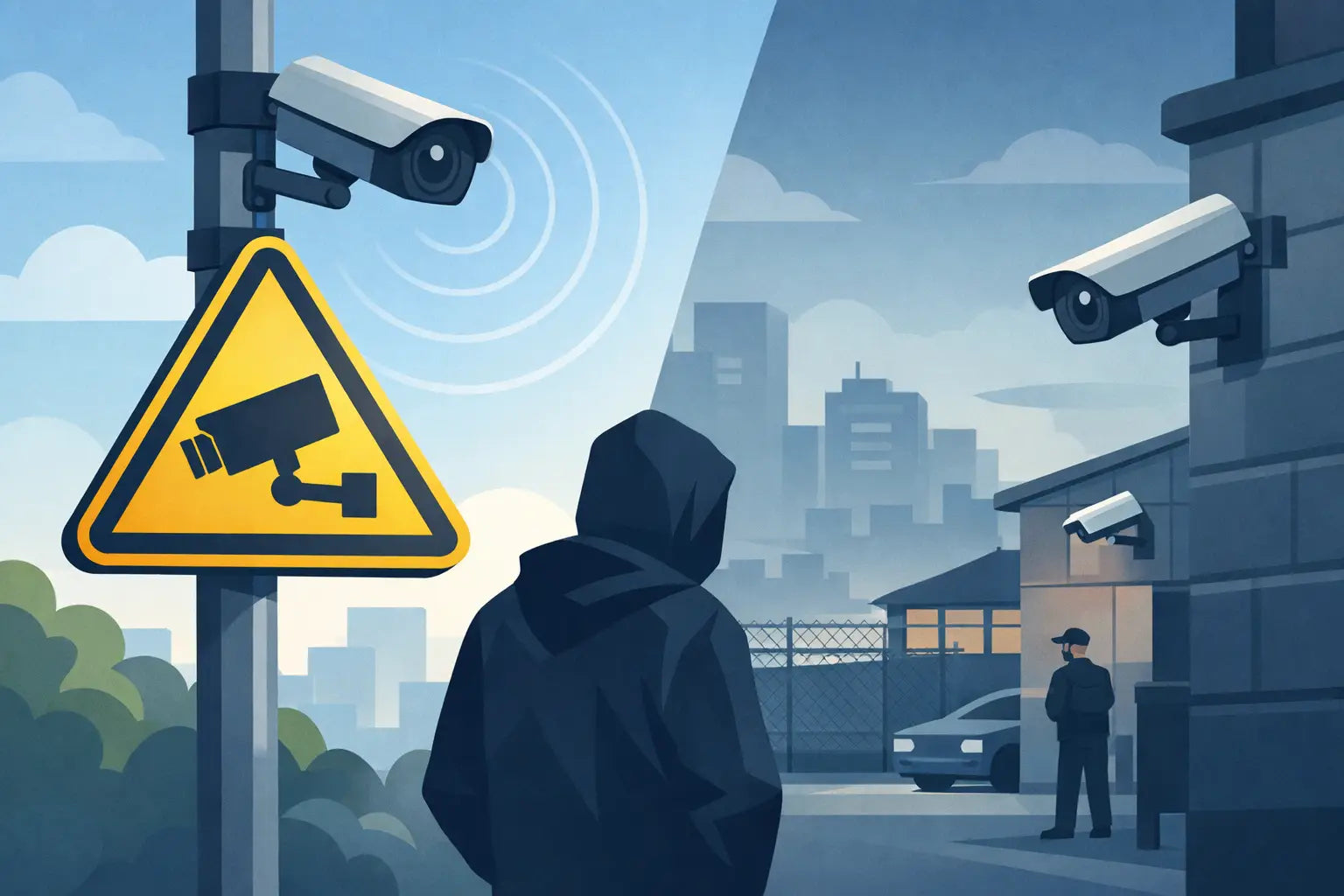
A damaged gate, fuel theft from a yard or repeated fly-tipping can quickly lead to the same question: do CCTV signs deter crime? They can, particularly where a potential offender believes the site is actively monitored and that evidence could identify them. But a sign is not a substitute for a security plan. Its value comes from making real, credible security measures visible before someone decides to act.
For site managers, landlords, farmers and business owners, the practical aim is simple: make it clear that unauthorised activity is likely to be seen, recorded and acted upon. Well-positioned CCTV signage supports that message at entrances, boundaries and vulnerable areas where it is most likely to influence behaviour.
Do CCTV signs deter crime on their own?
A CCTV warning sign will not physically prevent trespass, theft or vandalism. Someone determined to offend may ignore it, especially if they can see poor lighting, an open access point, no cameras or little chance of being challenged. Signs are a deterrent, not a guarantee.
They can still be highly effective against opportunistic offending. Much crime relies on speed, concealment and a low perceived risk of detection. A clear sign changes that calculation. It tells visitors, delivery drivers and would-be intruders that the area is monitored, footage may be available and the operator takes site security seriously.
The strongest deterrent is a joined-up approach: visible cameras, a maintained boundary, suitable lighting, controlled access and clear warning signs. Each measure reinforces the next. If cameras are discreet or cover a large site, signs do the useful job of communicating their presence before an incident occurs.
Why a CCTV warning sign changes behaviour
A warning sign works because it creates uncertainty for the person considering an offence. They may not know where cameras are positioned, whether recording is live, how long footage is retained or whether somebody is watching remotely. That uncertainty can be enough to send an opportunist elsewhere.
Signs also set expectations for legitimate visitors. Staff, contractors and members of the public are less likely to enter restricted zones, interfere with equipment or behave carelessly when surveillance is clearly communicated. In car parks, waste compounds, loading areas and shared premises, this can support better day-to-day conduct as well as security.
There is a commercial benefit too. When an incident does occur, clear signage helps demonstrate that the site operator took sensible, visible steps to manage foreseeable risks. It will not resolve every dispute, but it forms part of a professional site-management record.
Credibility matters more than the wording alone
A faded sticker on a broken fence is unlikely to convince anyone that a property is protected. The sign must look deliberate, readable and relevant to the location. It should also reflect a real security arrangement.
Using CCTV signs where no CCTV is in operation can create a false sense of security for the person responsible for the premises. It may also damage credibility if repeat offenders, staff or local visitors recognise that the cameras are absent or non-functioning. If a site advertises surveillance, ensure the system is operational, maintained and capable of supporting the stated purpose.
The same principle applies to poorly placed signs. A notice hidden behind a hedge, installed inside a compound or mounted too high to read does little to deter someone at the point they choose whether to enter. A camera sign is most useful before a person crosses into the monitored area.
Where CCTV signs should be placed
Start with the route a person takes towards the site. Signs should be visible at the main entrance and at other access points, including pedestrian gates, rear service entrances, vehicle barriers and shared access routes. On larger premises, repeat signs around the perimeter and near areas with a higher theft, damage or safety risk.
Common locations include car parks, building entrances, reception areas, loading bays, workshops, storage yards, fuel tanks, machinery compounds, bin stores and farm buildings. A rural site may need signs at track entrances and field gateways, while a multi-occupancy commercial unit may need them at the external approach as well as within communal areas.
Position signs at a sensible reading height, where they are not obstructed by parked vehicles, vegetation, stock or temporary site materials. Check visibility in poor weather and after dark. Reflective materials or good external lighting may be appropriate where the sign needs to be seen at night.
For complex premises, walk the boundary as a visitor or intruder might. If there is a route onto the site without passing a clear notice, that is a gap worth addressing.
Choosing the right CCTV sign for the environment
The right format depends on viewing distance, exposure and how permanent the installation is. A small self-adhesive sticker may suit an internal door, window or reception area. A rigid plastic sign is generally a better choice for external walls, gates and fencing. For a building site, farm or industrial yard, choose a durable material that can withstand rain, dirt and regular temperature changes.
Size matters. The sign must be large enough to read from the likely approach distance. A notice on a vehicle gate, for example, should be legible to a driver before they reach the entrance rather than only when they are already beside it.
Use straightforward wording and a recognisable CCTV symbol. Avoid overcrowding the notice with secondary messages. If the location needs additional information, such as private property, no unauthorised access or a speed limit, use separate signs so the surveillance message remains clear.
CCTV signage and UK data protection duties
Where CCTV captures identifiable people, the operator will usually need to meet data protection requirements. Clear signage is a key part of telling people that monitoring is taking place. It provides an immediate notice at the point footage may be captured.
The details needed depend on how and why the system is used, but signs should make the monitoring clear and identify who operates it or provide a way to obtain further information. A business, landlord or site operator should also be able to explain the purpose of its CCTV, such as crime prevention, safety or property protection, and handle recorded footage appropriately.
Avoid treating signage as a box-ticking exercise. Review whether cameras are necessary for the stated purpose, avoid recording areas that are not relevant where possible, limit access to footage and set a sensible retention period. Domestic systems, employee monitoring and cameras covering public areas can raise different considerations. Where the arrangement is more complex, take specialist data protection advice.
Make the deterrent part of a working security routine
A CCTV sign has more influence when the rest of the site backs it up. Test cameras regularly, correct any time and date issues, keep lenses clean and make sure vegetation has not blocked the view. Review footage access arrangements so the right person can respond if an incident is reported.
After a theft, break-in or near miss, do not only replace damaged property. Reassess the approach route, lighting, camera coverage and signs. Often, a small adjustment - such as moving a notice to the entrance used by delivery vehicles or adding one at an exposed side gate - makes the security message much more credible.
For multi-site operators, consistent wording and sign placement help staff recognise when a notice is missing or damaged. Keeping a small stock of replacement signs can also prevent a faded, cracked or removed notice from becoming a long-term weakness.
The Safety Sheep Store supplies British-made CCTV signs in formats suited to workplaces, yards, car parks and public-facing premises, making it easier to keep security signage clear and consistent across a site or estate.
A CCTV sign will not stop every offence, but it can make an easy target look less easy. Put notices where people make decisions, keep the surveillance system genuine and maintained, and let the sign support a security arrangement that is ready to respond. Think Safety - Think Sheep.
Share:
Which Danger Signs Are Used in Factories?
Are CCTV Signs Required for Home Security?