

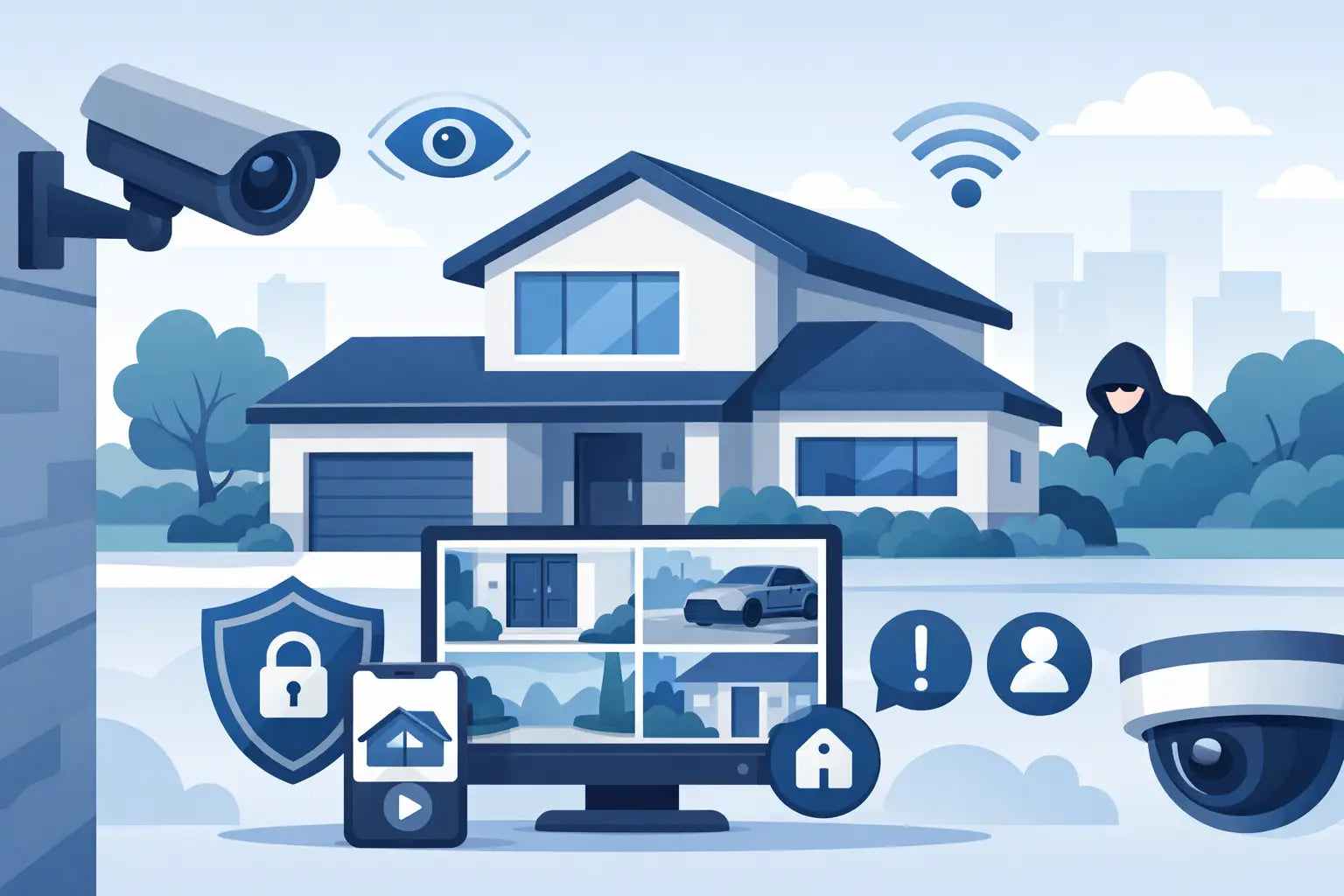
A camera above the front door may deter opportunists, but it can also record neighbours, delivery drivers and people using the pavement. So, are CCTV signs required for home security? In the UK, there is no single rule saying every house with a camera must display a sign. The answer depends mainly on where the camera records and whether the footage stays within your domestic boundary.
For most homeowners, clear CCTV signage is a sensible and low-cost part of a responsible security setup. Where cameras capture areas beyond the home, it may also be necessary to meet data protection obligations. The key is to assess the camera’s field of view, not simply where it is installed.
Are CCTV signs required for home security in the UK?
If your CCTV system records only your own home, garden, driveway and other private areas, it will generally fall within the domestic purposes exemption. In practical terms, this means the UK GDPR and Data Protection Act 2018 will not usually apply in the same way they do to a business. A sign is not normally a legal requirement in that narrow situation.
The position changes when a camera captures footage outside your boundary. This could include a public pavement, road, shared accessway, neighbour’s garden, communal car park or the entrance to flats. If the system records these areas, you should take reasonable steps to comply with data protection requirements. That includes telling people they are being recorded, which is where a visible CCTV sign becomes particularly relevant.
A doorbell camera can create the same issue. It does not matter whether the device is marketed as a smart doorbell, security camera or video intercom. What matters is what it records, how long footage is kept and who can access it.
When a CCTV warning sign is the right choice
A clear sign helps provide fair notice before someone enters a recorded area. It also supports the purpose of a home security system: prevention. A well-positioned warning sign may encourage a potential intruder to move on before any damage or theft occurs.
Signs are particularly advisable when your camera overlooks a front drive, gate, shared lane or access route used by visitors. They are also a sensible precaution for landlords and property managers using CCTV around shared entrances, bin stores, parking areas or communal gardens. In these cases, the system is unlikely to be solely for personal household use, and the privacy obligations are more formal.
For a home-based business, consider both sides of the property. A camera covering your private back garden may remain domestic in nature. A camera monitoring customers, employees, contractors or deliveries at a work entrance is more likely to fall within business data protection responsibilities. A suitable sign should be displayed at or before the point people enter the monitored area.
What should a home CCTV sign say?
The sign does not need a long legal statement. In fact, it should be easy to read at a glance. A straightforward message such as “CCTV in Operation” or “This Area Is Monitored by CCTV” is often enough to alert visitors to the presence of recording equipment.
Where data protection rules apply, the sign should also identify who is responsible for the system and provide a way for people to obtain more information. For a homeowner, that might be a name and contact email address. For a landlord, managing agent or business, it should be the relevant organisation or responsible person.
The wording should make the purpose clear. “CCTV in operation for the prevention of crime and protection of property” is more helpful than a vague warning alone. Avoid signs that make exaggerated claims, such as stating that recording takes place 24 hours a day if the camera is not actually active at all times. Safety signs work best when they accurately reflect the control in place.
Positioning matters as much as the sign itself
A CCTV notice hidden behind a hanging basket or placed after a person has already entered the recorded area does little to provide fair warning. Put the sign where it can be seen before or as someone approaches the camera’s coverage area. For a typical house, this may be near the front gate, driveway entrance, door or side access.
Choose a durable material suited to the location. Outdoor signs need to remain legible through rain, sunlight and seasonal temperature changes. A faded or cracked notice is less effective as a deterrent and can give the impression that security arrangements are not actively maintained.
Size matters too. A small sticker can be appropriate on a door or window at close range. A driveway entrance or larger boundary may need a more visible rigid sign. Think about the viewing distance, lighting and vehicle approach route. If a visitor cannot reasonably read it until they are standing underneath it, reposition or increase the size.
Keep your camera coverage proportionate
Displaying a sign does not give permission to record more than you need. Where a camera captures areas beyond your home, make reasonable adjustments to limit unnecessary recording. Many modern systems allow privacy masking, activity zones and motion detection areas. These settings can reduce the amount of footage of neighbours or passers-by.
Aim cameras at your own doors, vehicles, gates and boundaries rather than directly towards another property. If a shared path must be included to protect access to your home, keep the viewing angle as tight as possible. Explain your plans to neighbours where appropriate, particularly if a new camera may be visible from their property. A short conversation can prevent a prolonged dispute.
Audio recording deserves extra care. Sound is more intrusive than video and can capture private conversations beyond the area you intend to monitor. Unless there is a clear and specific reason to use audio, switching it off is often the proportionate choice for domestic CCTV.
Footage, access requests and practical records
If your system records public or shared areas, treat the footage responsibly. Keep it secure with strong passwords, two-factor authentication where available and restricted access to the app or recorder. Do not share clips casually on social media, local groups or messaging apps. Footage should normally be shared only where there is a legitimate reason, such as reporting an incident to the police or responding appropriately to a request for personal data.
Keep recordings only for as long as needed. There is no universal retention period for every home system, but retaining footage indefinitely is difficult to justify. Many systems automatically overwrite recordings after a set period. Choose a period that suits the risk at your property and the available storage, then review it if circumstances change.
People whose images are recorded may ask for a copy of footage containing them. If your CCTV is subject to data protection law, you should be prepared to handle such requests sensibly. Before releasing anything, check whether the footage includes other identifiable people and whether parts need to be obscured. Keeping a basic record of why cameras are used, where they point and how long recordings are retained can make this easier.
Common home CCTV situations
A camera pointed solely at a private rear garden is unlikely to need a CCTV warning sign for legal compliance, although one may still deter trespassers. A front-door camera that includes the pavement is different: a clear sign is strongly recommended, alongside careful settings to reduce unnecessary capture.
For a semi-detached or terraced home, a camera covering a narrow side passage may record a neighbour’s access. Discuss the positioning and use privacy zones if available. In a block of flats, an individual resident should be especially cautious with cameras in communal corridors or shared entrances. Those areas affect other residents and are usually better managed by the landlord, freeholder or appointed managing agent under a clear CCTV policy.
Landlords should not rely on a simple sticker alone. CCTV in communal areas needs a defined purpose, suitable signs, controlled access to footage and a proportionate approach to residents’ privacy. Cameras must not be used to monitor tenants inside their homes or in spaces where they have a reasonable expectation of privacy.
A practical approach before fitting a sign
Start by checking live camera views during the day and at night. Identify exactly what is captured when motion alerts activate, not just the image shown during installation. Adjust the angle, crop the activity zone and disable audio if it is not needed. Then place a clear, weather-resistant CCTV sign where visitors can see it before entering the monitored area.
For homeowners, this approach balances security with consideration for neighbours and the public. For landlords and home-based businesses, it also helps demonstrate that CCTV has been installed for a legitimate, clearly communicated purpose. The Safety Sheep Store supplies straightforward CCTV warning signage designed to make that message visible without complicating the job.
A camera is most effective when it is properly aimed, securely managed and clearly signposted. Think Safety - Think Sheep.
Share:
Do CCTV Signs Deter Crime? A UK Site Guide
Do I Need CCTV Signs to Comply With GDPR?