

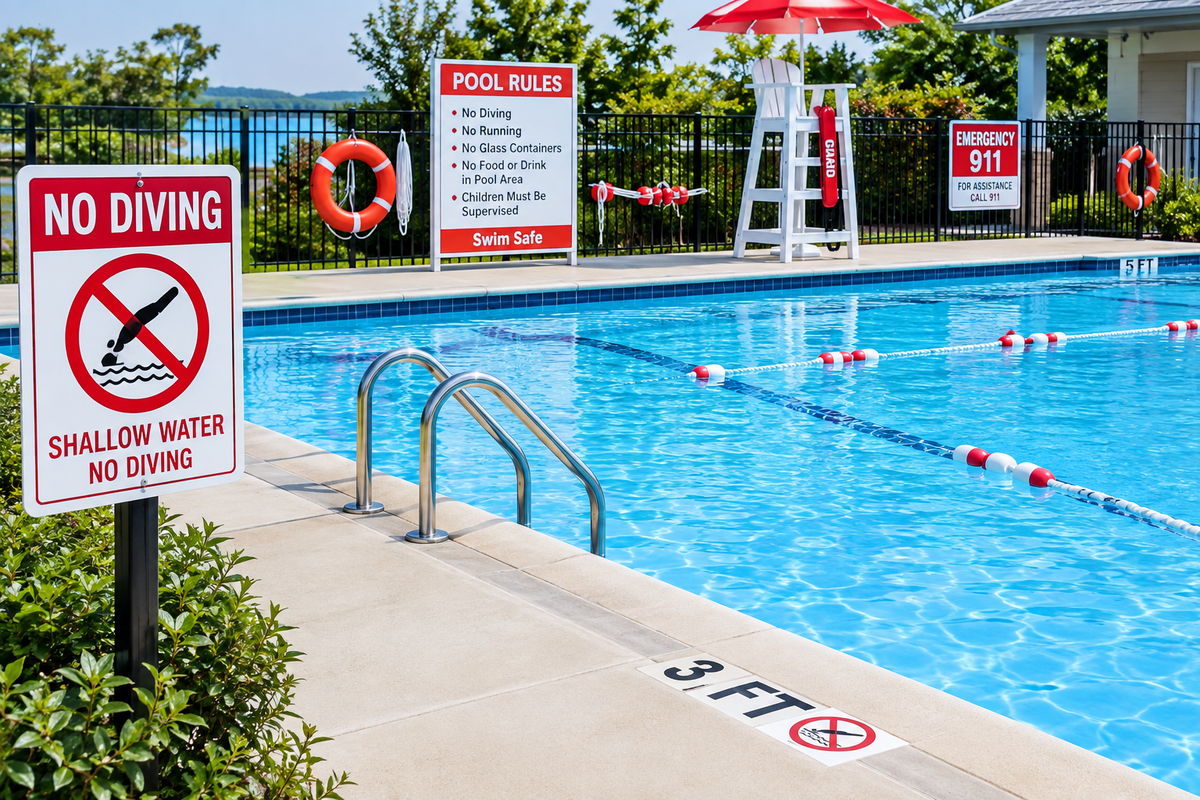
Swimming pools should be welcoming, enjoyable places for visitors of all ages and swimming abilities. However, they also present hazards that need to be carefully managed.
From slippery surfaces and sudden changes in water depth to diving restrictions and unsupervised activities, clear Swimming Pool Safety Signs help communicate important information to pool users before they encounter a potential danger.
Whether you manage a leisure centre, hotel, school, health club, holiday park or community swimming pool, choosing appropriate signage is an important part of your wider safety arrangements.
But which signs should your facility display? Where should they be positioned? And what does UK health and safety guidance say?
This practical guide explains the main types of Swimming Pool Signs, how to select them and what operators should consider when reviewing their existing signage.
Why Are Swimming Pool Safety Signs Important?
Pool users don't always know the layout, depth or operating rules of a swimming facility.
A visitor may be unfamiliar with the shallow end, a child may not understand why running is prohibited, or a swimmer may not realise that diving is restricted in a particular area.
Clear pool safety signage can help:
-
Communicate important swimming pool rules.
-
Identify shallow and deep water.
-
Warn about slippery surfaces.
-
Highlight prohibited activities.
-
Identify emergency and rescue equipment.
-
Provide instructions for pool features.
-
Reinforce safe behaviour around the facility.
Signs should be positioned where people need the information, using clear symbols and concise wording.
However, signage alone doesn't make a swimming pool safe. It should support the facility's risk assessment, operating procedures, supervision arrangements and other necessary safety measures.
Are Swimming Pool Safety Signs a Legal Requirement in the UK?
There isn't one universal list of signs that every UK swimming pool must display.
Pool operators have general health and safety duties and must assess the risks associated with their particular facility.
The Health and Safety Executive (HSE) provides guidance in HSG179 – Health and Safety in Swimming Pools.
This guidance identifies circumstances where safety signs should be considered, including:
-
Sudden changes in water depth.
-
Areas where swimming or diving is unsafe.
-
Slippery surfaces.
-
Instructions for the safe use of the pool and its equipment.
The appropriate combination of signs depends on the pool's design, operating arrangements, activities and identified risks.
Rather than purchasing every available swimming pool notice, choose the messages that genuinely apply to your facility.
Essential Swimming Pool Safety Signs to Consider
The following checklist covers common types of pool signage used by UK leisure facilities and other commercial pool operators.
1. Swimming Pool Rules Signs
A Swimming Pool Rules Sign provides visitors with a clear summary of the facility's main operating instructions.
Depending on the pool, this might include:
-
No Running.
-
No Diving.
-
Children must be supervised.
-
Shower before entering the pool.
-
No Outdoor Footwear.
-
No Inflatables.
-
Follow lifeguard instructions.
Only include rules that accurately reflect your facility's policies and risk assessment.
For example, if inflatables are permitted during designated family sessions, a blanket No Inflatables notice may be misleading unless the restriction is clearly explained.
Where to display: At the pool entrance, changing-room exit or another prominent location before visitors enter the poolside area.
2. No Running Signs
Wet poolside surfaces can increase the risk of slips and falls.
No Running Signs help communicate that running around the swimming pool is prohibited.
They may be particularly useful around:
-
Pool surrounds.
-
Changing-room exits.
-
Shower entrances.
-
Routes between different pool areas.
-
Children's swimming facilities.
Position the sign where visitors can see the instruction before entering the relevant area.
3. No Diving Signs
Diving into unsuitable water can cause serious injury.
A No Diving Sign communicates that diving is prohibited in a particular pool or section.
These signs can be especially important where water depth, pool design or other identified hazards make diving unsafe.
Where a pool contains separate areas with different rules, ensure that the signage clearly identifies where the restriction applies.
Where to display: At relevant poolside locations, particularly where swimmers may otherwise attempt to dive.
4. Shallow Water Signs
Shallow Water Signs help alert swimmers to areas where the water may be shallower than expected.
They can be particularly useful where visitors may be unfamiliar with the pool layout.
However, a general Shallow Water warning shouldn't replace accurate depth information where this is necessary.
Operators should consider how depth markings and warning signs work together to communicate the conditions clearly.
5. Deep Water Signs
Deep Water Signs warn swimmers that a particular area contains deeper water.
They can be helpful for visitors with limited swimming ability or those unfamiliar with the facility.
Position these notices where the deeper section begins or where the information is most relevant.
For pools with a gradual or sudden change in depth, ensure the signage accurately reflects the pool's design.
6. Water Depth Signs
Water Depth Signs communicate the actual depth of the swimming pool at a particular location.
These are especially important where the depth changes between the shallow and deep ends.
For example, depth information might be displayed as:
-
0.9 metres.
-
1.2 metres.
-
1.5 metres.
-
2.0 metres.
These are examples only. Always display the correct measurements for your own facility.
Depth information must remain accurate. If an adjustable-floor pool changes its operating depth, the information presented to users must reflect the current configuration.
Where to display: At relevant poolside locations where swimmers can easily identify the water depth before entering.
7. No Backflips & Somersaults Signs
Some facilities need more specific restrictions than a standard No Diving notice.
No Backflips or Somersaults Signs can help communicate prohibited activities where these present an identified risk.
These notices may be appropriate in hotel pools, leisure centres and other facilities where recreational swimming takes place.
Choose wording that accurately reflects the restriction.
8. No Inflatables Signs
Inflatables may be restricted because of visibility, overcrowding, supervision or other operational considerations.
A No Inflatables Sign can help communicate this rule before visitors enter the water.
Where inflatables are permitted only during particular sessions, consider how temporary or session-specific instructions will be communicated.
9. No Outdoor Footwear Signs
No Outdoor Footwear Signs can help communicate hygiene and operational rules around poolside areas.
They may be appropriate at changing-room exits, poolside entrances and other relevant access points.
Position these notices before visitors enter the area where the restriction applies.
10. Shower Before Swimming Signs
Showering before entering the pool can help reduce contaminants introduced into the water.
A Shower Before Swimming Sign can reinforce the facility's hygiene instructions.
These signs are particularly useful near shower facilities and entrances to the swimming area.
Clear hygiene instructions should complement appropriate pool water treatment and management procedures.
11. Slippery Surface Warning Signs
Pool surrounds, changing rooms and shower areas can become slippery when wet.
Appropriate warning signs may be useful where a slip hazard remains after relevant control measures have been considered.
For example:
-
Caution – Slippery When Wet.
-
Warning – Slippery Surface.
Signs should support suitable flooring, drainage, cleaning and maintenance arrangements rather than replace them.
12. Wave Machine Warning Signs
Facilities with wave machines may require additional instructions to warn swimmers before the equipment operates.
Depending on the facility, these could include:
-
Wave Machine Operates.
-
Warning – Wave Machine Starting.
-
Follow Lifeguard Instructions.
-
Other operating instructions identified through the risk assessment.
Where appropriate, audible signals may also be needed to communicate the start of a wave session.
Position instructions where swimmers and poolside visitors can understand them before the feature operates.
13. Weak Swimmers Prohibited Signs
Some pool areas or activities may not be suitable for inexperienced swimmers.
Where the facility's risk assessment identifies a need for swimming-ability restrictions, clear signage can help communicate those requirements.
However, avoid relying solely on a sign to determine whether somebody is capable of participating safely.
Suitable supervision, operating procedures and other relevant arrangements remain important.
14. No Snorkelling Equipment Signs
Snorkelling equipment may be prohibited during general swimming sessions or in particular areas.
Where this restriction applies, a No Snorkelling Equipment Sign can communicate the instruction clearly.
As with other activity restrictions, select the wording according to your facility's actual operating rules.
15. Emergency & Rescue Equipment Signs
Swimming pool operators should also consider how emergency equipment and facilities are identified.
Depending on the premises, relevant notices may include:
-
First Aid.
-
Emergency Telephone.
-
Rescue Equipment.
-
Emergency Exit.
-
Fire Exit.
Emergency signs should remain visible and unobstructed.
The presence of a sign doesn't replace the need to provide, inspect and maintain the relevant equipment or facilities.
Where Should Swimming Pool Safety Signs Be Displayed?
Choosing the correct sign is only part of the process.
The location of each notice is equally important.
Pool Entrances
The main entrance is a suitable place for general Swimming Pool Rules Signs and important instructions that apply throughout the facility.
Visitors should be able to understand the principal rules before entering the poolside area.
Changing Rooms & Shower Areas
These areas may require hygiene instructions, footwear restrictions and relevant slip hazard warnings.
Position signs where visitors are likely to see them before entering the next area.
Shallow & Deep Ends
Depth markings, Shallow Water and Deep Water notices should be displayed where the information is relevant and clearly visible.
Review whether swimmers can understand the depth before entering the water.
Poolside Restrictions
No Diving, No Running and other prohibition signs should be placed near the locations where the restricted activity might occur.
Avoid displaying a prohibition sign so far from the relevant area that visitors are uncertain where it applies.
Special Features
Wave machines, diving facilities, water slides and other pool features may require their own operating instructions.
Choose signs according to the facility's specific design and risk assessment.
Emergency Equipment Locations
First aid, rescue equipment and emergency facilities should be appropriately identified.
Keep signs unobstructed and inspect them as part of your routine facility checks.
What Do Swimming Pool Safety Sign Colours Mean?
Recognised safety signage uses different colours and shapes to communicate different types of information.
| Sign type | Typical appearance | Example |
|---|---|---|
| Prohibition | Red circular border and diagonal line | No Diving |
| Warning | Yellow triangle with black symbol | Slippery Surface |
| Mandatory | Blue circular sign | Required action |
| Safe condition | Green rectangular or square sign | First Aid / Emergency Exit |
Using recognisable safety symbols helps distinguish warnings from restrictions and required actions.
However, not every swimming pool information notice automatically falls within BS EN ISO 7010.
For example, a pool rules board or a numerical depth marker serves a different purpose from a standard prohibition pictogram.
Choose the appropriate design for the message being communicated.
Choosing the Right Swimming Pool Sign Size
Sign size should reflect the intended viewing distance and mounting position.
A pool rules notice displayed at an entrance may need sufficient space for several instructions.
A No Diving sign positioned beside the water should be easy to recognise from the relevant approach.
Consider:
-
Viewing distance.
-
Symbol size.
-
Text size.
-
Lighting.
-
Colour contrast.
-
Mounting height.
-
The amount of information displayed.
Avoid overcrowding a sign with unnecessary wording.
Clear symbols and concise instructions are generally easier to understand.
Which Materials Are Suitable for Swimming Pool Signs?
Swimming pool environments can be humid, and signs may be exposed to moisture, cleaning products and regular use.
Choose a material suitable for the intended location.
Depending on the product, options may include:
Self-Adhesive Vinyl: Suitable for appropriate smooth, clean surfaces.
Rigid Plastic: A practical option for many general indoor signage applications.
Aluminium Composite: A durable option for suitable longer-term installations.
Consider the mounting surface, cleaning procedures and expected exposure before choosing a material.
Signs should also be inspected regularly and replaced when damaged, faded or difficult to read.
Common Swimming Pool Signage Mistakes
Even well-managed facilities can overlook simple signage issues.
Common problems include:
-
Missing or inaccurate water depth information.
-
No Diving notices positioned too far from the restricted area.
-
Pool rules displayed only after visitors enter the poolside.
-
Damaged or faded signs.
-
Signs hidden behind equipment.
-
Too many notices competing for attention.
-
Generic warnings used instead of specific instructions.
-
Restrictions that don't match the facility's actual operating rules.
-
Signs that aren't reviewed when pool arrangements change.
-
Assuming signage can replace appropriate supervision or other risk controls.
Review your signage from the perspective of somebody visiting the facility for the first time.
Can they understand the important rules and hazards before entering the water?
Swimming Pool Safety Sign Checklist for UK Facilities
Use this practical checklist when reviewing your existing signs or ordering replacements.
General Pool Rules
-
Swimming Pool Rules Sign.
-
No Running.
-
No Diving, where applicable.
-
No Backflips or Somersaults, where applicable.
-
No Inflatables, where restricted.
-
No Outdoor Footwear, where required.
-
Shower Before Swimming.
Water Depth & Hazards
-
Accurate Water Depth Signs.
-
Shallow Water warnings, where appropriate.
-
Deep Water warnings, where appropriate.
-
Sudden changes in depth clearly communicated.
-
Slippery Surface warnings, where appropriate.
Pool Features & Activities
-
Wave Machine warnings, if applicable.
-
Diving restrictions clearly displayed.
-
Relevant swimming-ability restrictions communicated.
-
Water slide or special-feature instructions.
-
Other facility-specific activity restrictions.
Emergency Information
-
First Aid clearly identified.
-
Emergency exits appropriately signed.
-
Rescue equipment locations identified.
-
Emergency information remains accessible.
Positioning & Maintenance
-
Signs are visible before the relevant hazard or restriction.
-
Pool entrances have been reviewed.
-
Depth information is accurate.
-
Signs are free from obstructions.
-
Materials are suitable for the environment.
-
Fixings are secure.
-
Damaged or faded signs are replaced.
-
Signage is reviewed when operating arrangements change.
Remember: This is a selection checklist, not a universal list of signs that every UK swimming pool is legally required to display. Choose the notices relevant to your facility's identified risks and operating arrangements.
A Final Check Before Opening Your Pool
Before opening the facility to swimmers, walk through the premises as though you're visiting for the first time.
Start at the entrance and follow the normal route through the changing rooms, showers and poolside.
Ask yourself:
-
Are the main rules visible before entering?
-
Can swimmers identify the shallow and deep ends?
-
Are diving restrictions clearly communicated?
-
Are any special pool features accompanied by suitable instructions?
-
Are emergency facilities easy to identify?
-
Are signs clean, legible and unobstructed?
A simple visual review can help identify missing or poorly positioned notices before they become an issue.
Shop Swimming Pool Safety Signs at Safety Sheep
Safety Sheep supplies Swimming Pool Safety Signs for UK leisure centres, hotels, schools, health clubs, holiday parks and commercial swimming facilities.
Our range includes No Diving, No Running, Shallow Water, Water Depth, swimming pool restrictions and other water-related safety notices.
Choose from a selection of sizes and durable materials suitable for different facility requirements.
Made in Britain, with bulk savings available for businesses and trade customers.
Explore our full range of Water Hazard Signs & Water Safety Signs to find suitable signage for your swimming pool.
Think Safety. Think Sheep.
Share:
Deep Water & Drowning Hazard Signs: Where Should They Be Displayed?
Electrical Safety Signs: A Checklist for UK Workplaces