

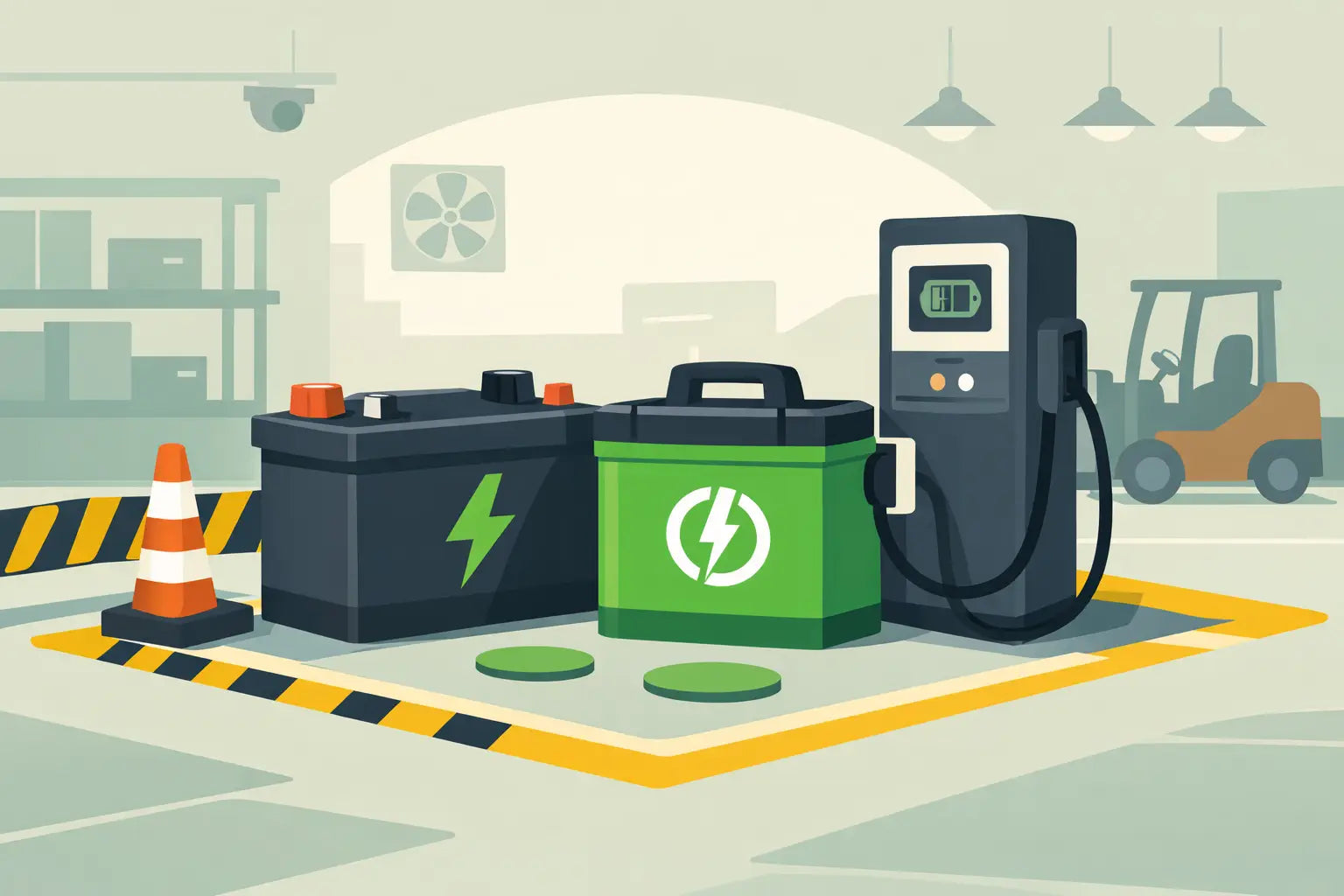
A battery charger on a warehouse wall can look like a minor part of the operation. But the space around it may involve live electricity, heavy plant movements, hydrogen gas, corrosive electrolyte, heat and restricted access. Clear battery charging area signs make the boundary obvious before someone parks the wrong vehicle, uses an ignition source or enters without understanding the risks.
For site managers, facilities teams and trade buyers, the aim is not to cover every wall with notices. It is to place the right signs where they give people clear instructions at the point of risk. That supports safer routines, helps demonstrate sensible control measures and makes charging areas easier to manage across one site or many.
Why charging areas need clear safety signs
Battery charging is not one single hazard. The risk profile changes according to the equipment, battery type and location. A dedicated forklift battery room using flooded lead-acid batteries needs controls for electrolyte spills and potentially explosive gases. A lithium-ion charging bay may require tighter arrangements around damaged batteries, overheating, fire response and keeping combustible materials away. An EV charging point in a visitor car park has a different set of access and electrical safety considerations again.
Signage cannot replace ventilation, maintenance, staff training or a suitable risk assessment. It does, however, communicate the rules quickly to people who may not work in the area every day. That includes agency staff, delivery drivers, contractors, cleaners and visitors. A clear prohibition sign can stop smoking or naked flames near a charging point. A mandatory instruction can reinforce PPE requirements. A warning sign can alert people to electrical danger, corrosive substances or battery charging in progress.
Under the Health and Safety (Safety Signs and Signals) Regulations 1996, safety signs should be used where a significant risk remains after other practical control measures have been considered. In a battery charging area, signs are often a sensible part of that wider control plan.
The signs most workplaces may need
The exact selection should come from your risk assessment, not a one-size-fits-all checklist. Still, most charging locations benefit from a combination of identification, warning, prohibition and instruction signs.
A clear "Battery Charging Area" or "Battery Charging Station" sign identifies the designated space. It helps staff return equipment to the correct point and makes it clear that the area is not general storage. Where access is controlled, add an authorised personnel notice or a restricted access sign.
Electrical hazard signs are appropriate where live charging equipment, cables and connections create a foreseeable risk. If lead-acid batteries are handled or charged, warnings for corrosive substances and explosive atmospheres may also be needed, subject to the conditions identified on site. Do not use an explosion warning symbol as a generic precaution if it does not reflect the assessed risk. Accurate signage is more credible and more useful than an over-signed area.
Prohibition signs are particularly effective in battery rooms and enclosed charging bays. No smoking and no naked flames signs address obvious ignition sources. Depending on the layout, a no mobile phones sign may be used where your site procedures restrict their use, although it should reflect a genuine operational need rather than habit.
Mandatory signs communicate actions people must take. These might include eye protection, gloves or face protection where electrolyte handling, inspection or maintenance is carried out. If PPE is required only for battery changes and not routine plug-in charging, position the sign at the maintenance point rather than presenting it as a rule for every person passing the doorway.
Fire action and emergency information should also be considered. The right approach depends on the battery chemistry, fire risk assessment and emergency arrangements. For example, signs identifying fire equipment or emergency exits must remain visible and must not be obscured by charging cables, stacked batteries or temporary notices.
Battery charging area signs for different applications
Forklift and warehouse charging bays
Forklift charging areas are commonly busy, practical spaces where signs must work at a glance. Drivers may be working around pallet lorries, racking, loading lanes and pedestrian routes, so the charging boundary needs to be unmistakable.
Use an identification sign at the approach to the bay, supported by warning and prohibition signs at eye level near the charger. Floor markings can help define where lorries should be parked, but they are not a substitute for wall-mounted notices. In high-traffic areas, a durable rigid sign is often easier to spot than a small adhesive label.
For lead-acid forklift batteries, good housekeeping matters as much as sign choice. Keep the charging zone free from combustible stock, prevent cables becoming trip hazards and ensure eyewash, spill response equipment and emergency procedures are provided where the risk assessment requires them. Signs should point people towards those controls without creating clutter.
Lithium-ion battery charging points
Lithium-ion batteries are now used across forklifts, power tools, cleaning equipment, e-bikes and portable devices. They can offer operational benefits, but damaged, unsuitable or poorly managed batteries can present a serious fire risk.
Signage in these areas should support the rules your team actually follows. This may mean identifying a charging-only bench, prohibiting storage of unrelated materials, restricting use to trained staff, and displaying a notice not to charge visibly damaged batteries. It may also be sensible to separate quarantined or defective batteries from normal charging equipment, with clear identification so they are not returned to service by mistake.
Avoid assuming that every lithium-ion charging point needs the same sign package as a lead-acid battery room. The hazards, controls and emergency arrangements may be different. Review the manufacturer guidance for the equipment and batteries in use, then make sure signs reinforce the procedures you have put in place.
EV charging spaces
EV charging signage has a more public-facing role. It needs to tell drivers where charging is permitted, whether bays are reserved for electric vehicles, and any site-specific conditions such as maximum stay, parking controls or charging-only use.
For workplace and visitor car parks, combine EV bay identification with clear parking restrictions where needed. Position signs so drivers can read them before parking, rather than after they have entered the bay. If the charging unit is near vehicle routes, use durable materials and sensible mounting heights to reduce damage and maintain visibility.
Electrical warning signs may be appropriate around equipment cabinets or restricted service areas, but the parking sign itself should stay simple. A driver should be able to understand the purpose of the bay within seconds.
Choosing the right material and size
A sign that cannot be read, or that fades after a season outdoors, is poor value regardless of its purchase price. Choose the format around the environment and viewing distance.
Self-adhesive vinyl works well for smooth indoor surfaces, chargers, cabinets and doors. It is quick to apply and useful where space is limited. Rigid plastic signs are a practical choice for warehouse walls, fences, posts and outdoor locations, offering better durability and visibility. For temporary works, maintenance shutdowns or short-term charging arrangements, a suitable temporary notice may be enough, provided it stays secure and legible.
Size matters. A small label may be suitable on a charging cabinet, but it will not effectively warn someone approaching a marked-out battery room. Consider where the person needs to see the message, how quickly they are moving and whether lighting, racking or parked vehicles could obstruct the view. In shared or public areas, use a larger sign than you might choose for a staff-only cupboard.
Positioning signs where they change behaviour
Put the main identification sign at the entrance or approach to the charging area. Place hazard and prohibition signs at the point where a person can still change their behaviour, not hidden behind the charger. Mandatory PPE signs belong where the task begins, while emergency equipment and fire action signs must be visible from the relevant equipment or escape route.
Check the area from the perspective of different users. A forklift operator may view the space from a seated position. A pedestrian may approach from a side aisle. A contractor may only see the area for the first time during an out-of-hours visit. If each person can understand the boundary and the main rules without asking for directions, the signs are doing their job.
Review signage after layout changes, new charging equipment, a near miss or a change in battery technology. Old signs left in place after procedures change can cause confusion and undermine compliance. A short inspection during routine site checks is usually enough to spot faded materials, obscured notices or missing instructions.
Ordering signs for multi-site and trade use
For procurement teams, consistency is a safety benefit. Using the same recognised symbols, wording, materials and sizes across warehouses, workshops and depots helps employees understand expectations when they move between locations. It also makes replenishment simpler when a sign is damaged or a charging bay is added.
Build a small standard specification based on your common applications, then allow for site-specific additions where the risk assessment requires them. Buying in volume can reduce the unit cost, but only order quantities that reflect current layouts and approved procedures. A low-cost sign that does not match the hazard is not a saving.
British-made safety signage, clear product descriptions and fast dispatch can make a real difference when a new charging point is being commissioned or an audit has identified a gap. The Safety Sheep Store supplies practical signs for workplaces that need to act quickly, with trade pricing and bulk savings available for larger orders.
A well-signed charging area gives staff a simple message: this is a controlled workspace, not somewhere to cut corners. Start with the risks on your site, choose signs people can see and understand, and keep them aligned with the way the area is actually used. Think Safety - Think Sheep.
Share:
What Is a Fire Assembly Point Sign? UK Guide
What Fire Safety Signs Should Every Workplace Have?