

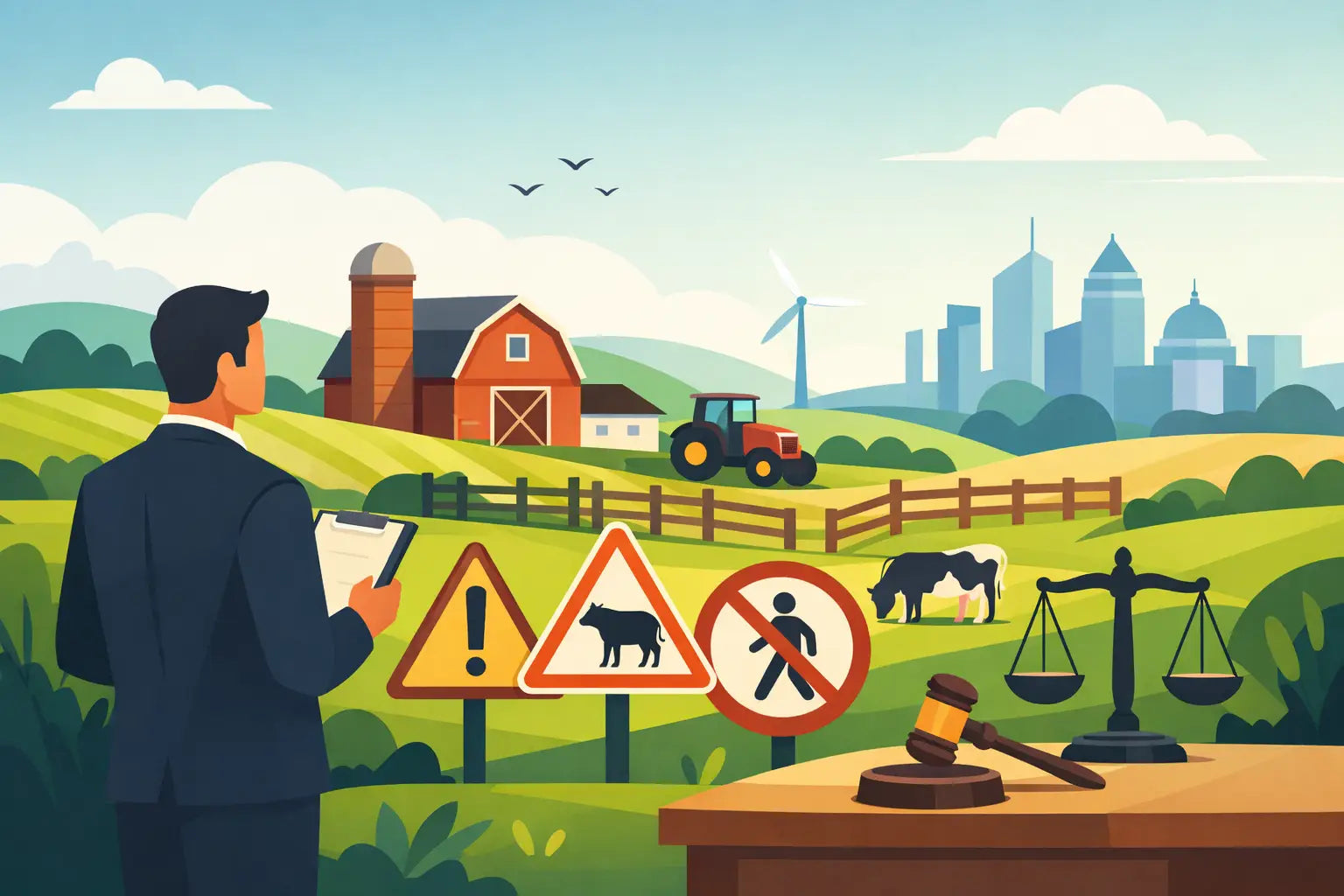
A farm gate can look harmless from the road, but beyond it may be moving machinery, livestock, chemicals, slurry stores, electric fencing and uneven ground. So, do farms need warning signs? In many cases, yes. UK farms have a duty to manage foreseeable risks to employees, contractors and visitors, and clear signage is often a practical part of that control.
Signs are not a substitute for safe systems of work, secure fencing or proper supervision. They do, however, help communicate hazards quickly, support access control and show that risks have been considered. For a working farm with staff, deliveries, visitors or public rights of way, the right warning signs are a sensible operational safeguard.
Do farms need warning signs for legal compliance?
There is no single rule saying every farm must display the same set of warning signs. Requirements depend on the hazards present, who may be exposed to them and what other controls are already in place.
Under UK health and safety law, employers and those in control of premises must assess risks and take reasonably practicable steps to prevent harm. The Health and Safety (Safety Signs and Signals) Regulations 1996 also apply where a significant risk remains after other suitable controls have been put in place and a sign is needed to warn, instruct or direct people.
In practical terms, a sign may be necessary where people could enter a dangerous area, misunderstand a site rule or fail to spot a hazard in time. A clearly marked restricted-access point, for example, is far more defensible than assuming visitors will know they should not walk into a machinery yard.
The key point is proportionate risk control. A small, private holding with no visitors will need a different approach from a large mixed farm receiving contractors, feed deliveries, school groups and holiday guests. Risk assessments should guide the decision, with signage used wherever it adds clear safety value.
Where warning signs are most commonly needed on farms
Farm environments change through the day and across the seasons, but some hazards are consistently high risk. Signage should be considered at entrances, gateways, building doors, track crossings and the point where a person can first make a decision about whether to proceed.
Machinery yards and vehicle routes
Tractors, telehandlers, loaders, ATVs and lorries create obvious risks, particularly where pedestrians share space with vehicles. Use warning signs to make drivers and walkers aware of moving plant, and use site notices to direct visitors to a reception point or safe waiting area.
Where possible, separate pedestrian and vehicle routes with physical measures. Signs reinforce the system, but they cannot safely manage a busy yard on their own. Marking speed limits, no unauthorised access rules and designated delivery points can also reduce confusion during peak periods.
Livestock areas
Cattle, bulls, rams, horses and other animals can be unpredictable, especially during feeding, handling, calving or lambing. Signs should warn visitors not to enter pens, touch animals or feed livestock without permission. A specific warning about livestock is useful at public-facing gates, farm shop boundaries and visitor routes.
Extra care is needed where cattle are near public footpaths. Landowners should assess the route, stock behaviour and seasonal conditions. Warning signs may help explain a risk, but they do not remove the need to manage livestock appropriately or maintain a safe right of way.
Chemicals, fuels and hazardous substances
Pesticides, fertilisers, cleaning products, diesel and LPG all require controlled storage and clear identification. Chemical stores should display appropriate hazard signage, prohibit unauthorised entry and make relevant PPE requirements visible before anyone enters.
Where substances fall under hazardous chemical rules, labels and safety information must also be properly maintained. A generic warning sign is not enough if containers are unlabelled, incompatible products are stored together or staff have not been trained. Signs work best as part of a well-organised store.
Slurry, silage and confined spaces
Slurry pits, tanks, lagoons, grain stores and silage clamps can present severe and sometimes fatal risks. Warning signs should be clear, weather-resistant and positioned before access is possible. They may need to state that entry is prohibited, identify the specific danger and highlight that toxic gases or engulfment risks may be present.
These are areas where physical security matters most. Secure covers, barriers, locked access and planned work procedures should come before signage. The sign is the visible final reminder for anyone approaching the hazard.
Electric fences, dogs and private areas
Electric fencing should be marked where people are likely to encounter it, particularly around public paths, visitor areas and shared access routes. Farm dogs, private dwellings, workshops and staff-only buildings also benefit from direct, legible notices.
A simple “Private - No Unauthorised Access” sign can prevent casual entry, while “Beware of the Dog” should only be used where it accurately reflects the situation. Avoid overusing dramatic warnings. If every gate carries a severe notice, people can stop noticing the ones that matter most.
Choosing the right type of farm safety sign
The format and message should match the hazard. Standard safety sign colours and symbols make instructions easier to recognise: yellow triangles warn of danger, blue circles give mandatory instructions, red circles prohibit actions, and green signs identify safe conditions or first aid information.
For farms, useful sign categories often include warning signs for livestock and moving vehicles; prohibition signs for restricted areas and no smoking zones; mandatory PPE signs for chemical stores and workshops; and fire, first aid and emergency information where facilities are provided.
Use clear wording alongside recognised symbols when the audience may include visitors, casual workers or delivery drivers. “Caution: Moving Vehicles” is more helpful than an ambiguous message. If the hazard is temporary, such as hedge cutting beside a farm track or a loose surface after works, use a temporary sign and remove it when the risk has passed.
Material choice matters too. A paper notice taped to a gate will not last through a British winter. Rigid plastic, aluminium composite or durable self-adhesive vinyl may be more suitable depending on the surface, exposure and expected lifespan. Check signs regularly for fading, damage, dirt and obstruction by vegetation.
Sign placement matters as much as the message
A good sign should be seen before a person reaches the danger, not after. Place it at a natural decision point: the entrance to a yard, gate to a field, door of a chemical store or approach to a slurry area. Mount it at a readable height and make sure it has enough contrast against its background.
Consider who will read it. A vehicle driver approaching a gate needs a larger sign than a pedestrian entering a workshop. A sign intended for walkers should not be hidden behind a parked tractor or facing the wrong direction along a public footpath.
Review signs when the layout changes. New buildings, altered vehicle routes, a farm diversification project or an increase in visitor numbers can all change the risks. This is especially relevant for farms adding a café, shop, campsite, seasonal attraction or educational visits.
A practical approach for farm operators
Start with your existing risk assessment and walk the site as a visitor or new contractor would. Could they tell where to report? Would they know which areas are off limits? Can they see moving-vehicle routes, dangerous storage areas and required PPE before entering?
Then prioritise the hazards with the greatest potential for harm. High-risk areas such as slurry stores, chemical stores, machinery yards and livestock handling facilities should be addressed first. Replace faded or contradictory notices, and keep the wording consistent across the site.
For multi-building farms or estates, standardising your signs makes maintenance and ordering simpler. It also gives staff and contractors a consistent visual language wherever they work. The Safety Sheep Store supplies British-made farm and workplace safety signage in durable formats, with trade pricing available for larger site requirements.
When signs are not enough
Warning signs have limits. They should never be used to justify leaving a serious danger exposed or allowing uncontrolled public access to a hazardous area. If a slurry pit can be reached by a child, a sign alone is not an adequate control. If delivery drivers regularly walk through a busy loading area, physical segregation and a clear arrival procedure may be required.
The most effective farms combine sensible layout, secure boundaries, staff instruction, maintenance and visible signage. That approach protects people, supports day-to-day operations and makes it easier to demonstrate that safety has been managed properly.
A clear sign at the right gate takes seconds to read, but it can prevent a visitor taking the wrong route or a contractor entering a high-risk area. Review your farm from the outside in, and make every warning count. Think Safety - Think Sheep.
Share:
How to Replace Faded Warning Signs Safely
Toilet Door Signs UK for Safer Facilities