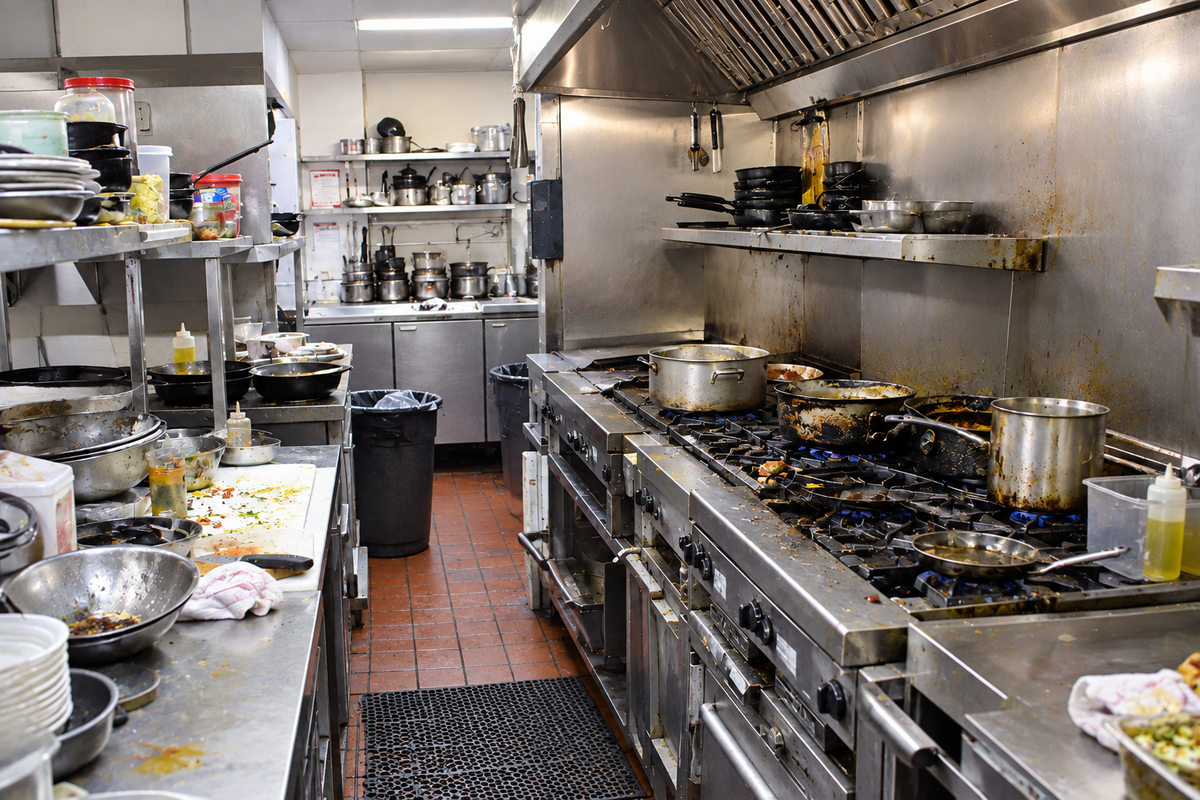
Preventing cross-contamination is one of the most important parts of running a safe commercial kitchen.
Raw meat, allergens, dirty equipment, hands, cloths and food-contact surfaces can all transfer harmful bacteria or allergens from one place to another if they're not managed correctly.
In a busy restaurant, café, takeaway, hotel or catering kitchen, that can happen surprisingly easily.
The good news is that many cross-contamination risks can be reduced through sensible kitchen design, good hygiene procedures, staff training and clear visual reminders.
Here's what commercial kitchens should consider.
What Is Cross-Contamination?
Cross-contamination happens when bacteria, allergens or other contaminants are transferred from one food, person, surface or piece of equipment to another.
For example:
-
Raw chicken touches a chopping board that's later used for ready-to-eat food.
-
A member of staff handles raw meat and then touches another food without washing their hands appropriately.
-
A knife is used for different foods without being properly cleaned between tasks.
-
Raw food is stored above ready-to-eat food and liquid drips onto it.
-
A cleaning cloth spreads contamination between different preparation surfaces.
-
Equipment used with an allergen is then used to prepare another customer's meal without appropriate controls.
The contaminant may be invisible, but the consequences can be serious.
Why Is Cross-Contamination Dangerous?
Cross-contamination can transfer harmful microorganisms from raw or contaminated food to food that's ready to eat.
Because ready-to-eat food may not undergo further cooking, there may be no later stage capable of reducing the microbiological risk before it's eaten.
Allergen cross-contact presents a different but equally important concern.
Very small amounts of an allergen can cause a reaction in somebody with a food allergy.
That's why preventing cross-contamination and allergen cross-contact needs to form part of everyday kitchen procedures rather than being treated as an occasional cleaning task.
1. Separate Raw & Ready-to-Eat Foods
One of the most important principles is keeping raw foods away from ready-to-eat foods.
This applies during:
-
Delivery
-
Storage
-
Preparation
-
Cooking
-
Plating
-
Service
Where practical, use separate preparation areas and equipment for raw and ready-to-eat foods.
If the same space has to be used for different tasks, appropriate cleaning and disinfection procedures between activities become particularly important.
Clear Raw Food Only, Cooked Food Only or preparation-area signs can help staff identify designated areas where these form part of your procedures.
2. Store Food Carefully
Poor storage can undo otherwise good kitchen hygiene.
Raw foods need to be stored in a way that prevents them contaminating ready-to-eat products.
Think about:
-
Where raw meat is stored
-
Whether containers are properly covered
-
Whether food can drip or leak
-
How different food categories are separated
-
How allergens are managed
-
Whether storage areas are clearly identified
Don't rely on staff remembering where everything belongs.
A logical storage system that's consistently followed is much more reliable.
Labels and appropriate food storage signs can provide additional visual reinforcement.
3. Wash Hands Properly
Hands are an obvious route for transferring contamination around a kitchen.
Food handlers need to follow appropriate hand hygiene procedures, particularly when moving between tasks that could transfer contamination.
Suitable hand washing facilities should be readily available, and staff need to know when and how to use them.
A clearly positioned Wash Hands or Hand Wash Only sign can reinforce those procedures at the point of use.
The important part is the positioning.
A hand washing sign on a distant staff noticeboard is unlikely to be as effective as a clear reminder immediately beside the designated hand wash basin.
4. Keep Hand Wash Basins for Hand Washing
Commercial kitchens can contain several sinks, and using the wrong one can create hygiene problems.
Depending on the premises, you may have separate facilities for:
-
Hand washing
-
Food washing
-
Equipment washing
-
Utensil washing
-
Pot washing
Clearly identifying the purpose of each facility can reduce confusion.
A Hand Wash Only sign positioned immediately beside the designated basin makes its purpose clear to employees, temporary workers and new members of staff.
5. Use Separate Equipment Where Appropriate
Knives, chopping boards, containers, utensils and other equipment can transfer contamination between foods.
Depending on your procedures, separate equipment may be used for different food categories or activities.
Colour coding can also help staff quickly identify which equipment should be used for a particular task.
Whatever system you use, it needs to be:
-
Easy to understand
-
Consistently applied
-
Included in staff training
-
Supported by appropriate cleaning procedures
A complicated system that nobody follows isn't an effective control.
6. Clean & Disinfect Effectively
Cleaning and disinfection play an essential role in controlling contamination.
But they're not the same thing.
Cleaning removes dirt, grease and food residues from a surface.
Disinfection is intended to reduce microorganisms to an appropriate level.
Your procedures should specify what needs to be cleaned, how it should be cleaned and when.
Pay particular attention to frequently touched or food-contact surfaces such as:
-
Worktops
-
Chopping boards
-
Knives
-
Handles
-
Taps
-
Fridge handles
-
Equipment controls
-
Sinks
-
Utensils
A Clean As You Go sign can provide a useful reminder, but it doesn't replace an appropriate cleaning schedule or staff training.
7. Don't Forget Cleaning Equipment
The equipment used to clean a kitchen can itself spread contamination.
Cloths, sponges, brushes and mops can transfer contaminants from one area to another if they're used incorrectly.
Your procedures should consider:
-
Which cleaning equipment is used in each area
-
How it's cleaned or replaced
-
Where it's stored
-
Whether equipment needs to be separated between different zones
Colour-coded cleaning equipment can be useful where it forms part of a clearly understood system.
8. Keep Food Covered
Food that's left uncovered may be exposed to contamination from hands, equipment, splashes, other foods or the surrounding environment.
Use appropriate containers, covers and wrapping according to your food safety procedures.
Food should also be clearly identified where necessary so staff understand what it is and how it should be handled.
9. Control Movement Around the Kitchen
Cross-contamination isn't only about food.
Think about how people and equipment move through the kitchen.
For example, a member of staff may:
-
Handle a delivery.
-
Touch packaging.
-
Move waste.
-
Handle raw food.
-
Touch a fridge handle.
-
Begin preparing ready-to-eat food.
Every transition can potentially transfer contamination if appropriate hygiene procedures aren't followed.
When reviewing your kitchen, don't just look at individual workstations.
Follow the journey that employees, food, equipment and waste actually take.
10. Manage Deliveries Carefully
Cross-contamination prevention starts before food reaches the preparation area.
When deliveries arrive, consider:
-
Condition of packaging
-
Separation of food types
-
Appropriate temperatures
-
Where products are temporarily placed
-
How food is moved into storage
-
Whether outer packaging enters food preparation areas
A well-designed goods-in process can help prevent contamination being carried further into the kitchen.
11. Manage Waste Properly
Waste creates another potential source of contamination.
Bins should be managed so waste doesn't interfere with food preparation activities.
Staff handling waste may also need to follow appropriate hygiene procedures before returning to food-handling tasks.
Consider:
-
Bin positioning
-
Lids
-
Emptying procedures
-
Cleaning
-
Waste routes
-
Hand hygiene after waste handling
Appropriate Food Waste, Keep Refuse Bins Closed and hand washing signs can reinforce established procedures where useful.
12. Be Careful With Mobile Phones & Personal Items
Phones, keys and other personal belongings can carry contamination into food preparation environments.
Businesses should consider how personal items are managed and where they're stored.
If your workplace has a specific policy restricting phones or personal belongings in food preparation areas, communicate it clearly to staff.
13. Use Protective Clothing Correctly
Protective clothing can help maintain hygiene when it's selected and used appropriately.
Depending on the food business and activity, this could include:
-
Aprons
-
Protective coats
-
Gloves
-
Hair coverings
-
Other suitable workwear
Protective clothing itself needs to be managed properly.
An apron that's heavily contaminated and then worn into another food preparation area could become part of the problem rather than the solution.
Where particular clothing or PPE is mandatory in an area, appropriate signage can reinforce the requirement.
14. Control Allergen Cross-Contact
Allergen cross-contact needs particular attention.
It can occur when an allergen is unintentionally transferred to food that isn't supposed to contain it.
Potential routes include:
-
Shared utensils
-
Shared preparation surfaces
-
Shared cooking equipment
-
Hands
-
Cloths
-
Containers
-
Splashes
-
Ingredients
-
Incorrect storage
Food businesses need suitable allergen-management procedures and must provide required allergen information accurately.
Staff should understand those procedures and know what to do when preparing food for somebody with an allergy.
An allergen sign or notice can support awareness, but it doesn't replace an effective allergen-management system.
15. Train Staff Properly
Even the best-designed kitchen can fail if employees don't understand the procedures.
Training should be appropriate to the person's role and the food-handling activities they perform.
Staff need to understand not just what they're expected to do, but why.
For example:
“Use this chopping board.”
is an instruction.
“Use this chopping board because using equipment that has contacted raw meat for ready-to-eat food could transfer harmful bacteria.”
explains the risk.
People are more likely to follow procedures consistently when they understand their purpose.
16. Make Procedures Easy to Follow
Good food hygiene shouldn't depend on employees remembering a long list of complicated rules while working under pressure.
Make the correct action the easy action.
For example:
-
Put hand wash facilities where they're needed.
-
Store the correct equipment near the appropriate preparation area.
-
Use clear identification.
-
Keep cleaning materials accessible.
-
Make storage arrangements logical.
-
Position visual reminders at the point of action.
If staff have to walk across the kitchen to find the right equipment every time, the procedure is less likely to work consistently.
17. Use Food Hygiene Signs at the Point of Action
Signs can be useful when they remind somebody what to do at the exact place where they need to do it.
Examples include:
Wash Hands
Position beside the designated hand wash basin.
Hand Wash Only
Position directly beside the hand washing sink.
Raw Food Only
Use where a preparation or storage area is specifically designated for raw food.
Cooked Food Only
Use where appropriate to identify a designated area.
Prevent Cross Contamination
Position where it reinforces a relevant procedure rather than using it as a generic wall notice.
Clean As You Go
Use where it provides a useful reminder of established cleaning procedures.
Protective Clothing Must Be Worn
Use where protective clothing is required.
The key principle is simple:
Put the message where the action happens.
18. Don't Rely on Signs Alone
A sign can communicate an instruction.
It can't:
-
Wash somebody's hands
-
Separate raw and cooked food
-
Clean a worktop
-
Train an employee
-
Check a refrigerator
-
Manage an allergen
-
Disinfect a chopping board
That's why food hygiene signage should support the controls already in place.
A kitchen covered in hygiene signs can still have poor food hygiene if the underlying procedures aren't effective.
19. Avoid Too Many Signs
More signage doesn't automatically mean better food hygiene.
If every wall is covered with notices, important instructions can disappear into the background.
Prioritise signs that:
-
Communicate an important action
-
Reinforce an established procedure
-
Identify a particular facility or area
-
Prevent a foreseeable mistake
-
Need to be seen at a particular location
Review signage periodically and remove notices that are outdated, duplicated or no longer relevant.
20. Review Your Kitchen Layout
One of the best ways to identify cross-contamination risks is to physically walk through the kitchen.
Start where food arrives and follow it through:
Delivery → Storage → Preparation → Cooking → Service
Then look at the reverse journey:
Used equipment → Waste → Cleaning
Ask where raw and ready-to-eat foods could cross paths.
Look at:
-
Doors
-
Handles
-
Sinks
-
Preparation surfaces
-
Fridges
-
Storage racks
-
Waste routes
-
Staff movement
-
Equipment movement
Sometimes a small change in layout can reduce risk more effectively than another procedure.
Cross-Contamination & HACCP
Food businesses need appropriate food safety management procedures, and these are commonly based on HACCP principles.
HACCP involves identifying food safety hazards and establishing appropriate controls.
Cross-contamination risks should therefore be considered as part of the business's wider food safety management arrangements.
A sign may support one of those controls, but displaying a Prevent Cross Contamination sign doesn't make a kitchen “HACCP compliant”.
The important issue is whether the hazard has been identified and effectively controlled.
A Commercial Kitchen Cross-Contamination Checklist
Walk through your kitchen and ask:
-
Are raw and ready-to-eat foods adequately separated?
-
Is food stored safely?
-
Are designated hand wash facilities clearly identified?
-
Do staff know when to wash their hands?
-
Is separate equipment used where appropriate?
-
Are cleaning and disinfection procedures clear?
-
Is cleaning equipment properly managed?
-
Are food preparation areas clearly identified?
-
Are allergen risks being appropriately managed?
-
Are waste routes and procedures suitable?
-
Do employees understand cross-contamination risks?
-
Are hygiene signs positioned where the relevant action takes place?
-
Is there unnecessary or outdated signage?
-
Have changes to the menu or kitchen created new risks?
-
Are procedures actually being followed during busy periods?
If you're unsure about any of these, it's worth reviewing the relevant part of your food safety procedures.
Common Cross-Contamination Mistakes
Some of the most useful improvements come from identifying everyday habits that can easily be overlooked.
Watch for:
-
Using the same equipment for raw and ready-to-eat food
-
Poor hand washing
-
Incorrect food storage
-
Dirty fridge or door handles
-
Reusing contaminated cloths
-
Using the wrong sink
-
Putting clean equipment onto contaminated surfaces
-
Allowing outer packaging onto food preparation surfaces
-
Poor waste handling
-
Inadequate allergen controls
-
Unclear preparation zones
-
Outdated procedures
Small mistakes can become routine if nobody notices or challenges them.
When Should You Review Cross-Contamination Controls?
Don't wait for something to go wrong.
Review your procedures when:
-
The menu changes
-
New ingredients are introduced
-
New allergens are introduced
-
Kitchen equipment changes
-
The layout changes
-
New preparation processes begin
-
New staff join
-
Cleaning procedures change
-
A problem or near miss occurs
Regular reviews can identify weaknesses before they develop into larger problems.
Food Hygiene Signs for Commercial Kitchens
Clear food hygiene and kitchen safety signs can help reinforce established procedures and provide visual reminders at important points throughout a commercial kitchen.
Safety Sheep supplies signs for:
-
Hand washing
-
Cross-contamination
-
Raw and cooked food
-
Food preparation
-
Cleaning
-
Sink identification
-
Food storage
-
Food allergens
-
Protective clothing
-
Kitchen safety
Explore our complete Food Hygiene & Kitchen Signs range for restaurants, cafés, takeaways, hotels, schools, care homes, canteens and other food businesses.
Made in Britain. Think Safety. Think Sheep.
Share:
Food Allergy Signs: What UK Food Businesses Need to Know
Kitchen Safety Signs: A Checklist for UK Catering Businesses