

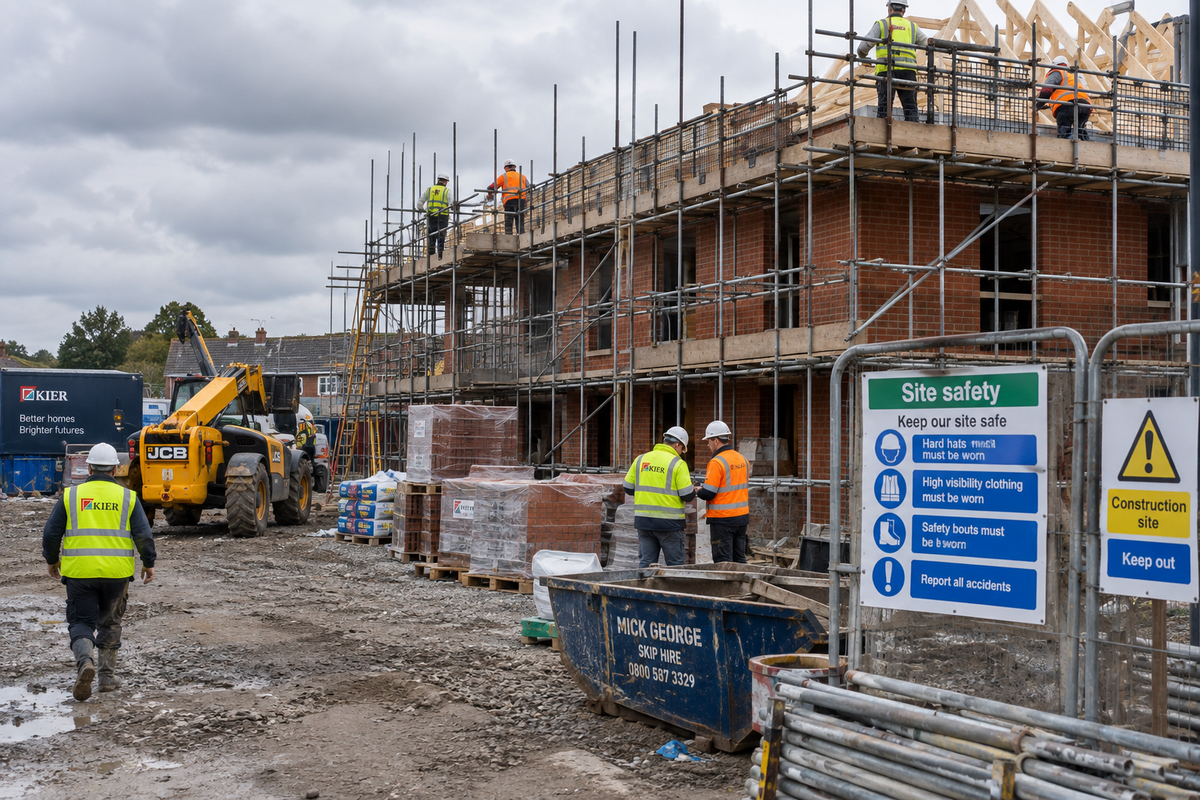
Construction Sign Packs: Which Pack Do I Need?
Setting up a construction site can mean buying a surprisingly large number of safety signs.
You may need signs for site entrances, PPE, access restrictions, hazards, fire safety, first aid, assembly points, vehicle movements and more.
Buying every sign individually can take time, particularly if you're setting up a new project or managing several sites.
That's where Construction Sign Packs can help.
Compare Our Construction Sign Packs
A construction sign pack brings together a selection of commonly used site safety signs in one convenient bundle. But with packs containing anything from a handful of signs to 40 or more, how do you decide which one is right for your site?
This guide explains what to look for, how to compare different pack sizes and when you'll need additional signs for project-specific hazards.
What Is a Construction Sign Pack?
A Construction Sign Pack is a pre-selected bundle of individual safety signs designed for use on construction and building sites.
Rather than ordering every sign separately, you receive a selection covering commonly encountered site requirements.
Depending on the pack, these might include signs relating to:
-
Site entrances
-
Unauthorised access
-
Visitors
-
PPE
-
Construction hazards
-
Fire safety
-
First aid
-
Assembly points
-
Site offices
-
Electrical hazards
-
Vehicle movements
The individual signs can then be positioned around the site wherever the information is needed.
Why Buy Construction Signs as a Pack?
The biggest advantage is convenience.
If you're setting up a new site, you don't necessarily want to search for 20 or 30 individual signs one at a time.
A suitable pack can give you a useful starting selection in one order.
Construction sign packs can be particularly useful for:
-
New construction projects
-
Building contractors
-
Refurbishment projects
-
Site managers
-
Companies operating multiple sites
-
Replacing damaged signage
-
Keeping spare signs in stock
-
Standardising common signage across projects
Buying signs as a pack can also provide better value than purchasing the equivalent signs individually, depending on the particular bundle.
Does Every Construction Site Need the Same Signs?
No.
This is the most important thing to understand before choosing a pack.
There isn't one standard set of construction signs suitable for every UK building site.
The signs you need depend on factors such as:
-
Work being carried out
-
Hazards present
-
Site layout
-
Access arrangements
-
PPE requirements
-
Vehicle and pedestrian movements
-
Fire arrangements
-
First-aid provision
-
Contractors and visitors
-
Risks to members of the public
A small residential refurbishment will have very different requirements from a major commercial development.
A construction sign pack should therefore be viewed as a convenient starting point, not a universal checklist of everything your site needs.
Are Construction Sign Packs a Legal Requirement?
No specific pre-selected construction sign pack is legally required.
UK health and safety requirements focus on identifying and controlling risks and using appropriate safety signs where necessary.
The Health and Safety (Safety Signs and Signals) Regulations 1996 require safety signs where a significant risk remains after other relevant measures have been taken.
Construction projects also operate within wider health and safety requirements, including the Construction (Design and Management) Regulations 2015.
The important point is that the signs used should reflect the actual risks and arrangements on the project.
Buying a large sign pack does not automatically make a construction site compliant.
What Should a Good Construction Sign Pack Include?
That depends on the project, but there are several categories worth looking for.
Construction Site Entrance Signs
Site entrances are one of the first places to consider.
Useful signs can include:
-
Danger Construction Site
-
Construction Site Keep Out
-
No Unauthorised Access
-
Visitors Must Report to Site Office
These help communicate access restrictions before somebody enters an operational area.
PPE Signs
Many construction sites have mandatory PPE requirements.
Common signs include:
-
Safety Helmets Must Be Worn
-
High Visibility Clothing Must Be Worn
-
Safety Footwear Must Be Worn
-
Eye Protection Must Be Worn
-
Hearing Protection Must Be Worn
-
Protective Gloves Must Be Worn
Only display instructions that actually apply.
If specialist PPE is required only in a particular area, position the appropriate sign where that requirement begins rather than implying it applies throughout the whole site.
Construction Hazard Signs
Depending on the work taking place, packs may contain warning signs for hazards such as:
-
Deep excavations
-
Moving vehicles
-
Overhead loads
-
Falling objects
-
Electrical hazards
-
Slippery surfaces
General packs won't necessarily include signs for every specialist hazard, so you may need to add individual signs separately.
Fire Safety Signs
Construction fire arrangements can change as the project develops.
Useful signs may include:
-
Fire Exit
-
Fire Action
-
Fire Extinguisher
-
Fire Point
-
Assembly Point
Check that the signage corresponds with the actual fire arrangements and escape routes on the site.
First Aid Signs
First-aid signage helps workers and visitors locate facilities and equipment.
A construction pack might include:
-
First Aid
-
First Aid Box
-
First Aid Room
The signs should correspond with the first-aid provision established for the project.
Site Office Signs
Directional and identification signs can help workers, visitors and delivery drivers find important locations.
Examples include:
-
Site Office
-
Visitors Report to Site Office
-
Site Entrance
-
Reception
These can be particularly useful on larger projects where the site office isn't immediately visible from the entrance.
Small Construction Sign Packs
A smaller pack can be ideal when you need a basic selection rather than dozens of signs.
They can suit:
-
Small building projects
-
Domestic construction work
-
Refurbishments
-
Maintenance work
-
Short-duration projects
-
Contractors who already own some signage
A small pack might focus on core entrance, PPE and emergency information.
Best for:
Small sites, short projects and supplementing existing signage.
Medium Construction Sign Packs
A medium-sized pack can provide broader coverage without purchasing a very large bundle.
These packs may include a mixture of:
-
Entrance signs
-
PPE signs
-
Hazard warnings
-
Fire safety signs
-
First aid signs
-
Site information
They can work well for general contractors who need a useful core selection for a new project.
Best for:
Small-to-medium construction sites and contractors wanting a broader starter selection.
Large Construction Sign Packs
Larger packs containing 25, 40 or more signs can be useful for bigger projects and companies operating multiple sites.
Their advantage isn't simply having more signs.
A larger pack can provide:
-
Wider coverage
-
Duplicate signs for multiple locations
-
Replacement stock
-
Signs for future project stages
-
Spare signage for other sites
This can make them particularly attractive to contractors who regularly need construction signage.
Best for:
Larger projects, multi-site contractors and companies wanting commonly used replacement signs in stock.
Is the Biggest Construction Sign Pack Always the Best?
No.
The best pack isn't necessarily the one containing the most signs.
Imagine choosing between:
Pack A – 10 signs
and
Pack B – 47 signs
Pack B might appear to offer much better value.
But if your project only needs eight of those 47 signs, the smaller pack plus a few individual signs might be a better purchase.
Compare:
-
Number of useful signs
-
Number of duplicate signs
-
Pack price
-
Individual sign prices
-
Project size
-
Existing signage
-
Future projects
Think in terms of useful signs, not simply the total number printed on the pack.
Which Construction Sign Pack Do I Need?
A simple way to decide is to start with the project.
Small Refurbishment or Building Project
Look for a smaller starter pack containing core entrance and PPE signage.
You may then need individual signs for particular hazards.
Small-to-Medium Building Site
Consider a broader pack covering:
-
Entrance
-
Access
-
PPE
-
Hazards
-
Fire
-
First aid
Add specialist signs according to the work taking place.
Large Construction Site
A larger pack may provide better coverage and useful duplicate signage.
You'll probably still require additional project-specific signs for traffic management, specialist hazards and changing work areas.
Multiple Construction Sites
A larger pack can be particularly cost-effective because unused signs can form replacement stock or be allocated to other projects.
You might also consider purchasing standard packs for each site so core signage remains consistent across your projects.
Construction Sign Packs for New Sites
A sign pack can be particularly useful during initial site set-up.
Before the project begins, consider:
Site boundary
What warnings or access restrictions are needed?
Site entrance
What does somebody need to know before entering?
PPE
Which requirements apply throughout the site?
Traffic
How will vehicles and pedestrians move around?
Fire
Where are escape routes, firefighting equipment and assembly points?
First aid
Where are first-aid facilities?
A suitable construction pack can cover many of these core requirements.
You can then add signs for hazards specific to the project.
Construction Sign Packs for Contractors
For contractors working across multiple projects, sign packs can offer another advantage: consistency.
You might establish a standard core set covering:
-
Construction Site warning
-
Keep Out
-
No Unauthorised Access
-
Visitors Must Report
-
Hard Hats
-
Hi-Vis
-
Safety Footwear
-
Fire safety
-
First aid
-
Assembly Point
Each project then adds signs relating to its own hazards and arrangements.
This can make procurement easier while still allowing individual sites to address their specific risks.
Should I Keep Spare Construction Signs?
It can be useful.
Construction signs can become:
-
Damaged
-
Dirty
-
Lost
-
Removed
-
Obscured
-
Weathered
Site layouts and work activities also change.
Keeping commonly used signs available means damaged or missing signage can be replaced quickly.
For contractors managing several projects, a larger sign pack can therefore double as useful replacement stock.
Can Construction Signs Be Reused?
Many durable construction signs can potentially be reused if they remain:
-
Clean
-
Legible
-
Undamaged
-
Suitable for the environment
-
Relevant to the new site
But don't install a sign simply because you already own it.
A mandatory sign should reflect a genuine requirement.
A warning sign should relate to a genuine hazard.
An outdated or irrelevant sign can create confusion.
Construction Sign Pack or Site Safety Board?
These products are often confused, but they perform different jobs.
A Construction Sign Pack contains individual signs that can be installed in different locations.
A Site Safety Board combines several messages on one larger panel, usually positioned at a site entrance.
For many sites, the ideal solution is to use both.
Example
Main entrance:
Site Safety Board showing PPE, access and visitor rules.
Perimeter:
Construction Site Keep Out signs.
Work areas:
Individual hazard and PPE signs.
Traffic routes:
Speed limit and vehicle signs.
Fire points:
Fire equipment signs.
First-aid location:
First Aid sign.
Assembly area:
Assembly Point sign.
This puts information where people actually need it.
Construction Sign Pack or Site Safety Banner?
Site Safety Banners are larger-format signs typically used across fencing, hoardings and site boundaries.
They're particularly useful when information needs to be visible from further away.
Construction Sign Packs contain smaller individual signs for specific locations.
A site might therefore use all three:
Site Safety Board – main entrance
Site Safety Banners – fencing and boundaries
Construction Sign Pack – individual locations around the site
Do I Need Additional Signs?
Probably.
A general construction sign pack cannot anticipate every hazard on every project.
Additional signage may be needed for areas such as:
-
Asbestos
-
Confined spaces
-
Electrical hazards
-
Deep excavations
-
Overhead cables
-
Underground services
-
Demolition
-
Fragile roofs
-
Hazardous substances
-
Specialist PPE
-
Traffic management
-
Lifting operations
Use the project's risk assessments and working arrangements to identify additional requirements.
What About Construction Traffic Signs?
Vehicle movements can create significant risks on construction sites.
Depending on the traffic-management arrangements, you may need signs for:
-
5 mph
-
10 mph
-
One Way
-
No Entry
-
No Parking
-
Pedestrian Route
-
Vehicle Route
-
Reversing Vehicles
-
Heavy Plant
These are often better selected separately because traffic arrangements vary considerably between projects.
What About Asbestos Signs?
If asbestos is present or asbestos work is taking place, specialist warning and access-control signs may be required.
These could include:
-
Danger Asbestos
-
Asbestos Keep Out
-
Asbestos Removal in Progress
-
Respiratory Protection Must Be Worn
-
Authorised Personnel Only
Asbestos signage is only one element of managing asbestos risks and doesn't replace the wider legal requirements and safe working arrangements.
What About Confined Space Signs?
Confined spaces can require specialist signage relating to:
-
Restricted entry
-
Permit systems
-
PPE
-
Harnesses
-
Respiratory protection
These signs are unlikely to be appropriate for every construction project, so they're often better purchased separately rather than included in a general pack.
What Size Construction Signs Do I Need?
Consider:
-
Viewing distance
-
Mounting location
-
Whether people approach on foot or in vehicles
-
Available mounting space
-
Lighting
-
Visual clutter
A sign suitable for a site cabin may be too small for perimeter fencing.
Likewise, a very large sign may be unnecessary in a small controlled work area.
What Material Should I Choose?
Construction environments can be demanding.
Signs may face:
-
Rain
-
Wind
-
Sunlight
-
Dust
-
Mud
-
Impact
-
Frequent relocation
The appropriate material depends on where the signs will be installed and how long they'll be required.
Temporary projects may favour lightweight materials, while longer-term or exposed locations may benefit from more durable rigid signage.
Construction Signs & BS EN ISO 7010
Many construction safety signs use graphical symbols standardised by BS EN ISO 7010.
Recognised symbols help provide consistent visual communication.
However, BS EN ISO 7010 is a standard rather than construction legislation itself.
Using recognised symbols does not automatically make an entire construction site legally compliant.
The signs still need to be appropriate to the actual hazards and site arrangements.
Where Should Construction Signs Be Positioned?
Don't simply unpack the signs and put them all at the site entrance.
Position each message where somebody needs the information.
For example:
Site gate:
Construction Site Keep Out.
Entrance:
PPE Must Be Worn.
Visitor entrance:
Visitors Must Report to Site Office.
Excavation:
Danger Deep Excavation.
Electrical installation:
Danger High Voltage.
Fire point:
Fire Extinguisher.
First-aid location:
First Aid.
Assembly area:
Assembly Point.
The objective is the right sign in the right place, not the largest possible number of signs.
Review Your Signs as the Site Changes
Construction projects evolve rapidly.
Groundworks become structural work.
Structural work becomes roofing and cladding.
Internal fit-out begins.
Vehicle routes change.
Temporary buildings move.
Escape routes change.
Different contractors arrive.
The signage should evolve with the project.
Regularly check:
-
Is the sign still relevant?
-
Is it still visible?
-
Is it damaged?
-
Has the hazard moved?
-
Has the access route changed?
-
Have PPE requirements changed?
-
Have fire arrangements changed?
Remove signs that no longer apply.
Common Construction Sign Pack Buying Mistakes
Choosing the Pack With the Most Signs
More signs don't automatically mean better value.
Not Checking What's Included
Two 25-sign packs can contain very different selections.
Assuming the Pack Covers Everything
Site-specific hazards often need additional signage.
Displaying Every Sign in the Pack
Only display signs relevant to the actual site.
Putting Everything at the Entrance
Local hazards need local signs.
Ignoring Existing Signs
Check what reusable signage you already have before ordering.
Forgetting Future Projects
For regular contractors, spare signs can be valuable.
Treating the Pack as a Compliance Kit
No generic pack can replace risk assessment and appropriate site controls.
Construction Sign Pack Checklist
Before ordering, ask:
-
What type of construction project is this?
-
How large is the site?
-
How many entrances are there?
-
What signs do we already have?
-
What PPE requirements apply?
-
What entrance signs are needed?
-
What significant hazards need warning signs?
-
What are the fire arrangements?
-
What first-aid signage is needed?
-
Are vehicle and pedestrian signs required?
-
Does the pack contain signs we'll actually use?
-
Do we need duplicate signs?
-
Which specialist signs will need purchasing separately?
-
Could spare signs be used on future projects?
-
Is the pack better value than buying the required signs individually?
So, Which Construction Sign Pack Should You Buy?
The best pack isn't necessarily the smallest, the largest or the cheapest.
It's the one that most closely matches the signs you actually need.
For a small project, a compact starter pack plus a few specialist signs may be the most sensible option.
For a larger site, a broader pack can make site set-up quicker and provide useful duplicate and replacement signs.
For contractors running several projects, larger packs can offer a convenient stock of commonly used signage.
Whichever pack you choose, check its contents against your project's risk assessments and safety arrangements and add any signs needed for site-specific hazards.
Shop Construction Sign Packs
Safety Sheep offers a range of Construction Sign Packs for UK builders, contractors and site managers, from smaller starter packs to larger multi-sign selections.
Our Made in Britain construction signs cover commonly used messages relating to site access, PPE, hazards, fire safety, first aid and other construction requirements.
Shop Construction Sign Packs →
Need more than a pack? Explore our complete range of Construction Safety Signs, Site Safety Boards and Site Safety Banners to equip your site.
Think Safety. Think Sheep.
Share:
Construction Safety Signs: A Complete Guide for UK Sites
10 Common Workplace Safety Signs & When to Use Them