
Made in Britain Members

Big Bulk Save Discounts
Fast UK Shipping
Refine your fire safety signs search


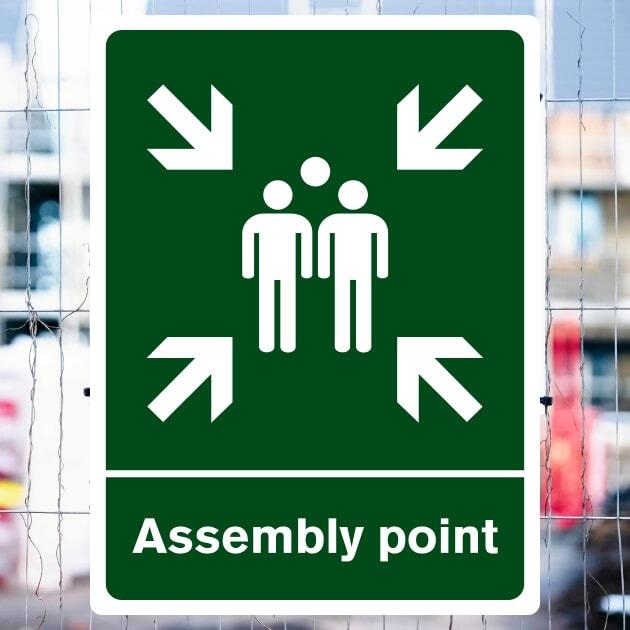
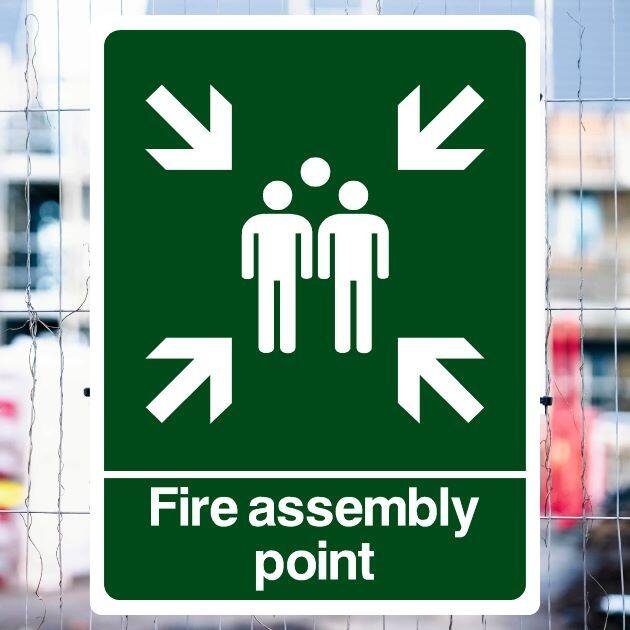
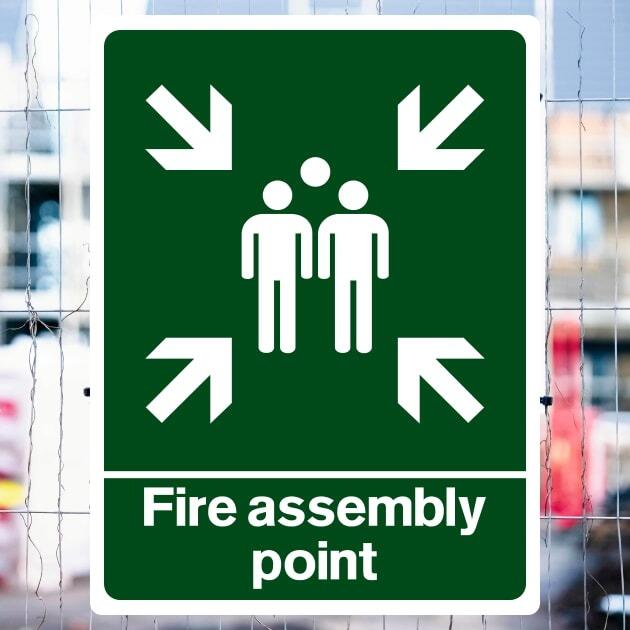
Fire Assembly Point Location Sign

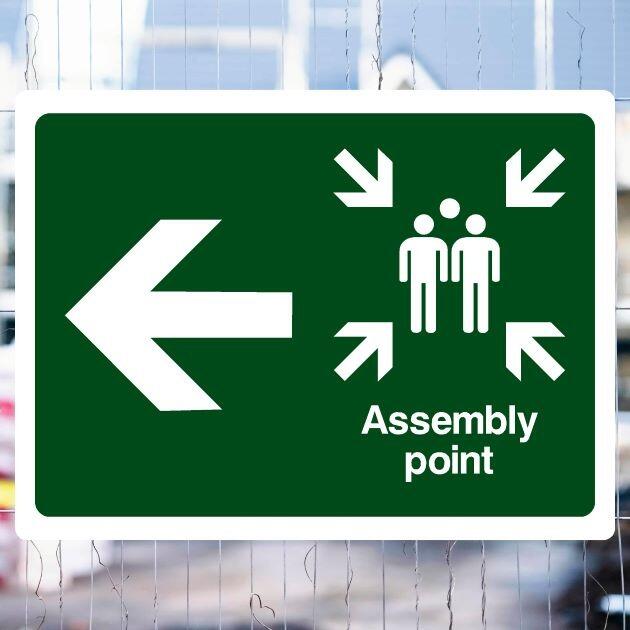
Assembly Point Left Arrow Fire Sign
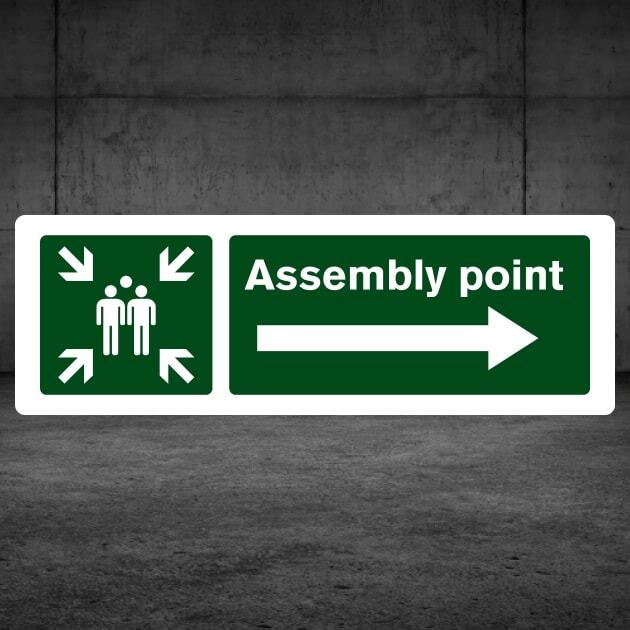
Assembly Point Fire Sign Right Arrow
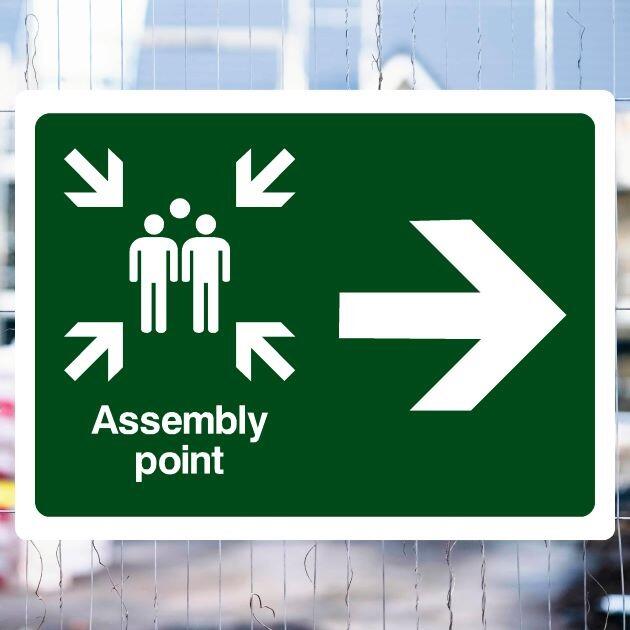
Assembly Point Right Arrow Fire Sign

Assembly Point Fire Sign Left Arrow
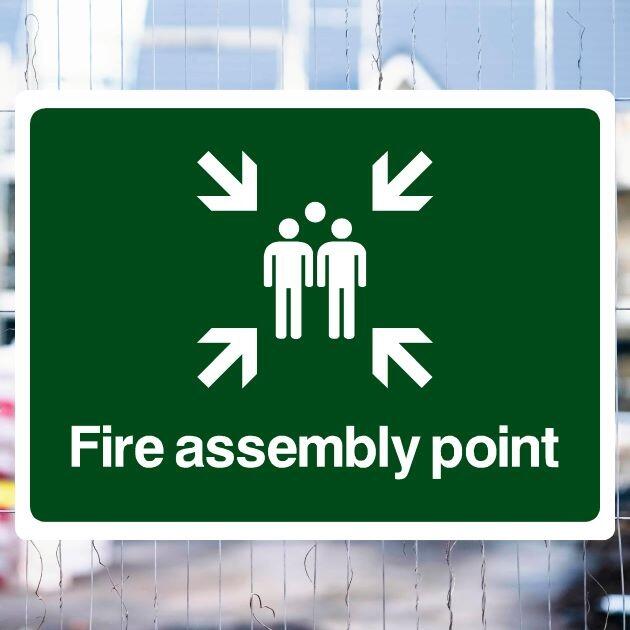
Fire Assembly Point Sign Landscape
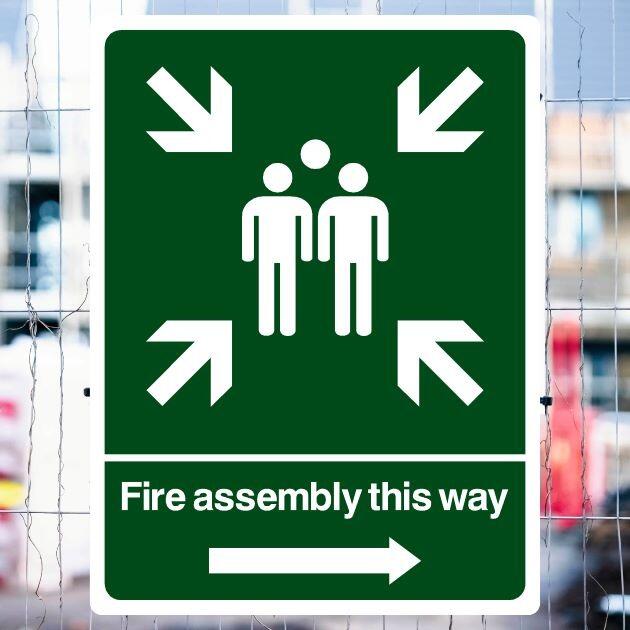
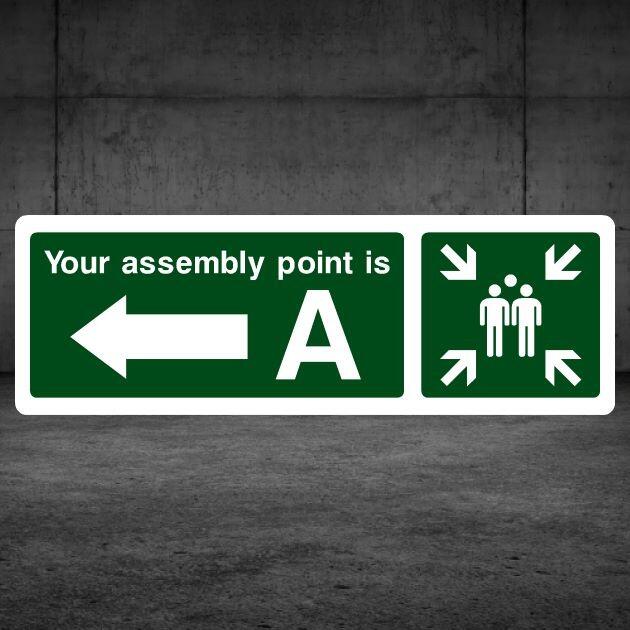
Assembly Point A Fire Sign With Left Arrow
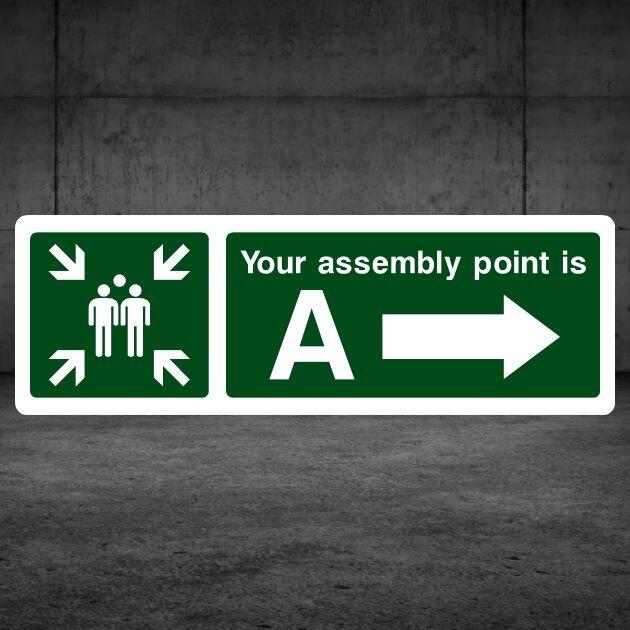
Assembly Point A Fire Sign With Right Arrow
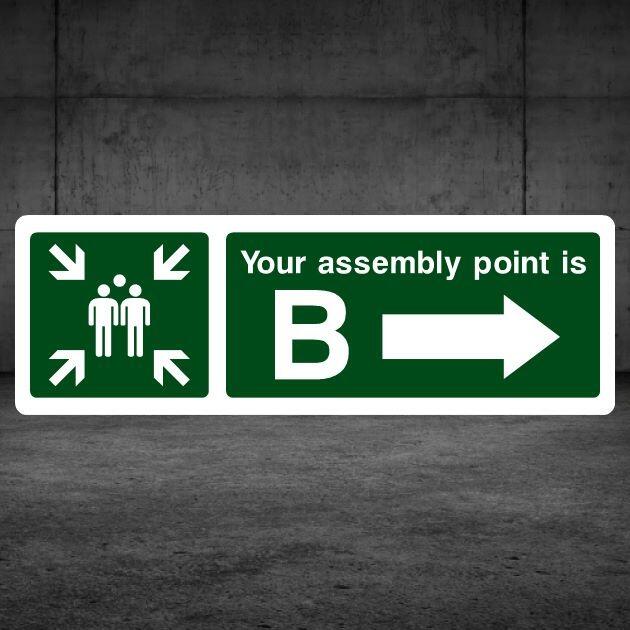
Assembly Point B Fire Sign Right Arrow
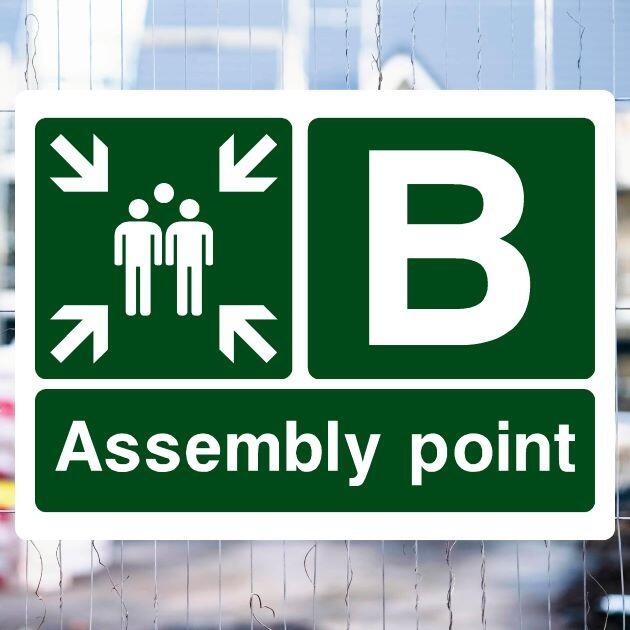
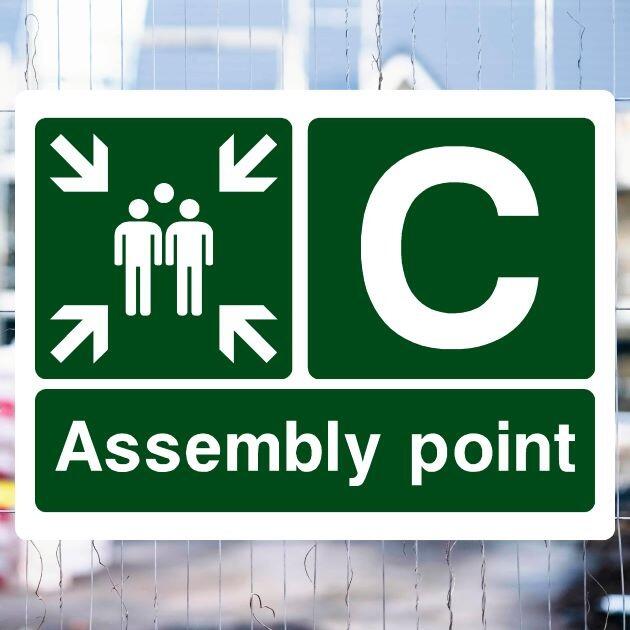
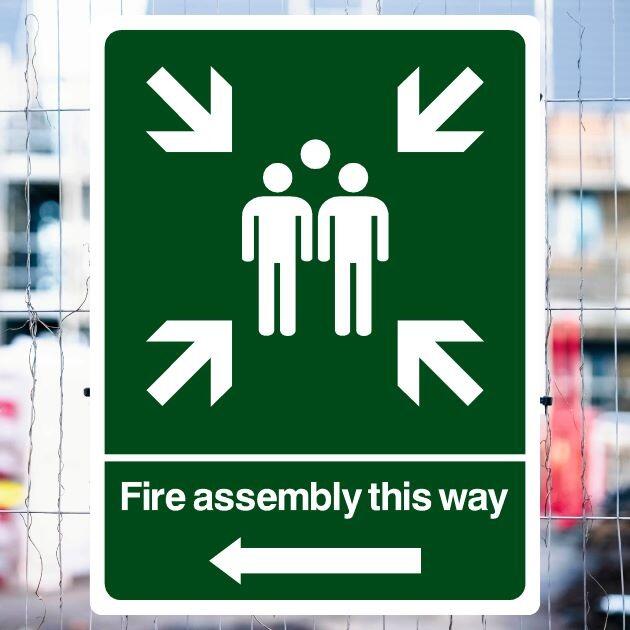
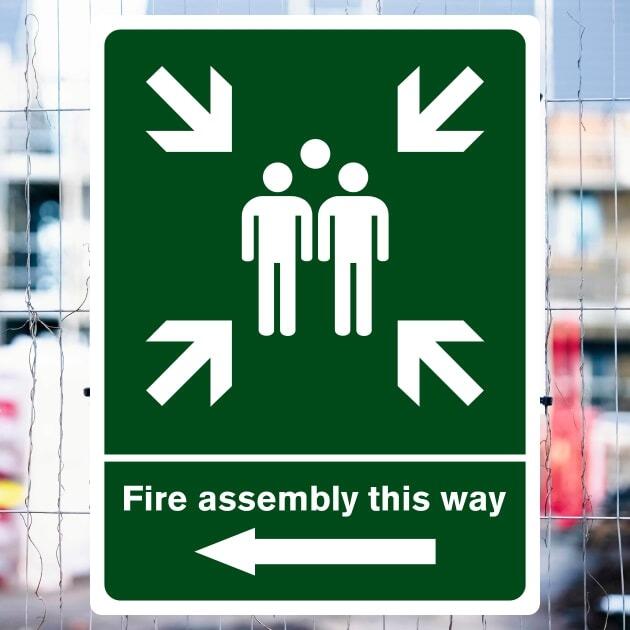
Fire Assembly This Way Left Arrow Sign

Assembly Point C Fire Sign Right Arrow
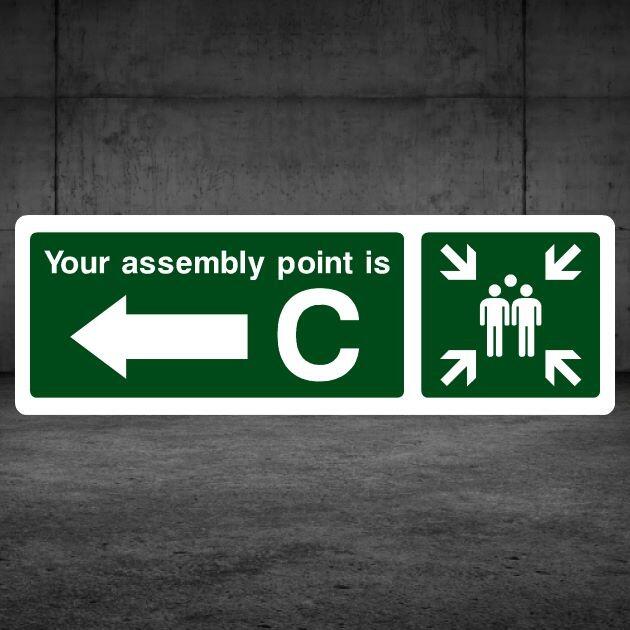
Assembly Point C Fire Sign Left Arrow
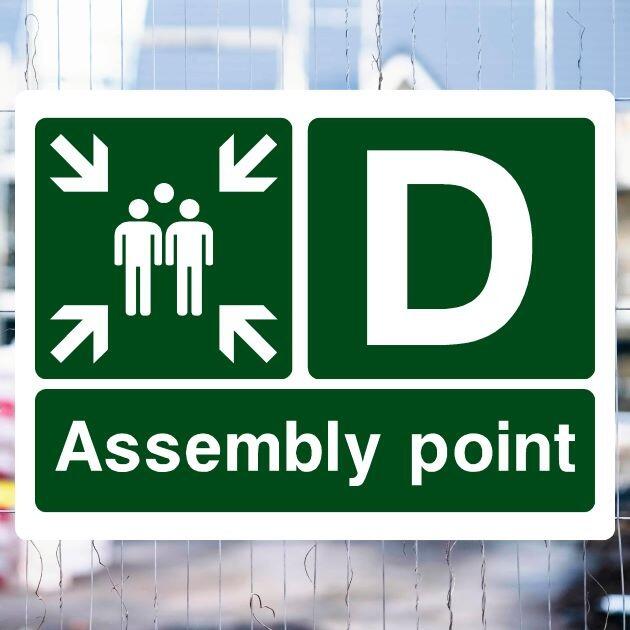
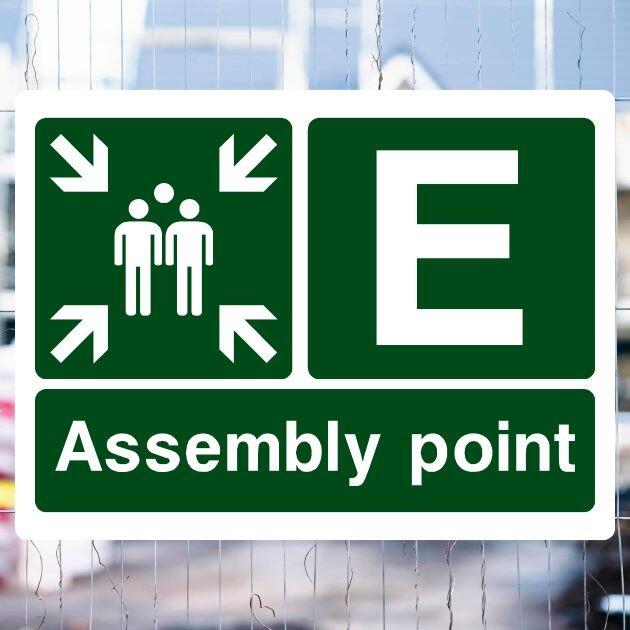
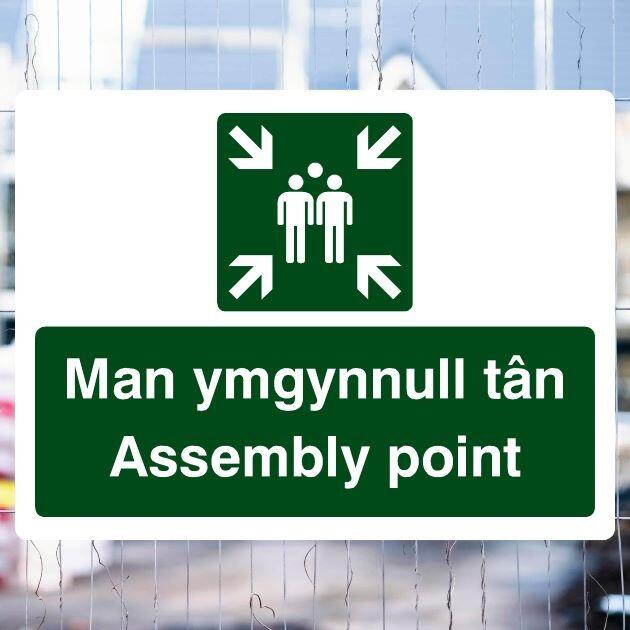
Assembly Point Fire Sign in Welsh
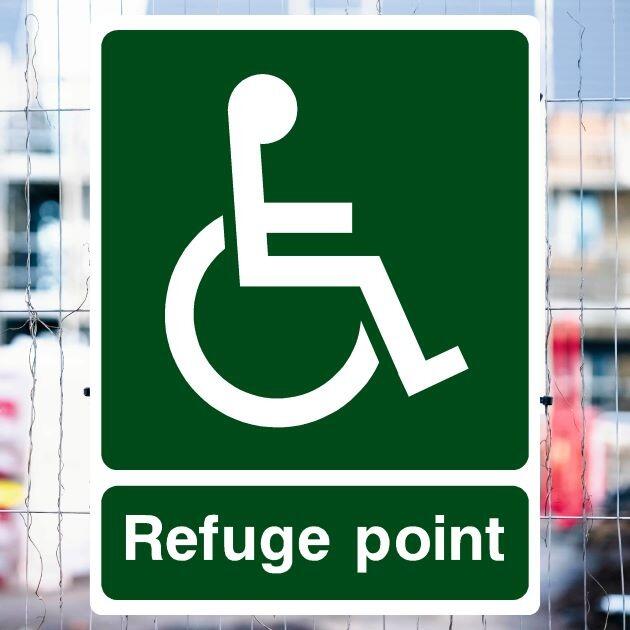
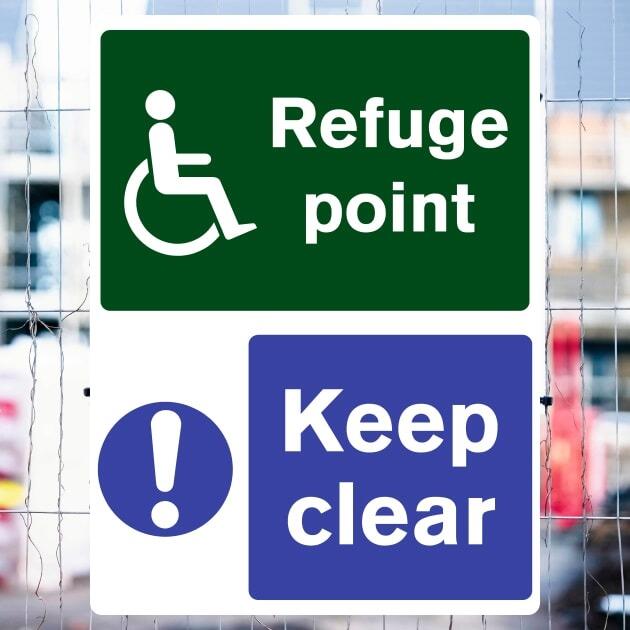
Refuge Point Keep Clear Location Sign

Assembly Point B Fire Sign Left Arrow
Assembly Point Signs for UK Workplaces & Sites
Clear Assembly Point Signs help employees, visitors and contractors identify where they should gather after evacuating a building or site.
A well-chosen assembly point can support an organised evacuation by giving people a recognised location where attendance can be checked and further instructions provided.
Our range includes fire assembly point signs, emergency assembly point signs and lettered or numbered signs for workplaces with multiple designated gathering areas.
Made in Britain, Safety Sheep assembly point signs are available in a choice of sizes and durable materials for offices, warehouses, factories, construction sites, schools, commercial premises and other workplaces.
What Is an Assembly Point Sign?
An assembly point sign identifies a designated location where people should gather following an emergency evacuation.
Depending on the organisation, this may also be referred to as a:
- Fire assembly point
- Emergency assembly point
- Evacuation assembly point
- Muster point
- Muster station
The purpose is to provide a clearly identifiable destination once people have left the building or affected area.
Why Have an Assembly Point?
An organised evacuation does not necessarily finish when people walk through the final exit.
Once outside, the organisation may need to:
- Direct people away from the building
- Keep escape routes clear
- Check attendance
- Identify potentially missing people
- Provide further instructions
- Prevent people wandering back towards the premises
- Keep access available for the emergency services
A designated assembly point can support these arrangements.
Are Assembly Point Signs a Legal Requirement?
There is no useful one-size-fits-all answer that every UK business must display a particular Assembly Point Sign.
Fire-safety arrangements should be based on the premises, the people using them and the findings of the fire risk assessment.
Employers and responsible persons need appropriate emergency arrangements, information and instructions.
Where a designated assembly point forms part of the emergency plan, clearly identifying that location can help employees, visitors and contractors find it.
The important issue is that the overall evacuation arrangement is suitable for the premises rather than simply displaying a sign as a compliance exercise.
Assembly Points & Your Fire Risk Assessment
Your fire risk assessment and emergency plan should consider what happens after people leave the building.
Questions can include:
- Where should occupants gather?
- Is the proposed location sufficiently separated from relevant hazards?
- Can people reach it safely?
- Could people interfere with emergency-service access?
- Is there enough space for the expected number of people?
- How will attendance be checked?
- Are visitors and contractors included?
- Are suitable arrangements in place for people who may need assistance?
- Are alternative arrangements needed if the normal assembly point cannot be used?
The sign should identify an assembly point that has been selected as part of these wider arrangements.
Choosing a Safe Assembly Point
Don't choose an assembly point simply because there is an empty wall or convenient place to install a sign.
Consider the surrounding environment.
Potential issues can include:
- Fire and smoke
- Falling debris
- Vehicle movements
- Emergency-service access
- Fuel or chemical storage
- Loading areas
- Other buildings
- Site entrances
- Gates
- Traffic routes
- Construction activity
The appropriate location depends on the particular site and its emergency arrangements.
Where Should an Assembly Point Be Located?
An assembly point should be somewhere people can reach safely following the planned evacuation procedure.
It should not create additional risks or interfere with the response to the emergency.
For example, avoid choosing a location that causes a large group of people to gather immediately outside a final exit or where they could obstruct fire and rescue service vehicles.
The correct position should follow from the site's fire risk assessment and emergency plan.
Where Should the Assembly Point Sign Be Positioned?
Position the sign so that people arriving at the designated area can readily identify it.
Consider:
- Viewing distance
- Mounting height
- Lighting
- Buildings
- Fences
- Vegetation
- Parked vehicles
- Stored materials
- Other signs
For outdoor assembly points, the sign may need to be larger than a typical indoor safety sign because it may be viewed from considerably further away.
Make the Assembly Point Easy to Find
A sign at the assembly point is useful only if people know how to reach it.
Employees should be familiar with the evacuation procedure through appropriate information, instruction and training.
Where necessary, additional information or directional signage can help people reach the designated area.
Visitors and contractors may require particular consideration because they may not know the site.
Fire Assembly Point Signs
Fire Assembly Point Signs identify the location designated for people to gather following a fire evacuation.
They can be used at workplaces including:
- Offices
- Warehouses
- Factories
- Schools
- Shops
- Construction sites
- Hotels
- Leisure facilities
- Industrial sites
The wording should be consistent with the terminology used in the organisation's emergency plan and staff training.
Emergency Assembly Point Signs
Some organisations use their assembly areas for emergencies other than fire.
In these circumstances, Emergency Assembly Point wording may be appropriate.
The correct terminology depends on the emergency arrangements for the site.
Consistency is important.
If staff training refers to an Emergency Assembly Point, signs using completely different terminology could cause unnecessary confusion.
Assembly Point A, B, C & Numbered Signs
Large workplaces and multi-building sites may need more than one assembly area.
Lettered or numbered signs can distinguish between locations such as:
Assembly Point A
Assembly Point B
Assembly Point C
or:
Assembly Point 1
Assembly Point 2
This can be particularly useful on:
- Large industrial sites
- Business parks
- Warehouses
- Schools and colleges
- Hospitals
- Construction sites
- Multi-building premises
The designation used on the sign should match the emergency plan, site maps and staff instructions.
Muster Point Signs
Muster Point is another term sometimes used for a designated emergency gathering area.
It is particularly common in certain industrial, construction, maritime and international environments.
If your organisation uses the term Muster Point within its emergency procedures, corresponding signage can help maintain consistency.
For many general UK workplaces, Assembly Point or Fire Assembly Point may be more familiar terminology.
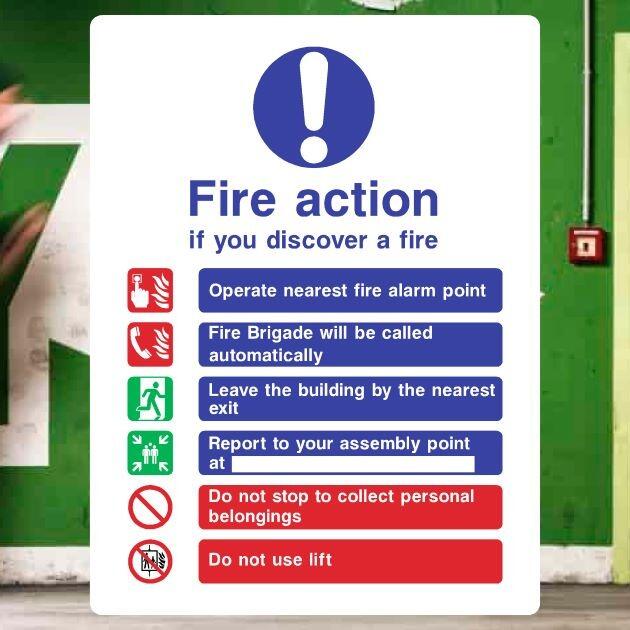
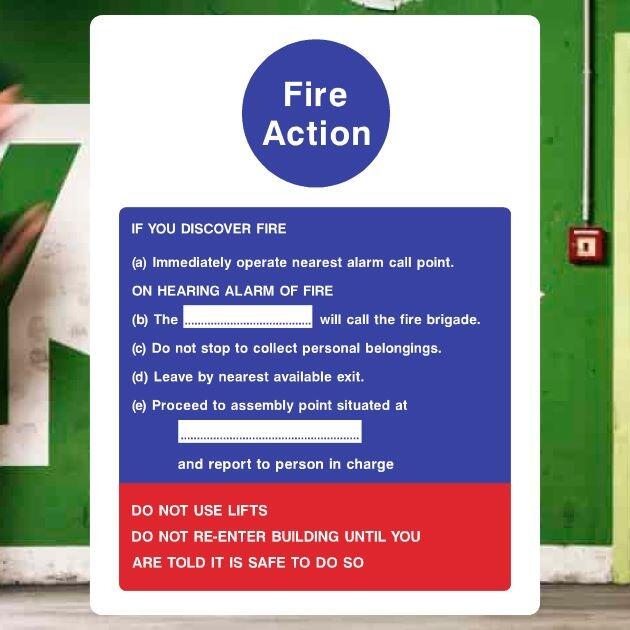
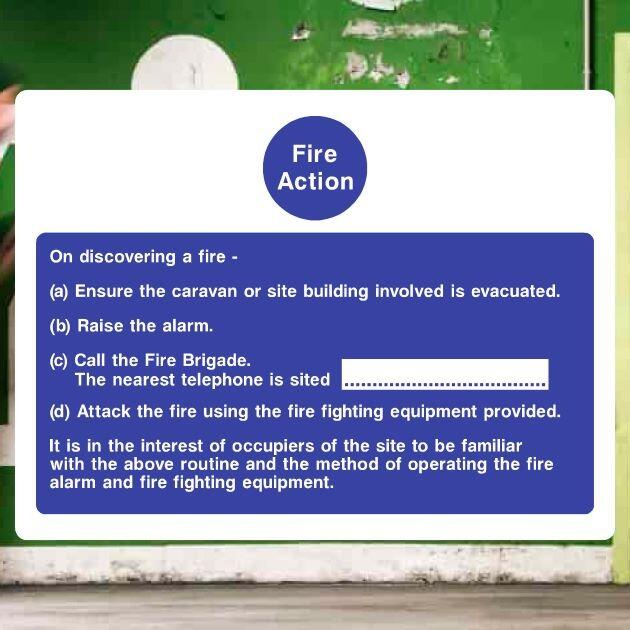
Assembly Point Signs & Fire Action Notices
These two signs work particularly well together.
A Fire Action Notice may tell occupants to:
Leave the building and report to the assembly point.
The Assembly Point Sign identifies that destination.
Make sure the location described on Fire Action Notices corresponds with the actual assembly point.
If the assembly point changes, update the notices too.
Assembly Point Signs & Fire Exit Signs
Fire Exit Signs help people follow an escape route towards a place of safety.
Assembly Point Signs identify where people should gather once they have evacuated, where this forms part of the emergency arrangements.
They therefore perform different functions.
Think of the evacuation as a journey:
Work area → escape route → final exit → designated assembly point
The signage and emergency procedure should make that journey clear.
What Colour Are Assembly Point Signs?
Assembly point signs normally use the green and white safe-condition format associated with emergency escape and first-aid information.
A recognised graphical assembly point symbol can make the location easier to identify without relying entirely on written text.
Consistent colours and symbols can be particularly useful on sites used by visitors, contractors and employees with different first languages.
Assembly Point Signs & BS EN ISO 7010
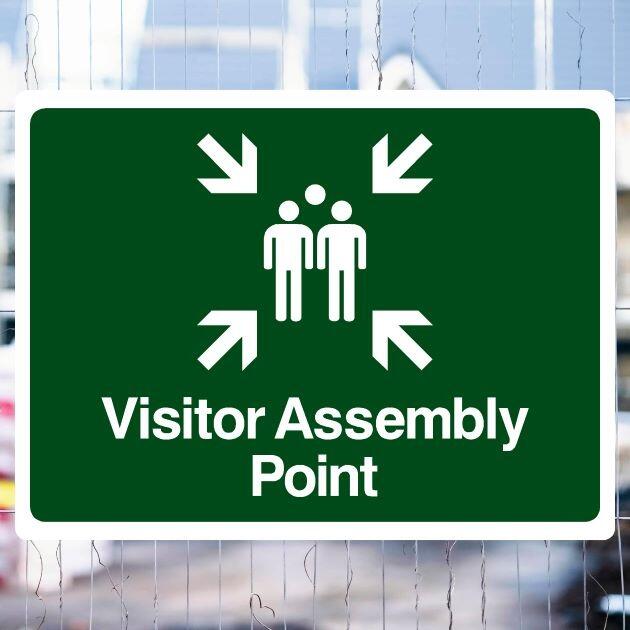
BS EN ISO 7010 includes a recognised evacuation assembly point symbol, identified as E007.
The symbol depicts people with arrows converging towards the central gathering point.
Using a recognised symbol provides consistent visual communication and can make the purpose of the location easier to understand.
However, BS EN ISO 7010 is a standard rather than legislation itself.
Using the correct symbol does not automatically make an unsuitable assembly area safe or make an organisation's complete emergency arrangements legally compliant.
Do Assembly Point Signs Need Text?
A recognised graphical symbol provides clear visual identification.
Supplementary wording such as:
Fire Assembly Point
Assembly Point
or:
Emergency Assembly Point
can make the meaning even clearer.
Letter or number designations can also be added where several assembly points are used.
What Size Assembly Point Sign Do I Need?
The correct size depends largely on viewing distance and the environment.
Consider:
- How far away people will be when looking for the sign
- Number of people using the assembly point
- Mounting height
- Outdoor lighting
- Buildings and fences
- Vegetation
- Parked vehicles
- Other visual distractions
A small sign suitable for a corridor may be difficult to identify across a large yard or car park.
Larger outdoor assembly point signs can therefore be appropriate.
Assembly Point Signs for Offices
An office may use an outdoor location within the site or another suitable area as its assembly point.
Employees should know where to go, but remember visitors may not.
Include assembly arrangements within visitor and contractor emergency information where appropriate.
Assembly Point Signs for Warehouses
Warehouses can contain large workforces, multiple exits, vehicle yards and extensive outdoor areas.
Assembly points need to be considered carefully so people do not gather in:
- HGV routes
- Loading areas
- Forklift routes
- Emergency access routes
- Areas affected by smoke or fire
- Locations where they obstruct other evacuees
A large, clearly visible sign can help identify the chosen location.
Assembly Point Signs for Factories
Factories and industrial premises can present additional hazards outside the building.
Consider:
- Process areas
- Gas storage
- Flammable materials
- Chemical storage
- Vehicle movements
- Adjacent buildings
The safest assembly arrangement should be determined through the site's risk assessment and emergency planning.
Assembly Point Signs for Construction Sites
Construction sites change continually.
Buildings develop, access routes move, compounds change and new hazards appear.
An assembly point that was appropriate at the start of a project may become unsuitable later.
Review the location as the site develops and move or replace signage where necessary.
Include the assembly arrangements within site inductions.
Assembly Point Signs for Schools
Schools and colleges may need assembly arrangements capable of accommodating large numbers of pupils, students and staff.
Different classes, year groups or buildings may be allocated different areas.
Lettered or numbered assembly point signs can help create an organised system.
The signage should correspond with the school's emergency plan and evacuation procedures.
Assembly Point Signs for Multi-Building Sites
Large sites can benefit from clearly differentiated assembly areas.
For example:
Building 1 → Assembly Point A
Warehouse → Assembly Point B
Offices → Assembly Point C
The same designations should appear consistently within:
- Emergency plans
- Site maps
- Fire Action Notices
- Staff training
- Visitor instructions
Avoid having different documents use different names for the same location.
Assembly Points & Visitors
Visitors may have little knowledge of your emergency procedures.
Consider how they will know:
- An evacuation is taking place
- Which exit to use
- Where the assembly point is
- Who to report to
Reception procedures, visitor badges, site inductions, Fire Action Notices and appropriate signage can all form part of the solution.
Assembly Points & Contractors
Contractors can be particularly important on industrial and construction sites.
They may work in unfamiliar areas or outside normal working hours.
Include relevant emergency and assembly-point information within contractor inductions and site procedures.
Assembly Points & Accessibility
Emergency planning should consider people who may require assistance.
Don't assume that everybody can follow the same route or reach the same location in the same way.
The fire risk assessment and emergency plan should consider relevant accessibility needs and suitable arrangements for the people who may be present.
An Assembly Point Sign is only one part of those arrangements.
Headcounts at the Assembly Point
One reason for establishing an organised assembly area is to support attendance checking after evacuation.
Different organisations may use:
- Staff registers
- Visitor books
- Electronic access information
- Department lists
- Fire wardens
- Roll calls
- Contractor records
The appropriate system depends on the workplace.
A sign identifies where people should gather; it does not perform the headcount.
Don't Leave the Assembly Point Without Reporting
Your emergency procedure should make clear what people are expected to do after arriving at the assembly area.
If people leave immediately without informing anyone, it can make attendance checking more difficult and could lead to uncertainty about whether someone remains inside the building.
Staff training and Fire Action Notices can communicate the procedure.
Keep Emergency Access Clear
The fire and rescue service may need rapid access to the building and surrounding areas.
Do not establish an assembly point where a crowd could obstruct:
- Fire appliances
- Firefighter access
- Hydrants
- Gates
- Access roads
- Emergency equipment
This should be considered when choosing the location rather than after the sign has been installed.
Can an Assembly Point Be in a Car Park?
Potentially, depending on the particular site and its risk assessment.
However, consider:
- Moving vehicles
- Emergency-service access
- Distance from the building
- Smoke and fire spread
- Capacity
- Accessibility
- Alternative escape routes
Don't choose a car park location solely because there is convenient space for a sign.
Outdoor Assembly Point Signs
Most assembly points are outdoors, so sign material matters.
Consider exposure to:
- Rain
- Sunlight
- Wind
- Temperature changes
- Dirt
- Impact
Choose a durable material and appropriate fixing method for the location.
Check outdoor signs periodically and replace them if they become faded, damaged or difficult to read.
Photoluminescent Assembly Point Signs
Photoluminescent signs absorb light and remain visible for a period when surrounding illumination reduces.
Whether this type of sign is useful depends on the environment and emergency arrangements.
For an outdoor assembly area used during darkness, also consider whether the location has sufficient general or emergency illumination.
A photoluminescent sign should not be assumed to solve wider lighting problems.
Review Assembly Points When Your Site Changes
Review the assembly arrangements when there are significant changes to:
- Buildings
- Escape routes
- Site boundaries
- Car parks
- Vehicle routes
- Construction work
- Occupancy
- Staffing levels
- External hazards
- Emergency procedures
Move or update signs when necessary.
Common Assembly Point Sign Mistakes
Choosing the Sign Before the Location
Select a suitable assembly area first, then identify it with signage.
Putting the Assembly Point Too Close to the Building
Consider fire, smoke and other potential hazards.
Blocking Emergency Access
People gathering should not obstruct emergency vehicles or responders.
Using a Sign That's Too Small
Outdoor viewing distances can be much greater than indoor ones.
Hiding the Sign Behind Parked Vehicles
Consider real-world sightlines.
Forgetting Visitors & Contractors
They may need clearer information than permanent employees.
Using Different Names for the Same Assembly Point
Keep terminology consistent across signs, plans and training.
Failing to Update Fire Action Notices
If the assembly point moves, related emergency information needs updating.
Assuming the Sign Makes the Location Safe
A sign identifies the location; the risk assessment determines whether the location is appropriate.
Assembly Point Sign Checklist
When reviewing your assembly point arrangements, ask:
- Has the assembly location been considered within the emergency plan?
- Can occupants reach it safely?
- Is it suitably positioned in relation to relevant hazards?
- Does it avoid obstructing emergency-service access?
- Is there enough space for the expected number of people?
- Can the sign be seen clearly?
- Is the sign large enough for the viewing distance?
- Is the wording consistent with Fire Action Notices?
- Do staff know where to go?
- Are visitors and contractors included in the arrangements?
- Have accessibility needs been considered?
- Is there an appropriate system for checking attendance?
- Are multiple assembly areas clearly differentiated?
- Is the sign suitable for outdoor conditions?
- Is the location reviewed when the site changes?
If you're uncertain about the suitability of an assembly point, review the fire risk assessment and seek competent fire-safety advice where necessary.
Made in Britain Assembly Point Signs
Safety Sheep offers a range of Assembly Point Signs for workplaces, businesses, construction sites and other premises.
Choose from Fire Assembly Point, Emergency Assembly Point, lettered and numbered designs in a selection of sizes and durable materials for indoor and outdoor use.
Choose a sign that clearly identifies the gathering area established within your emergency arrangements.
Assembly Point Signs FAQs
What is an Assembly Point Sign?
An Assembly Point Sign identifies a designated location where employees, visitors and other occupants should gather following an emergency evacuation.
Does every workplace need an Assembly Point Sign?
Not necessarily in exactly the same way.
Emergency arrangements should follow from the fire risk assessment and emergency plan. Where a designated assembly point is used, clear signage can help people identify it.
Are Assembly Point Signs a legal requirement?
UK fire and health and safety requirements should not be reduced to a blanket rule that every business must display a particular Assembly Point Sign.
The responsible person or employer needs appropriate risk assessment, emergency arrangements and information. Signage should support those arrangements where necessary.
Where should a fire assembly point be located?
The location should be selected as part of the emergency arrangements for the premises.
Consider distance from relevant hazards, safe access, available space, emergency-service access, vehicle movements and the people who may need to use it.
How far should an Assembly Point be from the building?
There is no single distance suitable for every workplace.
The appropriate position depends on factors including the building, fire risks, smoke, surrounding hazards, site layout and emergency-service access.
What colour is an Assembly Point Sign?
Assembly point signs commonly use the green and white safe-condition format.
What is the ISO 7010 Assembly Point symbol?
BS EN ISO 7010 symbol E007 is the recognised evacuation assembly point symbol. It depicts people with arrows converging towards a central point.
What size Assembly Point Sign do I need?
Choose the size according to viewing distance, mounting position and environment.
Outdoor assembly points may require larger signs because they often need to be recognised from further away.
Can an Assembly Point be in a car park?
Potentially, if the location is suitable following assessment.
Vehicle movements, emergency access, fire and smoke, capacity and accessibility all need to be considered.
What is the difference between a Fire Assembly Point and an Emergency Assembly Point?
A Fire Assembly Point specifically refers to a gathering location following a fire evacuation.
An Emergency Assembly Point may be used as part of procedures covering a wider range of emergencies.
Use terminology that matches your organisation's emergency arrangements.
What is a Muster Point?
Muster Point is another term for a designated emergency gathering location.
It is commonly used in some industrial, construction, maritime and international workplaces.
Can I have more than one Assembly Point?
Yes.
Large or multi-building sites may use Assembly Point A, B, C or numbered locations to direct different groups to appropriate gathering areas.
From The Safety Sheep Blog