

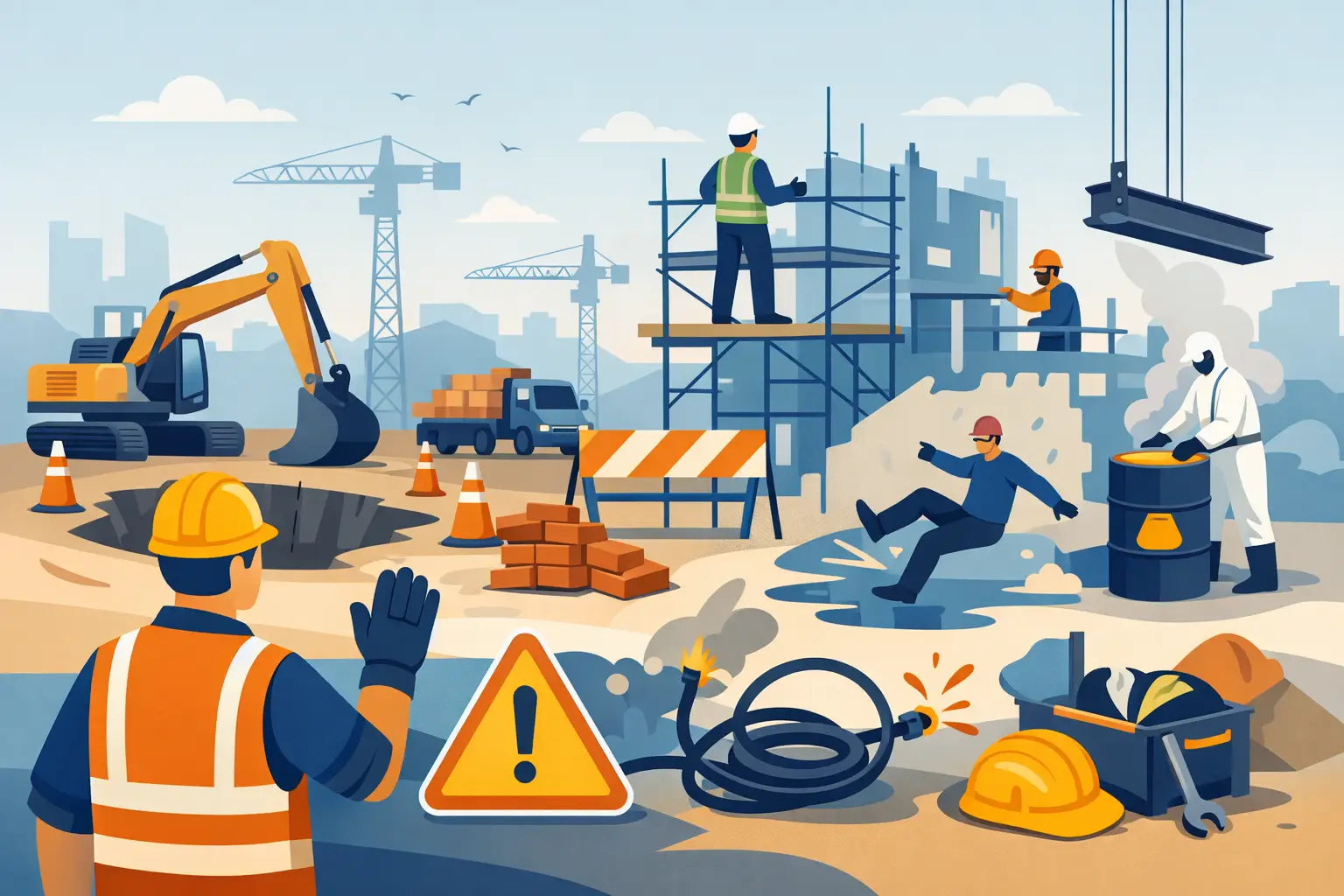
A site can look busy, productive and well run - and still contain serious gaps in safety control. That is why understanding the top 10 hazards on UK construction sites matters for anyone responsible for workers, visitors, deliveries or subcontractors. Most incidents are not caused by unusual events. They come from familiar site risks that were missed, poorly managed or not clearly communicated.
For site managers, contractors and buyers, the challenge is rarely knowing that hazards exist. The real pressure is identifying which risks need immediate control, what signage and communication are missing, and how to keep standards consistent when work changes daily. Construction sites are fast-moving environments, and safety systems need to keep up.
Top 10 hazards on UK construction sites and why they matter
The Health and Safety Executive continues to focus on a handful of recurring construction risks because they lead to serious injury, long absences and enforcement action. The hazards below are common across new builds, refurbishments, demolition work and civil projects, although the level of risk will vary by site layout, trade activity and public access.
1. Working at height
Falls from height remain one of the biggest causes of fatal and major injuries in construction. Roof edges, scaffolding, ladders, open voids and fragile surfaces all create risk, especially where access changes quickly or temporary works are altered without proper control.
This is not only about high-level roofing work. A short fall from a platform, stair opening or mobile tower can still cause life-changing injury. Good planning matters more than last-minute fixes. Edge protection, inspection routines, safe access equipment and clear warning signs all play a part. Where several trades are sharing one area, visual reminders are often what stop assumptions turning into incidents.
2. Moving vehicles and plant
Dumpers, telehandlers, excavators, delivery lorries and reversing vans create one of the most immediate hazards on any active site. The danger increases where pedestrians and vehicles use the same routes or where visibility is poor due to stored materials, cabins or temporary fencing.
Segregation is the priority. If people on foot can be kept away from plant routes, the risk drops sharply. When that is not fully possible, speed control, banksmen, one-way systems and highly visible traffic signage become essential. This is one area where poor site layout quickly leads to near misses.
3. Falling objects
A safe scaffold or working platform is only part of the picture. Tools, fixings, debris and materials dropped from above can injure workers below, damage equipment and expose gaps in exclusion control. Multi-level work makes this especially common.
The control measures depend on the task. Toe boards, brick guards, tool lanyards, debris netting and exclusion zones all help, but they only work if people understand where they can and cannot walk. Warning notices around overhead work areas are simple, but they remain effective because they remove doubt.
4. Slips, trips and falls on the same level
Not every serious incident involves height or heavy machinery. Uneven ground, trailing cables, wet surfaces, mud, poor lighting and scattered waste are responsible for a steady flow of site injuries. They also point to a wider housekeeping problem.
This hazard often grows gradually rather than appearing all at once. A route that was clear in the morning may be obstructed by lunchtime. The practical answer is consistent housekeeping, defined storage areas and regular checks rather than relying on one tidy-up at the end of the shift. Clear walkway marking and hazard notices support that routine.
5. Exposure to hazardous substances
Dust, wet cement, solvents, paints, adhesives, fuels and silica all create health risks that are sometimes underestimated because the effects are not always immediate. Construction still sees significant cases of occupational ill health linked to inhalation, skin contact and poor handling practices.
Silica dust is a major concern during cutting, drilling and demolition. Cement can cause burns and dermatitis. Solvents and chemicals bring both health and fire risks. COSHH assessment is essential, but so is communication at the point of use. Workers need to know what they are handling, what PPE is required and where controls apply. Labels, storage signs and mandatory PPE signage help keep that message clear in busy areas.
6. Manual handling injuries
Construction work involves lifting, carrying, pushing and positioning awkward materials every day. Plasterboard, kerbs, timber, doors, blocks and equipment can all cause strains, sprains and long-term musculoskeletal problems if handling is poorly planned.
The difficulty here is that manual handling often feels normal, so it receives less attention than higher-profile hazards. Yet lost time and recurring injury from poor lifting practice are common. Mechanical aids, team lifts, route planning and reducing unnecessary movement all make a difference. Where storage and delivery zones are badly organised, manual handling risks rise quickly.
7. Electrical hazards
Temporary electrics, damaged leads, underground services, overhead lines and portable tools all present real danger. Electric shock, burns and fire can result from faulty equipment, poor isolation or accidental contact during excavation and installation work.
This is one of the clearest examples of why site conditions matter. A tidy internal fit-out presents very different risks from a wet external groundwork project. Regular inspection, testing, cable protection and permit systems are important, but so is clear identification of electrical danger zones. When workers, visitors and subcontractors arrive on site, obvious warning signs reduce the chance of unsafe assumptions.
8. Collapse of excavations and structures
Excavations can fail suddenly, particularly where support is inadequate, ground conditions are poor or plant operates too close to the edge. Partial structural collapse during demolition, alteration or temporary works failure brings similarly severe consequences.
These risks demand planning before work starts, not after conditions deteriorate. Ground assessment, shoring, battering, exclusion zones and competent supervision are all central controls. Signage will not replace engineering measures, but it is still a necessary part of the control system because access restrictions must be visible and immediate.
9. Noise and vibration
Noise-induced hearing loss and hand-arm vibration syndrome remain serious construction health issues. They develop over time, which is one reason they are sometimes treated as secondary compared with instant-impact hazards.
That is a mistake. Long-term ill health has just as much operational and legal significance as a sudden accident. Breaking tools, compactors, saws and grinders can expose workers repeatedly if job rotation, equipment choice and PPE controls are weak. Mandatory hearing protection signs and equipment-specific warnings are a straightforward way to reinforce site rules where exposure is known.
10. Fire and emergency access failures
Construction sites contain ignition sources, temporary electrics, hot works, fuel storage, timber, packaging and waste, often in close proximity. On refurbishment projects, the fire load and escape arrangements can change day by day.
The hazard is not only the fire itself. Blocked escape routes, poorly marked assembly points and missing emergency information can turn a manageable incident into a major one. Fire point signs, no smoking notices, extinguisher identification and access control signage all support the emergency plan. On larger or split-level sites, that visual clarity matters even more because not everyone will know the layout.
Reducing the top 10 hazards on UK construction sites
There is no single control that solves every construction risk. The strongest sites combine planning, supervision, housekeeping, training, PPE, inspection and clear communication. If one element is weak, the others carry more pressure.
Signage is not a substitute for proper risk control, but it is a practical part of it. On a construction site, people move between tasks quickly, subcontractors rotate, delivery drivers arrive with limited site knowledge and visitors may only hear part of the induction. Well-placed, compliant signs help bridge that gap. They reinforce traffic routes, restricted areas, PPE rules, overhead work zones, fire procedures and hazard awareness without slowing the job down.
The best approach is to review hazards by work phase rather than treating the whole site as static. Groundworks, frame erection, fit-out and finishing all create different exposures. That means signage, barriers and notices should change with the job. A sign that was right last month may be inadequate today.
It also pays to think commercially. Small failures in hazard communication can lead to delays, damaged stock, injury costs and enforcement issues that far outweigh the price of proper controls. For buyers managing multiple sites, consistency is often the real win. Standardising the right warning, mandatory and access signs across projects makes ordering faster and expectations clearer. Think Safety - Think Sheep.
If you are reviewing site safety today, start with the hazards people have begun to ignore through familiarity. Those are often the ones most likely to cause the next problem.
Share:
How to Buy Construction Site Signage
Fire Safety Signs: What UK Sites Need