

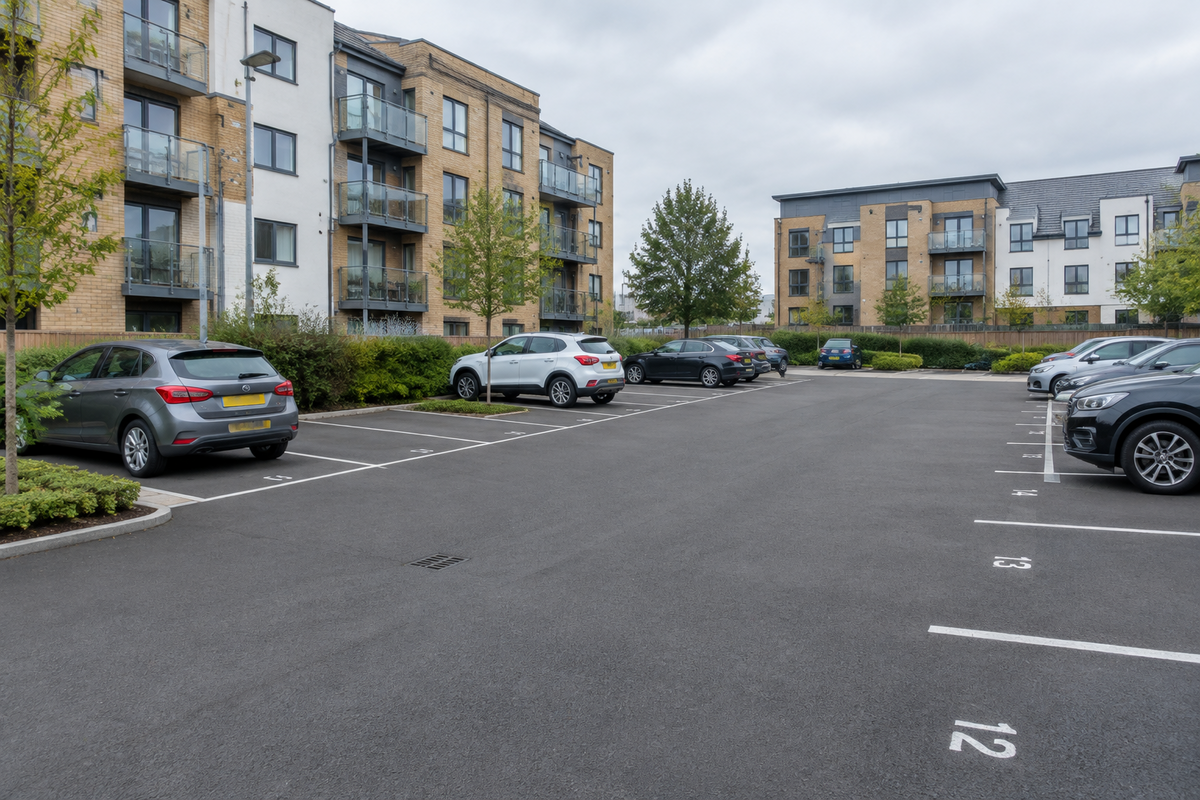
Whether you manage a small business car park, retail premises, office development or residential estate, clearly identifying designated parking spaces can make a significant difference to how your premises operate.
Without suitable signage, customers may accidentally park in staff spaces, visitors can struggle to find their allocated bays and reserved spaces may be occupied by unauthorised vehicles.
Customer Parking Signs, Visitor Parking Signs and Reserved Parking Signs help drivers understand which spaces they should use before leaving their vehicles.
But where should these notices be displayed? Is one sign at the entrance sufficient? Should every designated bay have its own notice? And what size or material is most suitable for outdoor use?
This practical UK guide explains the differences between these parking signs, where to position them and what businesses and landowners should consider before ordering.
What's the Difference Between Customer, Visitor & Reserved Parking Signs?
Although these signs perform similar functions, they communicate different parking arrangements.
| Sign Type | Main Purpose | Typical Locations |
|---|---|---|
| Customer Parking | Identifies spaces intended for customers using a business | Shops, restaurants, garages and retail premises |
| Visitor Parking | Identifies spaces allocated to guests and other authorised visitors | Offices, business parks, schools and residential developments |
| Reserved Parking | Communicates that a bay is allocated to a specific user or purpose | Commercial premises, private estates and allocated parking areas |
Choosing the correct wording helps drivers recognise which spaces are available to them.
Where Should Customer Parking Signs Be Displayed?
Customer Parking Signs help identify spaces intended for people visiting a business.
These notices are particularly useful where customer spaces are located alongside staff, visitor or reserved parking.
1. At the Car Park Entrance
An entrance notice can help drivers identify where customer parking is located before entering the premises.
This is especially useful for retail parks, business developments and larger commercial sites with separate parking sections.
Suitable messages may include:
-
Customer Parking.
-
Customer Parking Only.
-
Customer Car Park.
-
Customer Parking with Directional Arrow.
Where customer spaces are located away from the main entrance, a directional sign can help drivers find the correct area.
2. At Individual Customer Parking Bays
Where customer spaces sit alongside other allocated parking, consider positioning a Customer Parking Only Sign at the relevant bays.
Suitable mounting positions may include:
-
A wall immediately in front of the space.
-
A suitable fence.
-
A dedicated signpost.
-
Another clearly visible fixed surface.
Make sure the notice identifies the intended space without causing confusion.
3. At Relevant Junctions
Larger premises may require additional directional signs.
For example, a Customer Parking Left or Customer Parking Right Sign can guide drivers towards a separate customer parking area.
Position the sign before the junction so approaching drivers have sufficient time to recognise the direction.
Where Are Customer Parking Signs Most Useful?
Common locations include:
-
Retail shops.
-
Restaurants and cafés.
-
Garages and MOT centres.
-
Car dealerships.
-
Healthcare premises.
-
Leisure facilities.
-
Commercial offices.
Where customer parking restrictions apply, ensure the wording accurately reflects the actual arrangements.
Where Should Visitor Parking Signs Be Displayed?
Visitor Parking Signs help guests, contractors and other authorised visitors identify the spaces allocated to them.
They are particularly useful where visitors may be unfamiliar with the premises.
1. Near the Main Entrance
Where visitor parking is provided, consider displaying a notice at the main vehicle entrance.
This helps arriving drivers understand which area they should use.
For larger premises, a directional arrow may be necessary.
2. At Designated Visitor Bays
Position Visitor Parking Only Signs where the allocated spaces can be clearly identified.
This is particularly important when visitor bays are positioned next to staff, resident or reserved parking.
3. Near Reception Areas
Where visitors must report to reception, consider whether an additional instruction notice would improve the arrival process.
For example:
Visitor Parking Only – Please Report to Reception
This combines parking identification with a relevant visitor instruction.
4. In Shared Car Parks
Business parks and multi-tenant developments may have several organisations sharing the same parking area.
Where necessary, use wording that identifies the intended destination.
Examples include:
-
Visitor Parking for Unit 4.
-
Visitors Only – Building A.
-
Visitor Parking – Main Reception.
The objective is to help visitors find the correct spaces without unnecessary searching.
Where Should Reserved Parking Signs Be Displayed?
Reserved Parking Signs communicate that a space has been allocated to a particular person, vehicle or purpose.
They are useful in commercial premises, office developments, residential estates and privately managed parking areas.
1. Directly in Front of the Reserved Bay
For individual allocated spaces, position the notice where it clearly identifies the relevant bay.
Common mounting locations include:
-
Walls.
-
Fences.
-
Dedicated posts.
-
Suitable fixed structures.
Where several spaces are reserved for different users, individual signs may help distinguish the allocations.
2. At the Entrance to Reserved Parking Areas
If an entire section of the car park is reserved, an entrance notice can communicate the restriction before drivers enter.
Examples include:
-
Reserved Parking Only.
-
Staff Parking.
-
Authorised Vehicles Only.
-
Permit Holders Only.
Additional notices may be necessary within larger reserved parking areas.
3. At Residential Developments
Reserved Parking Signs can help identify allocated spaces within apartment developments, private estates and other residential properties.
Where a formal permit or allocation system exists, ensure the sign wording accurately reflects it.
4. At Business Premises
Reserved Parking Signs may also be useful for spaces allocated to:
-
Management.
-
Employees.
-
Specific departments.
-
Authorised vehicles.
-
Designated operational purposes.
Avoid using generic Reserved Parking wording where a more specific message would be clearer.
Should Every Parking Bay Have Its Own Sign?
Not necessarily.
The correct number of signs depends on the layout and how clearly drivers can identify the designated spaces.
For example, a small group of customer bays may be adequately identified by a prominent sign positioned at the entrance to that section.
However, where customer, visitor and reserved spaces are mixed together, individual bay signs may help prevent confusion.
Consider:
-
The number of parking spaces.
-
Whether different parking types are positioned together.
-
The normal vehicle approach direction.
-
The viewing distance.
-
The availability of suitable mounting positions.
-
Whether road markings are also provided.
-
Whether signs remain visible when nearby spaces are occupied.
The objective is to make the parking arrangements understandable before drivers choose a space.
How High Should Parking Signs Be Mounted?
There isn't one universal mounting height suitable for every general parking identification notice.
The correct position depends on the environment, intended viewing distance and mounting surface.
Consider:
-
Whether the sign will be visible above parked vehicles.
-
Whether pedestrians can safely pass beneath or beside it.
-
The normal approach direction.
-
Nearby walls, fences and vegetation.
-
Lighting conditions.
-
The size of the sign.
Avoid mounting notices so low that they become obscured by parked cars.
Similarly, a sign positioned too high may be difficult to recognise from the intended viewing position.
What Size Parking Sign Should I Choose?
The correct size depends on how far away drivers need to recognise the message.
A sign identifying an individual bay may have different requirements from a directional notice intended to be viewed from an access road.
Consider the following:
| Application | What to Consider |
|---|---|
| Individual parking bay | Visibility from the normal approach |
| Group of designated bays | Whether the notice clearly identifies the whole section |
| Car park entrance | Viewing distance and vehicle approach speed |
| Directional sign | Recognition before reaching the junction |
| Large commercial premises | Potential obstructions and longer viewing distances |
Choose a sign size that makes the wording easy to understand without requiring drivers to stop in an unsuitable position.
Choosing Materials for Outdoor Parking Signs
Customer, Visitor and Reserved Parking Signs are frequently installed outdoors.
They may be exposed to rain, wind, sunlight and other environmental conditions.
Choose a material suitable for the intended location.
Depending on the product, options may include:
Rigid Recycled Plastic: A practical option for suitable general parking applications.
Aluminium Composite: A durable option for suitable longer-term outdoor installations.
Also consider the mounting surface and fixing method.
For permanent installations, check that the sign remains securely mounted and visible throughout its intended use.
Are Customer, Visitor & Reserved Parking Signs a Legal Requirement?
There isn't one universal requirement for every UK business to display an identical set of Customer, Visitor and Reserved Parking Signs.
However, where parking forms part of a workplace, relevant health and safety duties and workplace transport arrangements should be considered.
HSE recommends that workplace parking areas are clearly signposted and that drivers are informed about controlled parking arrangements.
General parking identification notices should also be distinguished from signs intended to establish contractual parking terms.
If a business operates a formal private parking enforcement scheme, additional requirements concerning the wording, prominence and placement of notices may apply.
A generic Customer Parking Only or Reserved Parking Sign shouldn't automatically be treated as a complete contractual enforcement notice.
Common Parking Sign Placement Mistakes
Avoid these frequent problems:
-
Positioning Customer Parking Signs where they don't clearly identify the intended spaces.
-
Failing to distinguish visitor bays from staff or resident parking.
-
Mounting Reserved Parking Signs where parked vehicles obscure them.
-
Using directional arrows that point the wrong way.
-
Installing signs after the relevant junction.
-
Using wording that doesn't reflect the actual parking arrangement.
-
Displaying signs that are too small for the viewing distance.
-
Allowing vegetation or stored equipment to obscure notices.
-
Leaving outdated signs in place after parking allocations change.
-
Relying on generic bay identification signs where formal contractual parking terms are required.
Printable Parking Sign Placement Checklist
Use this checklist when reviewing your premises or ordering replacement signs.
Customer Parking
-
Customer parking area clearly identified.
-
Customer Parking Only Signs displayed where appropriate.
-
Relevant bays are easy to recognise.
-
Directional signs provided where necessary.
-
Wording reflects the actual parking arrangement.
Visitor Parking
-
Visitor parking area clearly identified.
-
Visitor Parking Signs positioned appropriately.
-
Visitors can locate the correct bays from the entrance.
-
Reception instructions are communicated where relevant.
-
Shared parking areas are clearly distinguished.
Reserved Parking
-
Reserved spaces are clearly identified.
-
Signs accurately describe the allocation.
-
Individual bay notices are provided where necessary.
-
Relevant restrictions are communicated.
-
Permit arrangements are accurately described where applicable.
Sign Installation
-
Signs are visible from the normal approach.
-
Mounting height is appropriate.
-
Sign size suits the viewing distance.
-
Outdoor materials are suitable.
-
Fixings are secure.
-
Notices aren't obscured by vehicles or vegetation.
-
Directional arrows point the correct way.
Maintenance & Review
-
Signs remain clean and legible.
-
Damaged or faded notices are replaced.
-
Parking allocations are still accurate.
-
Signage is updated when the layout changes.
-
Additional notices are provided where necessary.
Important: This checklist supports general parking sign selection and placement. It doesn't replace suitable workplace transport arrangements or any applicable private parking enforcement requirements.
A Simple Parking Signage Walkthrough
One of the easiest ways to review your signage is to approach the premises as though you're visiting for the first time.
Start at the car park entrance and follow the normal vehicle route.
Ask yourself:
-
Can I identify where customers should park?
-
Are visitor spaces easy to locate?
-
Can I recognise which spaces are reserved?
-
Are directional arrows accurate?
-
Are individual parking bays clearly identified?
-
Are the signs visible when nearby spaces are occupied?
-
Is the wording consistent throughout the premises?
If the answers aren't immediately clear, review the position, wording or quantity of your existing notices.
Shop Customer, Visitor & Reserved Parking Signs at Safety Sheep
Safety Sheep supplies Customer Parking Signs, Visitor Parking Signs and Reserved Parking Signs for UK businesses, offices, retail premises, residential developments, schools and private car parks.
Our range includes:
-
Customer Parking Only Signs.
-
Customer Parking Directional Signs.
-
Visitor Parking Signs.
-
Visitor Parking Directional Signs.
-
Reserved Parking Signs.
-
Staff Parking Signs.
-
Authorised Parking Notices.
-
Permit Parking Signs.
-
Car Park Directional Signs.
Choose from a selection of sizes and durable materials suitable for different outdoor environments.
Made in Britain, with bulk savings available for businesses and trade customers.
Explore our complete range of Car Park Signs & Notices and make your designated parking areas easier to identify.
Think Safety. Think Sheep.
Share:
Private Car Park Signs: What Should UK Businesses Display?
EV Charging Bay Signs: What Should UK Businesses Display?