

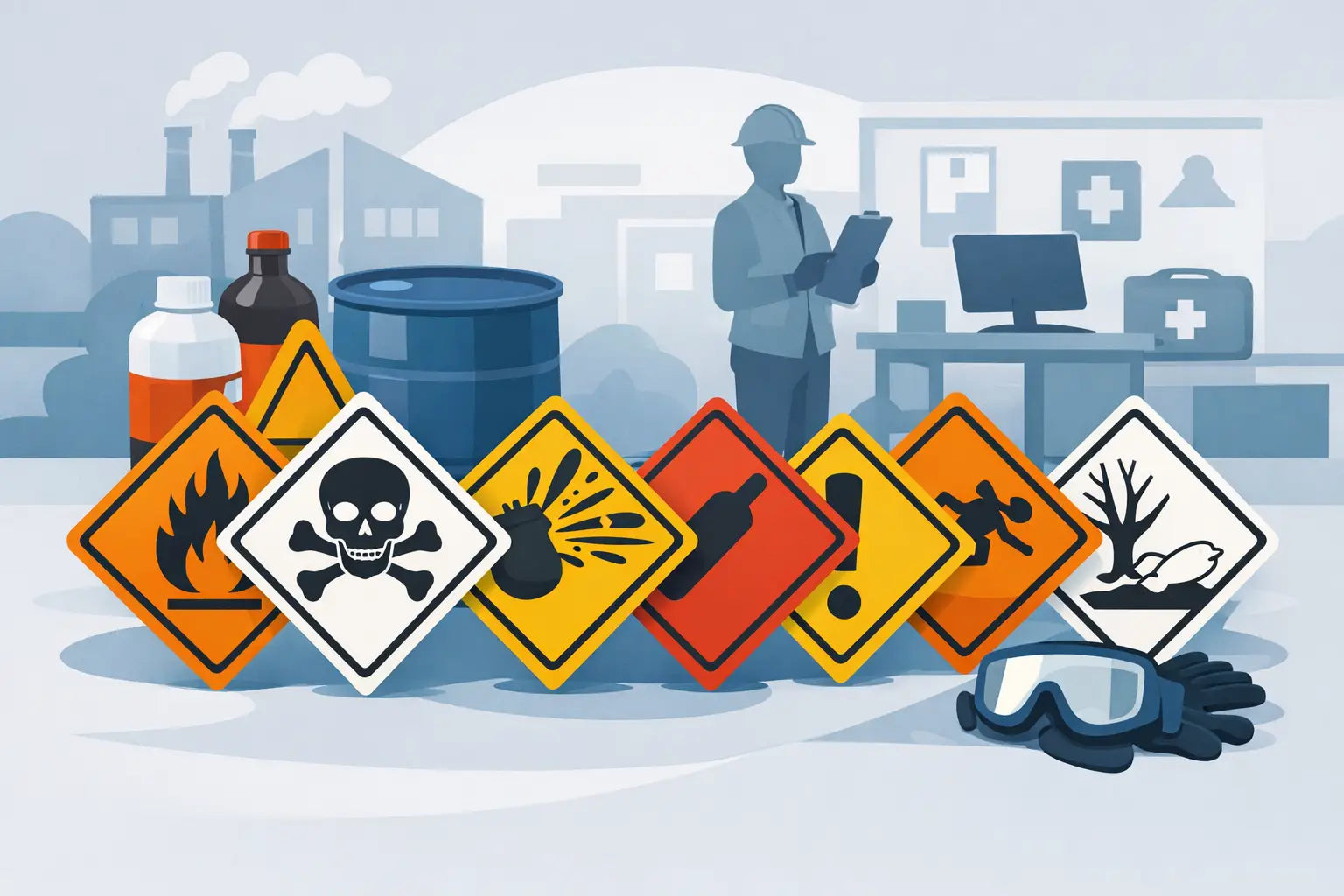
A damaged spray bottle in a cleaner’s cupboard, an unmarked drum in a workshop, a fuel can on a farm - small labelling gaps like these create big problems quickly. This hazard symbol labels guide is designed to help UK employers, site managers and buyers choose the right labels, use them correctly and avoid the confusion that leads to accidents, failed inspections and wasted time.
Why hazard symbol labels matter
Hazard symbol labels do two jobs at once. First, they warn people about the risks linked to a substance or material. Second, they support legal compliance by making sure hazardous products are identified clearly where they are stored, handled or transferred.
That sounds straightforward, but in practice there are plenty of grey areas. A label that is technically present may still be too small to read. A container may have been decanted from its original packaging and never relabelled. A workplace may rely on staff knowledge rather than clear visual communication, which works fine until a contractor, visitor or new starter enters the area.
For most workplaces, the cost of getting labels right is low. The cost of getting them wrong can be much higher, from avoidable exposure incidents to enforcement action and operational disruption.
What this hazard symbol labels guide covers
In UK workplaces, hazard symbol labels are commonly associated with chemical safety and the CLP system. These symbols appear as black pictograms on a white background with a red diamond border and are used to communicate specific hazards quickly.
You will often see them on cleaning products, solvents, fuels, paints, gases, agricultural chemicals and maintenance products. They may also appear on secondary containers, storage points and related workplace signage where extra visual warning is needed.
The key point is that labels are not decorative. They must match the actual risk. If the substance classification changes, or if the product is moved into another container, the label requirements may change too.
The main hazard symbols and what they mean
Some symbols are widely recognised, but recognition is not the same as proper understanding. A flammable symbol may be obvious to most staff, yet they may not appreciate whether the substance also presents inhalation, corrosive or environmental risks.
The exploding bomb symbol warns of explosive or highly unstable substances. The flame symbol covers flammable liquids, solids and gases, as well as some self-reactive substances. The flame over circle identifies oxidising materials that can intensify fire.
The gas cylinder symbol marks gases under pressure. The corrosion symbol warns that a substance may cause severe skin burns, eye damage or corrode metals. The skull and crossbones signals acute toxicity and should never be treated lightly.
The exclamation mark is often underestimated because it appears less dramatic, but it can indicate irritation, skin sensitisation or harmful effects. The health hazard symbol, showing a silhouette with a starburst on the chest, is used for serious longer-term risks such as respiratory sensitisation, carcinogenicity or reproductive toxicity. The dead tree and fish symbol identifies environmental hazards, particularly where substances may harm aquatic life.
In practical terms, many products carry more than one symbol. That is where buyers and managers need to pay attention. Choosing one generic label for convenience is not enough if the product requires several hazard warnings.
Where labels are usually required
The most obvious place is on the product container itself, but that is only part of the picture. Any workplace that stores, dispenses or transfers hazardous substances should review all the points where people come into contact with them.
This includes janitorial cupboards, engineering workshops, plant rooms, warehouses, laboratories, garages, agricultural stores, grounds maintenance sheds and production areas. If chemicals are decanted into smaller bottles, trigger sprays or dosing containers, those secondary containers usually need suitable identification as well.
Storage areas may also need supporting signage to reinforce the message at a distance. A small label on a container helps the person holding it. A hazard sign on a cupboard, gate or door helps everyone approaching the area before they handle anything.
That distinction matters on busy sites. Labels and signs are not interchangeable, but they work best together.
Common buying mistakes
One of the most common mistakes is buying on appearance alone. A red diamond and a familiar pictogram may look right, but if the wording, size or material is unsuitable for the environment, the label may fail in use.
Another frequent issue is using indoor labels in wet, dirty or high-abrasion areas. In workshops, farms and external storage areas, durability matters. A label that peels, fades or becomes unreadable after a short period creates a compliance gap just when you need clarity most.
There is also the problem of over-labelling. Putting hazard labels on everything, including items that do not require them, can dilute their impact. Staff stop noticing them. Clear hazard communication depends on accuracy, not volume.
How to choose the right hazard symbol labels
Start with the substance, not the shelf. Check the product classification and supporting safety data before selecting any label. The right choice depends on the actual hazards assigned to that product, along with how and where it is used.
Material is the next consideration. For indoor cupboards and low-contact areas, standard self-adhesive labels may be perfectly suitable. For external use, washdown zones, agricultural settings or heavy-use industrial environments, tougher materials are usually the better option.
Size also matters more than buyers sometimes expect. If the label is being applied to a small container, there may be practical limits. Even so, it still needs to be legible. If staff cannot identify the hazard quickly from normal working distance, the label is not doing its job properly.
Then there is quantity. Multi-site operators, contractors and facilities teams often need the same labels across several buildings or vehicles. Bulk ordering can save money and standardise presentation, but only if the product specification is correct from the start. It is usually quicker to standardise one approved label set than to reorder in stages after errors appear.
Labels, signs and legal expectations
Workplace safety labelling sits within a wider compliance framework. Exact duties vary according to the substances involved and the setting, but the principle is consistent: hazards should be identified clearly enough for people to act safely.
For many businesses, that means thinking beyond the original manufacturer packaging. If a substance is split between containers, stored in a designated area or used by multiple teams, internal signage and replacement labels may be needed to keep the information visible and consistent.
This is where a commercially minded approach helps. Good signage is not just about passing an audit. It reduces downtime, helps contractors work safely, supports training and cuts the risk of avoidable incidents. When labels are clear, durable and easy to source, compliance becomes easier to maintain.
Making hazard communication easier across sites
Consistency is often the difference between a tidy system and a patchwork one. If one depot uses clear hazard labels, another uses handwritten stickers and a third relies on staff memory, the business creates unnecessary risk.
A standardised approach makes training simpler and replenishment faster. Site managers know what to order, procurement teams avoid duplicate sourcing, and staff moving between locations see the same warnings presented in the same way. For organisations managing several buildings, yards or work vehicles, that consistency saves time as much as it supports safety.
It also helps to buy from a supplier that understands sector-specific use. A farm, a building site and a public facility may all need hazard communication, but the products and conditions are not identical. Fast dispatch, dependable stock and trade-friendly ordering make a real difference when replacements are urgent.
When a replacement label is not enough
Sometimes the issue is not the label itself but the wider control process. If containers are routinely left unmarked after decanting, the answer may be staff training and procedural changes rather than another pack of stickers. If labels keep failing, the environment may require a more durable material or a different application surface.
It is also worth checking whether the label is being used as a substitute for other controls. A corrosive warning does not replace safe storage, PPE, handling procedures or spill response planning. Labels are one part of the system, not the whole system.
That said, they are one of the quickest parts to put right. For many businesses, reviewing existing hazard symbols and replacing poor-quality, damaged or inconsistent labels is an easy win with immediate practical value.
A practical standard to aim for
A good hazard labelling setup is easy to recognise. Containers are marked clearly. Storage points are supported by suitable signs. Labels match the actual substance hazards. Materials suit the environment. Reordering is simple when stock runs low.
That standard is achievable without making procurement complicated. The best approach is usually the simplest one: identify the hazard correctly, choose durable labels that fit the job, and keep the presentation consistent across the site. Think Safety - Think Sheep. When people can recognise risks at a glance, safer decisions happen faster.
Share:
Fire Door Signs: What UK Sites Need
First Aid Room Signs That Get Noticed