

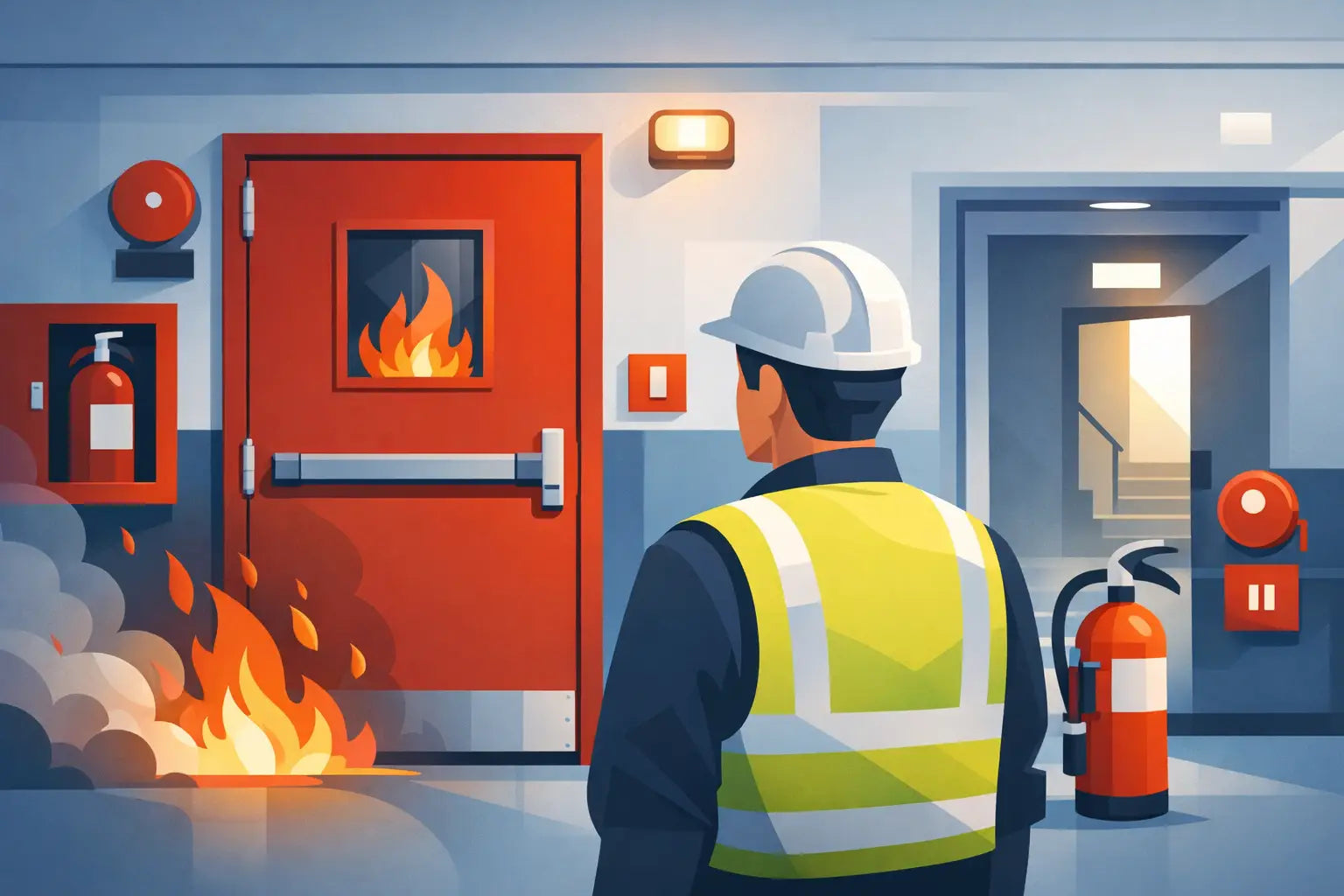
A fire door wedged open, a missing notice, or the wrong message on the wrong side of the door can turn a basic compliance issue into a real safety failure. Fire door signs are there to prevent that. They give staff, visitors and contractors clear instructions at the exact point where behaviour matters, helping to protect escape routes, slow the spread of fire and support day-to-day building safety.
Why fire door signs matter
Fire doors only do their job when people use them properly. That sounds obvious, but in busy workplaces, schools, flats, farms, warehouses and public buildings, doors get propped open, labels wear out, and rooms change use over time. A sign is often the only prompt someone sees before making a decision that affects the spread of smoke and fire.
The right fire door signage also supports a wider fire safety system. It works alongside door hardware, closers, alarms, extinguishers, emergency lighting and evacuation procedures. If one part is missing or unclear, the whole setup becomes less effective. For facilities managers and responsible persons, that is where small oversights can become expensive problems.
There is also a practical point here. During inspections, audits or routine checks, clear and appropriate signage shows that fire safety has been considered properly. It will not replace maintenance or risk assessment, but it does show attention to compliance and helps create a safer, more controlled environment.
Which fire door signs are commonly used
The wording on fire door signs depends on what the door is meant to do and who uses the building. In many workplaces, the most familiar message is “Fire door keep shut”. This is used where the door needs to remain closed to maintain compartmentation and stop fire or smoke spreading.
Another common option is “Fire door keep locked shut”, which is usually used where a door should stay secured when not in use. Then there is “Automatic fire door keep clear”, intended for doors that close automatically and must not be obstructed. In some settings, particularly on routes used for escape, “Fire exit keep clear” may also be relevant, though that serves a slightly different purpose and should not be confused with a fire door instruction sign.
This is where buyers sometimes run into trouble. The wording has to match the door function. A stockroom fire door, a communal corridor door in a residential block and an automatic door near a protected route may all need different messages. Choosing on appearance alone is not enough.
Where fire door signs should be fitted
Placement matters just as much as wording. If a sign cannot be seen easily at the moment a person approaches or uses the door, it loses much of its value. In most cases, the sign should be mounted directly on the door at a visible height, where the instruction is easy to read without slowing down foot traffic.
Many fire doors need signs on both sides because the instruction applies whichever direction the door is approached from. For example, if a door must be kept shut at all times, people on either side need to understand that. In other cases, the message may differ depending on the side of the door. That is common where one face opens onto a protected route and the other onto a service area.
Site conditions also make a difference. In a clean indoor office, a standard self-adhesive sign may be perfectly suitable. In a warehouse, school, factory or shared entrance with heavier wear, a more durable rigid sign often makes better sense over time. The cheapest option is not always the most economical if it needs replacing too soon.
Fire door signs and UK compliance
Most buyers are not looking for signage because they want more admin. They need to stay compliant, pass inspections and reduce risk without wasting time. That is why fire door signs should be treated as part of a compliance-led purchase rather than a generic label order.
In the UK, fire safety duties sit within a wider legal framework, and signage plays a supporting role in helping duty holders communicate hazards and safety instructions clearly. The exact requirement can depend on the premises, the fire risk assessment and how the building is occupied. A low-traffic back-of-house area may not need the same signage approach as a public building, a healthcare setting or a large HMO.
That said, clarity is the constant. Signs should be legible, correctly worded, durable enough for the environment and positioned where they can be understood quickly. If a sign is faded, peeling, obscured or contradictory, it is not doing the job expected of it.
For procurement teams and site managers, the practical takeaway is simple. Buy signs that are suitable for the premises, make sure the wording matches the fire door’s function, and include them in routine inspections. It is a small item, but one that should not be left to chance.
Choosing the right fire door signs for your building
The best choice depends on the building type, user behaviour and how much wear the sign is likely to face. An office refurbishment, a school compliance review and a multi-site facilities contract may all require fire door signs, but not necessarily the same format or quantity.
Material is the first decision. Self-adhesive vinyl works well for smooth indoor surfaces and quick application. Rigid plastic or aluminium can be better where you need a stronger finish or longer service life. If doors are cleaned frequently, exposed to rough handling or located in harder-working environments, durability becomes a bigger factor.
Size matters too. A very small sign may suit a tidy internal door with low viewing distance, but in busier or more public-facing areas, visibility should come first. It is worth thinking about who needs to read it. Staff who know the building well may spot a compact notice easily. Visitors, contractors or members of the public may not.
Consistency across the site is another point often missed. Mixed wording, mixed layouts and ad hoc sign replacements can make a building look poorly managed and create confusion. Standardising your fire door signage across departments or locations makes checks easier and gives the premises a more controlled, professional appearance.
When to replace fire door signs
Replacement is not just for signs that have fallen off. Fire door signs should be reviewed whenever doors are upgraded, room use changes, layouts are altered, or routine inspections show damage. A sign that is technically still attached but no longer easy to read should be replaced.
Changes in occupancy can also trigger the need for better signage. A building that once had limited staff access may now have contractors, visitors or members of the public moving through it. In those cases, signage often needs to be clearer and more visible than before.
There is also a strong argument for checking signs during planned maintenance rather than waiting for a failed inspection. Bulk replacement across a site is usually faster, more consistent and better value than ordering one or two signs at a time under pressure. For larger estates or repeat buyers, that can make procurement much easier to manage.
Common mistakes buyers should avoid
The biggest mistake is assuming any fire-related sign will do. A fire action notice, a fire exit sign and a fire door sign all serve different purposes. Mixing them up creates confusion at the worst possible moment.
Another common issue is under-ordering. If you are managing multiple doors across corridors, stairwells, plant areas and shared spaces, signs may be needed on more door faces than expected. A quick count at the start saves delays later.
Poor adhesion and poor placement also cause problems. If the surface is dirty, uneven or unsuitable, self-adhesive signs may not last. If the sign is hidden by push bars, glazing, kick plates or door furniture, people may miss it entirely. The product and the fitting position need to work together.
Finally, do not treat fire door signage as a one-off purchase to forget about. Like any safety sign, it should be part of ongoing site checks. That keeps standards up and avoids the last-minute scramble before an audit or inspection.
Buying fire door signs efficiently
For most trade and workplace buyers, speed and accuracy matter just as much as price. The simplest way to buy fire door signs is to group requirements by wording, material and quantity before ordering. That helps avoid mismatches and makes it easier to standardise across the site.
If you are ordering for several buildings, it is worth planning by door type and use rather than by department. Facilities teams often find that a centralised approach cuts repeat orders and gives better value, especially where volume discounts apply. A dependable UK supplier with clear product categories, fast dispatch and British-made signage can make that process far easier. Think Safety - Think Sheep.
Fire door signs are small items, but they carry a clear instruction at a critical point. Get the wording right, fit them properly and replace them before they become a problem, and you make life easier for your team while keeping the building safer.
Share:
Difference Between Mandatory and Prohibition Signs
Hazard Symbol Labels Guide for UK Workplaces