

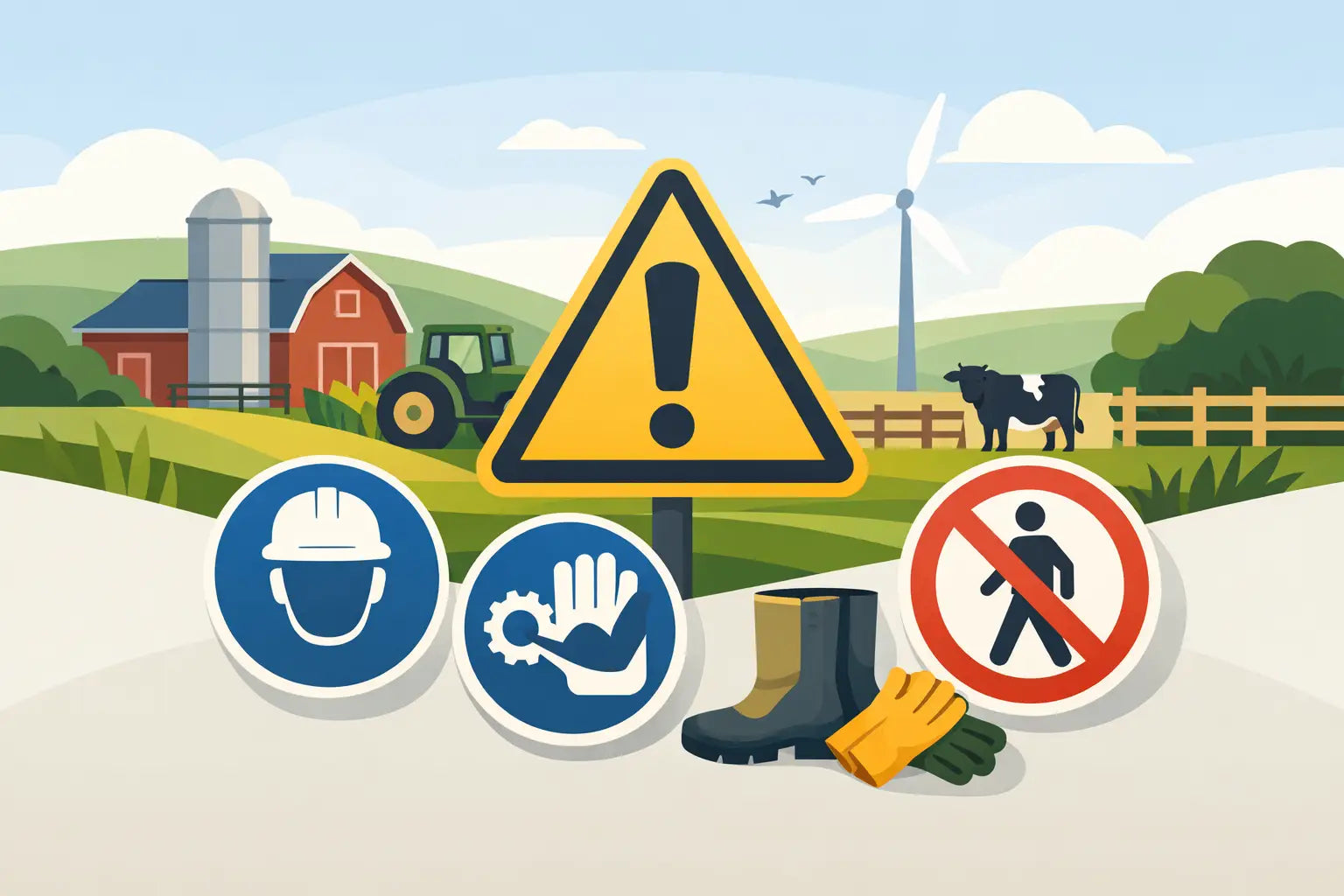
A missing warning sign at a slurry store, a faded notice on a grain silo, or an unreadable speed limit sign at a yard entrance can create the sort of problem no farm operator wants - avoidable risk, confused visitors and questions after an incident. Farm safety signs UK buyers install are not there to fill fence space. They are there to give clear instruction, warn of real hazards and help protect staff, contractors, delivery drivers and the public.
On a working farm, hazards change quickly. Machinery moves, livestock reacts unpredictably, chemicals are stored on site and public rights of way can bring walkers close to active work areas. That is why farm signage needs to be practical rather than generic. The right sign in the wrong place is not much use, and the cheapest option is rarely the best value if it fades, cracks or fails to match the risk on site.
Why farm safety signs UK sites need are different
A farm is not a warehouse, and it is not a standard industrial unit. It combines vehicle movement, uneven ground, livestock handling, fuel storage, machinery use and restricted areas in one environment. In many cases, family members, seasonal workers, contractors and visitors are all using the same spaces.
That mix changes what good signage looks like. A sign may need to be readable from a passing tractor, visible in poor weather or tough enough to stay legible on a gate exposed to mud, wind and washdown. It also needs to make sense to the people actually on site. A contractor arriving for a repair job needs clear access and hazard information straight away. A visitor collecting goods needs to know where not to go. A member of the public using a footpath needs warning without ambiguity.
The compliance side matters too. Safety signs support wider duties around risk assessment, site control and communication. They are not a substitute for proper management, training or physical controls, but they are an essential part of showing hazards have been identified and communicated clearly.
The main types of farm safety signs
Most farms need a mix rather than a single category. Warning signs are often the starting point because agricultural sites present obvious hazards such as moving vehicles, deep water, electric fencing, dangerous machinery, slurry pits and fragile roofs. These signs tell people what they may encounter before they step into danger.
Prohibition signs are just as important where access needs to be controlled. "No unauthorised entry", "No smoking" near fuel or chemical storage, and notices restricting children from work areas all help reduce predictable risks. On farms open to contractors or deliveries, these signs do a lot of heavy lifting.
Mandatory signs cover instructions that need to be followed, such as wearing safety boots, high-visibility clothing, hearing protection or eye protection in specific work zones. They are especially useful where machinery sheds, workshops and chemical handling areas sit alongside general farm traffic.
Then there are information and traffic signs. Speed limits, one-way systems, parking instructions, delivery points, reception notices and directional signs often get overlooked, but they make farms safer by reducing confusion. A clear sign telling visiting drivers where to report can prevent them wandering into active machinery areas.
Where signs make the biggest difference
Entrances matter first. If a site has multiple access points, each one should quickly tell a visitor what sort of place they are entering and what rules apply. This is where signs about authorised access, vehicle speed, pedestrians, livestock movement or reporting to the farm office earn their keep.
High-risk zones come next. Chemical stores, fuel tanks, slurry lagoons, workshops, grain handling areas and machinery sheds should be signed according to the actual hazards present. This sounds obvious, but farms often grow in stages, and signage does not always keep pace. A former storage building may now be a workshop. A field gate may now lead to a public-facing farm shop car park. Signage needs to reflect how the site is used now, not how it was used five years ago.
Public-facing areas need special attention. If your farm includes a shop, café, holiday accommodation, pick-your-own area or public footpaths, signs need to balance clarity with tone. People still need firm warnings where risks exist, but wayfinding and access control become more important. In those cases, a joined-up approach works better than scattering individual signs wherever a problem cropped up.
Choosing signs that hold up on a farm
Material quality matters more on farms than in many indoor workplaces. UV exposure, rain, dirt, impact and cleaning all take their toll. A cheap sign can look false economy very quickly if the print fades or the board warps after one season.
For outdoor use, durability should be near the top of the buying decision. Rigid plastic, aluminium composite and weather-resistant printed surfaces are common choices, but the best option depends on location. A gate sign exposed to regular contact may need a tougher substrate than a wall-mounted notice under cover. Adhesive labels can work well on clean, suitable surfaces, but they are not always ideal on rough or ageing farm fixtures.
Size is another point where buyers sometimes under-order. If a sign needs to be read by vehicle drivers, small formats can be ineffective even if the wording is technically correct. Bigger is not always better, especially in cluttered spaces, but readability from the real viewing distance matters. It is worth thinking about speed, line of sight and whether mud, machinery or parked vehicles will partly obstruct the sign.
Compliance is not just about having a sign
There is a temptation to treat signage as a box-ticking exercise. Buy a few standard notices, fix them up and move on. The problem is that poor placement, wrong wording or faded graphics can undermine the whole purpose.
Good farm safety signs UK operators rely on should be clear, relevant and consistent with the site risk assessment. If the sign says one thing but site practice says another, people stop paying attention. If contractors are told to report to one entrance but all deliveries use another, confusion follows. Consistency builds credibility, and credibility makes signs more likely to be followed.
The other point is maintenance. A damaged sign is not neutral. It can be worse than no sign at all because it suggests poor control and may not communicate the hazard properly. Periodic checks should be part of normal site inspections, especially after storms, harvest pressure or layout changes.
Buying farm safety signs without wasting time
Most buyers do not want a long design exercise. They want compliant, durable signage they can order quickly and fit with confidence. That means choosing a supplier that structures products clearly by hazard, environment and sign type rather than leaving you to guess.
It also helps to buy with the site as a whole in mind. Ordering one sign at a time tends to create gaps and inconsistency. A better approach is to review entrances, restricted areas, machinery zones, chemical storage, traffic routes and public interfaces in one pass. That often reduces repeat orders and helps standardise materials and layouts across the farm.
For larger estates, multi-building farms or businesses managing several agricultural sites, trade pricing and bulk ordering can make a real difference. So can fast dispatch when a sign has been damaged or an audit deadline is close. That is where a specialist supplier such as The Safety Sheep Store can save time - British-made signage, clear product categories and bulk savings up to 35% are useful when you need to get the job done properly and move on.
Common mistakes to avoid
The most common issue is under-signing public and visitor routes while over-signing staff areas. Farms often know their own working patterns so well that blind spots develop around what an outsider sees. If someone unfamiliar with the site would not immediately know where to go, where to stop or what to avoid, the signage probably needs work.
Another mistake is mixing old and new styles until the site becomes visually noisy. Too many different formats, colours or messages can reduce impact. Clear, standardised signage usually works better than a patchwork of notices added over time.
Finally, avoid buying purely on price. Value matters, especially for trade buyers, but replacing weak signs again and again is rarely the cheaper option. Better materials, legible design and dependable fulfilment usually pay for themselves.
Farm signage works best when it is treated as part of site control, not an afterthought. If the signs on your farm are clear, durable and placed where people actually need them, they do more than meet expectations - they help the whole site run with less risk and less confusion. Think Safety - Think Sheep.
Share:
EV Charging Bay Signs That Get Used Properly
Private Road Signs UK: What You Need