

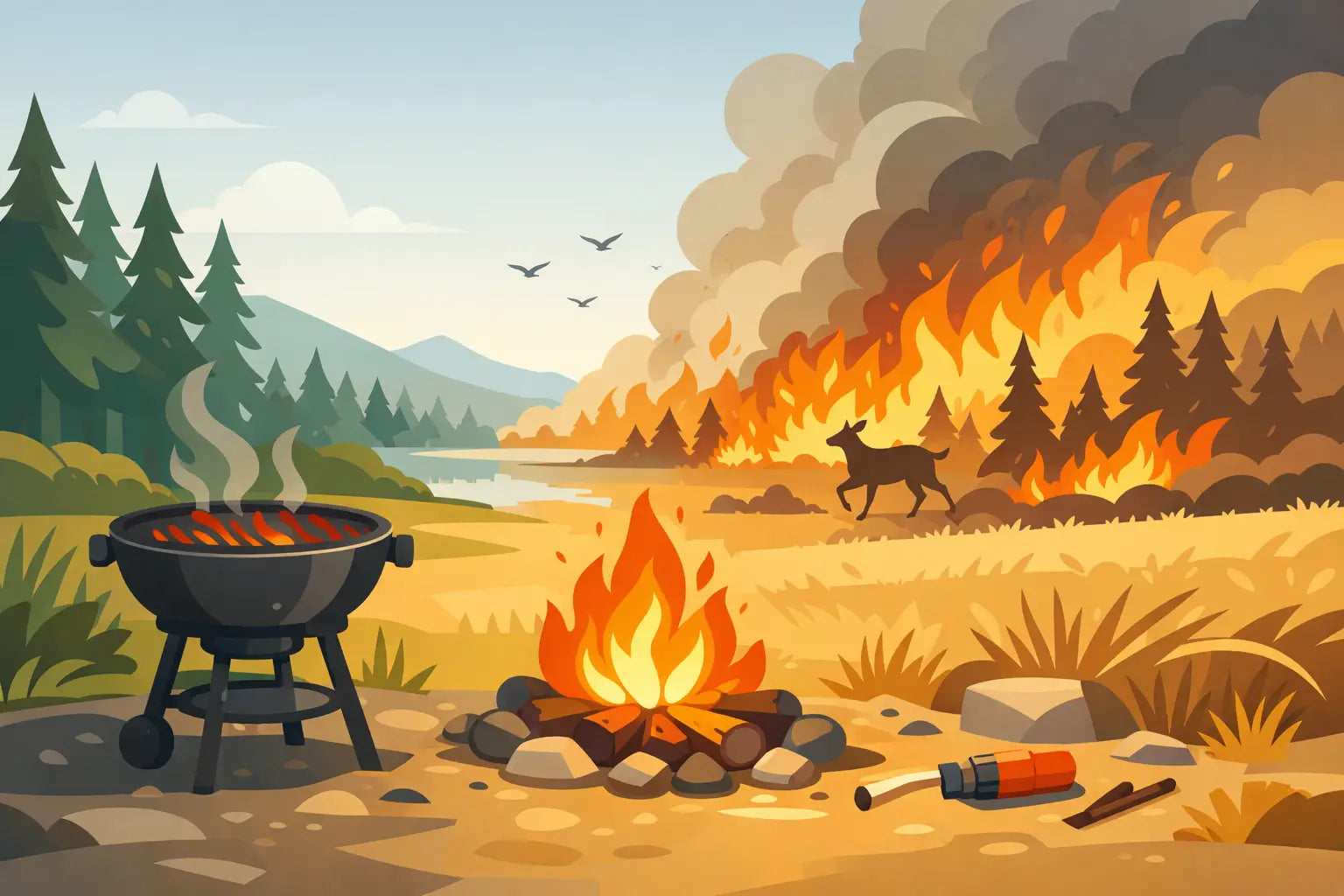
A disposable barbecue left on dry grass can start a fire long after its users have gone home. That is the central risk behind the dangers of lighting fires and BBQs in the countryside: how to prevent wildfires. A small flame, ember or hot foil tray can quickly ignite vegetation, then spread through grass, bracken, heathland, woodland litter or crops.
For landowners, farm operators, facilities teams and public-site managers, prevention is not simply about asking visitors to be careful. It relies on clear site rules, visible warning signs, sensible maintenance and a plan that reflects changing weather and ground conditions.
Why countryside fires spread so quickly
Rural fires do not need dramatic flames to become serious. Fine, dry fuels such as dead grass, leaves, bracken and heather ignite readily. Wind carries heat and sparks ahead of the main fire, while slopes can make flames travel uphill faster than expected. In periods of low rainfall, the risk can remain high even when the day itself feels cool.
BBQs create a particular problem because their risk does not end when food has been cooked. Charcoal stays hot for hours. Disposable BBQs can scorch turf beneath them, and ashes tipped into a hedge, bin or dry verge may contain live embers. Campfires bring further uncertainty: timber can crack and throw sparks, while a fire that appears fully extinguished can retain heat below the surface.
The consequences are wider than damaged vegetation. Wildfires threaten livestock, wildlife, buildings, machinery, fencing, power infrastructure and public access routes. They can also draw fire and rescue resources away from other emergencies. For a business or land manager, the aftermath may include clean-up costs, lost grazing, interrupted operations, insurance claims and reputational damage.
The dangers of fires and BBQs in the countryside
The level of risk depends on the site and the conditions. A managed campsite with a designated, non-combustible cooking area is not the same as an open heath, harvested field edge or forestry track. However, a site should never assume that visitors understand this distinction without being told.
Common high-risk situations include BBQs placed directly on grass, fires lit near hedgerows or woodland, cigarette ends discarded from vehicles, and ashes emptied before they are cold. Agricultural locations also face risks from machinery, fuel storage and standing crops. A spark close to a field margin can cross boundaries rapidly when the ground is dry.
Public access can make control more difficult. Dog walkers, cyclists, campers and visitors may enter from multiple points, and rules displayed only at a main gate can be missed. Clear communication must therefore be positioned where decisions are made: car parks, footpath entrances, picnic areas, campsite boundaries, noticeboards and known informal access points.
Set a clear fire and BBQ policy
A practical policy starts by deciding what is permitted, where it is permitted and when restrictions apply. Where there is no genuinely safe, managed place to cook, the most reliable approach is a simple prohibition on fires and BBQs across the site.
Where a site chooses to allow cooking, controls need to be specific. A designated area should be away from dry vegetation, buildings, stored materials, vehicles and fuel. It should have a stable non-combustible surface, suitable waste arrangements and supervision proportionate to the level of public use. Raised BBQs may reduce heat transfer to the ground, but they do not remove the risk from sparks, ash or poor disposal.
Build flexibility into the policy. Conditions can change quickly during warm, dry or windy weather, and restrictions may need to tighten at short notice. Check relevant local authority guidance, landowner rules and advice from the fire and rescue service. Requirements and restrictions can vary across the UK, particularly on public land, in protected landscapes and during periods of heightened fire danger.
Do not rely on vague messages such as “be careful with fires”. State the instruction plainly: “No fires or BBQs”, “BBQs only in designated area” or “Fire risk: no naked flames”. A visitor should understand the rule within seconds.
Use signage to make restrictions visible
Signage is an essential control, particularly where people are unfamiliar with the land or may arrive outside staffed hours. It cannot physically prevent unsafe behaviour, but it sets expectations, supports enforcement and gives staff a consistent message to refer to.
Choose signs that match the instruction and location. Prohibition signs are appropriate where all fires, naked flames and BBQs are banned. Warning signs can reinforce the reason, particularly during dry periods, with wording such as “High fire risk”. Directional signs are useful where a managed campsite or event site provides an approved cooking area.
For best results, signs should be durable, legible and positioned at eye level where practical. Avoid placing a single small notice behind a gate or among several unrelated messages. Use clear symbols as well as text, especially on visitor-facing routes. On larger estates, farms or multi-entrance sites, repeat signs so that a person entering from a side path receives the same instruction as someone arriving by car.
The Safety Sheep Store supplies countryside safety signage designed to help sites communicate restrictions clearly, including fire risk, no BBQ and no unauthorised access messages. For trade buyers, standardising wording and sign formats across locations makes seasonal changes easier to manage.
Reduce the fuel that allows fire to travel
Signage works alongside physical site management. The aim is to reduce the chance of ignition and limit the route a fire could take if one starts. This does not mean stripping land of vegetation indiscriminately. Habitats, conservation duties, nesting seasons and land-management plans all matter. The right measures depend on the site.
Around car parks, buildings, visitor areas and known gathering points, keep dry vegetation, leaf litter and combustible waste under control. Maintain appropriate separation between cooking areas and vegetation. Secure bins, empty them regularly and make sure hot ash is never placed in general waste.
On agricultural land, review field margins, equipment parking, fuel handling and access for emergency vehicles. Keep tracks and gateways usable, and make sure staff know the location of water supplies, extinguishers and relevant isolation points where applicable. During harvesting or other high-risk work, brief teams on hot surfaces, exhaust systems and immediate reporting procedures.
Give staff a simple response plan
When smoke is spotted, delay can turn a manageable incident into a major fire. Staff, volunteers and contractors should know who to contact, how to describe the location and when to call 999. A precise location is vital on rural land, so record site entrances, grid references or clear landmark descriptions in local procedures.
Only attempt to tackle a very small fire if it is safe to do so, the correct equipment is immediately available and there is a clear escape route. Do not put people at risk to save property or vegetation. Wind direction can change, smoke can overwhelm quickly and fires in grass or bracken can move unexpectedly.
A useful seasonal briefing should cover at least these points:
- current restrictions on fires, BBQs and smoking;
- how to report smoke, flames or discarded hot materials;
- safe use of extinguishers or other firefighting equipment where staff are trained;
- evacuation and access arrangements for visitors, livestock and vehicles; and
- who is responsible for checking signs, bins and high-risk areas.
Make prevention part of everyday site control
Wildfire prevention is most effective when it is treated as routine operational safety, not a response reserved for heatwaves. Inspect signs before busy weekends, check restrictions after dry weather, and make fire rules part of contractor and visitor briefings. If conditions worsen, update messages promptly rather than hoping people will use their judgement.
A visible rule, a well-managed site and staff who know what to do can stop a moment of carelessness becoming a serious rural incident. Think Safety - Think Sheep.
Share:
What PPE Signs Should Construction Sites Display?
Why Glow-in-the-Dark Fire Signs Improve Workplace Safety