

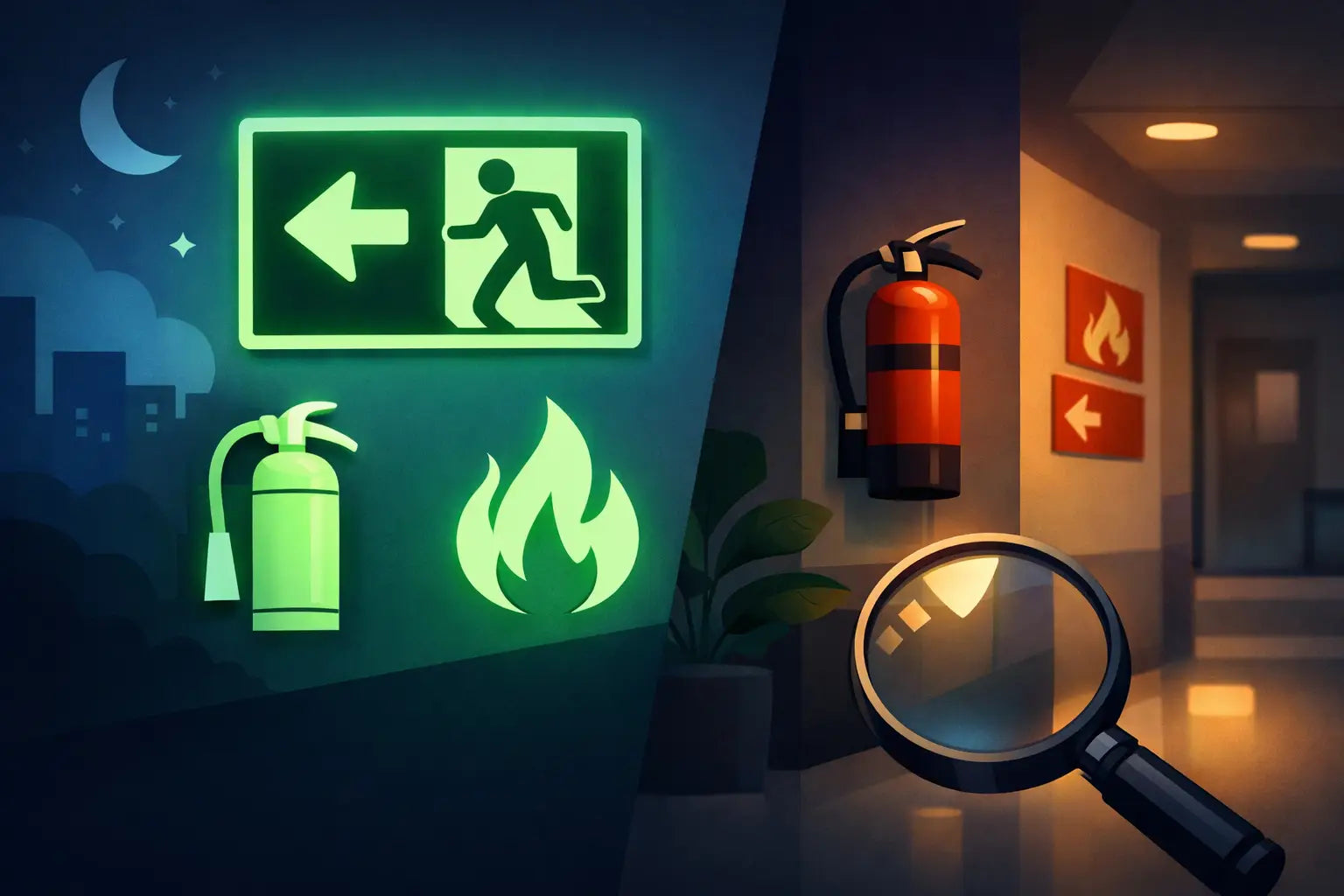
A power cut, smoke-filled corridor or poorly lit plant room is not the time for occupants to be searching for a fire exit or extinguisher. That is the practical reason buyers ask: are glow-in-the-dark fire signs worth buying? For many UK premises, the answer is yes, provided they are selected for the right locations and are not treated as a substitute for compliant emergency lighting.
Glow-in-the-dark fire signs, more accurately called photoluminescent signs, absorb light during normal conditions and release it when lighting levels fall. They can keep key safety information visible during the first moments of a lighting failure, helping staff and visitors identify escape routes, fire equipment and emergency procedures when visibility is under pressure.
What photoluminescent fire signs actually do
Photoluminescent material stores energy from natural or artificial light. When the lights go out, it emits a visible glow. A quality sign should be legible after a normal period of exposure to suitable ambient lighting, but its brightness reduces over time. It is therefore a passive aid, not an illuminated sign that will shine at a fixed level indefinitely.
This distinction matters on real sites. A glow-in-the-dark fire exit sign can reinforce an escape route in a warehouse aisle, school corridor, communal stairwell or office. A photoluminescent fire extinguisher sign can make equipment easier to locate when ordinary lighting has failed. In either case, it gives people an additional visual reference at a moment when clear wayfinding matters.
The benefit is strongest when signs are placed consistently along an established evacuation route and where they can receive enough light in everyday use. A sign hidden behind racking, installed in a permanently dim store room or positioned where it is regularly obstructed will not provide the intended benefit.
Are glow-in-the-dark fire signs worth buying for your premises?
They are usually worth buying where they add a meaningful layer of resilience to an existing fire safety strategy. They are especially useful in larger, unfamiliar or higher-risk environments where visitors may not know the layout, where routes include corridors or staircases, or where a loss of mains power could cause confusion.
For facilities managers and trade buyers, the value is not simply the glow effect. Photoluminescent signs have no wiring, batteries or routine electrical testing requirements. They are quick to fit, straightforward to replace and well suited to phased upgrades across multiple buildings. For sites ordering repeated sign types, that can make them a cost-effective way to improve the visibility of standard fire safety messages.
They are also useful where installing additional electrical signage would be disruptive or disproportionately expensive. Older buildings, temporary site accommodation, outbuildings and agricultural premises can all present practical installation challenges. A properly specified glow-in-the-dark sign may be a sensible supplementary measure in these settings.
That said, they are not automatically necessary in every area. A small, well-lit room with a direct and obvious exit may gain little from additional photoluminescent signage. The decision should follow the premises fire risk assessment, the complexity of the escape route, expected occupancy and the people who use the building.
Where they tend to offer the best return
Photoluminescent fire signs are particularly worthwhile on escape routes with turns, changes of level or multiple doors. They can also be effective in stairwells, corridors, underground areas, multi-occupancy buildings, industrial units and public-facing premises where the public may be unfamiliar with the layout.
They can be a sensible addition around fire points, fire doors, manual call points and evacuation equipment too. In a busy workplace, a clear sign helps people identify the item quickly during an emergency and helps staff locate equipment during routine checks.
The key word is addition. Use them to support clear, correctly positioned safety signage and emergency arrangements, not to patch over poor route design, inadequate lighting or missing procedures.
The important limitation: signs do not replace emergency lighting
This is the point that should guide every purchase. Under UK fire safety duties, responsible persons must take general fire precautions appropriate to their premises. Emergency escape lighting may be required where normal lighting failure could create danger, prevent people from finding their way out or make fire-fighting equipment difficult to locate.
Photoluminescent signs cannot replace a designed, installed and maintained emergency lighting system where one is required. They depend on prior charging from available light, their illumination fades, and smoke can still significantly reduce visibility. They also do not light floors, stairs, changes in level, doors or hazards along the route.
Emergency lighting design and maintenance are commonly considered against BS 5266 requirements. Sign symbols should also be clear, recognisable and suitable for their purpose, with ISO 7010 symbols widely used for safety signage. Your fire risk assessor, competent fire safety adviser or emergency lighting contractor can advise on what is appropriate for the building and its users.
For a simple rule of thumb, if a route would be unsafe in darkness, assume it needs more than a glow-in-the-dark sign. The sign may still be useful, but emergency lighting, route marking and maintenance arrangements must do the primary job.
What to check before ordering
Start with the fire risk assessment and walk the route as a person unfamiliar with the premises would. Check where people enter, which way they will turn, whether there are changes in level, and whether exits or fire equipment could be concealed by stock, machinery, open doors or seasonal displays.
Then check the existing lighting. Photoluminescent signs need sufficient exposure to light before they can perform. Areas lit only intermittently, spaces that are shut down overnight, and locations with very low ambient light deserve closer consideration. In some cases, an electrically illuminated sign or improved emergency lighting will be the more reliable option.
Choose signs with clear fire safety wording or recognised pictograms, and make sure the size suits the viewing distance. A small sign at the far end of a long warehouse aisle is unlikely to be effective, even if it glows. Positioning, contrast and sightlines are as important as the material.
Also consider the environment. For indoor offices, schools and retail settings, standard rigid signs or self-adhesive options may be suitable. In industrial, agricultural or external areas, look for a material and fixing method that can cope with dust, moisture, cleaning regimes, temperature changes and everyday wear. A damaged or faded sign is not a saving.
Installation and maintenance still matter
Photoluminescent signs are low maintenance, but not maintenance-free. Include them in routine fire safety inspections. Confirm they are clean, visible, securely fixed and not obscured by new shelving, equipment or notices. If layouts change, evacuation routes and signage must be reviewed together.
It is also good practice to check their performance after installation. View the sign in reduced lighting conditions after it has been exposed to normal site lighting. This does not replace professional testing of emergency lighting, but it can reveal a sign installed in an unsuitable dark corner or facing the wrong direction.
Avoid placing too many signs in one area. Over-signing can create visual clutter and make the important instruction harder to spot. Each sign should have a clear purpose: directing people to an escape route, identifying equipment or supporting a specific fire safety instruction.
A practical buying decision
If you manage a site with established emergency lighting and need a durable, visible extra layer of wayfinding, glow-in-the-dark fire signs are a worthwhile purchase. They are particularly useful for reinforcing routes and highlighting equipment without the cost and disruption of extra wiring.
If you are relying on them because the emergency lighting is absent, unreliable or overdue for review, deal with that issue first. No passive sign can compensate for an escape route that becomes unsafe when the mains fail.
For buyers managing several locations, standardising compliant fire signage across the estate can also simplify inspections, replacements and staff familiarity. British-made signage, clear product specifications and trade quantities can help keep that process efficient. Think Safety - Think Sheep, but let the fire risk assessment determine where photoluminescent signs genuinely earn their place.
Share:
Choosing Aluminium or Plastic Safety Signs
Which Signs Identify First Aid Rooms in the UK?