

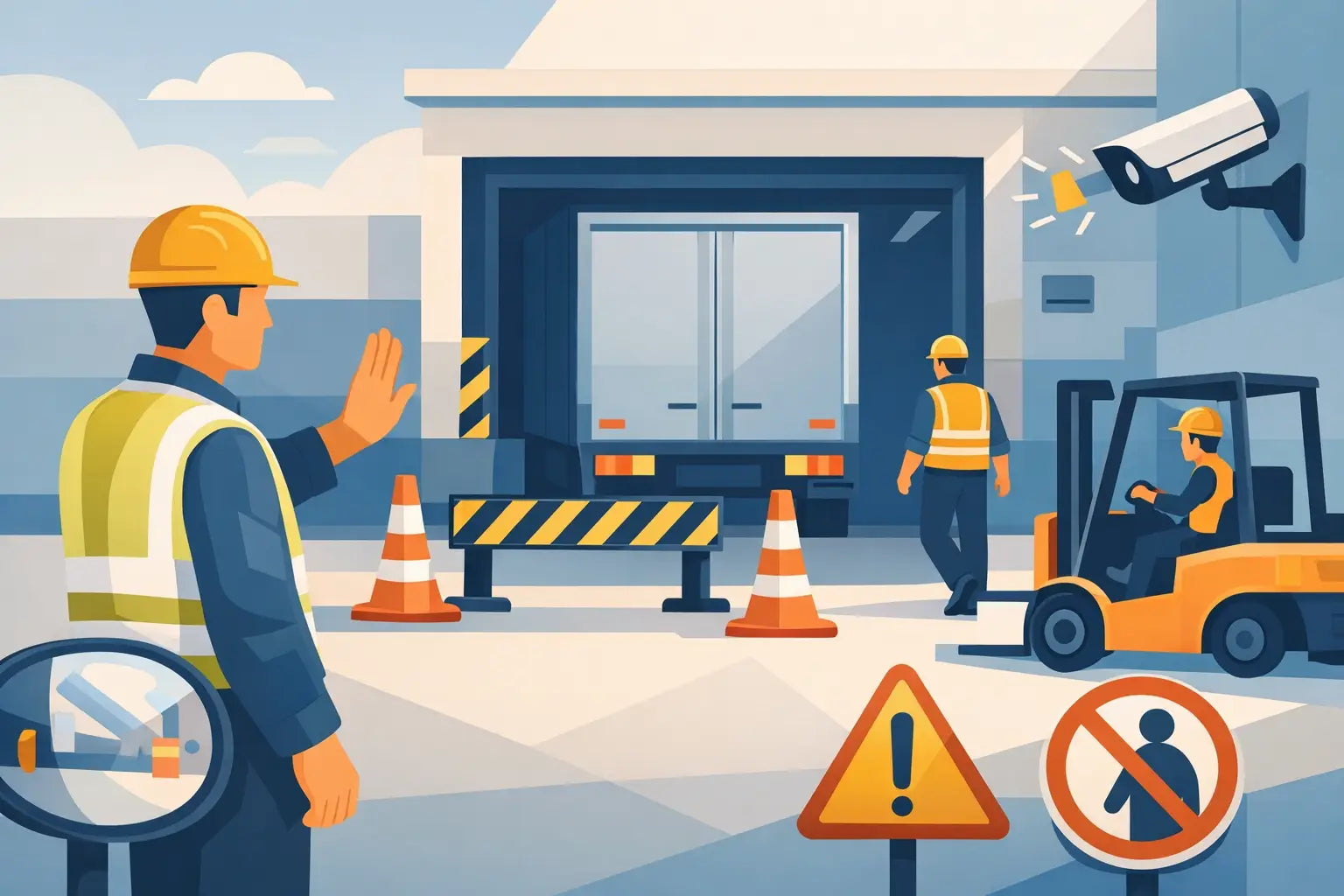
A loading bay only works when everyone knows exactly where to go, what to do and what not to do. When that information is missing, or buried in faded notices no one reads, the result is familiar - reversing vehicles, blocked access, pedestrian risk, delayed collections and avoidable near misses. Well-chosen loading bay signs reduce that confusion quickly and make a busy area easier to manage.
For warehouses, retail service yards, manufacturing sites, farms and distribution depots, the loading bay is one of the highest-risk parts of the premises. Vehicles move in tight spaces, drivers may be unfamiliar with the site, and staff often work against the clock. Good signage does more than label a bay. It sets expectations, supports traffic flow and helps show that safety controls are in place.
Why loading bay signs matter
Most loading areas deal with a mix of hazards at once. You may have HGVs reversing, forklifts crossing vehicle routes, pedestrians moving between doors, and deliveries arriving outside planned windows. In practice, that means one vague sign is rarely enough.
The right loading bay signs help separate movements and responsibilities. A driver needs to know whether to report to reception, switch off the engine, wait in the cab or use wheel chocks. Staff need to know whether a bay is designated for deliveries, collections, loading only or no parking. Visitors need clear direction before they wander into an active service yard.
There is also a compliance angle. Workplace signage supports broader health and safety duties by communicating site rules and hazards clearly. Signs are not a substitute for training, supervision or traffic management, but they are an essential part of that system. If an incident occurs, clear, visible signage helps demonstrate that risks were identified and communicated.
What a good loading bay sign should communicate
A sign has to be understood fast. In a loading bay, nobody has time to interpret vague wording or squint at a message hidden behind a roller shutter. The best signs are specific, readable at distance and placed where a decision is actually made.
That usually means focusing on one instruction or one category of message at a time. For example, a directional sign should direct. A prohibition sign should prohibit. A warning sign should identify the hazard plainly. Trying to combine every possible instruction on one panel often makes the message weaker, not stronger.
In most workplaces, loading bay signage falls into a few practical groups.
Traffic control and vehicle movement
This is the first layer. Drivers need clear instructions before they enter the bay area, not after they have already turned into the wrong lane. Signs such as Delivery Vehicles Only, No Unauthorised Parking, One Way System, Reversing Vehicles and Driver Reception help reduce hesitation and poor manoeuvring.
If your site has more than one bay, numbering and bay identification matter more than many buyers expect. Bay 1, Bay 2 and Goods In signs sound basic, but they cut down wasted time, prevent queueing in the wrong place and help visiting drivers follow booking instructions correctly.
Pedestrian safety
Where pedestrians and vehicles mix, signage needs to be direct and visible. Pedestrian Route, No Pedestrian Access, Fork Lift Trucks Operating and Beware Moving Vehicles signs are commonly used to mark safer routes and restrict access to hazardous zones.
This is especially important on mixed-use sites where office staff, agency workers, contractors or customers may pass near a loading area without fully understanding the risks. A regular warehouse operative may know the routine. A visiting engineer probably does not.
Driver instructions
Many incidents happen not because a driver ignored the rules, but because the rules were never made clear. Loading bay signs can set out routine instructions such as Report to Goods In, Turn Off Engine While Loading, Apply Handbrake, Use Wheel Chocks and Do Not Move Vehicle During Loading.
The exact wording depends on your process. A food site may need hygiene and access instructions alongside vehicle controls. A builders merchant may focus more on reversing guidance and pedestrian exclusion. The point is to match the sign to the real behaviour you need.
Hazard warnings and restricted access
Loading bays often include dock levellers, uneven ground, tail lift operations or overhead doors. Standard warning signs help highlight these risks, while access signs make it clear who is and is not permitted into the area.
Restricted access signage is particularly useful where bays back onto public-facing premises, shared estates or tenanted properties. If third parties can stray into the area, signs should leave no doubt that the space is controlled and potentially hazardous.
Choosing the right loading bay signs for your site
There is no single pack of signs that suits every loading area. A small retail service yard and a national distribution hub have different risks, traffic volumes and visiting driver patterns. The right choice depends on layout, vehicle type and how people actually use the space.
Start with the decision points. Ask where a driver first arrives, where they stop, where they reverse, where staff cross and where confusion normally happens. Those locations usually tell you which signs are missing.
Material also matters. Indoor bays may suit standard rigid signs, while exposed external yards often need more weather-resistant options. If a sign is likely to face knocks, grime or regular washdown, durability is part of the buying decision, not an afterthought.
Size should be driven by viewing distance. If drivers need to read a sign from inside a cab, a small notice fixed beside a loading door may be technically present but practically useless. The same applies to mounting height. A well-worded sign still fails if it is blocked by parked vehicles, pallets or open doors.
Common mistakes that weaken loading bay safety
One of the biggest issues is relying on old signage that no longer reflects the way the site operates. Bays get reassigned, traffic routes change and contractors start using entrances that were never intended for regular deliveries. If the signs stay the same, confusion follows.
Another common problem is over-signing. This sounds odd from a signage supplier, but it is true. Too many messages in one place can make the critical instruction disappear into the background. If every wall carries five warnings, people stop seeing them.
Poor consistency also causes problems. If one bay says Deliveries Only, another says Goods In, and a third uses hand-written instructions taped to a shutter, the site looks unmanaged. Consistent wording and presentation make instructions easier to trust and follow.
Then there is maintenance. Dirt, impact damage and sun fading all reduce effectiveness. A loading bay is a hard-working environment. Signs need to be checked as part of normal site upkeep, particularly in yards with frequent vehicle movement.
When standard signs are enough, and when they are not
Standard loading bay signs cover a large share of workplace needs. For many sites, clear off-the-shelf messages are the fastest and most cost-effective way to improve safety and compliance. That is often the best route when the hazard or instruction is universal and easy to understand.
But sometimes a standard sign will not fully cover the job. Multi-bay depots, shared premises and sites with unusual vehicle procedures may need more specific wording or a coordinated set of signs that work together. If your drivers keep making the same mistake, that is usually a clue that the message needs tightening, not just replacing like-for-like.
This is where practical sourcing matters. Trade buyers do not want to spend hours piecing together mixed signage from multiple suppliers or guessing which format will hold up outdoors. They need signs that are clear, durable, UK suitable and easy to order in volume when fitting out a whole yard or multiple sites.
Buying loading bay signs with speed and value in mind
For procurement teams, contractors and facilities managers, signage buying is rarely a one-off task. It often sits alongside wider site updates, audits, accident actions or opening schedules. That means availability, fast dispatch and straightforward bulk ordering matter just as much as the wording on the sign.
A dependable supplier should make it easy to find loading bay signs by use case, whether you need delivery bay identification, vehicle warning notices, access restriction signs or general traffic management messages. British-made signage, trade pricing and bulk savings can make a real difference on multi-site rollouts or larger yard upgrades, especially when replacement speed matters.
At The Safety Sheep Store, that practical approach is the point - compliant products, fast fulfilment and clear category structure that helps buyers get the right sign without wasting time. Think Safety - Think Sheep.
The best loading bay signs are the ones people notice early, understand instantly and follow without second-guessing. If your yard depends on timing, vehicle control and safe movement, that is not a small detail. It is part of keeping the whole operation moving properly.
Share:
Warehouse Safety Signage Guide for UK Sites
How to Sign Private Car Parks Properly