

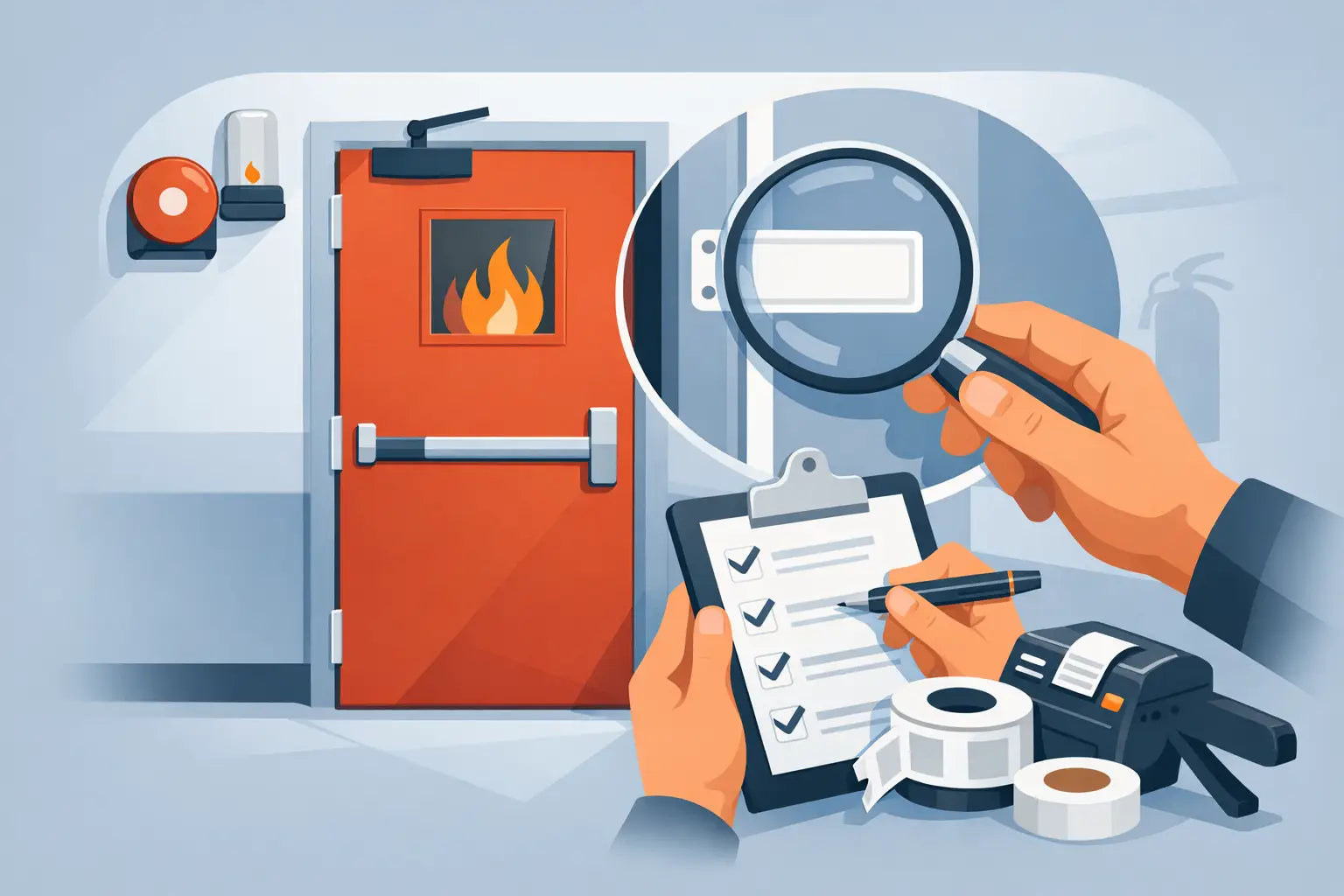
If a fire door is doing its job, it is holding back smoke and fire long enough for people to get out safely. If it is not clearly labelled, people prop it open, block it, misuse it or fail to recognise it at all. That is why knowing how to label fire doors matters just as much as choosing the right door set in the first place.
For UK businesses, landlords, facilities teams and contractors, fire door labelling is not about adding a sticker and hoping for the best. It is about making sure the message is clear, visible and suited to the way the door is used. In practice, the right label helps support compliance, reduces misuse and makes expectations obvious to staff, residents, visitors and contractors.
How to label fire doors in the right way
The first step is to match the label to the door's function. Not every fire door carries the same instruction. Some need to stay shut at all times. Others are designed to stay unlocked while still remaining closed. Some are held open by a device linked to the fire alarm and only close when the alarm activates. The wording on the sign should reflect that exact use, not a rough approximation.
Common examples include Fire Door Keep Shut, Fire Door Keep Locked, Fire Exit Keep Clear and Automatic Fire Door Keep Clear. These messages are not interchangeable. A stairwell fire door inside an office may need a Keep Shut message, while a final exit route may need a Fire Exit sign and a separate instruction to keep the route clear. Using the wrong wording can create confusion, especially in mixed-use premises where staff and visitors are moving quickly.
Placement matters as well. In many cases, the label should be fixed at eye level or where it is easy to see as someone approaches or uses the door. If the instruction applies to people on both sides, you may need signage on both faces of the door. A sign hidden behind a noticeboard, placed too low or obscured by door furniture is unlikely to do much good.
Material and finish also make a difference. In a clean office, a self-adhesive fire door sign may be perfectly suitable if the surface is smooth and properly prepared. In a harder-working environment such as a warehouse, school corridor, plant room or farm building, a more durable rigid sign may be the better option. It depends on traffic levels, cleaning routines and how exposed the sign is to knocks, moisture or grime.
What fire door labels usually need to say
The wording should be brief, standard and easy to understand at a glance. This is not the place for long instructions or clever phrasing. The best fire door labels are direct because people often read them while walking through, carrying equipment or reacting under pressure.
In most settings, the safest approach is to use recognised fire safety wording that aligns with the door's purpose. Fire Door Keep Shut is one of the most common because many internal fire doors rely on being closed to provide protection. If a door must remain secure, Fire Door Keep Locked may be more appropriate. If a door opens automatically or is linked to a release mechanism, the label needs to make that clear so users do not interfere with its operation.
Colour and symbol use should support quick recognition. Blue mandatory signs are often used where the instruction is something people must do, such as keeping a fire door shut. Green is commonly associated with safe condition and escape route information. The exact combination depends on the message being given, but consistency across a site helps people understand what they are looking at.
Where to place labels on fire doors
There is no one-size-fits-all position that works for every building, but visibility is the key test. A person approaching the door should be able to read the instruction without stopping to search for it. On many doors, the upper or middle area of the face works well because it sits within normal sight lines.
If both sides of the door serve different user groups, think about each approach separately. A corridor-side label may tell occupants to keep the door shut, while the room side may need the same message repeated because that is where misuse is more likely. In flats, communal buildings, schools and healthcare sites, this point is often overlooked. People only obey signs they actually see.
You also need to consider what else is on or around the door. Vision panels, push plates, access control readers and handles can all compete for space. The label should not be squeezed into an awkward corner where it becomes background clutter. Clean positioning makes the instruction look deliberate and authoritative.
How to label fire doors without creating confusion
A common mistake is over-signing. One door ends up covered with fire action notices, access instructions, room IDs and temporary warnings. The result is visual noise. The fire door message may still be there, but it loses impact.
Good labelling is clear and proportionate. Use the essential fire door instruction first, then add other notices only where they are genuinely needed. If the door is part of an escape route, nearby fire exit signage should support the route rather than compete with the door label itself. If the door has access restrictions, make sure those messages do not contradict the fire safety function.
Language should also suit the people using the building. In most commercial and public environments, standard wording is enough. In higher-risk or mixed-user settings, you may need symbols or larger formats to improve clarity. A small label on a busy service corridor may meet the technical requirement but still be easy to miss in practice.
Fire door labels and UK compliance
Most buyers asking how to label fire doors are really asking a wider question: what will stand up to scrutiny if there is an inspection, an incident or a complaint? The short answer is that labels should be clear, appropriate to the door's role and consistent with your wider fire risk controls.
The Regulatory Reform (Fire Safety) Order 2005 places responsibilities on those managing non-domestic premises to take general fire precautions. Suitable signage supports those precautions by helping people use fire doors correctly. In residential blocks, schools, workplaces and public buildings, labels are one part of the overall fire safety picture alongside maintenance, inspection and staff awareness.
That is the trade-off to keep in mind. A label is essential, but it is not a substitute for a compliant fire door, functioning self-closer or proper inspection regime. A door marked Fire Door Keep Shut that has damaged seals or does not close properly is still a problem. Clear signage supports compliance. It does not create it on its own.
Choosing the right type of sign for your site
For many buyers, the practical question is not just what the label should say, but what format will last. Self-adhesive labels are quick to apply, cost-effective and well suited to smooth indoor doors in offices, communal areas and managed facilities. They are often the fastest choice when you need a straightforward replacement.
Rigid plastic or aluminium signs may be more suitable where conditions are tougher or where a more permanent finish is preferred. Sites with heavy traffic, regular washdowns or frequent contractor movement often benefit from something more durable. If you are ordering for multiple buildings, consistency across formats can help with maintenance and visual standards.
This is also where buying from a specialist supplier makes life easier. Instead of trying to piece together mismatched signs from general sources, you can choose products designed for workplace compliance, with clear wording and formats suited to different environments. For trade buyers managing several locations, that saves time as much as money. Think Safety - Think Sheep.
Common mistakes to avoid
The biggest mistake is assuming any fire-related sticker will do. It will not. The wording must match the door's actual function. A close second is poor placement, followed by faded, damaged or peeling labels that no longer look credible.
Another issue is failing to review signage after layout changes or refurbishments. A fire door that once sat on a simple corridor may now serve a different area, or new access controls may have changed how people use it. If the building changes, the signage should be checked as part of the handover.
Finally, do not leave fire door labels as an afterthought on larger projects. They are a small item, but they carry a clear safety instruction that people rely on. Ordering the right signs early avoids last-minute substitutions and helps keep handovers clean and compliant.
When you are deciding how to label fire doors, keep the standard simple: the right message, in the right place, in a format that lasts. If the sign is easy to see and easy to understand, you are already making the door more likely to do what it was installed to do.
Share:
Mandatory Signs vs Prohibition Signs
When Are PPE Signs Required at Work?