

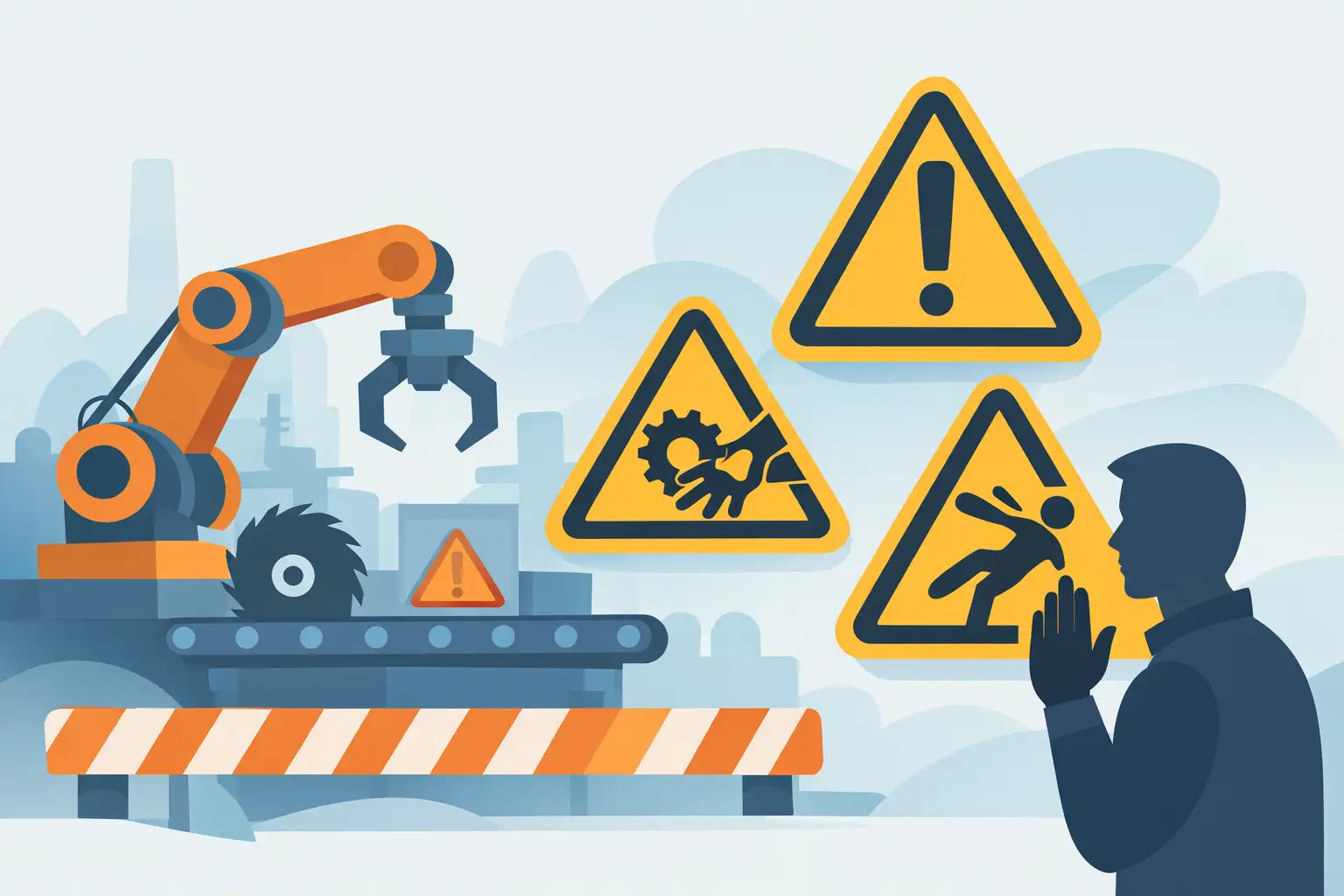
A missing warning sign near a moving blade, roller or conveyor is the sort of detail people only notice after something has gone wrong. In busy workplaces, dangerous machinery warning signs are not a box-ticking extra. They are a practical control measure that helps staff, contractors and visitors recognise serious hazards before they get too close.
For site managers, facilities teams, farm operators and contractors, the challenge is rarely understanding that machinery is dangerous. The challenge is making that risk obvious, consistent and legally defensible across every area where plant is used, maintained or accessed. Good signage supports that job. Poor signage, badly placed signage or worn-out signage leaves gaps that can quickly turn into incidents.
What dangerous machinery warning signs are for
Dangerous machinery warning signs are designed to alert people to hazards from moving parts, crush points, entanglement risks, cutting equipment, automated machinery and other plant-related dangers. In UK workplaces, they are part of the wider safety sign system used to communicate risk quickly and clearly.
Their value is simple. People do not always arrive on site fully briefed. Agency workers, delivery drivers, visiting engineers and occasional contractors may be unfamiliar with a layout or process. Even regular staff can become blind to hazards in areas they use every day. A clear warning sign acts as a visible prompt at the point of risk.
That said, signage is not a substitute for guarding, lock-off procedures, training or supervision. If an employer relies on signs where a physical control is needed, that is a weak safety arrangement. Signs work best as part of a layered approach, not as the only line of defence.
Where dangerous machinery warning signs matter most
The most obvious locations are production lines, workshops, engineering bays and processing areas, but the need goes much wider. Farms, warehouses, refuse sites, vehicle depots, construction compounds and plant rooms all contain machinery that can injure people in seconds.
High-risk machinery areas
Warning signs are especially useful around equipment with exposed or semi-exposed movement. That includes conveyors, rollers, presses, saws, mixers, compactors, balers, augers, lift mechanisms and automatic gates. Any equipment with nip points, rotating parts or sudden movement should prompt a signage review.
The key point is visibility at approach. If someone only sees the sign once they are already inside the danger zone, the placement is too late. Signs should be positioned where they influence behaviour before a person enters the hazard area.
Maintenance and restricted access zones
Maintenance spaces are often overlooked because they are not always occupied. In practice, they can be some of the highest-risk areas on site. Plant rooms, roof spaces, service corridors and machinery enclosures need clear warnings, especially where access is limited to authorised persons.
This is where combining messages can help. A warning about dangerous machinery may need to sit alongside mandatory PPE signage or access restriction notices. The aim is not to overload the wall with messages, but to make the safety expectation unmistakable.
What a compliant warning sign should look like
In the UK, warning signs follow a recognised format. They are typically triangular, with a yellow background, black border and black symbol. That consistency matters because workers recognise the meaning immediately, often before they read any supporting text.
Text can still be useful, particularly in mixed environments or where the exact hazard needs naming. A general machinery warning symbol may be sufficient in one area, while another may benefit from wording such as warning moving machinery or warning keep clear of rotating parts. It depends on how specific the risk is and who needs to understand it.
Clarity beats clutter every time. If the sign uses too much wording, poor contrast or an unclear graphic, it slows recognition. In operational settings, that is a real weakness.
Choosing the right sign for the setting
Not every machine needs the same sign, and not every site needs the same material. The right choice depends on hazard type, environment and expected wear.
For indoor use in dry, controlled areas, a standard rigid plastic sign may be perfectly suitable. In harsher settings such as farms, yards, washdown areas or external compounds, weather resistance becomes more important. A sign that fades, peels or cracks within months is poor value, even if the initial cost looks lower.
The level of hazard should shape the wording too. A broad sign warning of dangerous machinery can be useful at entry points to a machine area, while more specific notices should sit nearer to the relevant equipment. This layered approach often works better than relying on one sign to explain everything.
Placement mistakes that reduce effectiveness
Most signage problems are not caused by choosing the wrong symbol. They come from poor siting, inconsistent use or neglect over time.
One common issue is mounting signs behind stored materials, open doors or plant itself. Another is placing them too high to read naturally at approach. In noisy or fast-moving environments, people scan quickly. The sign needs to be in the natural line of sight.
There is also the problem of sign fatigue. If every available surface is covered in notices, people stop processing them. That does not mean using fewer safety signs than necessary. It means using the right signs in the right places, with a clear hierarchy.
Lighting matters as well. A warning sign in a dim plant room or outdoor area is only effective if people can actually see it. In some settings, larger formats or more durable, high-visibility finishes make operational sense.
Dangerous machinery warning signs and legal compliance
Employers in the UK have a duty to manage workplace risks, and safety signage is part of that picture where hazards remain despite other control measures. For buyers and duty holders, the practical question is not whether a sign alone makes a site compliant. It is whether the site uses appropriate signage as part of a sensible, documented risk control system.
If machinery presents a residual risk, warning signs help demonstrate that the hazard has been communicated clearly. They support inductions, site rules and safe systems of work. They also provide consistency across departments and locations, which matters for businesses managing multiple sites.
There is, however, a trade-off. Buying cheap signs to cover a compliance gap may tick a purchasing line, but if those signs are not durable, visible and suitable for the environment, they create repeat costs and leave room for failure. For most commercial buyers, dependable quality is the better long-term decision.
When to replace or review machinery warning signs
A sign should be reviewed any time machinery is moved, replaced, reconfigured or newly installed. Changes to workflow, pedestrian routes or contractor access can also make existing signage inadequate.
Wear is another trigger. If a sign is faded, cracked, stained, damaged or no longer legible from a sensible distance, it should be replaced. The same applies where wording no longer matches the actual machinery risk.
Routine inspections help avoid this slipping down the priority list. For sites with regular audits, signage checks can be built into existing safety walks. For smaller businesses, even a simple quarterly review is better than waiting until a near miss exposes the problem.
Buying practical signage without wasting time
Trade buyers usually want three things from safety signage: the right message, the right material and fast delivery. That is especially true when replacing damaged signs after an inspection or preparing a new area before machinery goes live.
A well-structured product range makes a real difference here. Being able to find dangerous machinery warning signs by hazard type, size or material saves time and reduces ordering errors. For larger businesses or multi-site operators, bulk buying can also make the cost per sign far more sensible.
This is where a specialist supplier adds value. British-made signage, clear product categorisation, dependable stock and same day dispatch are not marketing extras for operational teams. They help keep projects moving and support compliance without unnecessary chasing. Think Safety - Think Sheep fits that practical approach when buyers need signs that are straightforward to source and built for the job.
The signs work best when the system works
The best warning sign in the world cannot compensate for missing guards, poor housekeeping or weak supervision. Equally, a well-managed machine area without clear signage still leaves unnecessary room for confusion. Effective safety comes from both.
If you are reviewing machinery risks, treat signage as a visible part of control, not an afterthought. Check what people see as they approach the hazard, not just what appears on a site drawing or asset list. When warning signs are clear, correctly placed and suited to the environment, they do exactly what they should - they help people stop, notice the danger and make a safer choice.
Share:
Best Fire Assembly Point Signs for UK Sites
Flammable Storage Warning Signs Explained