

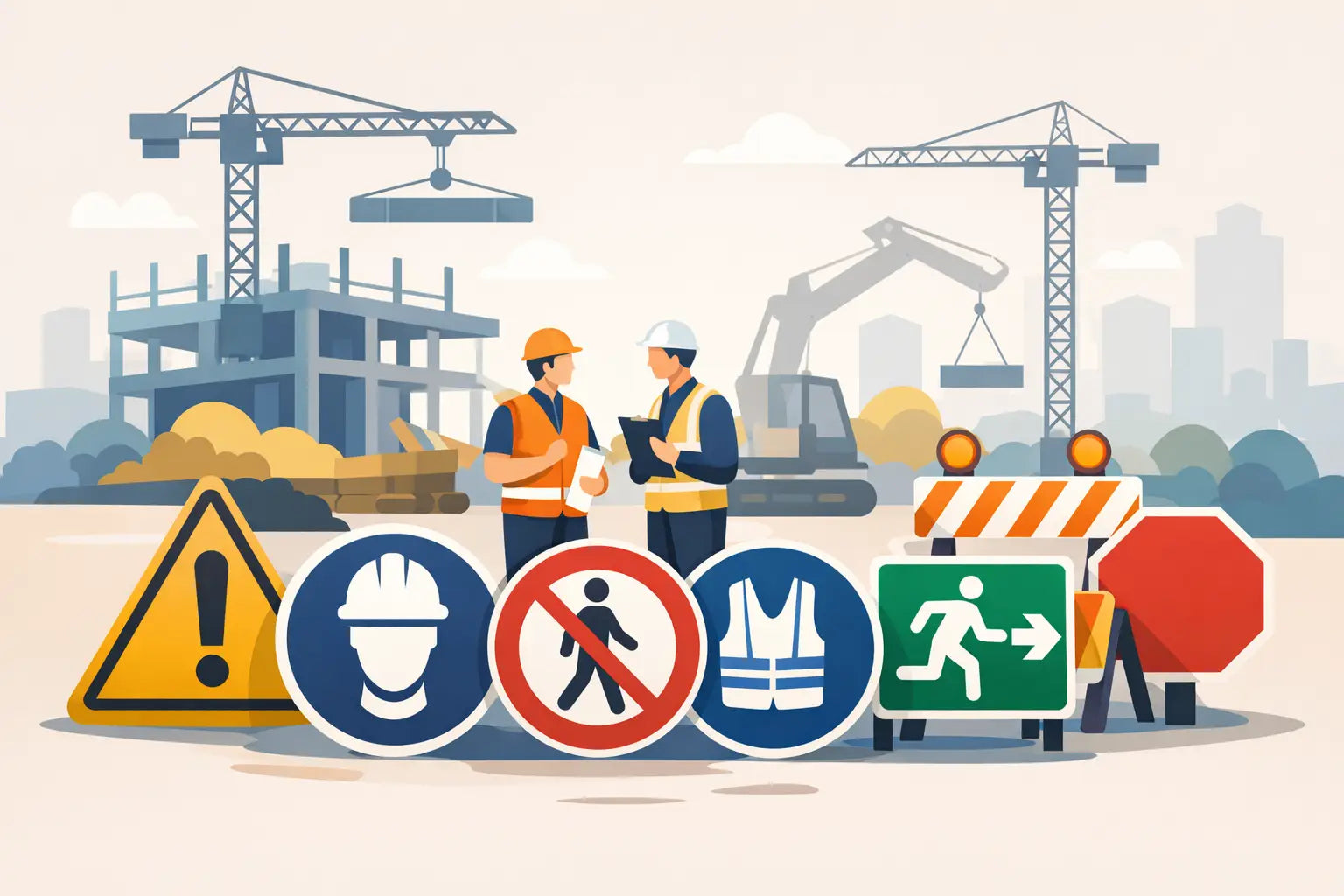
A missing sign is rarely noticed until something goes wrong. On a building site, that can mean an injured visitor, a delivery driver walking into a restricted area, or a contractor starting work without the right PPE. If you are asking what signs are required on a building site, the practical answer is this: you need signs that warn of risk, control access, direct safe behaviour and support legal compliance for workers and the public.
What signs are required on a building site in the UK?
There is no single one-size-fits-all sign pack that covers every site. The signs required on a small domestic refurbishment will differ from those needed on a large commercial development. That said, most UK building sites rely on a core group of signage types based on the hazards present, the people entering the site and the activities taking place.
In broad terms, a compliant site usually needs clear safety signage at entrances, around high-risk areas, on temporary routes and wherever specific rules apply. The Health and Safety at Work etc. Act 1974, the Construction (Design and Management) Regulations 2015 and the Health and Safety (Safety Signs and Signals) Regulations 1996 all shape what is expected. The key point is not simply to put signs up, but to put up the right signs in the right places.
Site entrance signs are usually the starting point
The site entrance is where most construction projects need their signage to work hardest. It is the first control point for workers, visitors, delivery drivers and members of the public. If site rules are unclear here, they are often unclear everywhere else.
Most sites need a clear construction site notice at the entrance. This often includes wording such as Construction Site Keep Out, Site Safety Starts Here or Authorised Personnel Only. Many businesses also display a multi-message sign board covering mandatory PPE, visitor reporting instructions, speed limits and emergency contact details.
For many sites, the entrance sign package also includes mandatory signs such as Safety Helmets Must Be Worn, High Visibility Clothing Must Be Worn and Safety Footwear Must Be Worn. These are common because PPE requirements often apply from the moment someone steps onto the site, not just once they reach the work area.
If the public could access the perimeter, prohibition and warning signs matter just as much. Signs such as Danger Construction Site, No Unauthorised Access and Children Must Not Play on This Site are widely used because they address a predictable risk. A building site next to a pavement, school route or public car park will usually need stronger perimeter messaging than a fully enclosed industrial compound.
The main categories of building site signs
Building site signage usually falls into a few recognised groups. Understanding those groups makes it easier to check whether you have covered the basics.
Prohibition signs
These signs tell people what they must not do. Typical examples include No Smoking, No Entry, Do Not Operate and Unauthorised Persons Prohibited. On construction sites, they are often used at access points, plant zones, fuel storage areas and welfare units where certain behaviours create immediate risk.
Mandatory signs
These signs set out instructions that must be followed. PPE signage is the most obvious example, but mandatory signs can also cover pedestrian routes, hearing protection, eye protection or the need to use handrails. If a rule is compulsory for safety, a mandatory sign helps make that clear.
Warning signs
These signs alert people to hazards that cannot be eliminated altogether. Common building site examples include Danger Deep Excavation, Warning Overhead Loads, Danger Fragile Roof, Danger Electrical Hazard and Caution Slippery Surface. The wording and symbol should match the actual risk, not a generic idea of danger.
Safe condition signs
These signs help people find emergency equipment, first aid points, fire exits, assembly points and escape routes. On larger or more complex sites, these are essential for emergency planning and quick response.
Fire safety signs
If fire equipment, alarm points or escape routes are on site, fire safety signs are part of the picture too. Construction sites can involve hot works, temporary electrics, fuel storage and combustible materials, so fire signage should never be treated as an afterthought.
What signs are required on a building site depends on the hazards present
This is where many buyers get caught out. They assume a basic site entrance board and a few PPE signs are enough. Sometimes they are. Often they are not.
If your site includes excavations, you will usually need warnings around open holes, trench edges or unstable ground. If mobile plant is operating, signage may be needed to separate vehicles and pedestrians, mark crossing points and restrict public access. If asbestos is present, the signage requirement becomes more specific. If hazardous substances are stored on site, COSHH-related labelling and area notices may also be needed.
The same applies to work at height. A scaffold access point may require signs covering inspection status, loading limits, unauthorised use or fall risk. Roof work may need edge protection warnings, fragile surface notices or restricted access signs. The exact requirement depends on the task, the layout and who may be exposed to the danger.
This is why signage should follow the site risk assessment rather than guesswork. Signs are there to support your controls, not replace them.
Public-facing sites need extra attention
Not every building site sits behind locked gates in a quiet industrial estate. Many are attached to live premises, town centre plots, housing developments or roadsides. In those cases, the public interface becomes a major part of the signage plan.
Where members of the public pass close to the works, you may need signs directing pedestrians safely around the site, warning of construction traffic or identifying temporary walkways. Delivery areas may need clear instructions to avoid conflict with visitors or neighbouring occupiers. If your project affects car parks, footpaths or shared access routes, signage should help reduce confusion as much as legal risk.
For landlords, schools, retailers and facilities managers overseeing contractors, this point matters. A site can be well managed internally and still create avoidable problems at the boundary if temporary signs are poor, damaged or missing.
Common signs many UK sites use
Most building sites will use a combination of the following, depending on risk and layout:
- Construction Site Keep Out
- Danger Construction Site
- No Unauthorised Entry
- All Visitors Must Report to Site Office
- Safety Helmets Must Be Worn
- High Visibility Clothing Must Be Worn
- Safety Footwear Must Be Worn
- Site Office
- First Aid
- Fire Exit
- Fire Point
- Assembly Point
- Danger Deep Excavation
- Warning Overhead Loads
- Danger 415 Volts or electrical hazard notices
- Pedestrian Route
- Fork Lift Lorries Operating or plant movement warnings
Temporary sites still need durable, readable signage
Construction signage often has to cope with poor weather, dirt, heavy traffic and frequent site changes. A paper notice taped to a fence may work for an hour. It is not a reliable control measure over a full project.
Signs should be durable enough for the environment and large enough to be read at the required distance. They also need to be positioned sensibly. A sign hidden behind stacked materials, fixed too low, or facing the wrong direction will not do the job. As the site develops, signage often needs updating as routes move, hazards change and work phases progress.
This is one reason many trade buyers standardise their sign ordering across multiple projects. It saves time, keeps presentation consistent and reduces the risk of obvious gaps when a new site is set up quickly.
Good signage helps compliance, but it also helps site control
There is a legal angle to site signs, but there is also an operational one. Clear signage reduces wasted time. It tells drivers where to go, tells visitors where to report, reminds contractors of PPE rules and marks restricted zones without constant supervision.
That matters on busy sites where several trades are working at once. Good signage supports inductions and method statements, but it also backs up everyday discipline. If the rule changes by area, the sign should make that obvious. If a hazard is temporary, the sign should appear when the hazard does.
For procurement teams and site managers, this is where buying quality signs pays off. British-made products, clear print and fast replacement availability are not just nice extras. They help you keep control when conditions change quickly. If you need to source site safety signs without delay, The Safety Sheep Store at https://www.safetysheep.co.uk is built around that practical requirement - compliance-focused products, fast dispatch and trade-friendly ordering.
A sensible way to check your building site signage
A good test is to walk the site as if you were three different people: a first-time visitor, a subcontractor and a member of the public passing the boundary. Can each of them understand where they may go, what hazards exist and what rules apply? If not, your signage may be too limited, too generic or simply in the wrong place.
The best building site signs are not there to decorate a fence panel. They make the site safer, easier to manage and easier to defend from a compliance point of view when standards are questioned.
If you are reviewing what signs are required on a building site, start with your risk assessment, your access points and your public exposure. Once those are clear, the right signs usually become obvious - and getting them in place early is always easier than explaining later why they were missed.
Share:
Construction Signs vs Safety Banners
Health and Safety Signs Explained