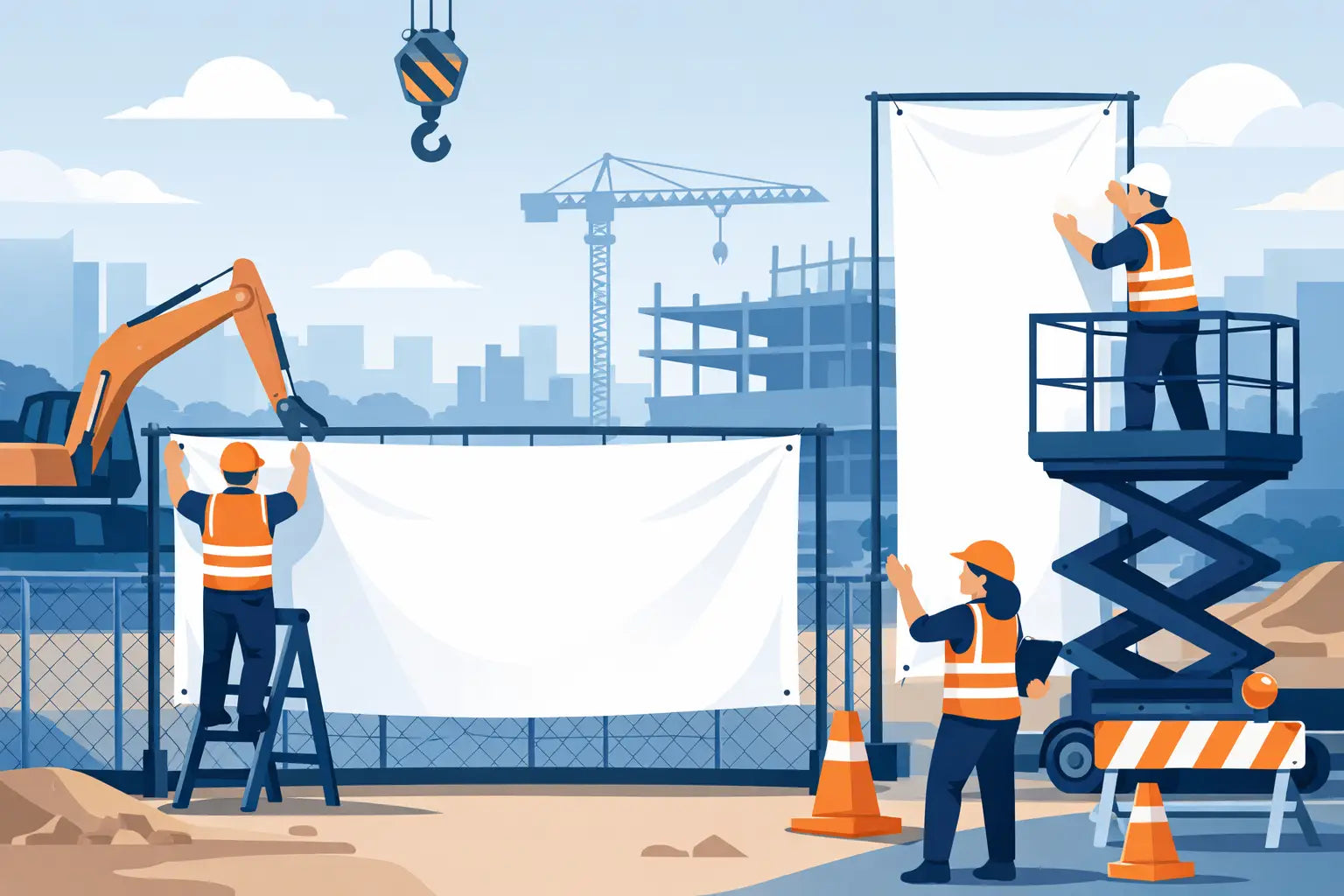
A site boundary says a lot before anyone steps through the gate. If the messaging is faded, generic or missing altogether, it creates confusion straight away. Custom safety banners for sites give you a clear way to set expectations from the perimeter onwards - whether you need to control access, direct deliveries, reinforce PPE rules or show that safety is being managed properly.
For many UK sites, a standard sign is enough for fixed hazards and routine instructions. But banners solve a different problem. They cover more space, carry multiple messages clearly and work well where visibility matters from a distance. On construction sites, farms, temporary compounds, public works and industrial projects, that extra scale can make a practical difference.
Why custom safety banners for sites matter
A banner is often doing several jobs at once. It warns, informs and reassures. It tells staff and contractors what is expected, and it tells visitors or members of the public that the site is controlled.
That matters most where activity changes quickly. A building site may need to show principal contractor details, mandatory PPE requirements, delivery instructions, restricted access warnings and emergency contact information. Trying to spread that across several small signs can look cluttered and be missed entirely. A properly designed custom banner brings those messages together in one visible format.
There is also a commercial reason to get it right. Poor site presentation can affect first impressions with clients, inspectors and neighbouring businesses. A clean, durable banner with the correct wording supports compliance, but it also shows that the operation is organised.
When a banner is better than a standard sign
Not every message belongs on a banner. Permanent hazards such as asbestos warnings, fire points or fixed traffic controls are often better handled with rigid signs in set positions. Banners come into their own when the site is temporary, the message needs to be seen at distance or the layout changes over time.
Heras fencing is a common example. Temporary fencing creates a large visual boundary, and banner material sits neatly on it without the weight and fixing requirements of rigid boards. The same applies to scaffold wraps, gate banners and perimeter screening where there is a need for both information and strong visibility.
There is a trade-off, though. A banner gives you scale and flexibility, but it must be specified properly for wind exposure, fixing points and viewing distance. The bigger the banner, the more important material choice becomes.
What to include on custom safety banners for sites
The best banner wording is direct. Too much text weakens the message, especially when drivers, delivery teams or pedestrians only have a few seconds to read it.
In most cases, the strongest banners focus on a clear hierarchy. Site identification comes first, followed by the safety-critical instructions. That may include PPE icons, "No Unauthorised Entry", visitor reporting instructions, speed restrictions, delivery access points or emergency contact details.
If the banner is for a principal contractor or multi-contractor environment, branding can be included, but it should never overpower the safety content. A site banner is not just an advert. Its main job is to communicate essential information quickly and legibly.
For public-facing areas, wording also needs to suit the audience. A banner facing the road or a footpath may need plainer language than one aimed at trained operatives. That is especially relevant on schools projects, housing developments, utility works and agricultural sites where the public may be close to active work zones.
Size, layout and readability
A common mistake is trying to fit too much into one design. Bigger banners allow more content, but that does not mean every available inch should be used.
Readability depends on distance, contrast and layout. Large headings, recognised safety symbols and short instruction lines usually perform better than long paragraphs. Black, red, yellow, blue and white combinations remain popular for a reason - they are familiar, high contrast and easy to interpret.
Site position also affects the design. A gate banner viewed by pedestrians at close range can carry more detail than a fence banner intended for approaching vehicles. If the banner will sit behind mesh fencing, text and symbols need enough weight to remain readable through the structure.
It also helps to think in zones. One area for site name, one for mandatory actions, one for contact or reporting instructions. That structure makes the message easier to scan.
Choosing the right material for site conditions
Material choice should match the environment, not just the budget. External banners face wind, rain, dirt and constant UV exposure, so short-term promotional material is rarely suitable for a working site.
PVC banner material is often a practical choice for durability and print clarity. For exposed fencing, mesh options can reduce wind loading while still carrying visible messaging. This can be especially useful on perimeter fencing around construction compounds or roadside works, where a solid banner may catch too much wind.
There is an it depends element here. A sheltered internal warehouse banner has very different demands from a roadside fence on a winter site in Yorkshire. The right answer depends on where it will be fixed, how long it needs to stay in place and whether appearance or weather resistance is the bigger priority.
Finishing details matter too. Eyelets, reinforced hems and the correct fixings all affect performance. A good print on poor fixings will still fail early.
Compliance, consistency and site control
A custom banner should support your wider signage plan, not replace it. UK sites still need the correct mandatory, warning, prohibition and emergency signage in the right locations. Banners work best as a visible first layer of communication.
That makes consistency important. If your gate banner says hi-vis and safety boots are mandatory, the same requirement should be reflected inside the site on the appropriate safety signs. Mixed messages create avoidable risk.
For organisations managing multiple locations, custom banners can also help standardise site presentation. Using the same layout, terminology and core safety messages across several sites makes procurement easier and supports a more consistent compliance approach.
This is where a practical supplier matters. Buyers do not want to explain the same requirements repeatedly or gamble on poor print quality when they need fast turnaround. Clear product options, reliable dispatch and trade-friendly ordering save time, especially when several banners are needed at once.
Who benefits most from custom site banners
Construction is the obvious sector, but it is not the only one. Farms use banners to control contractor access, separate vehicle and pedestrian routes and warn about machinery or livestock risks. Industrial estates use them for visitor reporting, PPE enforcement and traffic management. Schools, landlords and facilities teams may use temporary banners during maintenance works, refurbishments or roof access projects.
The value tends to be highest where there is a changing workforce, public interface or temporary risk profile. If people are unfamiliar with the site, your banner has to do more of the communication work.
For procurement teams, there is also a straightforward cost argument. Ordering a banner that combines several key messages can be more efficient than sourcing multiple items for the same boundary line, particularly when bulk ordering for repeat use across projects.
Getting the brief right before you order
A little planning prevents expensive reprints. Start with the exact message you need the banner to deliver. Then consider where it will sit, who needs to read it and from what distance.
It is worth checking practical points early: the fence or wall dimensions, whether wind-permeable material is needed, whether logos must be included and whether the wording needs to reflect a principal contractor, landlord, school, farm or public authority environment. If contact details are likely to change, keep them off the artwork unless necessary.
For urgent jobs, simple usually works best. A banner with a strong headline, key symbols and essential instructions is quicker to approve and easier to read. Over-designed artwork may look impressive on screen but perform poorly on site.
If you are buying regularly, standardising your banner formats can save time on future orders. The same core design can often be adapted for different projects with only minor wording changes. At The Safety Sheep Store, this kind of practical buying approach is exactly what many trade customers need - quick decisions, compliant messaging and dependable supply.
The best site banner is not the one with the most design features. It is the one people notice, understand and act on straight away. Think Safety - Think Sheep.
Share:
Site Safety Boards UK: What to Include
Food Hygiene Signs for Kitchens That Work