

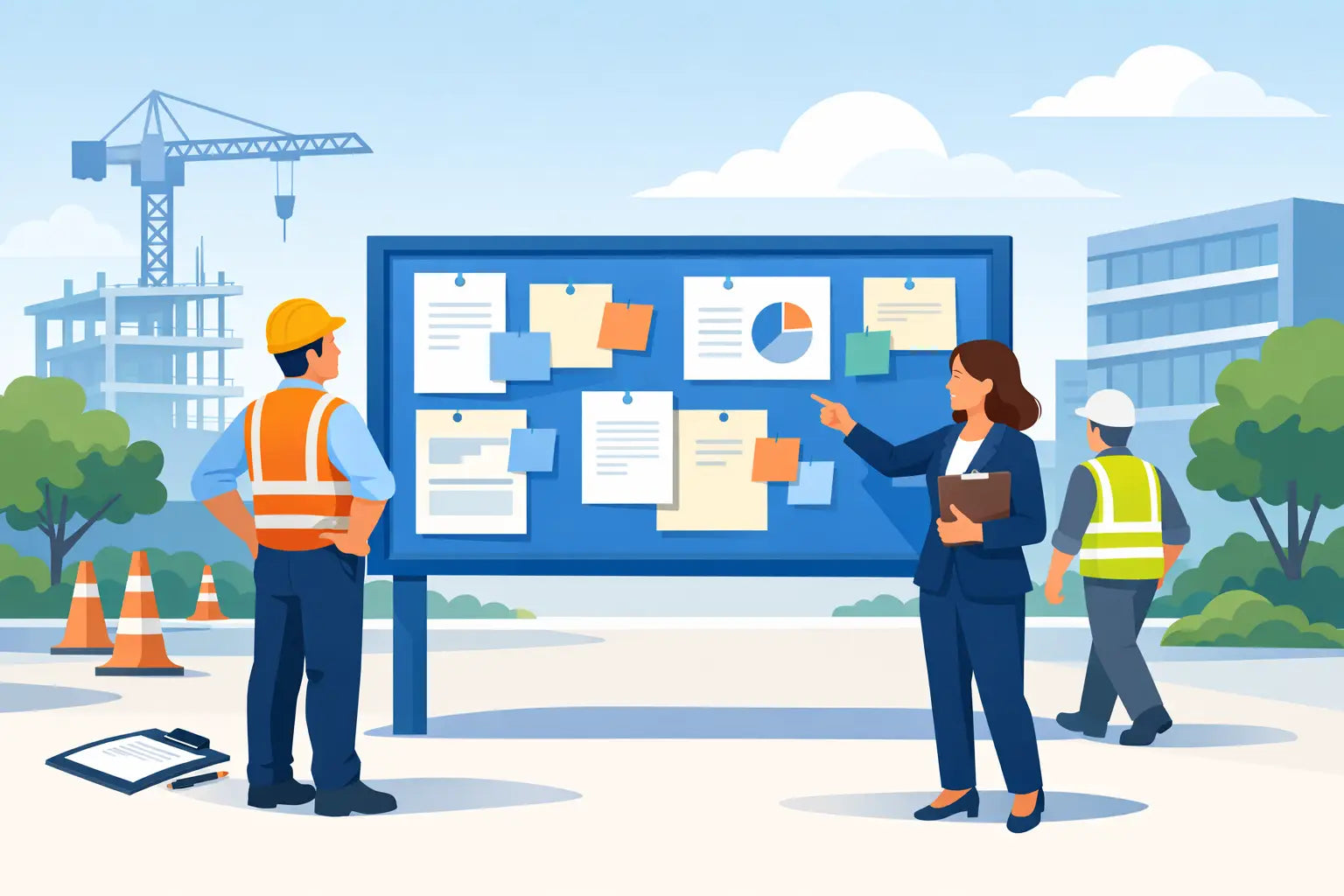
You usually notice a poor notice board only when something has gone wrong. A contractor cannot find the fire assembly point, a visitor misses the sign-in rules, or an out-of-date welfare notice is still pinned up months after the site changed. That is where a proper site notice board guide earns its keep. On a busy workplace, yard, farm, depot or construction project, the board is not decoration - it is a working control point for safety, communication and compliance.
The challenge is that many notice boards grow by accident. A few mandatory posters go up, then a permit reminder, then a faded contact sheet, then three old memos no one removes. Before long, the board is full but not useful. If people have to hunt for the information that matters, the board is failing its job.
What a site notice board should actually do
A good site notice board gives the right person the right information at the right moment. That sounds simple, but it means balancing legal requirements, operational updates and site-specific risks without creating clutter. On most sites, the board needs to support three things at once: compliance, safety awareness and day-to-day coordination.
Compliance matters because some information must be available to workers and visitors. Safety matters because people need clear instructions in plain view, especially where teams, contractors and delivery drivers move in and out. Coordination matters because the site changes. Contact details, access rules, welfare arrangements and emergency information do not stay static forever.
The best boards are clear enough for a first-time visitor and practical enough for regular staff. If your board only makes sense to the person who put it up, it needs work.
Site notice board guide: what to include
What belongs on a site notice board depends on the type of premises, the hazards present and who uses the space. A construction site board will look different from one in a farmyard, warehouse or commercial building, but there are common essentials.
Start with core safety and contact information. That often includes emergency contact numbers, first aider details, fire action information, site rules, PPE requirements and welfare information. If visitors or contractors attend the site, sign-in procedures and access restrictions should be obvious. Where relevant, you may also need health and safety law posters, insurance details, permit information, traffic management instructions or reporting arrangements for accidents and near misses.
The key point is relevance. A notice board is not improved by adding every possible document. If a notice does not help someone work safely, comply with site rules or understand what to do in an emergency, it may not belong in the main display area.
There is also a trade-off between permanent and temporary information. Permanent notices should be durable, legible and professionally presented. Temporary updates can sit alongside them, but they need tighter control. Otherwise short-term messages quickly bury the important material.
Mandatory information versus useful information
This is where many sites get muddled. Some items are displayed because they are required. Others are displayed because they are helpful. Both matter, but they should not compete for attention.
Mandatory notices should be easy to find and kept current. Useful notices, such as shift updates, temporary route changes or contractor instructions, should support site operations without making the board look chaotic. One practical approach is to divide the board into fixed sections so essential information always stays in the same place.
Where to place a site notice board
Location has a direct effect on whether the board gets used. The best content in the world is wasted if the board sits behind a door, inside a locked office or in a dim corner of the welfare cabin.
In most workplaces, the right place is where people naturally pause. That may be at the main entrance, signing-in point, canteen, welfare unit, site office entrance or near the pedestrian route from parking to the work area. On larger sites, one central board may not be enough. Separate boards for visitors, staff and contractors can be more effective, especially where different groups need different information.
Visibility matters as much as position. The board should be readable at a glance, with a sensible mounting height and enough contrast for printed notices. If the site is exposed to weather, choose a board or display method suitable for outdoor use. Rain-damaged paper notices send the wrong message and can make critical information unreadable.
Indoor or outdoor boards
An indoor board is easier to maintain and protects paper notices from damage. It suits offices, welfare areas, communal rooms and internal access points. An outdoor board makes sense where people need information before they enter the site or where site traffic bypasses indoor spaces altogether.
There is no universal answer. If delivery drivers never step into the welfare cabin, putting the traffic rules inside helps no one. If staff gather indoors before starting work, that may be the stronger location for daily notices and emergency contacts. The right choice depends on movement around the site.
How to organise the board so people actually read it
A board should be quick to scan. If every sheet is the same size, colour and weight of importance, nothing stands out. Good organisation reduces delay and mistakes.
Group notices by function. Emergency information should sit together. Site rules and PPE requirements should sit together. Welfare and contact details should sit together. Temporary updates should have their own area and expiry date. This structure matters because people are often looking under time pressure.
Use headings, backing panels or labelled sections if needed, but keep the design straightforward. Too much visual styling can make the board harder to read, not easier. Printed notices should be clean, current and large enough to read without leaning in. If a document matters, do not rely on a curled A4 sheet held by one drawing pin.
It also helps to think about hierarchy. The fire action notice, emergency contacts and evacuation information should not be hidden beneath social messages or old toolbox talk records. A site notice board is not a scrapbook. Its first job is to communicate clearly.
Common mistakes that create risk
Most notice board problems are not dramatic. They are small failures that build up over time. Out-of-date first aider names, faded fire instructions, missing corners, handwritten amendments and duplicate notices all reduce confidence in the information displayed.
Another common mistake is treating the board as a storage point for paperwork. If too much gets pinned up, staff stop checking it because they assume nothing important will stand out. A cluttered board creates the same practical result as no board at all.
There is also the issue of ownership. When nobody is clearly responsible for updates, the board drifts. On active sites, assign responsibility to a named role, whether that is the site manager, facilities manager or health and safety lead. A notice board only stays useful if someone checks it routinely.
Review frequency matters
How often should you review the board? It depends on the pace of change. A construction site with changing contractors and traffic routes may need daily or weekly checks. A stable office or managed building may only need a scheduled monthly review, with immediate updates when key information changes.
The point is not to create admin for the sake of it. The point is to make sure the board reflects current conditions. If the emergency contact left two months ago, the notice board is already behind the site.
Choosing the right board and signage format
The physical board matters more than many buyers expect. In a clean internal environment, a simple enclosed notice board may be enough. In harsher settings, durability becomes part of compliance. Moisture, dust, mud, sunlight and heavy use all affect how well notices survive.
Think about who is reading the board and from what distance. If users are mostly staff who stand directly in front of it, detail is easier to manage. If the board needs to catch the eye of visitors entering a busy compound, bolder headings and clearer sign placement matter more.
For many sites, a mix of permanent signage and replaceable notices works best. Permanent signs can display fixed site rules, PPE requirements or mandatory safety messages. Changeable inserts can then carry local contacts, temporary instructions or operational updates. That approach often gives a cleaner finish and reduces the need to reprint everything when only one detail changes.
If you are buying for multiple locations, consistency helps. Standard layouts make it easier for staff and contractors to find the same information across different premises. It also makes internal checks simpler for procurement and compliance teams. This is one reason many trade buyers prefer a dependable supplier with UK-made products, clear categories and fast dispatch when replacements are needed. Think Safety - Think Sheep.
A practical standard for any workplace
The most effective notice boards are not the busiest or the most colourful. They are the ones people can trust. If a worker, visitor or contractor can walk up to the board and quickly understand the rules, contacts and emergency actions that apply to that site, it is doing its job.
That means keeping the content current, the layout disciplined and the location sensible. It also means resisting the temptation to turn the board into a dumping ground for every loose sheet in the office. Clear information supports safer decisions, and safer decisions keep sites moving.
If your board has not been reviewed in a while, that is a useful place to start. A short check today can prevent confusion tomorrow.
Share:
10 Best Farm Safety Warning Signs
How to Sign Staff Only Areas Properly