

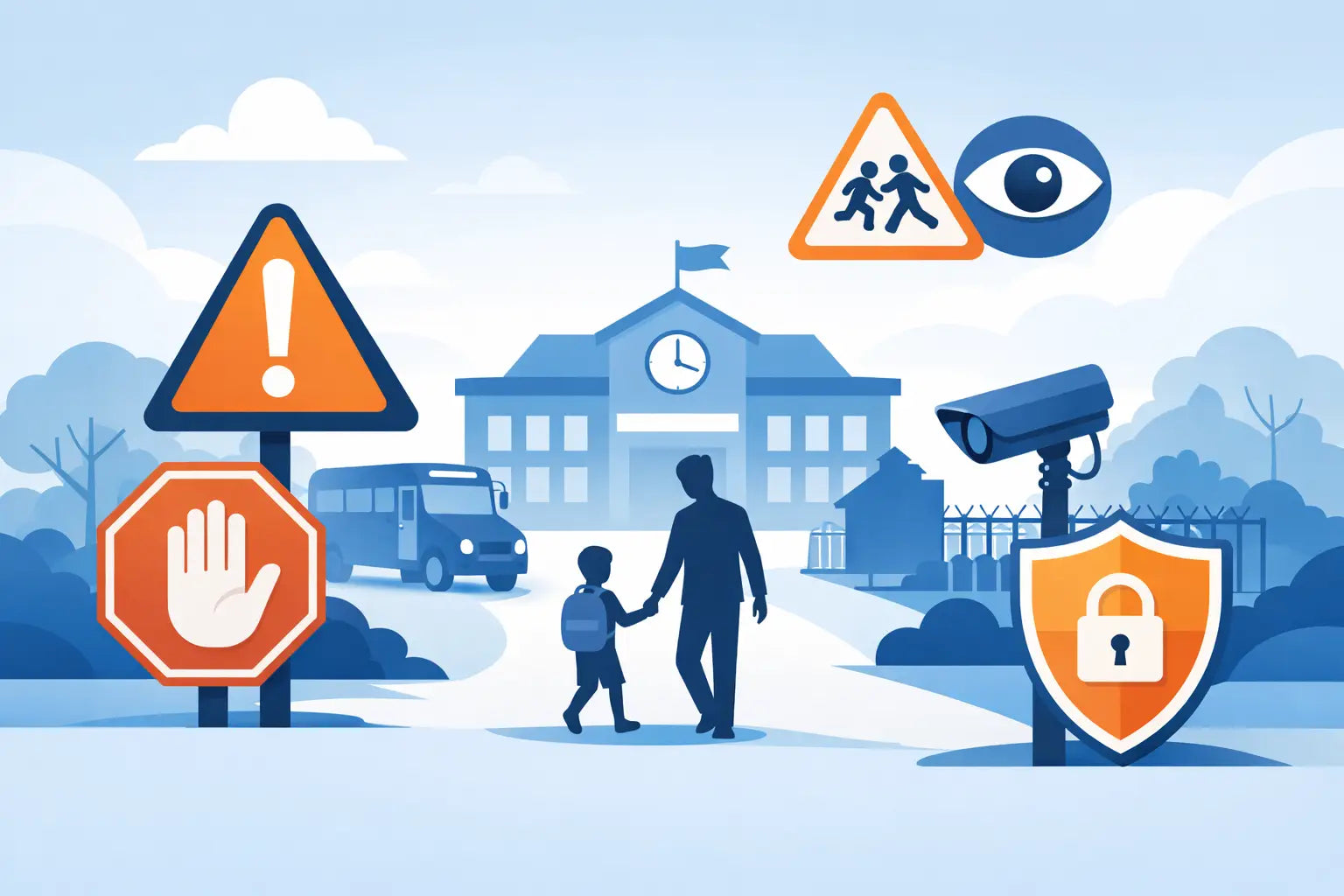
The busiest point outside a school is rarely the school gate itself. It is the stretch of road, footway and car park approach where drivers, parents, staff, delivery vehicles and children all meet at once. That is exactly why school warning signs matter. They do more than mark a location. They help reduce confusion, support safer vehicle movements and give drivers earlier notice that they are entering a high-risk area.
For schools, academies, nurseries and colleges, signage is part of everyday site control. If a warning sign is missing, poorly placed or hard to read, the problem is not just appearance. It can affect driver behaviour, pedestrian awareness and the overall safety of the entrance. In practical terms, the right sign in the right place helps people react sooner and move more carefully.
Why school warning signs matter
A school environment changes quickly across the day. Morning drop-off, afternoon collection, deliveries, maintenance visits and after-school events all create different movement patterns. One fixed risk assessment is rarely enough on its own if the site is not clearly signed.
School warning signs act as advance communication. They tell road users and visitors what to expect before they reach the hazard. That may mean children crossing, reduced speed expectations, restricted access, no parking zones or pedestrian-only areas. In each case, the value of the sign is in the few seconds of extra notice it gives.
That early warning is particularly important where visibility is limited, traffic builds up fast or the site is used by visitors unfamiliar with the layout. A parent who uses the route every day may already understand the pinch points. A contractor, courier or supply driver may not. Clear signage helps close that gap.
Which school warning signs are most commonly needed?
The exact mix depends on the site, but most education settings need more than one type of message. A roadside warning sign may alert drivers to a school entrance ahead, while separate signs inside the boundary manage speed, parking, access and pedestrian priority.
The most common requirement is the standard warning that children may be crossing or that a school is nearby. That sign is often supported by speed reduction messages, keep clear notices and no parking signs around the entrance. On larger sites, you may also need signs for visitor reception, one-way systems, delivery access, staff parking and restricted vehicle routes.
Where schools have shared grounds, sports facilities or community use outside teaching hours, signs also need to reflect changing site use. A car park that is calm during the school day may become busier in the evening. A gate used only by staff at one time may need to be closed to vehicles at another. In those cases, one sign rarely does the whole job.
Roadside and perimeter signage
Perimeter signage is about early notice. Drivers need time to slow down, check mirrors and look for pedestrians. If the first school-related message appears only when they have already reached the entrance, it is too late to influence behaviour properly.
This is where warning signs near approach roads, gateways and boundary lines do the heavy lifting. They help establish that the area is not a standard road environment. In practical terms, they are most effective when visible at normal driving speed, free from obstruction and positioned before the key decision point.
On-site traffic and pedestrian signs
Once vehicles enter the site, the risk changes. The issue is no longer just awareness of the school. It becomes movement control. Drivers need clear instruction on where to go, where not to stop and who has priority.
Pedestrian crossing points, speed limit reminders, no entry notices and directional signs all support that control. If the site has minibuses, service vehicles or a breakfast club drop-off lane, internal signage becomes even more important. It helps separate traffic types and keeps movement predictable.
Placement matters as much as the sign itself
One of the most common mistakes with school warning signs is treating them as a box-ticking exercise. A compliant-looking sign is not much use if it sits behind a hedge, faces the wrong direction or is too small for the approach speed.
Good placement starts with the actual risk. Ask where a driver first needs to know that children may be present. Ask where a parent is likely to stop without thinking. Ask where a visitor might take a wrong turn. The answers will usually tell you where signage needs to go.
Height, angle and background contrast all matter. A sign mounted too low can be hidden by parked cars. A sign fixed against a cluttered fence line may blend into the background. On larger sites, repeating a key message can also be sensible. Drivers do not always absorb a warning the first time, especially during busy collection periods.
There is also a trade-off to manage. Too few signs leave gaps in communication, but too many can create visual noise. If every fence panel carries a notice, important warnings may lose impact. The aim is not to cover the site in graphics. It is to make the critical messages unmissable.
Temporary and seasonal considerations
Not every school safety issue is permanent. Building works, resurfacing, temporary classrooms and event traffic can all create short-term hazards that need a clear response. In those situations, temporary school warning signs can be the practical answer.
For example, if a normal pedestrian route is closed for maintenance, a temporary diversion sign and barrier notice may be more useful than relying on staff to direct people all day. If contractor vehicles are entering through a secondary gate, a temporary warning for pedestrians can reduce avoidable risk.
Seasonal factors matter too. In autumn and winter, darker mornings and poor weather can reduce visibility. Signs may need to work harder during those months, particularly near roads with heavy traffic or limited street lighting. A sign that is adequate in bright daylight can be less effective in rain, glare or early dusk.
Choosing materials and formats that last
Schools and public-facing sites cannot afford signage that fades quickly or fails after a short period outdoors. Durability matters because damaged or worn signs weaken both compliance and credibility. If a warning is peeling, cracked or difficult to read, people are less likely to respond to it.
Material choice should match the location. Outdoor school warning signs need to cope with weather exposure, while indoor notices may need to withstand regular cleaning or heavy contact in corridors and entrances. Larger signs may suit roadside use, while compact but clear formats can work better in tight on-site spaces.
There is also a practical buying consideration here. Multi-sign orders are common for schools with several gates, separate buildings or trust-managed sites. Standardising sign types across the estate can save time and create a more consistent safety message. For procurement teams, that usually makes ordering simpler and future replacements easier.
Compliance, clarity and common sense
Signage on school sites should always support a wider safety plan, not replace it. Staff supervision, traffic management procedures, marked walkways and physical controls all play a role. Signs are there to reinforce safe behaviour and communicate expectations clearly.
That means clarity should come first. Overcomplicated wording, poor symbol choice or mixed messages can reduce effectiveness. In a school setting, signs often need to be understood quickly by drivers, visitors, contractors and members of the public who may only be on site once. Simple, direct messages usually perform best.
If you are reviewing an existing site, it is worth checking whether signs still match the way the grounds are actually used. Entrances change, buildings are extended and old traffic plans often linger long after operations have moved on. A sign audit can reveal gaps that are easy to miss during the day-to-day rush.
For buyers responsible for multiple locations, speed and consistency matter just as much as compliance. That is why many operators choose British-made signage with straightforward ordering, dependable stock and bulk pricing where needed. Think Safety - Think Sheep only works as a line if the products behind it are clear, durable and ready when the job cannot wait.
The best school warning signs are not the ones people admire. They are the ones people notice early, understand instantly and follow without hesitation.
Share:
CCTV Warning Signs: What You Need to Know
Warehouse Aisle Marker Signs That Work