

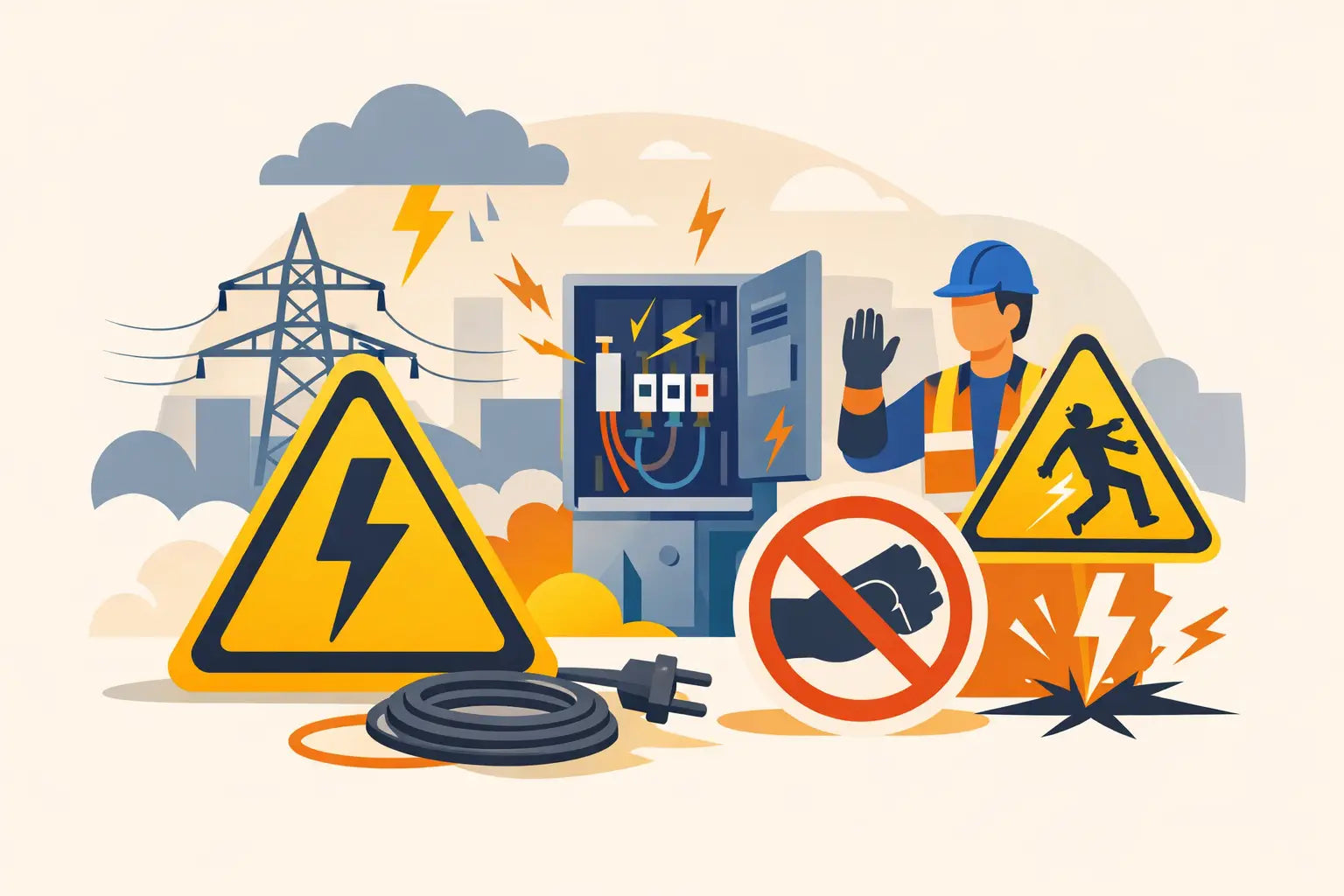
A missing electrical warning sign is easy to overlook - right up to the moment somebody opens the wrong cabinet, enters a plant area without authorisation or starts work near live equipment. That is why electrical hazard warning signs are not just another box to tick. In UK workplaces, they play a direct role in hazard communication, legal compliance and day-to-day site control.
For site managers, facilities teams, landlords and trade buyers, the real question is not whether electrical signage matters. It is whether the signs in place are clear enough, visible enough and specific enough to prevent the wrong person doing the wrong thing at the wrong time.
What electrical hazard warning signs are for
Electrical hazard warning signs are used to alert people to the presence of electrical risks such as electric shock, burns, arc flash danger or high-voltage equipment. In most cases, they take the familiar warning format - a yellow triangle with a black symbol - and are positioned where the hazard begins, not somewhere nearby that can be missed.
That sounds straightforward, but the practical use of these signs goes beyond a generic lightning bolt symbol. A well-chosen sign helps people understand both the presence of danger and the behaviour expected around it. On some sites, that means marking a live electrical panel. On others, it means warning against overhead cables, fenced substations, switch rooms or equipment that should only be accessed by competent persons.
Where the risk is significant, warning signage often works alongside prohibition, mandatory and access restriction signs. A single electrical room door may need to communicate more than one point at once: danger from electricity, authorised personnel only and PPE requirements before entry. The sign has to fit the real risk, not just the location name.
Where electrical hazard warning signs are commonly needed
In commercial and industrial settings, electrical hazards are rarely confined to one obvious area. Distribution boards, meter cupboards, risers, plant rooms, workshops, service yards and maintenance zones all need review. Construction sites bring extra complexity because temporary electrical installations, generators, site cabins and changing layouts can create new hazards quickly.
Agricultural premises are another area where signage is often underestimated. Farms may have exposed equipment, outbuildings, pump systems and overhead power lines in areas used by workers, contractors and visitors. In public-facing locations, such as schools, retail units, offices and mixed-use buildings, the issue is often preventing unauthorised access to electrical equipment rather than supporting technically trained staff.
The right sign placement depends on who may encounter the hazard. A trained electrician entering a switch room needs different information from a visitor passing an external intake cabinet. That is where buyers sometimes go wrong - they choose a technically correct sign, but not one that suits the audience or viewing distance.
Choosing electrical hazard warning signs that do the job
The best signage choice is usually the one that removes ambiguity. If there is a specific hazard, say so clearly. "Warning Electrical Hazard" may be suitable in a general area, but "Danger 415 Volts", "Danger High Voltage" or "Warning Overhead Live Cables" is often more useful where the risk is known and fixed.
Material matters as well. Internal office risers may only need a standard self-adhesive or rigid plastic sign, while outdoor compounds, plant areas and exposed farm buildings usually need something more durable and weather-resistant. The environment affects lifespan, legibility and replacement frequency, which in turn affects value.
Size is another practical decision. A sign on a small cabinet door does not need to be oversized, but a warning fixed to perimeter fencing or mounted near vehicle routes must be readable from a greater distance. If people need to stop, assess the risk and change behaviour before approaching, the sign has to be seen early enough to allow that.
It is also worth considering whether one sign is enough. In many settings, a warning triangle on its own does not fully control the risk. Combining a warning message with access restrictions or procedural instructions can reduce confusion and support safer behaviour.
Generic or specific signage?
There is no single rule for every site. Generic electrical hazard warning signs are useful where multiple electrical risks exist across an area, or where signage needs to be applied quickly and consistently across several access points. They are often used in facilities management portfolios, multi-unit properties and routine maintenance environments.
Specific signs are usually better where the nature of the hazard is clear and the consequence of misunderstanding is higher. High-voltage rooms, transformer compounds and overhead cable routes are good examples. The more serious or unusual the risk, the less sense it makes to rely on a vague message.
Compliance matters, but clarity comes first
UK buyers are rightly focused on compliance, but signage should not be chosen by regulation wording alone. Health and safety signage exists to communicate hazards effectively. If the sign meets the formal standard but is hidden behind a half-open door, faded by weather or too small to read, it is not doing its job.
That is why regular checks matter. Electrical hazard warning signs should be reviewed as part of routine premises inspections, especially after refurbishments, layout changes, maintenance works or tenant turnover. Temporary works are a common weak point. Teams install a generator, move a distribution board or fence off a live area, then fail to update the signage around it.
For organisations managing more than one building or site, consistency helps. Standardising sign wording, format and placement across locations can make internal audits easier and reduce the chance of gaps. It also saves time when procurement teams need to reorder in volume.
Common mistakes buyers make
One of the most common problems is under-signing electrical areas because the risk feels obvious to maintenance staff. It may be obvious to the engineer who works there every week, but not to a cleaner, courier, contractor or new starter.
Another mistake is treating all electrical signage as identical. There is a difference between a warning sign for general electrical danger and a sign intended to keep unauthorised people out of a live equipment area. Using the wrong message can weaken control measures rather than strengthen them.
Poor placement is just as common. Signs fixed too low, hidden by stored items, mounted on the wrong side of a gate or lost among cluttered notices are less likely to be seen. In busy workplaces, visual competition is real. If every surface carries multiple messages, important warnings can disappear into the background.
Then there is durability. Cheap or unsuitable materials may look fine at the point of installation but fade, peel or crack well before they should. For trade buyers and facilities teams, replacing failed signs repeatedly is not a saving.
Buying for one site or many
If you are sourcing electrical hazard signage for a single room or a small premises, the priority is usually speed and getting the exact sign required. For larger estates, contractors and multi-site operators, the buying process needs to be more structured.
That often means grouping signs by hazard type, location and material, then ordering in sensible quantities to keep stores stocked for replacements and new works. Standard product ranges make this easier, especially when urgent maintenance jobs or compliance actions come up. For procurement teams, trade pricing and bulk savings can make a real difference when signage needs to be rolled out across several sites at once.
This is where a specialist supplier earns its keep. A broad, sector-led range helps buyers find the right sign quickly without trawling through irrelevant products. At The Safety Sheep Store, that focus is built around practical compliance needs - British-made signage, fast dispatch and bulk save opportunities for larger orders.
When to replace electrical hazard warning signs
There is no perfect replacement cycle because usage and environment vary. Some signs stay serviceable for years indoors, while others degrade quickly in exterior or high-wear locations. The better approach is condition-based replacement.
If the sign is faded, damaged, obscured, out of date or no longer reflects the actual hazard, replace it. The same applies after electrical upgrades, panel changes, room repurposing or site reconfiguration. Signage should match the present risk, not the one that existed three contractors ago.
For many duty holders, the easiest way to stay ahead of this is to treat signage as part of normal safety maintenance rather than a one-off purchase. That keeps standards up and avoids the scramble when an audit, incident review or contractor visit exposes gaps.
Electrical hazards demand respect, but the control measures around them do not need to be complicated. Clear signs, placed properly and chosen for the real conditions on site, do a simple job very well - they give people the warning they need before a mistake becomes an injury. Think Safety - Think Sheep.
Share:
Fire Assembly Point Signs: What to Choose
Site Safety Boards UK: What to Include