

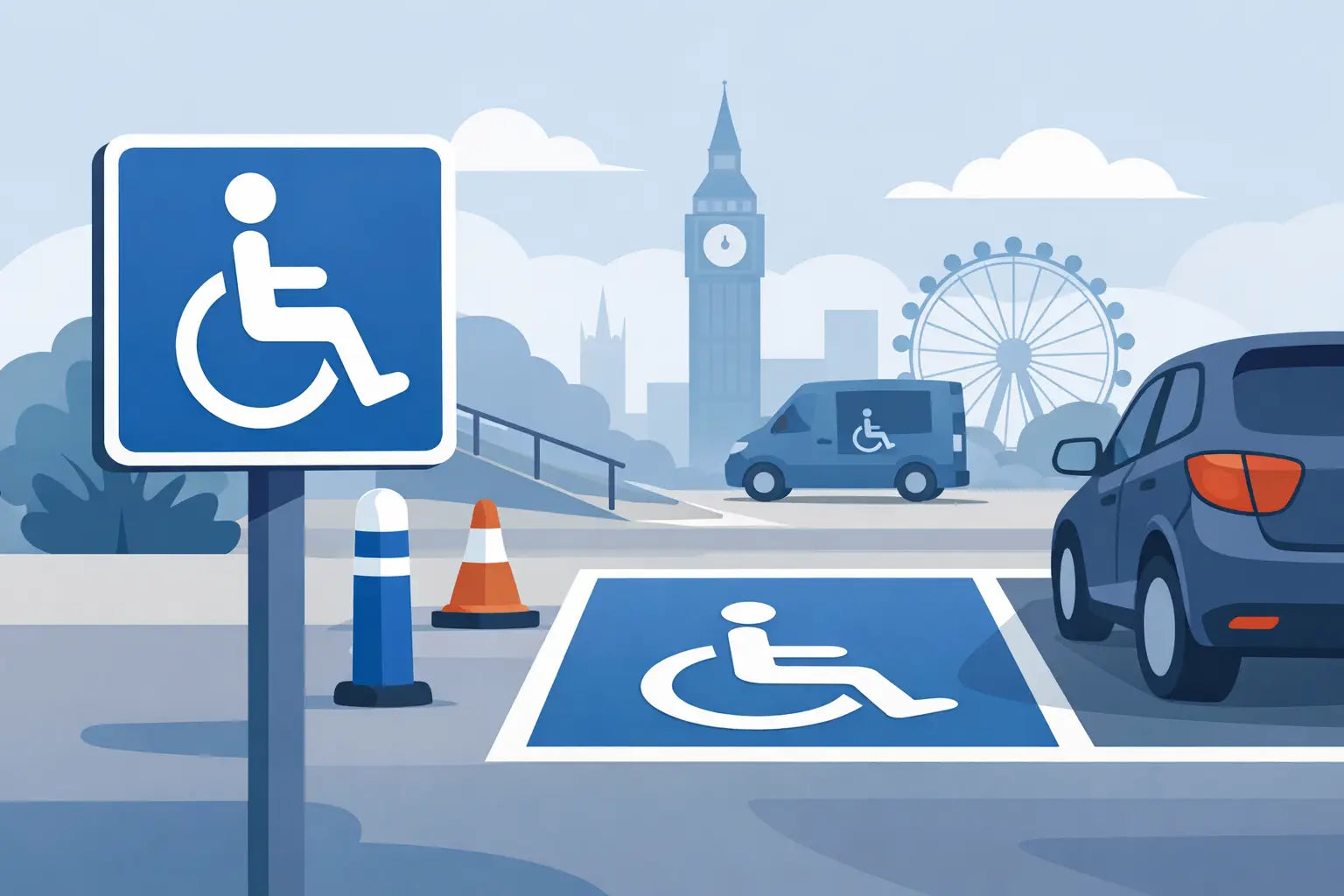
A disabled bay that is marked on the ground but missing a clear upright sign causes problems quickly. Drivers miss the restriction, visitors challenge enforcement, and site teams are left arguing over whether the space was properly identified in the first place. If you are sourcing disabled parking signs UK buyers can rely on, the goal is simple - make the bay obvious, durable and appropriate for the setting.
For most businesses, landlords and site operators, that means thinking beyond a single sign on a post. The right solution depends on whether the car park is private or public, how formal your enforcement approach is, and how exposed the sign will be to weather, impact and daily wear. A small office car park needs something different from a retail park, medical site or mixed-use residential development.
What disabled parking signs UK sites usually need
In practical terms, most private premises need signage that clearly identifies an accessible bay and supports orderly use of the car park. That often includes a standard disabled parking sign, a marked bay on the surface, and sometimes additional wording such as permit holders only, badge holders only, or customer parking only if the site has tighter access rules.
The point is clarity. If a driver can understand the restriction from the moment they enter the car park, you reduce misuse and make it easier for staff or contractors to manage the space. If the message is vague, enforcement becomes difficult and complaints become more likely.
There is also a difference between signs used on public highways and signs used on private land. Public road markings and traffic signs are governed far more tightly, and local authority requirements are not the same as what a private business uses in its own car park. For commercial sites, industrial premises, farms, schools, surgeries and private developments, the focus is usually on clear parking control signage rather than highway-spec traffic signage.
Getting the wording right
The best disabled parking signs UK car parks use are usually straightforward. A simple wheelchair symbol with clear text such as Disabled Parking Only or Blue Badge Holders Only is often enough. On some sites, extra wording helps remove ambiguity, especially where bays are reserved for specific users.
For example, a GP surgery may want signage that makes it clear the bay is for disabled visitors attending the site. A managed residential development may need wording that ties the bay to permit control. A distribution yard with occasional visitor access may need a more prominent sign because the environment is visually busy and drivers are making quick decisions.
Too much text can be counterproductive. If drivers need to stop and read a paragraph, the sign is doing too much. The strongest parking signs communicate the main restriction immediately, then add only the supporting detail that matters.
Symbol-only or text-heavy?
It depends on the users of the site. A wheelchair symbol is widely recognised and works well as the primary visual cue. Text adds precision. In most cases, combining both gives the best result. Symbol-only signs can look clear from a distance but leave room for argument. Text-only signs can be missed if the car park is busy or the sign is mounted too far from the bay.
Placement matters as much as the sign itself
A compliant-looking sign in the wrong place is still a poor result. If the sign is hidden behind parked vehicles, mounted too low, or installed where drivers only notice it after parking, it will not do the job properly.
For private car parks, the sign should normally be positioned so it is visible as a driver approaches or enters the bay. In many cases, that means an upright sign at the head of the bay, supported by surface marking. Where bays sit against a wall, a wall-mounted sign can work well, provided it remains unobstructed.
Multi-bay accessible parking areas need extra thought. One sign for several spaces may be fine in a compact layout, but in larger car parks individual bay identification is often clearer. This is especially true where there are mixed parking rules nearby, such as parent and child bays, staff bays or EV charging spaces.
Indoor, outdoor and high-traffic settings
A covered basement car park has different demands from an exposed forecourt or yard. Indoors, glare and lighting matter more than weather resistance. Outdoors, you need materials and print quality that will hold up against rain, UV exposure and general wear. In high-traffic areas, a more rigid sign material may be the better commercial choice because it is less likely to look tired after a short period.
Materials and durability
For trade buyers, material choice is rarely cosmetic. It affects lifespan, replacement frequency and the overall cost of ownership. Temporary signage may suit short-term works or interim parking arrangements, but permanent disabled bays usually justify a more durable product.
Common options include self-adhesive vinyl for smooth surfaces, rigid plastic for general wall or fence mounting, and aluminium composite for a stronger long-term outdoor solution. The right choice depends on where the sign is going and how likely it is to be knocked, scuffed or exposed.
A small private practice with a sheltered entrance may be perfectly well served by a rigid plastic sign. A busy commercial estate with open parking and regular vehicle movement may be better off with a more hard-wearing option. If you are ordering for multiple locations, consistency matters too. Standardising sign design and material across sites makes maintenance easier and presents a more professional standard to staff and visitors.
Disabled parking signs UK buyers often overlook
One common mistake is treating the upright sign as the whole job. In reality, clear disabled parking provision usually works best when sign and bay marking support each other. If the paint has faded, the sign can feel disconnected from the space. If the sign is missing but the bay marking remains, drivers may question whether the restriction is still active.
Another issue is scale. A sign that looks fine on screen can be too small once fitted in a large open car park. Distance, angle of approach and background clutter all affect readability. That is why standard, well-proven parking sign formats are often the safest buy for commercial premises.
There is also the question of tone. Some sites need a polite directional sign. Others need firmer parking control wording because misuse is a regular issue. The right balance depends on your environment. A care setting or school may prefer reassuring, accessible wording. A retail or mixed-use site with persistent abuse may need more explicit restriction wording.
Compliance, accessibility and enforcement
Businesses are right to think carefully about disabled parking because this is not only about car park management. It is also about accessible use of the premises. Signage should support the intended access arrangements and make those spaces easy to identify for the people who need them.
That said, enforcement on private land is not created by signage alone. Signs help communicate the rule, but your wider parking management approach still matters. If your site uses permits, visitor registration or private parking terms, the disabled bay signage should fit neatly into that system rather than sit apart from it.
Clarity is the commercial advantage here. Clear signs reduce disputes, help staff answer challenges with confidence, and show visitors that accessible parking has been considered properly. Poorly marked bays do the opposite and can create reputational as well as operational issues.
Buying the right sign without slowing the job down
Most buyers are not looking for theory. They need the correct sign, in the right size and material, delivered quickly enough to keep the site moving. That is why product structure matters. Being able to choose by message, fixing method and use case saves time, especially when ordering across several bays or sites.
If you are replacing a missing or damaged sign, match the wording and format as closely as possible to keep the car park consistent. If you are installing new disabled bays, it is worth reviewing the wider parking layout at the same time. You may find that entry signs, general parking notices or bay markings also need attention.
For procurement teams and facilities managers, bulk ordering can make sense where multiple locations use the same parking rules. It reduces repeat admin and helps create a consistent standard across the estate. At The Safety Sheep Store, that practical approach is exactly why many trade buyers prefer to source signage from one place - fast dispatch, UK-made products and bulk savings all help when the requirement is straightforward but urgent.
The best disabled parking sign is the one that drivers understand instantly and your team does not have to keep explaining. If the sign is clear, visible and suited to the site, you have already solved most of the problem. Think Safety - Think Sheep.
Share:
No Entry Signs for Private Property Explained
EV Charging Bay Signs That Get Used Properly