

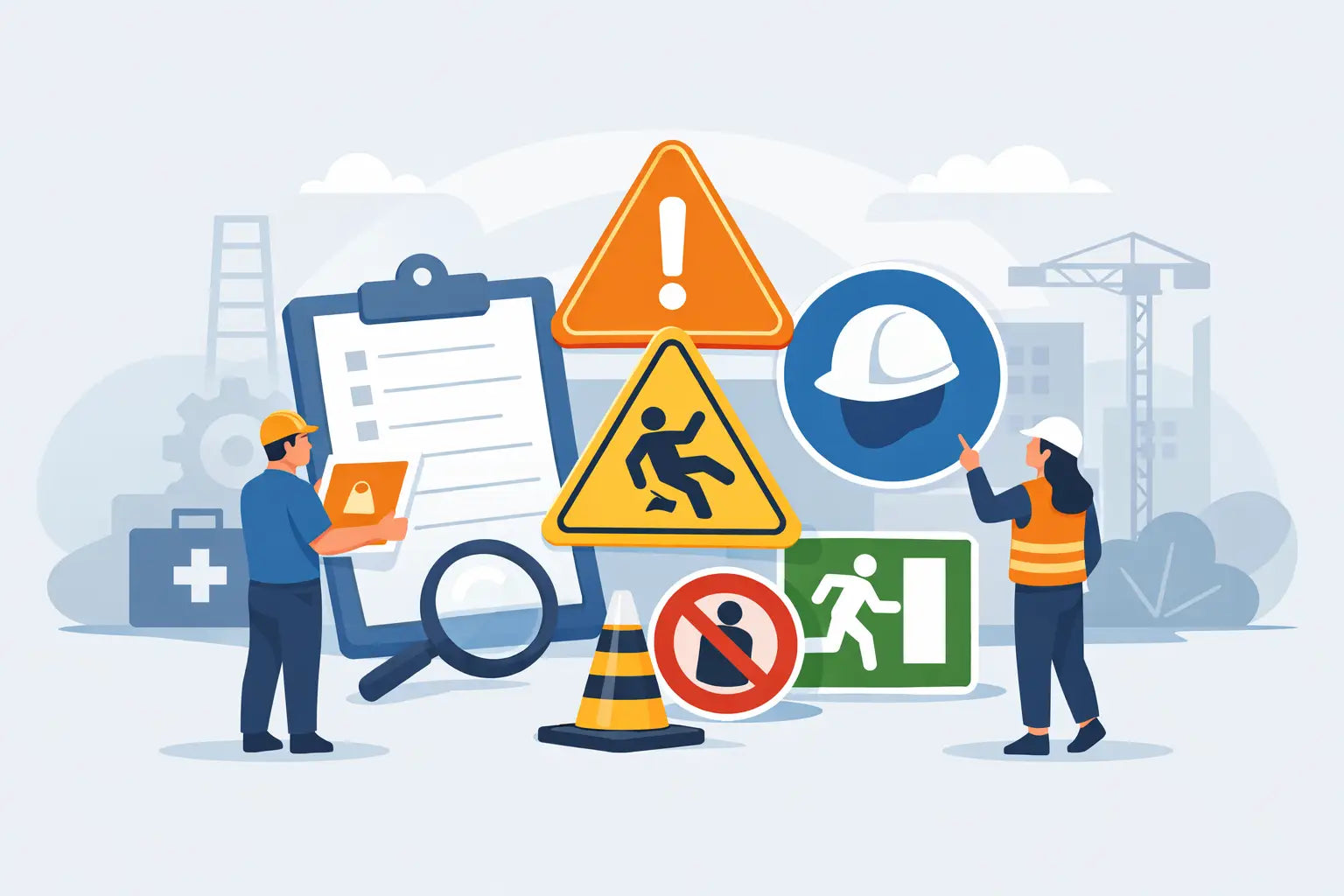
A missing sign is rarely noticed until something goes wrong. A fire door is propped open, a delivery driver walks into a restricted yard, or a visitor misses a mandatory PPE point because the notice was too small, badly placed or simply the wrong type. That is why knowing how to choose workplace safety signs matters. Good signage does more than fill a compliance gap - it helps people make the right decision quickly, even in busy, noisy or unfamiliar environments.
Start with the actual risk, not the catalogue
The fastest way to buy the wrong sign is to shop by appearance alone. A workplace safety sign should be chosen to communicate a specific instruction, warning or restriction linked to a real hazard on site. That means starting with your risk assessment, traffic flow, work activities and the people using the space.
In practice, an office, warehouse, farm and construction site may all need hazard signage, but not the same wording, size or material. A sign for forklift movements in a distribution yard has a different purpose from a notice warning of livestock, deep water or chemical handling. The right choice depends on what people need to know, where they need to know it, and how quickly they must understand it.
If you are replacing signs after an audit, it is worth checking whether the old sign failed because it was damaged or because it never matched the risk properly in the first place. Reordering the same product is not always the best fix.
How to choose workplace safety signs by sign type
Most buyers need to identify the sign category before they think about size or material. In UK workplaces, safety signage is generally used to give one of a few clear messages.
Warning signs alert people to hazards such as asbestos, moving vehicles, fragile roofs or slippery surfaces. Mandatory signs instruct people to do something, such as wear eye protection or keep fire doors shut. Prohibition signs tell people what they must not do, such as no smoking, no unauthorised access or no pedestrian entry. Safe condition signs identify escape routes, first aid points or emergency exits. Fire safety signs help locate firefighting equipment and fire action procedures.
Choosing the right category matters because the shape, colour and symbol are part of how the sign is understood at a glance. A poorly matched sign can create confusion, especially in shared workplaces where staff, contractors and visitors are moving through quickly.
Match the message to the behaviour you need
A useful rule is this: choose the sign that prompts the exact behaviour required. If a person must wear hearing protection before entering a machine area, a general hazard warning is not enough on its own. If a loading bay is for authorised personnel only, the sign should make that restriction clear rather than relying on vague wording.
Sometimes one sign is enough. In other cases, a combined sign is more practical, especially where space is limited or several instructions apply at one entry point. For example, a workshop entrance may need eye protection, ear defenders and safety footwear notices together. Combined signs can reduce clutter, but only if the message remains easy to read.
Consider who will read the sign and where
A sign is only effective if people can see it, read it and understand it in time to act. That sounds obvious, but it is where many buying decisions go wrong.
Distance is a key factor. A small door sign may work well in a corridor where people approach on foot, but it will not be enough at a vehicle entrance or open yard. Likewise, signs in dim plant rooms, outdoor compounds or high-traffic industrial spaces may need larger text, stronger contrast or reflective and photoluminescent properties depending on the setting.
Think about the audience too. Staff who know the site may only need a short reminder. Visitors, agency workers and contractors usually need clearer direction because they are less familiar with the layout and hazards. Public-facing areas often need especially plain wording and obvious symbols.
Placement is part of the buying decision
The best sign in the wrong place still fails. Entry-point signs should be visible before someone crosses into the hazard zone, not after. Fire exit signs should support route finding through the building, not just mark the final door. Car park and traffic signs need to be positioned so drivers can react safely, not at the point where a manoeuvre has already become difficult.
When ordering, it helps to decide not only what sign you need but exactly where it will be fixed. That will usually guide both size and material.
Choose materials that suit the environment
Material choice affects durability, readability and value over time. Indoor office signage has very different demands from signage used on farms, in food production areas or on exposed construction perimeters.
Self-adhesive vinyl can work well for smooth indoor surfaces and quick application. Rigid plastic is a common choice for general workplace use because it is durable, cost-effective and suitable for walls, doors and fences. Aluminium or composite options may be better where weather exposure, heavy wear or longer service life justify the extra spend.
There is always a trade-off. The cheapest option may be fine for a temporary internal notice, but poor value for an external gate sign that will fade, peel or crack. On the other hand, specifying premium materials everywhere can add unnecessary cost if the sign is in a low-risk, sheltered location.
For buyers managing multiple sites, standardising materials by environment can speed up reordering and help keep appearance consistent.
Check compliance without overcomplicating it
If you are wondering how to choose workplace safety signs in a way that supports compliance, keep it practical. The sign should match the hazard, use recognised colours and symbols, be clearly visible, and be maintained in good condition. It should support your wider duties under UK health and safety law rather than act as a substitute for training, supervision or physical controls.
That last point matters. A sign is not a workaround for poor site management. You cannot rely on a warning notice where guarding, segregation or safer systems of work are required. Signage works best as part of a broader control measure.
For many buyers, the real challenge is not understanding whether signs matter, but choosing from too many near-identical options. A sector-structured range helps here because it allows you to buy by use case - construction, fire safety, parking, access control, PPE, countryside safety and so on - rather than trying to decode every product from scratch.
Avoid common buying mistakes
One common mistake is ordering signs that are too small. Another is buying a generic message when a site-specific instruction would be clearer. Clutter is also a problem. Too many notices on one wall can reduce the impact of all of them.
There is also the issue of inconsistency. If one building uses clear mandatory PPE signs and another uses faded typed notices stuck to doors, standards quickly drift. Procurement teams and facilities managers often benefit from reviewing signage by zone or site type rather than purchasing ad hoc whenever a gap appears.
Urgency can cause problems too. When signs are needed quickly after damage, a failed inspection or a change in layout, buyers may prioritise speed over suitability. Fast dispatch helps, but it is still worth taking two minutes to confirm wording, fixing method and dimensions before placing the order.
Buying for one site versus buying at scale
A landlord replacing a few communal area signs has a different buying process from a contractor ordering for several active projects. If you only need a small number of signs, clarity and relevance matter most. If you are buying at scale, consistency, lead times and unit cost become just as important.
Bulk purchasing can reduce costs significantly, especially where the same fire safety, PPE or access signs are needed across multiple locations. It also helps with standardisation. For trade buyers, that means fewer mismatched formats, easier site checks and simpler repeat ordering later.
Where speed matters, it is sensible to use a supplier that can handle both urgent single-site needs and larger planned orders. British-made stock, clear product categorisation and dependable dispatch times all reduce friction, especially when maintenance teams, health and safety officers and procurement are working to deadlines. For businesses that want compliance-led signage without slowing the job down, The Safety Sheep Store keeps that process straightforward. Think Safety - Think Sheep.
Make the decision easier
The best way to choose is to ask four practical questions. What is the hazard or instruction? Who needs to see it? Where will it be used? How long does it need to last? Once those answers are clear, the right sign type, size and material usually follow quickly.
Good safety signage should never feel like guesswork. When the message is clear, the product suits the environment and the placement is right, signs do what they are supposed to do - support safer behaviour, reinforce compliance and help the site run properly. If a sign saves someone from stopping to figure out what to do next, it is already doing its job.
Share:
UK Workplace Signage Guide for Employers
Construction Signs vs Safety Banners