

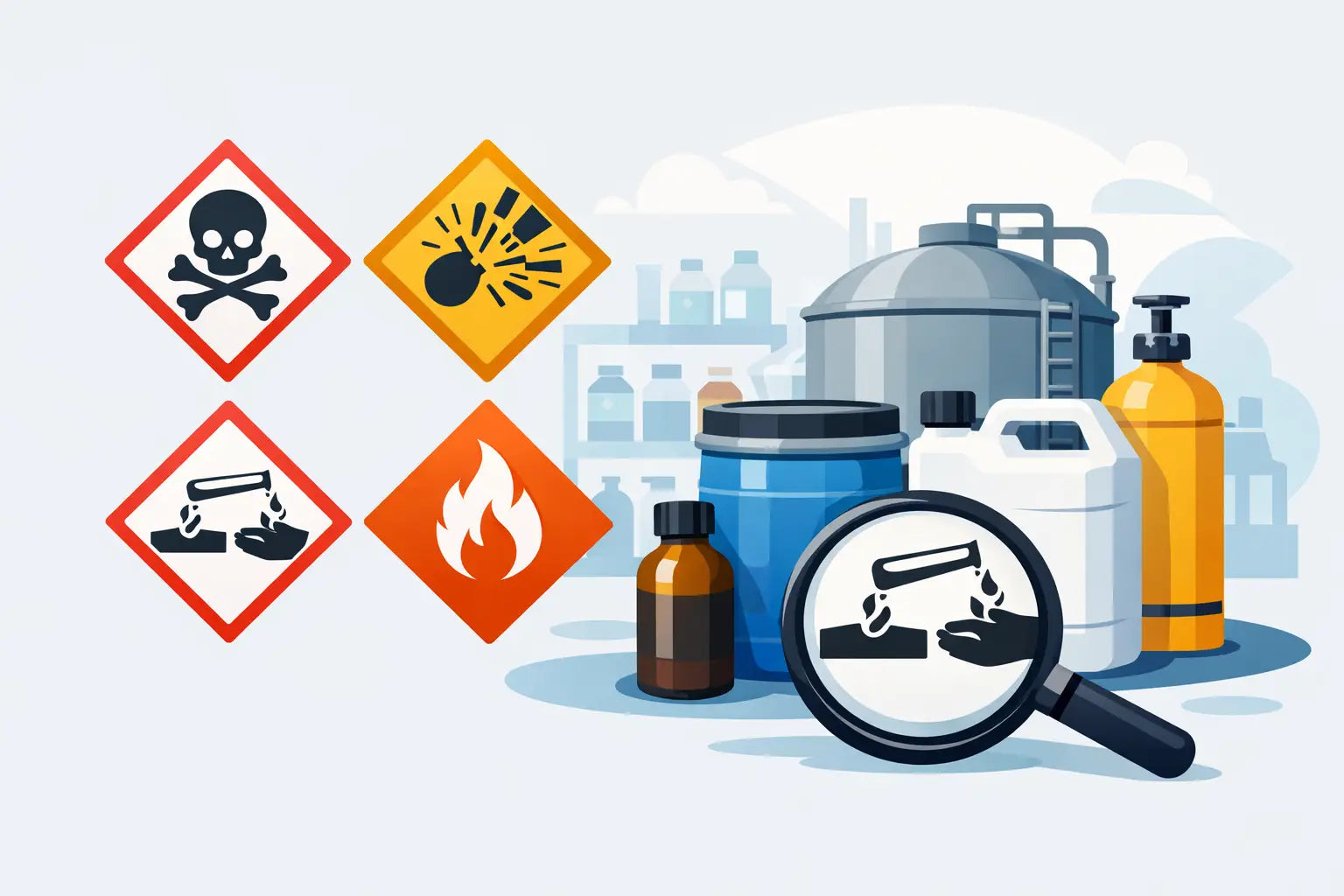
A missing label on a chemical cabinet can turn a routine task into a reportable incident very quickly. Chemical storage warning labels are there to stop guesswork before someone opens the wrong container, mixes incompatible substances or stores hazardous materials in the wrong place. For site managers, facilities teams and duty holders, that makes labelling less about admin and more about control.
Why chemical storage warning labels matter
In most workplaces, chemicals move through more hands than people realise. Deliveries arrive, stock gets decanted, cleaners rotate products, contractors access stores and temporary staff may be asked to fetch items they do not normally use. If the warning is unclear, missing or in the wrong place, the risk is not theoretical. It affects handling, storage, emergency response and day-to-day compliance.
Good chemical storage warning labels do three jobs at once. They identify the hazard, direct safer behaviour and support legal duties around communication and risk reduction. That applies whether you are managing a factory COSHH store, a farm chemical shed, a school site cupboard or a landlord-maintained plant room.
There is also a practical commercial point. Clear warning labels reduce delays, product misuse and avoidable waste. When teams can identify what is stored, where it belongs and what precautions apply, the site runs more smoothly.
What chemical storage warning labels should communicate
The best labels are easy to read at a glance and specific enough to guide action. In a storage area, people usually need answers to simple questions fast. What is in here? What is the risk? Who should handle it? What must not be done?
That means labels often combine hazard wording with recognised symbols, signal colours and direct instructions. Depending on the setting, you may need signs that indicate flammable storage, corrosive substances, toxic materials, oxidising agents or general hazardous chemicals. You may also need supporting notices such as no smoking, wear gloves, wear eye protection or authorised access only.
This is where some sites get caught out. A single general warning sign on the door is rarely enough if different substances are kept inside under different controls. On the other hand, overloading one area with too many signs can make the key message easier to miss. The right balance depends on the substances present, the size of the store and who uses it.
Container labels and area labels are not the same thing
One common mistake is assuming the product container label covers the whole storage area. It does not. Container labels identify the substance itself. Area labels warn people before they handle, enter or work near the storage location.
If a member of staff approaches a cabinet full of solvents, they need a clear warning before the door is opened. If a contractor enters a bunded store, they should not have to inspect each container to understand the hazard profile. Storage labels and signs work at the point of approach, which is exactly where many incidents can still be prevented.
Where labels are most often needed
Chemical storage warning labels are relevant anywhere hazardous products are stored, even in small volumes. Industrial and manufacturing sites are the obvious example, but they are not the only ones. Cleaning stores, agricultural units, maintenance cupboards, laboratories, food production areas, workshops and hospitality back-of-house spaces can all require clear hazard communication.
For outdoor locations, durability matters just as much as wording. UV, rain, mud and washdown conditions can quickly shorten the life of poor-quality labels. In indoor settings, chemical splash resistance and adhesion on metal, plastic or painted surfaces may be more relevant. A label that peels away after a few weeks is not doing its job.
There is also a difference between permanent storage points and temporary holding areas. A dedicated flammable store usually needs fixed, highly visible signage. A short-term quarantine area for damaged containers may need a more flexible approach, but it still needs to be clearly identified while in use.
Choosing the right chemical storage warning labels
The right label depends on the hazard, the environment and the people on site. Start with your risk assessment and substance inventory rather than choosing signage by appearance alone. If you store corrosives, your labels need to reflect that specific risk. If the main concern is flammability, the wording and symbol should support safe separation from ignition sources.
Clarity always beats cleverness. Short, direct wording usually works best because people often read labels while carrying out another task. A warning such as Hazardous Chemicals Storage Area or Flammable Liquids Store is more useful than a vague notice that leaves room for interpretation.
Size matters too. A small label may be perfectly suitable on an individual cabinet, but inadequate on a warehouse wall or external compound gate. Viewing distance, lighting and site traffic all affect what is readable. In busy operational environments, a sign that can only be read from two feet away may as well not be there.
Material choice affects lifespan and compliance
Buyers sometimes focus on wording and forget the base material. That can be an expensive false economy. Self-adhesive vinyl can be ideal for smooth indoor surfaces and cabinet doors. Rigid plastic or aluminium composite may be better for outdoor stores, gates and exposed plant areas.
If your site has frequent cleaning, harsh weather or rough handling, choose a material that will stay legible and securely fixed. Replacing failed signage again and again costs more than buying suitable labels in the first place. For multi-site buyers and procurement teams, standardising materials across similar environments also makes maintenance easier.
Common mistakes that create risk
Most labelling failures are not dramatic. They are small oversights that build up over time. A faded symbol, a missing replacement after repainting, an old label left on an empty cabinet or a handwritten sticker that no longer matches the contents all create uncertainty.
Mixed messages are another issue. If the door says one thing, the cabinet says another and the COSHH file says something else, staff lose confidence in the system. That is when shortcuts creep in. Good signage should support your wider hazard communication, not compete with it.
It also depends on who is using the area. A tightly controlled chemical room accessed only by trained technicians may need a different level of detail from a mixed-use maintenance store where visiting contractors and cleaners come and go. The less familiar the user, the more important simple, immediate warnings become.
Chemical storage warning labels and UK compliance
Labels are only one part of compliance, but they are a visible and essential one. UK employers and duty holders must identify hazards, assess risk and communicate precautions clearly. In practice, that often means making sure hazardous storage areas are marked in a way that supports safe handling and emergency awareness.
No sign can replace training, correct storage segregation or suitable PPE. Equally, training alone does not remove the need for clear labels. If a flammable cabinet is unmarked, or a corrosive store is not identified properly, the controls around it are already weaker than they should be.
For many buyers, the challenge is speed. A new store opens, a contractor requests replacement signage, or an audit highlights missing labels that need sorting this week. In those cases, product range and fast dispatch matter. A supplier that groups safety signs logically by hazard and application can save time when you are ordering for several buildings or multiple sites at once.
How to review your site without overcomplicating it
A practical review usually starts with a walk-round. Check entrances to storage rooms, cabinet doors, shelving zones and any decanting or waste holding areas. Ask whether a person unfamiliar with the space could understand the hazard before touching anything.
Then look at condition. Are labels clean, legible and securely fixed? Do they still match what is stored there now, not six months ago? Have any become hidden behind equipment, stacked stock or open doors?
Finally, consider consistency. If one flammable store is marked clearly and another is not, people notice. Standard wording, standard design and sensible placement make a site easier to read. That matters even more across estates, farms, depots and contractor-managed properties.
At The Safety Sheep Store, that is exactly why buyers often favour clearly categorised, UK-made signage that is easy to source quickly and simple to reorder when sites expand or labels need replacing. Think Safety - Think Sheep.
When bespoke wording makes sense
Standard signs cover many common hazards, but not every storage set-up is straightforward. You may need bespoke wording for a site-specific chemical room, a restricted agricultural store or a shared area with particular access rules. Bespoke labels can be useful when standard wording does not go far enough, but they should still stay clear and direct.
Too much custom text can reduce impact. If people have to stop and read a paragraph, the warning is doing too much. In most cases, the strongest approach is a clear hazard label supported by a separate notice for local rules.
Chemical storage warning labels work best when they are treated as part of the site system, not an afterthought. If the right hazard is identified, the wording is clear, the material is suitable and the placement is obvious, labels quietly do what they are meant to do - prevent the avoidable before it becomes urgent.
Share:
How to Sign Staff Only Areas Properly
Bulk Sign Ordering for Contractors That Works