

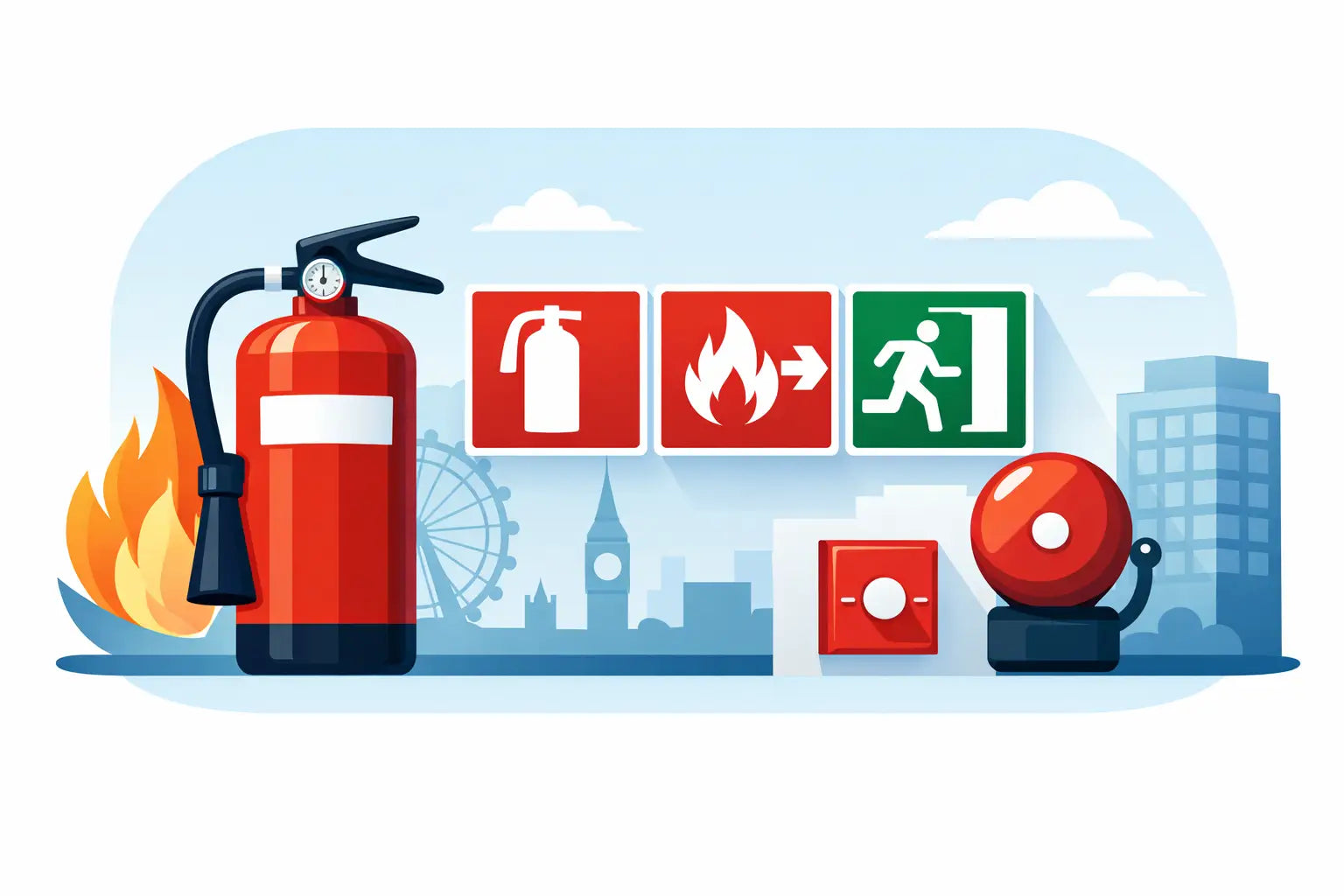
If a fire starts, nobody wants to waste seconds guessing which extinguisher is on the wall or whether it is suitable for the risk in front of them. A proper fire extinguisher sign guide helps remove that hesitation. For site managers, landlords, facilities teams and business owners, the point is simple - clear signs support faster decisions, safer evacuation and better day-to-day compliance.
Why fire extinguisher signs matter
The extinguisher itself does the firefighting, but the sign above it does an important job before anyone even reaches for the handle. It identifies the equipment location, helps people recognise the type of extinguisher provided and reminds staff which classes of fire it is intended for. In a busy warehouse, school corridor, office block or farm building, that clarity matters.
Signs also help keep your site legible for people who are not there every day. Contractors, visitors, agency staff and new starters are less likely to know the layout. In an emergency, they need visual information that is immediate and easy to follow, not something hidden behind stored items or left to memory.
From a compliance point of view, fire safety signage is part of a wider duty to make emergency equipment identifiable. The exact sign arrangement can vary depending on the building, the risks present and your fire risk assessment, but missing, damaged or poorly placed extinguisher signs are a common weak point during inspections.
Fire extinguisher sign guide: what the sign should show
At its most useful, an extinguisher sign does more than say fire extinguisher. It should help the user understand what is mounted there and when it should be used. On many UK sites, that means combining location marking with extinguisher type information.
A standard extinguisher ID sign will usually sit above the unit so it remains visible even if the extinguisher is partly obscured at ground level. Depending on the format, the sign may include the extinguisher name, colour band reference and icons or text covering suitable fire classes. Some signs also warn against incorrect use, which is especially important for water extinguishers near electrical equipment or CO2 units where users may need specific handling awareness.
This is where detail matters. A generic fire point marker may be enough to show equipment is present, but a more specific extinguisher sign is often better for operational clarity. If you have multiple extinguisher types across one site, matching the sign to the extinguisher reduces avoidable confusion.
Common extinguisher types and sign meanings
Water extinguishers are generally used for Class A fires such as wood, paper and textiles. Their signs should make that clear and should not imply suitability for flammable liquids or live electrical risks.
Foam extinguishers are commonly used for Class A and certain Class B fires, making them useful in mixed commercial settings. The sign should reflect that broader application without overstating it.
CO2 extinguishers are typically selected for electrical equipment and some flammable liquid risks. Because they are often found in offices, server rooms, workshops and plant areas, the sign should be easy to spot in spaces where wall-mounted equipment can blend into the background.
Dry powder extinguishers cover a broad range of risks, but they are not ideal for every indoor setting because discharge can reduce visibility and create a mess. That is one of those it depends situations - effective on some sites, less suitable on others. Signage should reflect the extinguisher type accurately, not just the fact that an extinguisher is present.
Wet chemical extinguishers are mainly intended for cooking oil and fat fires, which makes correct signage essential in commercial kitchens and food preparation areas. If the wrong extinguisher is used in that environment, the result can be serious.
Where to place fire extinguisher signs
The basic rule is visibility. If someone stands in the space and cannot quickly identify where the extinguisher is, the sign is not doing its job.
In most workplaces, extinguisher signs are positioned directly above the extinguisher at a height that remains visible from a distance. This is particularly helpful where bins, stock, furniture or equipment may block the lower wall area. The sign should not be hidden by open doors, shelving, temporary displays or stacked materials.
Placement also needs to make sense within the building layout. A long corridor may need clear equipment marking at intervals, while a plant room may need more explicit identification because the environment is visually busy. In public-facing premises, signs should be easy for visitors to understand without prior site knowledge.
Consistency helps. If one extinguisher is marked clearly and another is left without a sign, users may assume equipment standards are uneven across the building. On multi-site estates, standardising sign style and placement can also make maintenance checks quicker.
Areas where signage is often missed
The most common omissions are not always on the main office wall. They tend to appear in back-of-house areas, temporary workspaces and places where responsibility is split between teams.
Outdoor yards, farm buildings, workshops, mobile welfare units, kitchen service areas and small plant enclosures are often overlooked. So are extinguishers added after a refurbishment, machinery upgrade or change of use. If the extinguisher arrives but the sign does not, the installation is only half finished.
Choosing the right sign format
There is no single sign format that suits every site. Material, size and wording should match the environment.
For clean indoor spaces, a standard rigid plastic sign may be perfectly suitable. In harsher industrial or agricultural environments, you may need something more durable and easy to wipe down. If the area is prone to moisture, dust or heavy wear, sign longevity becomes part of the buying decision, not an afterthought.
Size depends on viewing distance and wall space. A small sign may work in a compact office cupboard, but it will be lost in a warehouse aisle or loading area. The trade-off is straightforward - larger signs improve visibility, but only if they are positioned sensibly and do not create clutter among other notices.
Wording should stay clear and direct. Overloading a sign with too much technical text can slow people down. The best extinguisher signs communicate the essentials at a glance, with enough supporting detail to guide correct use.
Fire extinguisher sign guide for compliance checks
When carrying out routine inspections, extinguisher signage should be checked alongside the extinguisher itself. It is a simple addition to monthly or periodic site walks and can save last-minute replacements before an audit or fire safety review.
Look for signs that are missing, faded, cracked, dirty or no longer matched to the extinguisher below. This mismatch happens more often than people expect, particularly after extinguisher servicing, relocations or specification changes. A CO2 unit under a water extinguisher sign is more than untidy - it creates a real risk of misuse.
It is also worth checking whether the sign is still appropriate for the space. If a room has changed function, the previous signage arrangement may no longer fit the hazards present. A store room converted into an electrical plant area, for example, may need different extinguisher provision and different sign messaging.
For buyers managing multiple buildings, keeping signage consistent across properties can reduce procurement time and make reordering simpler. That is where a dependable UK supplier with clear product categories, fast dispatch and bulk savings can make life easier. Think Safety - Think Sheep.
Common mistakes to avoid
The first is relying on the extinguisher body label alone. That label is useful at close range, but it does not replace a visible wall sign.
The second is treating all extinguisher locations the same. A quiet admin office and a noisy fabrication area have different visibility challenges. Sign choice should reflect the environment, not just tick a box.
The third is poor maintenance. Even the right sign becomes ineffective if it is covered in grime, knocked loose or hidden behind stored items. Housekeeping and signage work together.
Finally, avoid mixing old and new sign styles in a way that creates uncertainty. A site does not need to look cosmetic, but it does need to look clear. If people have to stop and interpret the signage system, it is already less effective than it should be.
Making buying decisions simpler
For most workplaces, the right approach is to match each extinguisher with a clear, type-specific sign, position it where it can be seen above normal obstructions and review it during routine safety checks. That covers the basics well.
Larger or more complex sites may need a broader approach that includes fire point signs, directional signs and area-specific messaging. If your building has varied risks, multiple floors or frequent visitors, a more joined-up signage plan is usually worth it.
Good safety signage should not be hard to source or hard to understand. The best setup is the one that helps people act quickly, supports compliance without fuss and stands up to the reality of the working environment. Get that right, and your extinguisher signs quietly do what they are supposed to do every day.
Share:
PPE Signs Workplace Guide for UK Sites
Where to Place CCTV Warning Signs